In 2026, supplier data enrichment has evolved far beyond simple contact databases. Procurement and sourcing teams now require deeper operational intelligence that helps verify manufacturers, assess compliance risk, analyze shipment activity, and identify reliable supplier relationships across fragmented global markets. Platforms like SourceReady, ZoomInfo and ImportYeti are leading this shift by combining AI-driven enrichment, trade intelligence, and workflow automation into more actionable sourcing systems. This guide breaks down the top supplier enrichment tools in 2026, where each platform performs best, and how procurement teams can build a smarter, more audit-ready supplier intelligence workflow.
There's a better way to source ❤️
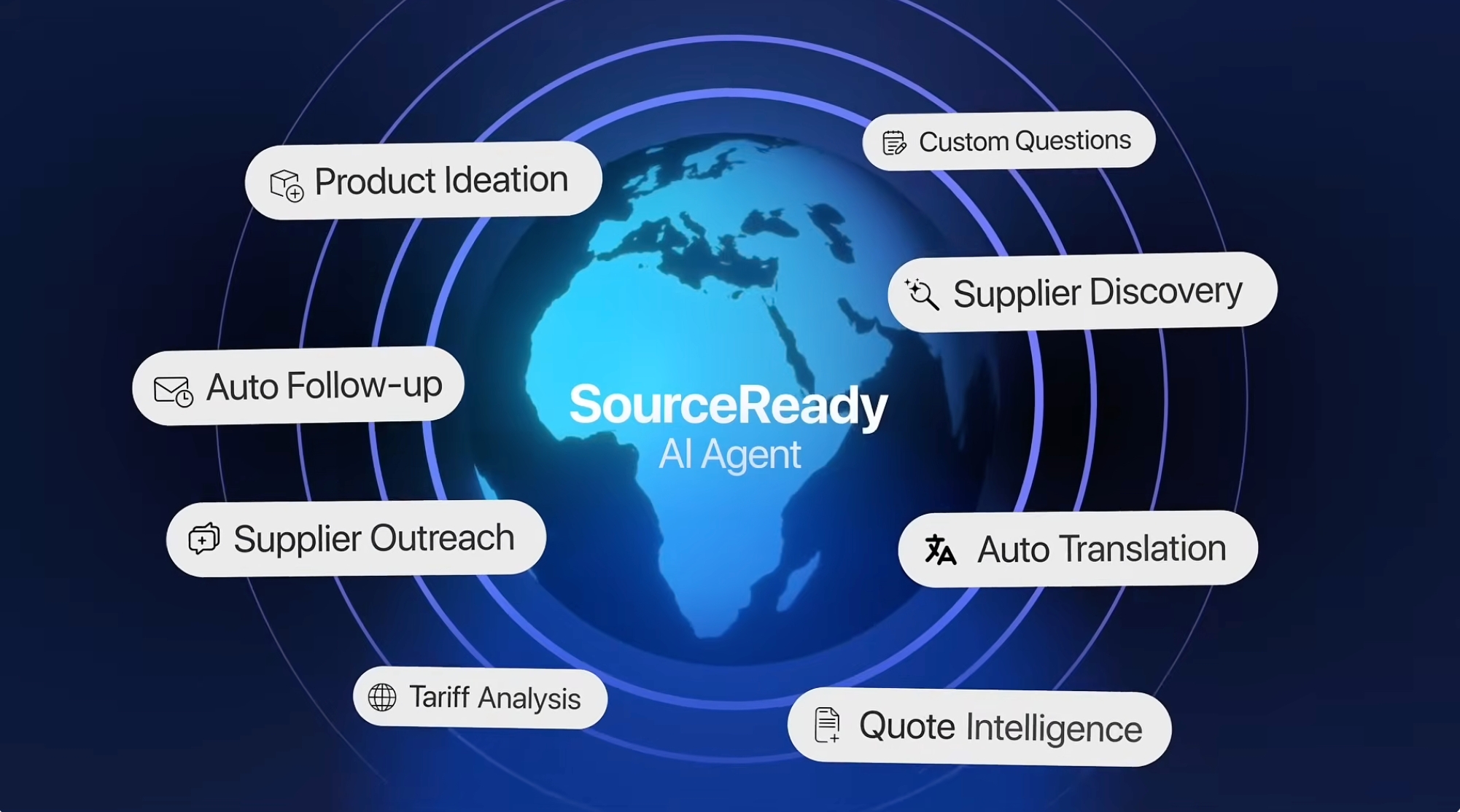
Watch the video to see how SourceReady helps brands move from product ideas to trusted supplier relationships faster
Watch the VideoWhat Actually Matters in a Supplier Data Enrichment Tool in 2026?
Most “supplier databases” still fail the same audit test: the data looks complete until someone on your procurement or compliance team actually verifies it against real-world operations, shipment history, ownership records, certifications, and production capability.
A supplier enrichment tool should not simply provide a company name, a generic email address, and a scraped LinkedIn profile. It should help you answer operationally important questions that directly affect sourcing risk, supplier reliability, and procurement efficiency.
You should be able to determine:
- Supplier legitimacy: whether the supplier is a legitimate operating business with verifiable manufacturing activity, identifiable ownership structures, and traceable trade records instead of a sourcing intermediary masking itself as a factory.
- Manufacturing capability: what products the supplier actually manufactures at scale, how long they have been exporting those products, and whether their production capabilities align with your technical, quality, and compliance requirements.
- Commercial stability: which brands or importers have previously worked with the supplier, whether shipment activity has remained consistent over time, and whether the supplier demonstrates operational stability instead of sporadic or inconsistent export patterns.
- Compliance readiness: whether the supplier meets increasingly important compliance expectations such as ESG documentation, certifications, forced labor screening requirements, or sanctions exposure checks that enterprise procurement teams now routinely require during onboarding.
In 2026, the strongest supplier enrichment platforms combine trade data, corporate registry records, AI-driven entity matching, compliance intelligence, shipment history, supplier verification workflows, and contact enrichment into one operational workflow that sourcing teams can actually use.
This guide breaks down the supplier enrichment tools that are actually useful in 2026 and explains where each one fits operationally.
Which Supplier Data Enrichment Tools Are Actually Worth Using?
1. SourceReady — Best for Manufacturing & Supplier Intelligence
If your primary goal is identifying, evaluating, and comparing manufacturers instead of merely enriching CRM records with contact details, this is the category where SourceReady separates itself from generic B2B enrichment platforms.
Most enrichment tools were designed primarily for sales organizations trying to identify potential buyers. SourceReady was designed for procurement teams, sourcing professionals, importers, and supply chain operators that need operational visibility into suppliers.
What it does well
- Supplier intelligence aggregation: SourceReady aggregates and normalizes supplier information from multiple fragmented sources, allowing procurement teams to evaluate manufacturers using product categories, certifications, trade activity, customer relationships, factory capabilities, and sourcing-specific operational signals instead of relying solely on generic business profiles.
- AI-driven entity matching: The platform uses AI-driven entity matching to reconcile inconsistent supplier naming conventions across customs records, trade databases, supplier websites, and corporate registries, which significantly reduces duplicate records and improves sourcing accuracy when evaluating overseas manufacturers.
- Operational supplier comparison: Procurement teams can compare suppliers using sourcing-relevant criteria such as production capability, export consistency, customer overlap, certifications, and match scoring instead of relying purely on sales-oriented firmographic enrichment data.
Strongest use cases
- Supplier discovery: identifying manufacturers across multiple sourcing regions and production categories.
- Competitive sourcing analysis: uncovering factories behind competing brands and benchmarking sourcing strategies.
- Import/export visibility: evaluating shipment activity and historical export consistency across suppliers.
- Supplier due diligence: validating operational legitimacy before onboarding or RFQ engagement.
- Country diversification: identifying alternative manufacturing regions to reduce geopolitical or tariff exposure.
- Brand-factory mapping: tracing which factories manufacture products for recognizable brands.
2. ZoomInfo — Best for Enterprise Contact Enrichment
ZoomInfo remains one of the strongest enterprise-grade platforms for B2B contact enrichment, organizational hierarchy mapping, and procurement decision-maker identification.
If your organization needs direct access to procurement executives, sourcing managers, supply chain leadership teams, or corporate purchasing contacts, ZoomInfo still maintains one of the largest and most mature commercial contact databases available.
What it does well
- Enterprise contact coverage: ZoomInfo provides extensive contact enrichment capabilities that help procurement-related sales teams identify buyers, procurement leaders, sourcing executives, and operational decision-makers across enterprise organizations globally.
- CRM integration: The platform integrates deeply into CRM and outbound workflow systems, allowing teams to automate enrichment, lead routing, account prioritization, and organizational mapping at scale.
- Intent and buying signals: Enterprise organizations often rely on ZoomInfo for intent data, organizational charts, technographic enrichment, and account-level buying signals that help identify active procurement initiatives or sourcing opportunities.
Best use cases
- Procurement contact enrichment: identifying relevant procurement and sourcing stakeholders within large organizations.
- Enterprise account mapping: understanding reporting structures and purchasing influence across target accounts.
- Supplier sales outreach: supporting B2B outreach efforts aimed at procurement organizations.
- CRM enrichment workflows: improving account-level data quality within sales and procurement systems.
- Decision-maker targeting: identifying executives responsible for sourcing, purchasing, and supply chain operations.
Operational limitation
- Manufacturing visibility gap: ZoomInfo is exceptionally effective at identifying people and organizational structures, but it is much less effective at validating whether a supplier can actually manufacture your product reliably, maintain production quality standards, or support complex sourcing requirements across global manufacturing regions.
That distinction matters more than many teams initially realize.
A supplier with polished sales contacts and a strong digital footprint is not automatically a reliable manufacturing partner.
3. ImportYeti — Best Free Trade Relationship Visibility
ImportYeti fundamentally changed the sourcing landscape by making customs shipment data accessible in a way that procurement professionals, sourcing managers, and entrepreneurs could actually use without enterprise-level budgets.
It remains one of the fastest ways to identify manufacturing relationships between brands and factories.
What it does well
- Customs shipment visibility: ImportYeti allows users to analyze U.S. customs shipment records in order to identify factories supplying established brands, uncover historical supplier relationships, and evaluate shipment consistency over time.
- Competitor sourcing analysis: Procurement teams frequently use the platform to reverse engineer competitor sourcing strategies by identifying likely manufacturing partners associated with major importers and consumer brands.
- Operational activity signals: The platform provides rapid visibility into shipment frequency, trade volume patterns, and supplier-export relationships that can help sourcing teams validate whether a supplier appears operationally active.
Best use cases
- Factory discovery: identifying manufacturers connected to existing importers and brands.
- Supply chain mapping: visualizing sourcing relationships across suppliers and importers.
- Competitive intelligence: analyzing where competitors source products and how frequently they import.
- Initial supplier validation: verifying whether suppliers show signs of real export activity.
- Shipment analysis: evaluating shipment consistency and operational export behavior.
Why sourcing teams still use it heavily
Research efficiency: ImportYeti dramatically reduces the amount of manual research required to identify potential manufacturers, making it extremely valuable during the early supplier discovery phase before deeper compliance and operational verification begins.
How Do the Top Platforms Compare Operationally?
What mature procurement teams now expect
In 2026, procurement organizations increasingly expect enrichment platforms to support AI-driven entity resolution, trade and compliance cross-referencing, workflow integrations, and operational auditability because supplier risk management now extends far beyond simple vendor onboarding.
1. AI-based entity resolution
Supplier name normalization: Supplier naming inconsistencies remain one of the largest hidden operational problems in global procurement because the same manufacturer may appear under multiple legal names, abbreviations, export aliases, or translated business entities across customs records, registries, invoices, and sourcing databases.
Duplicate reduction: Strong enrichment platforms automatically normalize and reconcile these records so procurement teams can evaluate suppliers accurately without manually consolidating fragmented data.
2. Trade and compliance cross-referencing
Integrated compliance intelligence: The strongest platforms now combine customs data, sanctions screening, ESG indicators, factory certifications, financial intelligence, and shipment behavior analysis into unified supplier profiles because supplier fraud, transshipment risk, and compliance scrutiny continue increasing globally.
3. Workflow integrations
Operational system connectivity: Modern procurement teams increasingly expect supplier enrichment systems to integrate directly with ERP systems, supplier onboarding workflows, procurement platforms, CRMs, RFQ systems, and internal compliance tools so sourcing workflows remain operationally efficient instead of becoming spreadsheet-heavy manual processes.
Conclusion
Supplier enrichment in 2026 is no longer just about finding a company email or scraping a contact database. Modern procurement teams need verified operational intelligence that helps them evaluate manufacturing capability, shipment consistency, compliance exposure, and supplier reliability before production problems appear. The strongest sourcing organizations are combining trade intelligence, AI-driven supplier matching, compliance workflows, and contact enrichment into one streamlined process that supports faster and more confident supplier decisions.
If your current sourcing workflow still depends heavily on spreadsheets, fragmented databases, or manual supplier validation, it may be time to modernize your supplier intelligence stack. Start by evaluating which platform best aligns with your sourcing, compliance, and procurement priorities.
FAQ
1. What is the difference between supplier enrichment and CRM enrichment?
CRM enrichment primarily focuses on improving sales and marketing records by adding contact information, firmographics, and organizational data. Supplier enrichment focuses on procurement-related intelligence such as manufacturing capability, export history, shipment activity, certifications, supplier legitimacy, and sourcing risk analysis.
2. Can supplier enrichment tools verify if a factory is legitimate?
Yes, although verification depth varies by platform. Advanced supplier enrichment tools can cross-reference customs records, business registries, certifications, shipment activity, customer relationships, and operational history to help determine whether a supplier appears to be a legitimate manufacturer rather than a trading company or intermediary.

Find the sourcing tools you need.
Explore how SourceReady helps you research products, discover suppliers, verify factory information, analyze trade data, and manage your sourcing workflow in one place
Explore Features
Graduating from USC with a background in business and marketing, Judy Chen has spent over a decade working in e-commerce, specializing in sourcing and supplier management. Her experience includes developing strategies to optimize supplier relationships and streamline procurement processes for growing businesses. As SourceReady’s blog writer, Judy leverages her deep understanding of sourcing challenges to create insightful content that helps readers navigate the complexities of global supply chains.