Industrial sourcing is high-stakes. You are not just buying products; you are securing machinery, components, materials, tooling, MRO supplies, and other production-critical inputs. The wrong supplier can delay orders, disrupt operations, or create compliance risk. The best sourcing platform is not simply the one with the most suppliers. It is the one that helps you verify capability, prove compliance, and defend decisions under audit. SourceReady helps procurement teams move beyond supplier discovery by combining global supplier data, verification signals, and sourcing intelligence, so you can build stronger shortlists without getting buried in supplier noise. To choose the right platform, start by understanding what each one does best.
Best Platforms for Global Industrial Sourcing

Judy Chen
·
June 17, 2026
Technology
Product Sourcing
Find Suppliers

Turn your product idea into supplier quotes
START YOUR FREE TRIAL
Table of contents
Which platforms are best for global industrial sourcing?
How should you compare suppliers across platforms?
What is the safest sourcing workflow?
Final takeaway
FAQ
Turn your product idea into supplier quotes
See how SourceReady helps you research products, discover verified factories, and start sourcing faster.
Get started for free
No credit card required
There’s a better way to source ❤️
Watch the video to see how SourceReady helps brands move from product ideas to trusted supplier relationships faster
Watch the Video
Which platforms are best for global industrial sourcing?
There is no single “best” platform for every industrial category. The right choice depends on your sourcing region, product complexity, compliance requirements, and whether you need supplier discovery, quote comparison, verification, or market mapping.
1. SourceReady
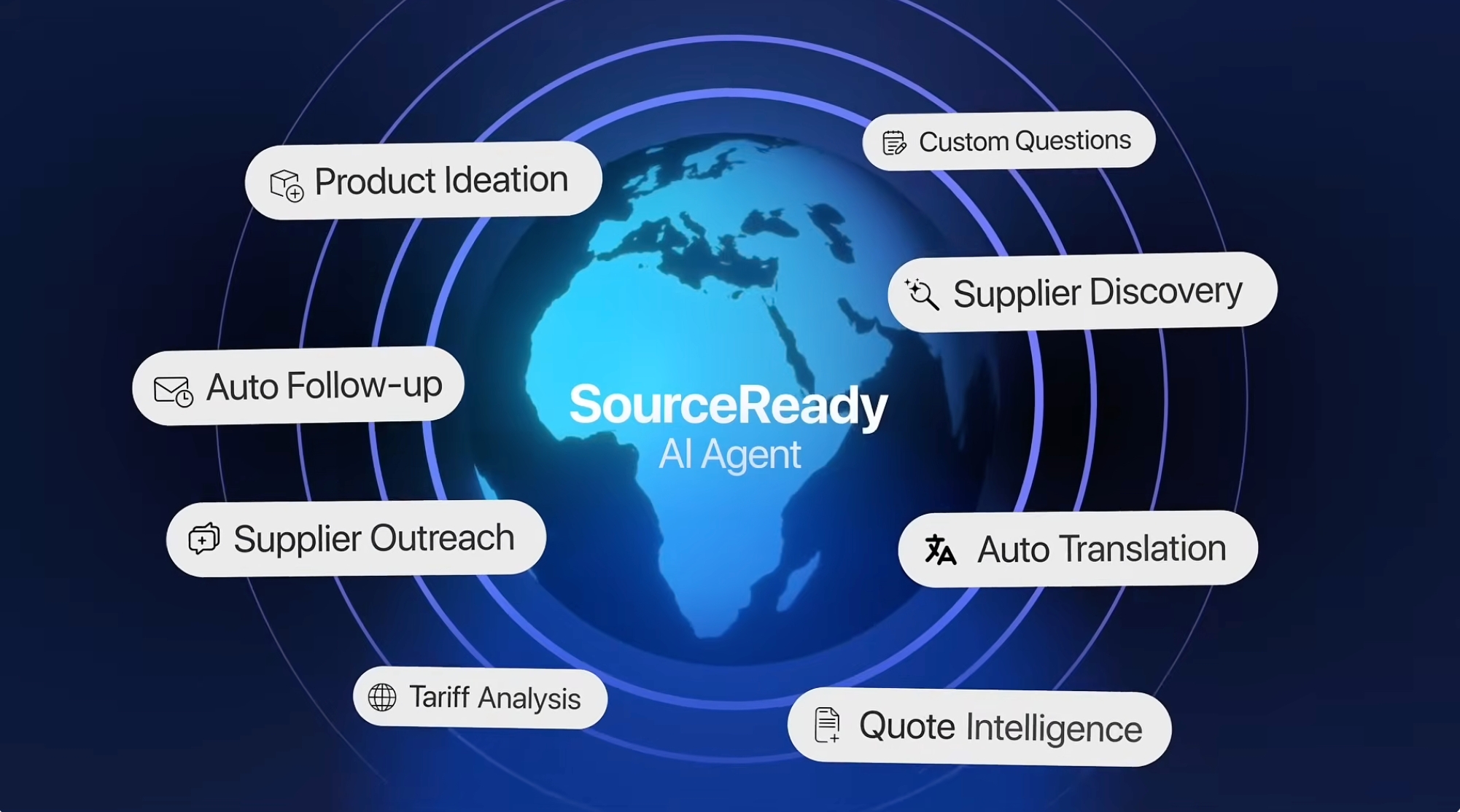
SourceReady is built for procurement teams that need more than a supplier directory. It combines supplier discovery, verification data, and sourcing intelligence to help buyers move from finding suppliers to qualifying them faster.
One of its biggest advantages is scale. SourceReady provides access to more than 4 million suppliers across 200+ countries and territories, making it useful for both global sourcing and supplier diversification efforts.
It is particularly valuable when you need:
- Supplier discovery and qualification in one place
- Faster supplier shortlisting
- Better visibility into supplier capabilities and trade activity
- More defensible sourcing decisions
- Less manual supplier research
SourceReady also helps teams assess supplier risk by monitoring sanctions, tariffs, and regulatory changes that could impact sourcing programs. Trade and customs data can be used to validate whether suppliers are actively producing and exporting relevant products, rather than relying solely on self-reported information.
For organizations managing complex supply chains, the platform can provide visibility into supplier networks and potential concentration risks. It also offers market intelligence that helps buyers identify sourcing trends, emerging supplier regions, and new supplier opportunities.
For industrial sourcing teams, SourceReady helps bridge the gap between supplier discovery and building an audit-ready supplier file.
2. Alibaba.com
Alibaba.com remains one of the largest B2B sourcing platforms in the world and is often the starting point for global industrial sourcing. It works well for machinery, components, packaging, tools, electronics, and a wide range of industrial products.
Its biggest advantage is supplier volume. Buyers can quickly gather quotes, compare pricing, and identify potential manufacturers across multiple countries.
However, supplier verification remains critical. Treat platform verification as an initial filter rather than final proof of capability. Always request business licenses, certifications, factory information, test reports, and production evidence before moving forward.
3. Made-in-China.com
Made-in-China.com is particularly strong for sourcing directly from Chinese manufacturers. It is often preferred for technical industrial categories such as machinery, industrial equipment, automotive components, electrical products, and OEM manufacturing.
The platform tends to be more factory-focused than many general B2B marketplaces, making it useful when buyers want to identify actual manufacturers rather than intermediaries.
Before approving any supplier, request:
- Factory registration details
- Production capability information
- Quality certifications
- Product testing documentation
- Export experience records
The platform can be highly effective, but independent verification is still essential.
4. Global Sources
Global Sources has built its reputation around connecting international buyers with export-ready suppliers, particularly across Asia. It is especially useful when sourcing suppliers that already understand international documentation, packaging requirements, and export processes.
Industrial buyers often use Global Sources for:
- Electronics and components
- Hardware products
- Industrial equipment
- Manufacturing partners
- Export-focused suppliers
Because many suppliers are already experienced with overseas customers, communication and documentation processes can be smoother than with less export-oriented suppliers.
5. Thomasnet
Thomasnet remains one of the strongest platforms for North American industrial sourcing. It is widely used by procurement professionals, engineers, and manufacturers looking for suppliers in the United States and Canada.
It is particularly valuable for:
- Custom manufacturing
- Machining and fabrication
- OEM components
- MRO supplies
- Industrial services
- Domestic sourcing initiatives
For organizations focused on nearshoring, supply chain resilience, or shorter lead times, Thomasnet can be an excellent source of qualified industrial suppliers.
For most sourcing projects, relying on a single platform is rarely enough. Combining a discovery platform, a verification tool, and a regional supplier source typically produces stronger supplier shortlists and better sourcing outcomes.
How should you compare suppliers across platforms?
The easiest way to compare suppliers is to score each one using the same criteria. This prevents decisions from being based on price alone or on whichever supplier has the best-looking profile.
Focus on these seven areas:
1. Capability Fit
Can the supplier actually make your product?
Check:
- Materials and specifications
- Manufacturing processes
- Production equipment
- Tolerances and quality requirements
- Customization capabilities
If a supplier cannot clearly explain how they will produce your product, remove them from consideration.
2. Compliance Fit
Can they meet your regulatory and certification requirements?
Check:
- ISO certifications
- Product test reports
- Industry-specific standards
- Regulatory requirements (CE, UL, RoHS, REACH, FDA, etc.)
A supplier that fails compliance requirements should not move forward, regardless of price.
3. Commercial Fit
Does the supplier make sense financially and operationally?
Compare:
- Unit pricing
- Minimum order quantities (MOQs)
- Tooling costs
- Payment terms
- Lead times
Remember: the cheapest quote is not always the lowest-risk option.
4. Quality Management
How do they control quality?
Ask about:
- Inspection procedures
- Quality certifications
- Defect handling processes
- Corrective action procedures
- Historical quality performance
Strong quality systems usually lead to more consistent production results.
5. Export Readiness
Can they successfully ship products internationally?
Look for experience with:
- Export documentation
- International shipping
- Packaging requirements
- Incoterms
- Overseas customers
A supplier may be technically capable but still create delays if they lack export experience.
6. Traceability and Transparency
Can you clearly identify who you are doing business with?
Verify:
- Legal company name
- Factory location
- Ownership structure
- Production site details
This helps avoid confusion between manufacturers, trading companies, and subcontractors.
7. Responsiveness and Risk Signals
How do they behave during the sourcing process?
Watch for:
- Slow responses
- Inconsistent information
- Missing documentation
- Vague answers
- Pressure tactics
These issues often become bigger problems after an order is placed.
Use the same RFQ template every time
Your RFQ should include:
- Product specification: Drawings, photos, BOM, materials, tolerances, finish, standards.
- Quantity assumptions: Sample quantity, trial order, annual volume, forecast range.
- Compliance requirements: ISO, CE, UL, RoHS, REACH, FDA, ASTM, or other category-specific standards.
- Quality expectations: AQL level, inspection process, defect policy, warranty terms.
- Commercial terms: MOQ, tooling cost, lead time, payment terms, Incoterms.
- Documentation request: Business license, certificates, test reports, factory profile, references.
- Audit permission: Confirm whether they allow third-party inspection or factory audit.
Keep the RFQ boring. Boring is good. Boring is how procurement avoids expensive surprises.
What is the safest sourcing workflow?
A sourcing platform helps you find suppliers. It does not qualify them for you. The safest sourcing workflow combines supplier discovery, verification, sampling, inspection, and documentation into one repeatable process.
Your goal is not just to find a supplier that says “yes.” Your goal is to build a supplier file that explains why this supplier was selected, what risks were checked, and how the decision can be defended later.
Use this workflow:
1. Build a supplier longlist
Start with 20 to 40 potential suppliers using a sourcing platform that gives you broad supplier coverage and enough data to qualify suppliers, not just find names. Supplier quality can vary by country, product category, and data completeness, so your first step is to build a wide but relevant supplier longlist before narrowing it down.
At this stage, avoid over-filtering too early. Your first goal is market coverage. You want to understand who can potentially supply the product, where they are located, how they position themselves, and what the price range looks like.
2. Screen out poor-fit suppliers
Once you have a longlist, remove suppliers that fail basic qualification checks. This saves time before you request samples, negotiate pricing, or share sensitive product details.
Cut suppliers with:
- Wrong or unclear product category
- No factory address or production details
- Weak technical answers
- No relevant export experience
- Missing or irrelevant certifications
- Unrealistic pricing
- Inconsistent company information
- Pushy payment behavior
- Refusal to provide basic documents
This step matters because many sourcing problems start with suppliers that were never a good fit in the first place. A low quote is not a win if the supplier cannot meet quality, compliance, lead time, or documentation requirements.
3. Send a structured RFQ
Before comparing quotes, make sure every supplier is responding to the same request. A vague RFQ creates vague pricing, and vague pricing creates painful surprises later.
Your RFQ should include:
- Product specifications
- Drawings, photos, or samples
- Materials and finish requirements
- Target quantities and annual forecast
- Quality standards
- Required certifications
- Packaging requirements
- Testing requirements
- Lead time expectations
- Incoterms
- Payment terms
- Required supplier documents
Ask suppliers to confirm what they can and cannot meet. Do not let them skip technical details. If a supplier only replies with a price, push for more information before moving forward.
4. Verify supplier identity and capability
Before sending deposits, tooling fees, or sensitive product files, verify that the supplier is real, qualified, and aligned with your sourcing requirements.
Check:
- Legal company name
- Registered business address
- Factory address
- Ownership or group structure
- Business scope
- Production capabilities
- Export history
- Website and domain details
- Certification authenticity
- Product test report validity
- Customer references, where available
You also need to understand whether the company is a manufacturer, trading company, distributor, or agent. None of these are automatically bad, but the distinction matters. If you think you are buying directly from a factory but the supplier is outsourcing production, your quality and traceability risks increase.
For China sourcing, confirm that the company registration, factory information, invoice entity, and payment account are consistent. For any country, verify banking details through a controlled process before payment. Invoice fraud is boring right up until it becomes very expensive.
5. Compare suppliers using a scorecard
Do not choose based on price alone. Use a supplier scorecard so your decision is consistent and defensible.
Evaluate each supplier across the same criteria, including:
- Capability fit — Product match, equipment, materials, and customization ability.
- Compliance fit — Certifications, test reports, and regulatory requirements.
- Commercial fit — Price, MOQ, tooling costs, payment terms, and lead times.
- Quality management — Quality control processes, defect handling, and inspection records.
- Export readiness — Documentation, Incoterms knowledge, packaging, and shipping experience.
- Traceability — Legal entity verification, factory location, ownership structure, and subcontracting risk.
- Responsiveness — Communication speed, technical clarity, and consistency.
- Risk signals — Missing documents, vague answers, or unusual payment pressure.
The supplier with the lowest quote may still lose if they score poorly on compliance, quality, or traceability. That is not overthinking. That is procurement doing its job.
6. Request samples and validate performance
Never approve an industrial supplier based on catalog photos or a polished company profile. Request samples and compare them against your specification.
For technical or production-critical products, use:
- Pre-production samples to confirm design and material fit.
- First article inspection to validate the first manufactured unit.
- In-process inspection to catch issues before full production is complete.
- Pre-shipment inspection to verify quality before final payment or shipment.
- Lab testing when safety, compliance, or performance claims need proof.
Review not only the product, but also packaging, labeling, documentation, and communication during the sample process. A supplier’s sample-stage behavior often predicts how they will perform during production.
7. Approve with clear conditions
Supplier approval should not be informal. Define what the supplier is approved for and under what conditions.
Document:
- Approved product category
- Approved specifications
- Approved factory location
- Required certifications
- Accepted sample version
- Quality inspection requirements
- Payment terms
- Lead time expectations
- Approved Incoterms
- Reassessment schedule
This prevents future confusion. A supplier approved for one component should not automatically be approved for another product, factory, or material without review.
8. Build an audit-ready supplier file
Keep a complete supplier record from the beginning. This is what protects your team during internal reviews, customer audits, compliance checks, and quality investigations.
Your supplier file should include:
- RFQ records
- Supplier quotes
- Quote comparison table
- Supplier scorecard
- Business license
- Company registration details
- Factory information
- Certifications
- Product test reports
- Audit reports
- Inspection reports
- Sample approval records
- Email and communication history
- Payment verification notes
- Final approval rationale
This is the part many teams skip. Then six months later, someone asks why the supplier was approved. “They looked good online” is not an audit strategy.
9. Monitor supplier performance after approval
Supplier qualification does not end after the first order. Track performance over time so you can identify risk before it becomes disruption.
Monitor:
- On-time delivery
- Defect rates
- Responsiveness
- Price changes
- Lead time changes
- Compliance updates
- Failed inspections
- Customer complaints
- Changes in ownership, factory location, or subcontracting
For strategic suppliers, review performance quarterly or at least annually. If the supplier supports production-critical products, do not wait for a failure to recheck them.
Final takeaway
The best industrial sourcing platform depends on your category, region, and risk profile, but successful procurement always combines supplier discovery with rigorous verification. Platforms such as SourceReady, Alibaba.com, Made-in-China.com, Global Sources, and Thomasnet can help identify suppliers, but your evaluation process ultimately determines sourcing success. If you want to build stronger supplier shortlists and make more defensible sourcing decisions, start by implementing a structured supplier qualification workflow.
FAQ
1. What is an RFQ in industrial sourcing?
An RFQ, or Request for Quote, is a document you send to suppliers to request pricing and production details for a specific product or project.
A good RFQ should include:
Product specifications
Drawings or photos
Materials
Quantity requirements
Quality standards
Certification requirements
Packaging needs
Lead time expectations
Payment terms
Incoterms
Documentation requests
The more specific your RFQ, the easier it is to compare suppliers accurately.
2. What are the biggest risks in global industrial sourcing?
The biggest risks include:
Poor product quality
Misrepresented supplier capabilities
Fake or outdated certifications
Delayed shipments
Hidden subcontracting
Compliance failures
Communication issues
Payment fraud
Tariff or sanctions exposure
Weak documentation
Most sourcing problems happen when buyers move too quickly from discovery to payment without proper verification.

Find the sourcing tools you need.
Explore how SourceReady helps you research products, discover suppliers, verify factory information, analyze trade data, and manage your sourcing workflow in one place
Explore Features
Graduating from USC with a background in business and marketing, Judy Chen has spent over a decade working in e-commerce, specializing in sourcing and supplier management. Her experience includes developing strategies to optimize supplier relationships and streamline procurement processes for growing businesses. As SourceReady’s blog writer, Judy leverages her deep understanding of sourcing challenges to create insightful content that helps readers navigate the complexities of global supply chains.