Finding MOQ-friendly suppliers is essential for startups, ecommerce brands, retailers, and procurement teams that want to test products without committing to large inventory investments. While several sourcing platforms support low minimum order quantities, the best choice depends on your product category, customization requirements, and supplier verification needs. Alibaba remains a popular option for factory-direct sourcing, while Faire, Global Sources, Thomasnet, and SourceReady each serve different buyer profiles. Regardless of the platform you choose, success depends on verifying supplier capabilities, understanding true MOQ requirements, and building a sourcing process that minimizes risk before scaling orders.
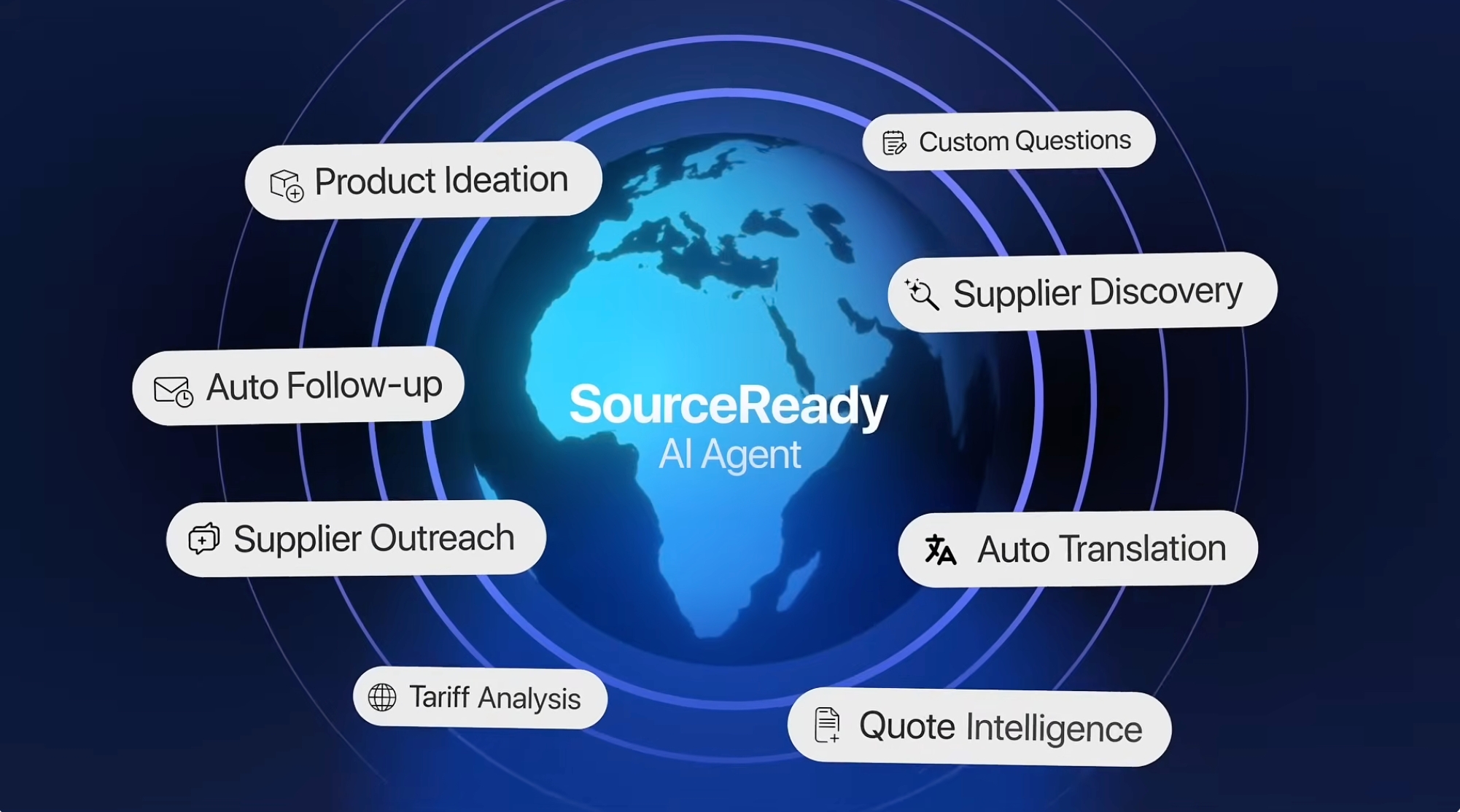
There's a better way to source ❤️
Watch the video to see how SourceReady helps brands move from product ideas to trusted supplier relationships faster
Watch the VideoWhat does “MOQ-friendly” really mean?
MOQ stands for minimum order quantity, which is the smallest order a supplier is willing to accept. However, a supplier advertising a low MOQ does not automatically mean the supplier is ideal for small-batch sourcing.
There are typically four MOQ levels buyers should understand:
- Sample MOQ – The minimum quantity required for product samples.
- Trial Order MOQ – The smallest production order after sample approval.
- Custom Production MOQ – The minimum quantity needed for custom logos, packaging, colors, materials, or product modifications.
- Economic MOQ – The quantity at which pricing becomes commercially viable and supports healthy margins.
A truly MOQ-friendly supplier is transparent about these distinctions and explains how customization, materials, packaging, and compliance requirements affect minimum quantities.
When evaluating suppliers, ask questions such as:
- Can stock materials be used to reduce MOQ?
- Are custom colors or packaging subject to higher minimums?
- Can production be combined with other customer orders?
- Are there setup or tooling costs that impact small orders?
- What quantity unlocks better pricing?
The best MOQ-friendly suppliers provide realistic guidance rather than simply agreeing to every request.
Which marketplace is actually best for low-MOQ sourcing?
There is no single marketplace that works best for every sourcing scenario. The right platform depends on whether you need custom manufacturing, wholesale products, industrial suppliers, or verified sourcing support.
1. Alibaba
Alibaba is often the first choice for buyers seeking low-MOQ manufacturers and private-label suppliers. The platform offers access to factories, trading companies, and wholesalers across a wide range of product categories.
Alibaba is particularly useful for:
- Private-label products
- Consumer goods
- Packaging
- Apparel
- Home products
- Promotional items
Strengths
Alibaba's greatest strength is its enormous supplier network. Buyers can compare hundreds of suppliers for the same product, making it easier to negotiate pricing, MOQ requirements, lead times, and customization options. The platform supports a wide variety of industries and is especially attractive for startups and ecommerce brands looking to launch private-label products.
Additional strengths include:
- Large selection of manufacturers and trading companies
- Strong support for custom products and private labeling
- Competitive factory-direct pricing
- Access to suppliers across multiple countries
- Trade Assurance and payment protection features
- Flexible MOQ options in many product categories
Because of its scale, Alibaba often provides sourcing opportunities that smaller marketplaces cannot match.
Limitations
The platform's size also creates challenges. Supplier quality varies significantly, and buyers must invest time in verification and due diligence. Not every supplier claiming to be a manufacturer actually owns production facilities.
Common limitations include:
- Significant variation in supplier quality
- Higher risk of encountering inexperienced suppliers
- Time-consuming supplier screening process
- Communication barriers with some suppliers
- Product quality inconsistencies between suppliers
- Compliance documentation may require additional verification
For inexperienced buyers, Alibaba can feel overwhelming because the platform provides access to suppliers but does not eliminate the need for careful supplier evaluation.
2. Faire
Faire is designed primarily for retailers and boutique buyers looking for wholesale products from established brands.
The platform is well suited for:
- Retail-ready inventory
- Product testing
- Boutique stores
- Gift shops
- Ecommerce retailers
Faire often supports lower opening orders than traditional wholesale channels, making it attractive for businesses that want to test demand without committing to large inventory purchases.
Strengths
Faire simplifies wholesale purchasing by connecting retailers directly with brands that already have finished products ready for resale. Buyers can quickly build product assortments without managing overseas manufacturing, product development, or factory relationships.
Key strengths include:
- Low opening order requirements
- Retail-ready products with professional packaging
- Easy product discovery across multiple categories
- Simplified ordering process
- Faster purchasing decisions compared to factory sourcing
- Reduced operational complexity for retailers
For businesses focused on testing products and expanding inventory selection, Faire offers a streamlined buying experience.
Limitations
Faire is not designed for buyers seeking manufacturing control or product customization. Most sellers are brands rather than factories, which limits opportunities for private labeling and custom development.
Common limitations include:
- Limited customization options
- Little visibility into manufacturing operations
- Less control over product specifications
- Higher pricing compared to factory-direct sourcing
- Limited opportunities for exclusive products
- Not ideal for building proprietary product lines
Businesses seeking unique products or long-term manufacturing partnerships may eventually outgrow the platform.
3. Global Sources
Global Sources is a strong option for buyers sourcing electronics, gifts, accessories, and export-focused products.
The platform is known for:
- Verified exporters
- Electronics suppliers
- Trade-show-connected manufacturers
- International sourcing opportunities
While some suppliers may require higher order values than those found on Alibaba, Global Sources can provide access to experienced exporters with established production capabilities.
Strengths
Global Sources has built a strong reputation among international buyers, particularly in electronics and consumer products. Many suppliers have extensive export experience and are accustomed to serving overseas markets.
Notable strengths include:
- Strong supplier presence in electronics and technology categories
- Focus on export-ready manufacturers
- Supplier verification programs
- Connections to major sourcing trade shows
- Access to experienced international exporters
- Better visibility into supplier capabilities in certain industries
For buyers sourcing technical products, Global Sources often provides a more specialized supplier base than broader marketplaces.
Limitations
Although supplier quality is generally strong, buyers may encounter higher MOQs and less flexibility than on platforms focused on small businesses.
Potential limitations include:
- Higher MOQ expectations in some categories
- Smaller supplier pool compared to Alibaba
- Less suitable for very small startup orders
- Fewer suppliers in certain non-electronics categories
- Pricing may be less competitive for low-volume purchases
Global Sources tends to work best for buyers who already have some sourcing experience and are preparing to scale beyond initial product testing.
4. Thomasnet
Thomasnet focuses primarily on North American industrial and manufacturing suppliers.
It is particularly valuable for:
- Industrial sourcing
- OEM components
- Fabrication services
- Packaging suppliers
- Domestic manufacturing
Although pricing may be higher than offshore alternatives, buyers often benefit from shorter lead times, easier communication, and stronger alignment with North American compliance requirements.
Strengths
Thomasnet excels as a supplier discovery platform for industrial procurement and domestic manufacturing. Buyers can identify specialized suppliers that may not be visible on international marketplaces.
Major strengths include:
- Strong network of North American manufacturers
- Easier communication and collaboration
- Faster shipping and production timelines
- Better alignment with local regulations and standards
- Reduced geopolitical and tariff-related risks
- Access to specialized industrial capabilities
For companies prioritizing reliability, engineering support, or domestic sourcing, Thomasnet can be an excellent resource.
Limitations
Thomasnet is not optimized for low-cost consumer product sourcing or rapid private-label launches.
Common limitations include:
- Higher production costs compared to offshore sourcing
- Smaller selection of consumer products
- Less emphasis on low-MOQ startup orders
- Limited suitability for private-label ecommerce products
- Fewer suppliers focused on mass-market consumer goods
Buyers seeking the lowest possible unit cost may find offshore marketplaces more attractive.
5. SourceReady
SourceReady is an AI-powered supplier discovery and procurement intelligence platform that helps organizations identify, evaluate, and manage suppliers more efficiently. Unlike traditional marketplaces that primarily focus on supplier listings, SourceReady combines a global supplier database with sourcing intelligence and workflow automation.
The platform provides access to more than 4 million suppliers across 200 countries, making it one of the largest supplier discovery networks available to procurement teams.
SourceReady can be especially useful for:
- Procurement teams seeking qualified suppliers
- Buyers looking for MOQ-friendly sourcing options
- Organizations managing strategic sourcing initiatives
- Enterprises consolidating supplier discovery workflows
- Teams conducting supplier research and benchmarking
- Companies seeking AI-powered procurement intelligence
- Businesses performing product research before sourcing
Strengths
SourceReady's primary advantage is not simply supplier volume—it's the intelligence layer built on top of that supplier network.
The platform leverages AI and procurement intelligence capabilities to help sourcing teams discover suppliers, evaluate opportunities, identify alternatives, and make more informed sourcing decisions.
Key strengths include:
- Massive global supplier coverage that gives procurement teams access to more than 4 million suppliers across 200 countries, making it easier to identify both mainstream and niche suppliers that may be difficult to find through traditional sourcing channels.
- AI-powered supplier discovery and qualification that helps buyers quickly narrow large supplier pools based on capabilities, geography, certifications, industry focus, and sourcing requirements, reducing the time spent manually researching vendors.
- Faster supplier comparison and alternative sourcing identification through data-driven insights that help teams evaluate multiple suppliers side by side, uncover backup options, and reduce dependency on a limited supplier base.
- Enhanced procurement intelligence and strategic sourcing support by providing greater visibility into supplier ecosystems, helping organizations make more informed sourcing decisions and strengthen long-term procurement strategies.
- Product research capabilities that help businesses identify promising products, evaluate market opportunities, analyze demand trends, and validate sourcing decisions before engaging suppliers, reducing risk during product selection and supplier outreach.
For procurement teams managing large supplier bases or complex sourcing initiatives, SourceReady can significantly reduce the time required to identify and evaluate potential suppliers.
Limitations
SourceReady serves a different purpose than traditional transactional marketplaces, so its limitations are often misunderstood.
Rather than acting as a wholesale ordering platform where buyers immediately place orders, SourceReady focuses on supplier discovery, intelligence, qualification, and sourcing decision support.
For procurement professionals, however, these are often workflow differences rather than disadvantages. Many organizations prefer a platform that helps them identify the right suppliers before entering negotiations rather than relying solely on marketplace listings.
How do you verify MOQ-friendly suppliers before you pay?
Low-MOQ sourcing can reduce risk, but only if suppliers are properly verified before payment.
1. Verify Supplier Identity
Request and review:
- Legal company name
- Business registration documents
- Factory address
- Website information
- Export licenses where applicable
- Primary contact details
Ensure all information matches across invoices, certificates, websites, and marketplace profiles.
2. Assess Production Capability
Ask suppliers about:
- Manufacturing equipment
- Monthly production capacity
- Core product categories
- In-house versus outsourced processes
- Previous export experience
- Recent production examples
For low-MOQ orders, determine whether stock materials can be used to reduce minimum quantities and lead times.
3. Review Compliance Documentation
Depending on the product category, request:
- Product test reports
- Material certifications
- Factory audit reports
- Quality management certifications
- Social compliance documentation
- Country-of-origin records
Always verify that documents apply specifically to the product you intend to purchase.
4. Confirm Commercial Terms in Writing
Before sending payment, document:
- MOQ requirements
- Unit pricing
- Tooling or setup fees
- Packaging specifications
- Production lead times
- Payment terms
- Shipping terms
- Inspection procedures
- Defect resolution policies
All agreed terms should appear on a purchase order or proforma invoice rather than relying solely on marketplace messages or email conversations.
5. Start with a Small Trial Order
Even after verification, begin with a controlled test order. Compare samples, inspect quality, evaluate communication, and monitor delivery performance before increasing order volumes. A successful trial order provides far more insight than any supplier profile or sales presentation.
Conclusion
MOQ-friendly sourcing gives businesses a practical way to test products, minimize inventory risk, and evaluate supplier performance before making larger purchasing commitments. While Alibaba is often the preferred choice for custom products and private-label manufacturing, Faire is well suited for retail-ready wholesale goods, Global Sources excels in electronics and export-focused sourcing, and Thomasnet offers strong options for North American industrial suppliers. SourceReady can further support supplier discovery and evaluation through sourcing intelligence and supplier data. Ultimately, success depends less on the marketplace itself and more on a structured sourcing process that includes verification, compliance checks, and trial orders. If you're ready to streamline supplier discovery and make more confident sourcing decisions, explore SourceReady to identify and evaluate suppliers more efficiently. Start building a stronger, lower-risk supply chain today.
FAQ
1. Can I negotiate MOQ with suppliers?
Yes. MOQ is often negotiable, especially for first orders.
You can improve your chances by asking for:
- A trial order
- Use of stock materials
- Generic packaging instead of custom packaging
- Fewer colors or sizes
- A higher unit price in exchange for a lower MOQ
- A clear reorder plan if the first batch performs well
A good supplier may accept a smaller first order if you show serious buying intent and provide clear product requirements.
2. What is the difference between MOQ and sample order quantity?
A sample order quantity is the number of units you buy to evaluate the product before placing a bulk order.
An MOQ is the minimum quantity required for a production or wholesale order.

Find the sourcing tools you need.
Explore how SourceReady helps you research products, discover suppliers, verify factory information, analyze trade data, and manage your sourcing workflow in one place
Explore Features
Graduating from USC with a background in business and marketing, Judy Chen has spent over a decade working in e-commerce, specializing in sourcing and supplier management. Her experience includes developing strategies to optimize supplier relationships and streamline procurement processes for growing businesses. As SourceReady’s blog writer, Judy leverages her deep understanding of sourcing challenges to create insightful content that helps readers navigate the complexities of global supply chains.