Global supplier directories helped digitize supplier discovery, but modern procurement teams now need more than searchable listings. Rising geopolitical risk, compliance pressure, and supply chain complexity are pushing sourcing toward AI-driven procurement tools that provide deeper visibility and smarter decision-making. Unlike traditional directories, platforms like SourceReady combine supplier discovery with risk monitoring, competitor intelligence, and supply chain mapping to help teams move faster and reduce sourcing risk. This guide breaks down the real differences between supplier directories and AI procurement tools—and where each fits in a modern sourcing strategy.
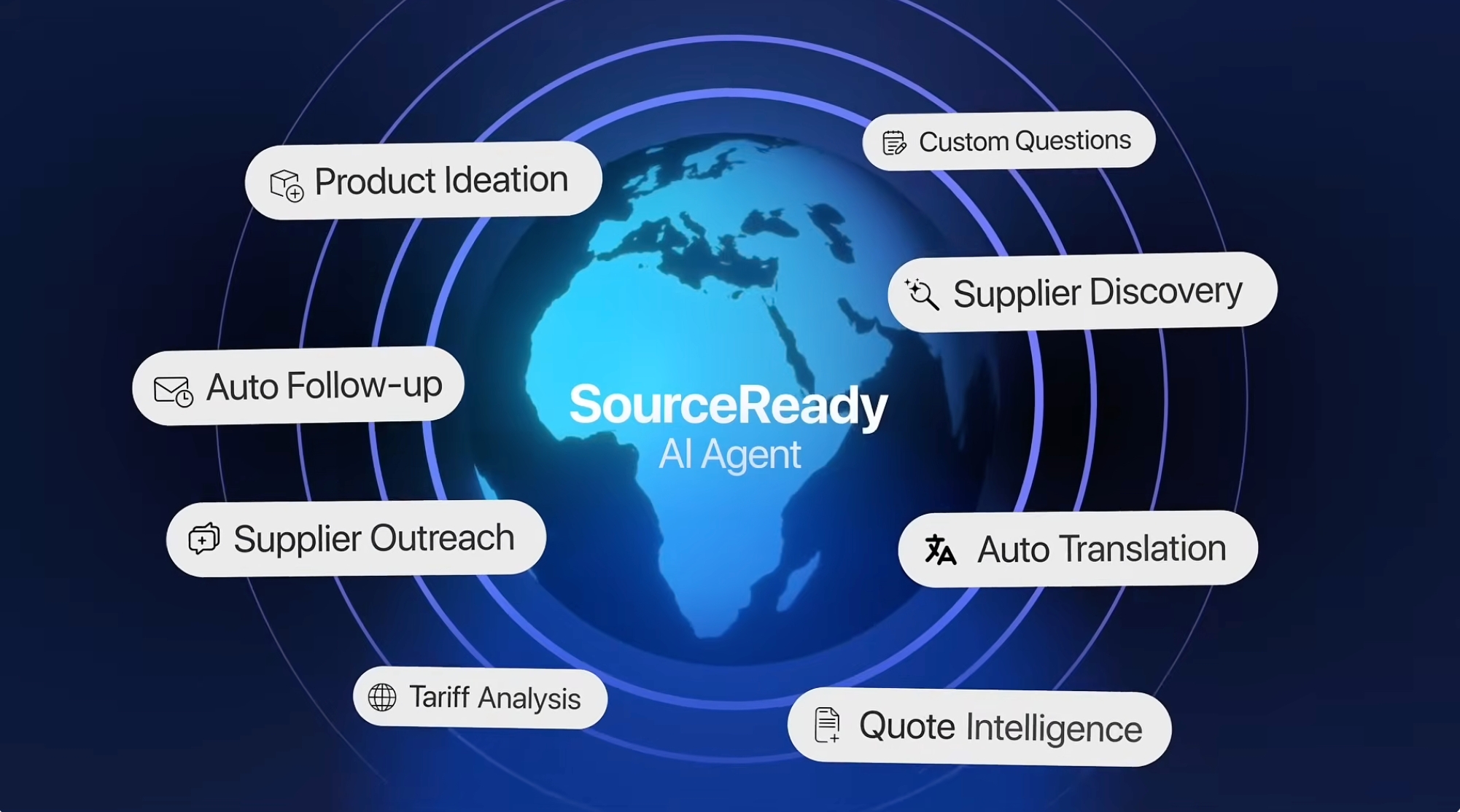
There's a better way to source ❤️
Watch the video to see how SourceReady helps brands move from product ideas to trusted supplier relationships faster
Watch the VideoWhy are traditional supplier directories starting to fall behind?
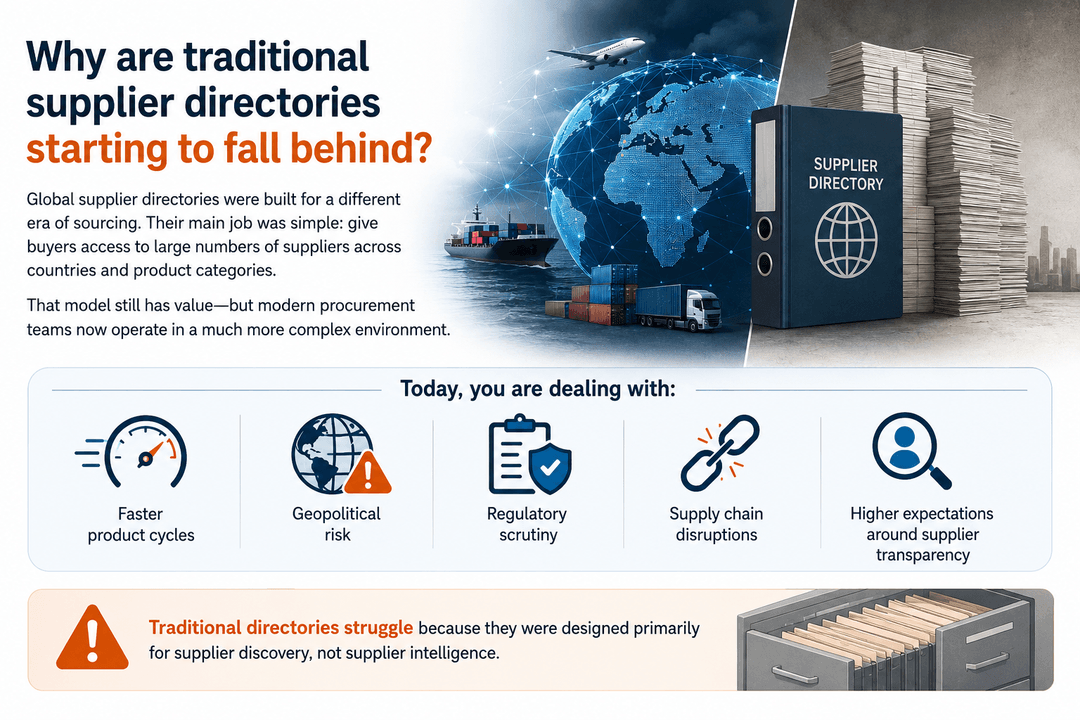
Global supplier directories were built for a different era of sourcing. Their main job was simple: give buyers access to large numbers of suppliers across countries and product categories.
That model still has value—but modern procurement teams now operate in a much more complex environment.
Today, you are dealing with:
- Faster product cycles
- Geopolitical risk
- Regulatory scrutiny
- Supply chain disruptions
- Higher expectations around supplier transparency
Traditional directories struggle because they were designed primarily for supplier discovery, not supplier intelligence.
Where supplier directories still work well
- Broad supplier access: Directories are useful for quickly exploring categories and identifying potential suppliers across regions.
- Low barrier to entry: You can search suppliers without building complex sourcing workflows or data systems.
- Useful for early-stage research: They remain effective for understanding supplier density, pricing ranges, and manufacturing regions.
Where they start to break down
- Self-reported supplier data: Most directory information is controlled by suppliers themselves, which creates inconsistencies in capability claims, certifications, and specialization.
- Limited verification depth: Verification often confirms that a company exists—not whether it can reliably deliver your product at scale.
- Manual filtering burden: Procurement teams still spend large amounts of time researching, cross-checking, and eliminating poor-fit suppliers.
- Static information: Supplier profiles can quickly become outdated, especially when production locations, certifications, or export activity change.
- Weak visibility into risk: Most directories provide little insight into sanctions exposure, geopolitical risk, or upstream supply chain dependencies.
- Reality: directories help you find suppliers. They do not necessarily help you choose the right ones.
What makes AI procurement tools fundamentally different?
AI procurement tools are not just “smarter directories.” They change the sourcing process from a search exercise into a data-driven decision system.
Instead of asking: “Who manufactures this product?”
You can start asking:
- Which suppliers are most aligned with my requirements?
- Which suppliers are operationally reliable?
- Which suppliers carry lower geopolitical or compliance risk?
- Which suppliers are already supplying competitors?
That shift matters.
How AI procurement tools improve sourcing
- Multi-source data aggregation: AI tools combine supplier data from customs records, certifications, trade shows, websites, marketplaces, and internal systems into a structured view.
- AI-powered matching: Instead of manually searching, the system analyzes your requirements and surfaces suppliers with the highest probability of fit.
- Continuous supplier monitoring: Supplier risk is tracked over time, including changes in sanctions exposure, tariffs, export activity, and operational signals.
- Structured supplier comparison: Standardized data allows procurement teams to compare suppliers side by side using consistent criteria.
- Product and market intelligence: AI tools can analyze websites, marketplaces, and trade activity to identify emerging product trends and sourcing opportunities earlier.
- Competitor sourcing visibility: Global customs data reveals where competitors are sourcing from and how sourcing strategies are shifting geographically.
Where do AI procurement tools actually create the most value?
The biggest gains are not just speed—they come from reducing poor sourcing decisions.
1. Faster and more accurate shortlisting
AI reduces noise early: Instead of reviewing hundreds of suppliers manually, procurement teams receive a smaller shortlist based on relevance, capability, and historical activity.
Better alignment with requirements: AI systems can account for factors like certifications, production capacity, geography, and specialization simultaneously.
This dramatically reduces sourcing friction.
2. Better supplier verification
Real-world activity signals: AI tools can validate whether suppliers have actually exported relevant products and at what scale.
Reduced reliance on claims: This helps procurement teams avoid over-relying on supplier-written profiles or marketing language.
3. Improved geopolitical and compliance visibility
Continuous risk monitoring: AI systems track evolving sanctions, tariffs, and geopolitical exposure in real time.
Supply chain dependency analysis: Teams gain visibility into upstream risks and concentration exposure across regions.
This has become increasingly important as trade policies and regulations tighten globally.
4. Earlier visibility into market shifts
Trend identification: By scanning marketplaces, websites, and trade data, AI tools can detect emerging product demand before it becomes obvious.
Competitive intelligence: Procurement teams can monitor where competitors are shifting production and sourcing activity.
This turns procurement into a more strategic business function—not just an operational one.
How does SourceReady fit into this shift?
Platforms like SourceReady represent the evolution from static supplier directories to intelligent procurement systems.
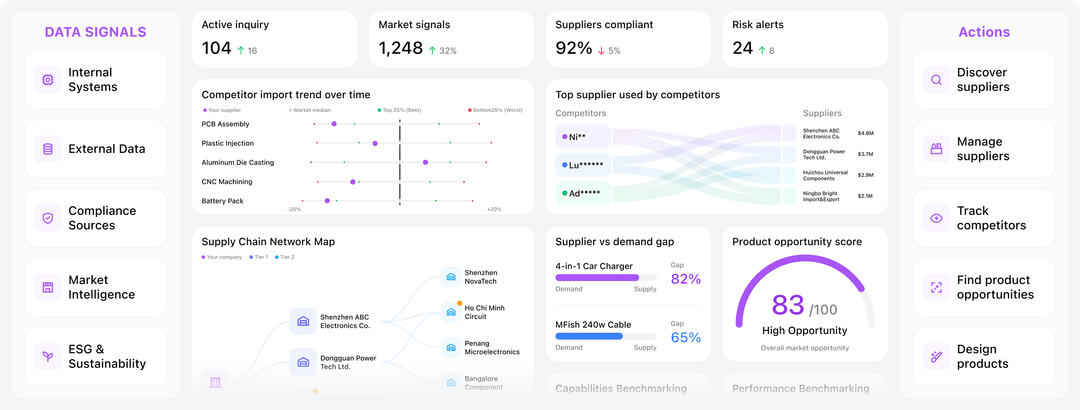
Instead of acting as a simple listing database, SourceReady combines supplier discovery, risk visibility, and market intelligence into a single workflow.
What SourceReady enables
- Continuous supplier risk monitoring: Always-on compliance agents continuously track sanctions, tariffs, and operational exposure so teams can respond before disruptions occur.
- Geographic and risk visibility: You can clearly see where suppliers manufacture and export from, helping assess geopolitical exposure and regional concentration risk.
- Verified supplier activity signals: Export history and shipment activity help validate whether suppliers actually produce relevant products at meaningful scale.
- Supply chain mapping and dependency analysis: Tier 1 and Tier 2 visibility helps identify upstream dependencies, category concentration, and hidden supply chain vulnerabilities.
- Competitor sourcing intelligence: Global customs data reveals which suppliers competitors use, how much they import, and where production is shifting.
- AI-powered supplier matching: The platform surfaces suppliers most aligned with your sourcing requirements, reducing time spent on low-fit options.
- Product and market intelligence: By analyzing trade activity, websites, and marketplaces, SourceReady helps teams identify emerging product trends and sourcing opportunities earlier.
Final takeaway: what’s the real difference?
The core difference is not technology—it’s how sourcing decisions are made.
Supplier directories help you search. AI procurement tools help you evaluate.
In a stable world, that distinction mattered less. In today’s environment—where regulations shift quickly, supply chains are fragile, and visibility matters more than ever—it matters a lot.
Procurement teams that continue relying only on directories will spend more time filtering noise and reacting to issues. Teams that adopt AI-driven procurement systems will move faster, reduce risk, and make better sourcing decisions with greater consistency.
Platforms like SourceReady are helping procurement teams make that shift by combining supplier discovery, risk monitoring, market intelligence, and AI-powered matching into a single workflow. If your sourcing process still depends heavily on manual research and static directories, now is the time to modernize your procurement stack and build a more resilient sourcing operation.
FAQ
1. How can procurement teams use competitor sourcing intelligence?
By analyzing global customs data, teams can:
- See which suppliers competitors use
- Identify shifts in production regions
- Benchmark sourcing strategies
- Spot emerging manufacturing hubs earlier
This provides additional market context when evaluating suppliers.
2. Do AI procurement tools replace procurement teams?
No. AI improves:
- Supplier discovery
- Filtering
- Data analysis
- Risk visibility
But procurement teams still handle:
- Negotiation
- Relationship management
- Strategic decision-making
- Final supplier approvals
The goal is augmentation, not replacement.

Find the sourcing tools you need.
Explore how SourceReady helps you research products, discover suppliers, verify factory information, analyze trade data, and manage your sourcing workflow in one place
Explore Features
Graduating from USC with a background in business and marketing, Judy Chen has spent over a decade working in e-commerce, specializing in sourcing and supplier management. Her experience includes developing strategies to optimize supplier relationships and streamline procurement processes for growing businesses. As SourceReady’s blog writer, Judy leverages her deep understanding of sourcing challenges to create insightful content that helps readers navigate the complexities of global supply chains.