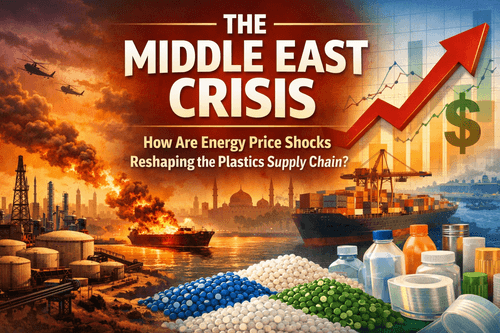
The recent U.S.–Israel strikes on Iran have intensified geopolitical risk around critical energy corridors, driving oil volatility, freight uncertainty, and rising insurance costs. Even without widespread physical disruption, pricing instability is rippling across energy, petrochemicals, logistics, and finance. Supply chain leaders must proactively model exposure, diversify sourcing, and strengthen contracts. Platforms like SourceReady can help teams identify supplier risk and build resilience into strategic procurement decisions.
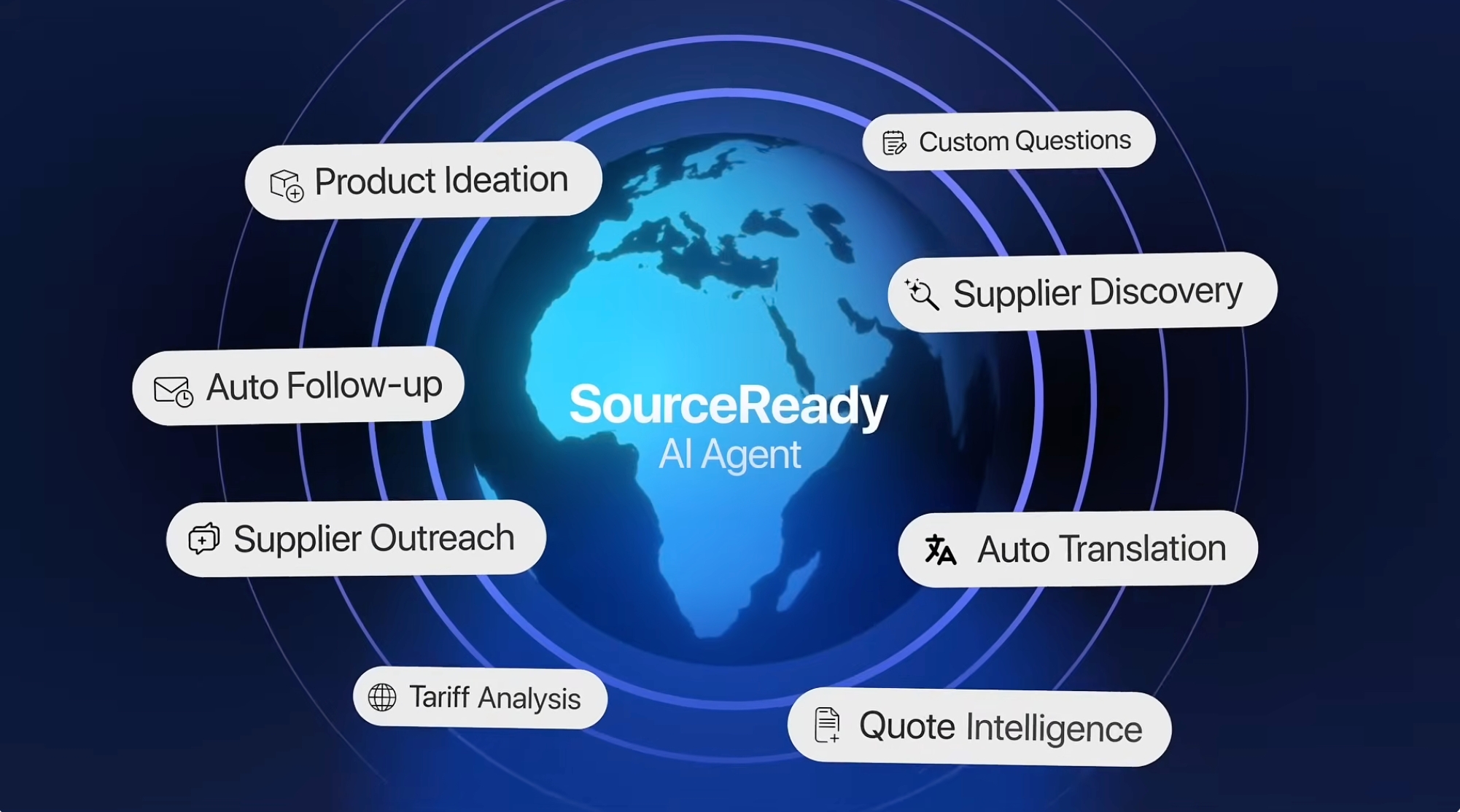
There's a better way to source ❤️
Watch the video to see how SourceReady helps brands move from product ideas to trusted supplier relationships faster
Watch the VideoWhat Just Happened?
On February 28, 2026, tensions in the Middle East escalated sharply when the United States and Israel launched coordinated strikes on Iranian military targets, significantly raising the level of confrontation in the region. In response, Iran carried out missile and drone attacks on U.S. and allied assets across the Gulf.
Markets reacted immediately:
- Oil prices spiked on fears of supply disruption
- Shipping companies reassessed routes near the Strait of Hormuz
- Insurance premiums for vessels in the region climbed
- Financial markets moved toward “risk-off” positioning
This isn’t just a geopolitical headline. It’s a supply chain event.
Why? Because Iran sits at one of the most important intersections of global energy and maritime trade. And when energy flows are threatened, the ripple effects extend far beyond the Middle East.
What Role Does Iran Play in the Global Supply Chain?
Iran matters for two core reasons:
1. It’s a Major Energy Player
Iran holds some of the world’s largest oil and natural gas reserves. While sanctions have limited its full export potential, it remains structurally important to global energy supply and pricing dynamics.
Energy is not just fuel — it is:
- A manufacturing input
- A transportation cost driver
- A raw material for petrochemicals
- A pricing benchmark for industrial production
When energy risk rises, global cost structures shift.
2. It Sits Beside the Strait of Hormuz
The Strait of Hormuz is arguably the most critical energy chokepoint in the world.
- Roughly 20% of global seaborne oil passes through it
- Gulf producers rely on it as their primary export route
- The strait is narrow and geographically sensitive
If that “valve” is threatened, even temporarily, markets price in risk immediately. The disruption does not need to be complete. Fear alone can move oil, insurance, and freight rates.
That’s why escalation in Iran translates into global economic tension within hours.
What Aspects of the Supply Chain Are Most Affected?
When geopolitical conflict intersects with energy infrastructure, the effects cascade across multiple layers of the supply chain.
Here are the primary categories impacted:
1. Energy and Fuel Costs
This is the most immediate and visible transmission channel.
When oil prices rise, the effects move quickly across transportation and production systems.
If crude increases:
- Ocean freight bunker fuel costs increase
- Air cargo fuel surcharges rise sharply
- Trucking rates climb due to diesel price increases
- Manufacturing facilities face higher electricity and fuel bills
Energy is not simply an operating expense — it is embedded in nearly every stage of production and distribution. From powering factory machinery to moving finished goods across continents, oil and gas underpin global trade flows.
Even a moderate, sustained increase in oil prices can:
- Compress supplier margins
- Trigger fuel adjustment surcharges
- Push up landed costs
- Reduce pricing flexibility
Short-term impact: sharp volatility and sudden freight rate swings.
Medium-term impact: broader inflation pressure as higher energy costs flow into finished goods pricing.
The longer elevated prices persist, the more likely they become embedded in contract renegotiations and baseline cost structures.
2. Petrochemicals and Industrial Inputs
Beyond fuel, oil and gas are upstream feedstocks for a wide range of industrial materials.
They are essential inputs for:
- Plastics and resins
- Chemical fibers such as polyester and nylon
- Fertilizers and agricultural chemicals
- Synthetic rubber
- Industrial coatings and solvents
- Packaging materials
When crude prices climb, petrochemical producers face higher input costs. These increases typically move downstream into component pricing.
That translates into higher production costs for industries such as:
- Consumer packaged goods
- Apparel and textiles
- Automotive manufacturing
- Electronics casings and components
- Industrial equipment
The impact is often indirect but widespread. A brand sourcing plastic packaging in Southeast Asia may not feel the effect immediately — but resin suppliers upstream will adjust pricing, and those increases eventually appear in procurement quotes.
This is why even companies geographically distant from the Middle East feel cost pressure. Energy-linked materials are globally traded and globally priced.
3. Freight and Shipping Routes
Shipping companies are highly sensitive to geopolitical risk.
When maritime corridors are perceived as unstable, carriers adjust rapidly to protect assets and crews.
Possible outcomes include:
- Rerouting vessels away from high-risk areas
- Imposing war-risk surcharges per container
- Increasing marine insurance premiums
- Extending transit times due to longer routes
If ships avoid certain Gulf routes, vessel capacity becomes less efficient. Longer routes mean fewer rotations per ship per month, effectively tightening available capacity.
This can trigger:
- Secondary congestion in alternative ports
- Equipment imbalances (container shortages in certain regions)
- Rate increases across unrelated trade lanes
The key issue is not just cost escalation — it is predictability.
Lead time variability disrupts:
- Production schedules
- Inventory planning
- Promotional cycles
- Seasonal product launches
Uncertainty forces companies to build buffers or accept higher stockout risk. Both carry financial consequences.
4. Insurance and Risk Premiums
Insurance costs rarely make headlines — but they are structurally important.
When conflict escalates, insurers reassess route classifications and exposure levels.
Consequences include:
- Higher per-voyage insurance premiums
- Additional war-risk surcharges
- More restrictive coverage terms
- Increased deductibles
These expenses are often embedded within freight invoices rather than itemized transparently. Over time, they accumulate significantly for high-volume shippers.
Unlike oil price spikes, which may reverse quickly, insurance risk premiums can remain elevated as long as regional instability persists.
In effect, geopolitical risk becomes a permanent operating cost rather than a temporary fluctuation.
5. Financial Markets and Hedging Behavior
Geopolitical escalation also influences capital markets.
During periods of heightened tension:
- Gold and other safe-haven assets typically rise
- Investors shift toward lower-risk securities
- Currency markets experience volatility
- Commodity futures markets see speculative activity
For supply chains, this translates into:
- Increased borrowing costs
- Higher working capital requirements
- More expensive trade finance
- Greater complexity in commodity hedging
Companies exposed to energy or raw material volatility may need to hedge more aggressively, raising financial management costs.
Additionally, currency swings can amplify or offset commodity price increases, adding another layer of uncertainty.
Volatility raises the cost of capital — an often overlooked but meaningful supply chain pressure.

How Does This Translate Into Real-World Supply Chain Pressure?
To simplify the transmission mechanism:
Energy shock → Transport cost increase → Input price rise → Margin compression → Consumer price pressure
Here’s how that plays out operationally:
- Procurement teams face higher raw material quotes
- Logistics teams deal with uncertain lead times
- Finance teams manage cost volatility
- Sales teams confront margin erosion
Companies operating with lean inventory and single-region sourcing are especially exposed.
The risk is not necessarily physical shortage.
The risk is pricing instability and planning uncertainty.
What Should Supply Chain Leaders Do Now?
This is not a moment for panic.
It’s a moment for disciplined risk management.
Geopolitical shocks like the recent Iran escalation don’t just disrupt supply chains — they expose structural weaknesses. The companies that navigate volatility best are not the fastest reactors. They are the most prepared.
Here is a practical framework leaders should be implementing now.
1. Model Energy Sensitivity Before Costs Escalate Further
Energy shocks rarely affect every product equally. Some SKUs absorb volatility. Others amplify it.
Supply chain leaders should stress-test cost structures under multiple crude price scenarios:
- +10% oil
- +20% oil
- +30% oil
Key questions to ask:
- Which SKUs are most energy-intensive?
- What percentage of landed cost is freight-driven?
- Which products rely heavily on petrochemical inputs (plastics, resins, synthetic fibers)?
- How would margin shift under sustained higher bunker fuel prices?
For example, plastic-heavy consumer goods, chemical-based materials, and bulky freight-intensive items typically carry higher embedded energy exposure.
The objective isn’t to predict oil perfectly. It’s to understand your sensitivity curve before volatility compounds.
Know your exposure before you’re forced to react.
2. Map Supplier Exposure Beyond Tier 1
Many companies only assess direct suppliers. That is no longer sufficient.
Leaders should evaluate:
- Which suppliers depend heavily on oil-based feedstocks
- Which operate in energy-intensive production environments
- Which rely on freight routes near high-risk chokepoints
- Where single points of failure exist
For instance:
- A packaging supplier dependent on resin may be exposed to crude price swings.
- A textile factory producing polyester may face rising raw material costs.
- A supplier reliant on Gulf shipping routes may encounter delays or surcharges.
Visibility reduces reaction time — and reaction time protects margin.
This is where structured supplier intelligence becomes critical. Platforms like SourceReady can help procurement teams centralize supplier data, identify geographic concentration risks, and quickly evaluate alternative sourcing options when volatility rises.
The goal is not just awareness. It’s optionality.
3. Revisit Inventory Strategy in a Volatile Environment
Pure just-in-time systems work in stable markets.
They struggle in geopolitical volatility.
When freight reliability declines and input prices fluctuate, supply chains need flexibility. That does not mean abandoning efficiency — it means recalibrating it.
Consider:
- Strategic buffers for long-lead or energy-sensitive components
- Adjustable safety stock thresholds tied to risk indicators
- Dual-sourcing for vulnerable categories
- Segmenting inventory strategy by product criticality
- Resilience carries a cost.
But so does disruption.
The key is precision. Not every SKU requires higher inventory. Only those most exposed to energy or route volatility should receive structural buffers.
Smart resilience is targeted resilience.
4. Strengthen Contract Flexibility Before It’s Needed
Contracts written in stable environments often fail under stress.
Now is the time to review:
- Fuel surcharge clauses in freight agreements
- Force majeure language
- Commodity cost adjustment mechanisms
- Price renegotiation timelines
Are freight surcharges transparent?
Do supplier agreements allow structured cost pass-throughs?
Are you locked into fixed pricing that ignores input volatility?
Proactive contract review preserves leverage.
Waiting until costs spike reduces negotiating power.
Volatility rewards preparation.
5. Integrate Geopolitical Monitoring Into Operational Planning
Geopolitical risk is no longer an occasional disruption. It is recurring.
Supply chain planning should incorporate ongoing monitoring of:
- Energy market trends
- Maritime route security
- Sanctions and export controls
- Currency volatility
- Regional military escalation
This cannot remain a finance-only function. It must inform sourcing, inventory, and logistics strategy.
Companies that embed geopolitical awareness into procurement decisions gain structural advantage. They move early — not late.
Planning assumptions must now account for volatility as a baseline, not an exception.

Conclusion: The Bigger Lesson
The recent Iran escalation reminds us of a core reality:
Global supply chains are deeply interconnected through energy, logistics, and financial systems.
You may not source from Iran.
You may not ship through the Strait of Hormuz.
But energy markets connect everyone.
The biggest threat isn’t immediate collapse.
It’s volatility.
Volatility:
- Distorts planning
- Compresses margins
- Increases insurance and financing costs
- Forces reactive decisions
The companies that manage this best are not necessarily the lowest-cost operators — they are the most adaptable.
In a world where geopolitical shocks are increasingly common, resilience is no longer optional. It is part of strategic supply chain design.
FAQ
1. Could this conflict trigger global inflation?
If energy and freight costs remain elevated for months, inflationary pressure is likely. Energy is embedded across supply chains, so sustained price increases typically feed into broader consumer pricing.
2. How does oil price volatility affect small businesses?
Small businesses are often more vulnerable because they have:
Lower purchasing power
Less hedging capacity
Thinner margins
Rising fuel and freight costs can quickly erode profitability, especially for import-dependent businesses.

Find the sourcing tools you need.
Explore how SourceReady helps you research products, discover suppliers, verify factory information, analyze trade data, and manage your sourcing workflow in one place
Explore Features
Graduating from USC with a background in business and marketing, Judy Chen has spent over a decade working in e-commerce, specializing in sourcing and supplier management. Her experience includes developing strategies to optimize supplier relationships and streamline procurement processes for growing businesses. As SourceReady’s blog writer, Judy leverages her deep understanding of sourcing challenges to create insightful content that helps readers navigate the complexities of global supply chains.