AI is reshaping procurement faster than most procurement teams expected. What started as basic automation has evolved into intelligent systems that can analyze spend, monitor supplier risk, streamline approvals, and improve sourcing decisions at scale. But not all AI procurement platforms deliver the same value. Some focus on enterprise spend visibility, while others specialize in supplier intelligence or workflow orchestration. Choosing the right platform requires more than comparing feature lists. You need to understand how the software performs under real procurement pressure — across sourcing, compliance, supplier management, and operational efficiency. This guide breaks down the leading procurement suites by their actual AI strengths.
There's a better way to source ❤️
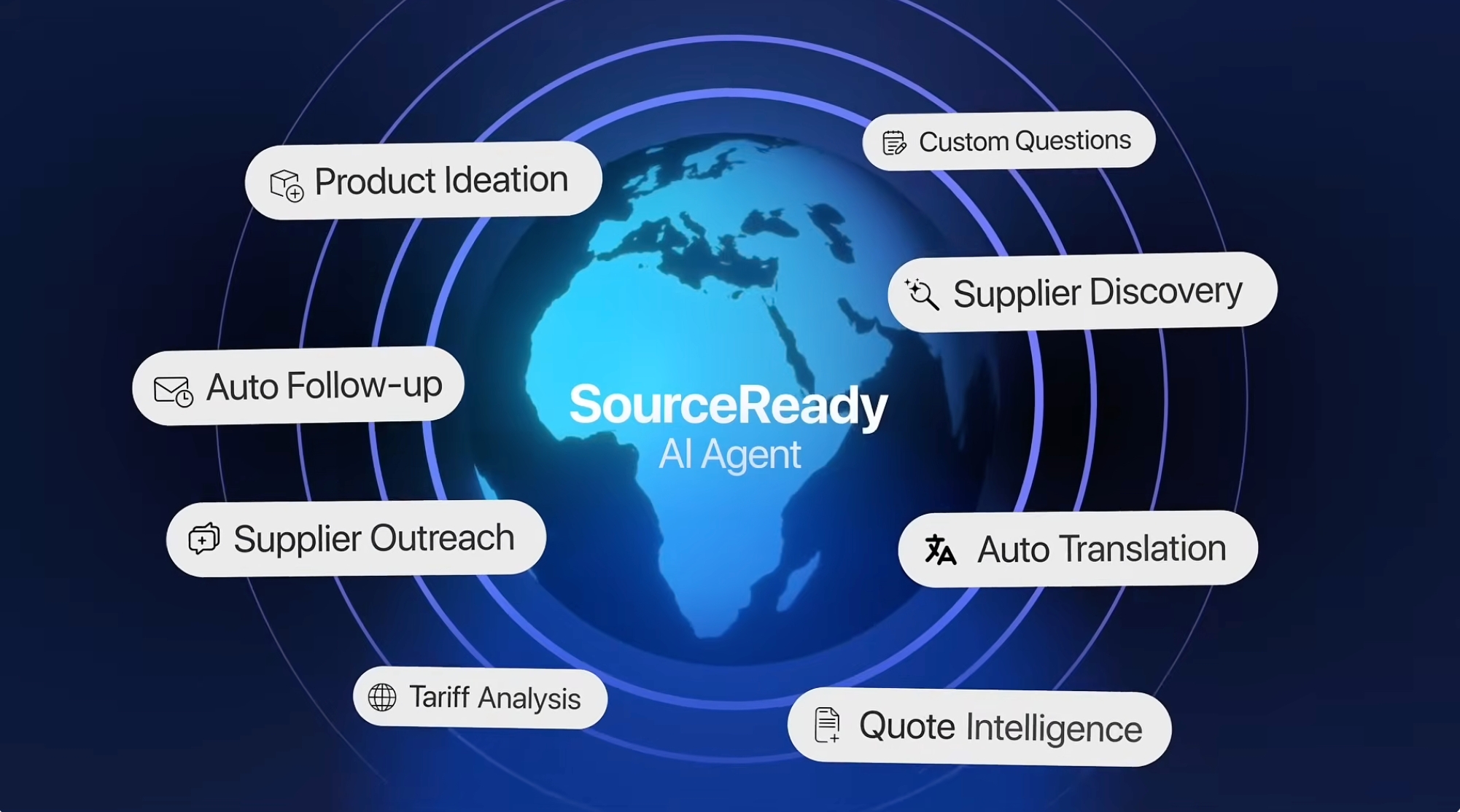
Watch the video to see how SourceReady helps brands move from product ideas to trusted supplier relationships faster
Watch the VideoWhat Should You Actually Evaluate in AI Procurement Software?
Most procurement platforms now claim they are “AI-powered.” That alone means very little. You should evaluate whether the AI improves procurement operations in measurable, auditable ways.
1. Does the Platform Improve Spend Visibility?
Strong procurement AI should help you:
- Automatically classify spend data across suppliers and categories without relying on manual cleanup.
- Detect maverick spend and duplicate suppliers before reporting becomes unreliable.
- Generate benchmarking insights that strengthen sourcing negotiations.
- Poor spend visibility creates downstream problems in sourcing, finance, and compliance reporting.
2. Can the AI Detect Supplier Risk Early?
Modern procurement teams face constant supplier risk from tariffs, ESG regulations, sanctions, and logistics disruptions.
You should look for systems that:
- Continuously monitor supplier risk signals from external data sources.
- Flag financial, compliance, or operational risks before disruptions escalate.
- Maintain explainable audit trails for every supplier alert and review action.
If the system cannot explain why a supplier was flagged, compliance teams will not trust it.
3. Does the Platform Actually Reduce Manual Work?
The best procurement AI removes repetitive operational work without weakening governance controls.
Strong workflow automation should:
- Route approvals automatically based on policy and spend thresholds.
- Match invoices and purchase orders with minimal manual review.
- Escalate exceptions intelligently instead of flooding teams with alerts.
The goal is controlled automation, not uncontrolled automation.
4. How Strong Is the Contract Intelligence?
Procurement risk often hides inside contracts.
Good contract AI should help you:
- Extract clauses and obligations automatically.
- Monitor renewals before auto-renewal deadlines pass.
- Identify risky or non-standard legal language quickly.
This becomes critical when procurement teams manage hundreds of supplier agreements across multiple regions.
Which Procurement Suites Lead on AI Features?
Not all AI procurement platforms solve the same problems. Some focus heavily on spend visibility and workflow automation, while others prioritize supplier intelligence, sourcing orchestration, or procurement compliance.
The strongest platforms are the ones that improve procurement decision-making without creating additional operational complexity.
1. Coupa
Coupa remains one of the most established AI procurement platforms for enterprise spend management. Its biggest strength is the scale of procurement data flowing through its network, which allows the platform to improve benchmarking and spend analysis over time.
The platform performs especially well for large enterprises that need tighter visibility and control across fragmented procurement operations.
Key strengths include:
- Coupa automatically classifies spend data across categories and suppliers with strong accuracy at enterprise scale.
- The platform uses community benchmarking data to help procurement teams compare pricing and sourcing performance against broader market activity.
- Its AI capabilities support invoice matching, fraud detection, and procurement policy enforcement with minimal manual intervention.
- The system integrates well into finance-heavy procurement environments where auditability and spend governance matter significantly.
Coupa works best for organizations prioritizing financial visibility, spend control, and procurement standardization.
2. SAP Ariba
SAP Ariba remains a dominant player because of the scale of its supplier network and its deep integration into enterprise ERP ecosystems.
For multinational procurement organizations, supplier collaboration and sourcing governance are often more important than flashy AI interfaces.
Ariba’s AI capabilities focus heavily on:
- Supplier onboarding and supplier risk management.
- Guided buying workflows that reduce off-contract spending.
- Intelligent sourcing recommendations based on procurement activity.
- Contract analytics and procurement compliance monitoring.
- Cross-border supplier collaboration across global supply chains.
The platform is particularly effective for organizations already operating within the SAP ecosystem because integration becomes significantly smoother.
However, Ariba implementations can become complex. Procurement teams should expect larger deployment timelines, deeper change management requirements, and more structured procurement processes overall.
3. Zip
Zip became popular because it focused on fixing one of procurement’s oldest problems: employees avoiding procurement systems entirely.
Traditional procurement tools often create friction for internal teams. Zip approaches procurement from an intake and orchestration perspective instead.
Employees submit requests in plain language, and the platform automatically:
- Routes requests through the correct approval chains.
- Applies procurement policies and budget rules.
- Flags compliance concerns early in the workflow.
- Connects procurement intake directly into sourcing processes.
This creates a much cleaner procurement experience for non-procurement employees.
Zip works especially well for:
- High-growth technology companies.
- Lean procurement teams managing high request volumes.
- Organizations trying to reduce maverick spend without adding operational friction.
- Procurement teams modernizing outdated approval workflows.
The platform is less sourcing-heavy than traditional enterprise procurement suites, but it excels at workflow automation and procurement orchestration.
4. GEP SMART
GEP SMART stands out because it unifies multiple procurement functions inside a single platform instead of forcing procurement teams to manage disconnected systems.
That matters because procurement AI performs poorly when sourcing, contracts, suppliers, and spend data all live in separate tools.
GEP SMART combines:
- Sourcing management.
- Supplier management.
- Contract lifecycle management.
- Spend analytics.
- Procurement automation.
Its AI capabilities help procurement teams:
- Generate predictive sourcing insights using historical procurement data.
- Extract and analyze contract clauses automatically.
- Improve spend visibility across procurement categories.
- Automate repetitive procurement workflows with stronger operational consistency.
The platform performs especially well for mid-sized and enterprise procurement organizations looking to reduce procurement system fragmentation.
Instead of adding another procurement tool into the stack, GEP SMART positions itself as a centralized procurement operating environment.
5. How Is SourceReady Different From Traditional Procurement Suites?
SourceReady focuses less on traditional procurement workflow management and more on supplier intelligence and sourcing decision support.
Most procurement suites help companies manage suppliers they already know. SourceReady focuses on helping procurement and sourcing teams discover, evaluate, and verify suppliers more effectively from the start.
Its AI capabilities are designed to help teams:
- Identify suppliers and manufacturers globally based on sourcing requirements.
- Verify supplier credibility using multiple structured data sources.
- Compare suppliers across certifications, production capabilities, product categories, and operational fit.
- Reduce manual supplier research and supplier due diligence work.
- Analyze supplier compatibility using AI-driven matching and sourcing insights.
This approach becomes especially valuable for sourcing teams operating across fragmented global supply chains where supplier visibility is limited.
SourceReady is particularly useful for:
- Consumer brands.
- E-commerce businesses.
- Private label sourcing teams.
- Procurement teams diversifying sourcing regions outside traditional manufacturing hubs.
- Companies trying to improve supplier discovery speed and sourcing transparency.
Rather than functioning purely as a procurement workflow platform, SourceReady strengthens the supplier sourcing and supplier intelligence layer within modern procurement operations.
How Should You Choose AI Procurement Software?
Choosing procurement software based on feature lists alone is a fast way to overspend on tools your team barely uses.
The best AI procurement platform is not necessarily the one with the most features. It is the one that fits your procurement structure, sourcing complexity, approval workflows, and supplier strategy.
Before evaluating vendors, you should first understand where your procurement operation actually struggles today.
1. Are You Solving a Spend Problem or a Sourcing Problem?
Different procurement platforms solve different operational bottlenecks.
If your biggest issue is:
- Poor spend visibility and fragmented procurement data, platforms like Coupa or GEP SMART may fit better.
- Complex enterprise procurement governance and supplier collaboration, SAP Ariba is often stronger.
- Slow approvals and procurement intake bottlenecks, Zip may be more practical.
- Supplier discovery and sourcing intelligence gaps, SourceReady becomes highly relevant.
Many procurement teams buy broad enterprise suites when their real operational problem is supplier visibility or sourcing efficiency.
That usually creates expensive complexity without fixing the underlying issue.
2. Does the Platform Fit Your Existing ERP and Procurement Stack?
AI procurement software does not operate in isolation. Integration quality matters just as much as AI functionality.
You should evaluate:
- Whether the platform integrates cleanly with your ERP system.
- How procurement, finance, AP, and sourcing data flow between systems.
- Whether approval workflows remain traceable after integration.
- How much manual reconciliation your team still needs after implementation.
Even strong AI tools become operational liabilities when procurement data lives across disconnected systems.
This is where many procurement transformations quietly fail.
3. Does the AI Improve Decision-Making or Just Automate Tasks?
Some procurement platforms focus heavily on automation but provide very little procurement intelligence.
Strong procurement AI should help teams make better decisions, not simply process transactions faster.
You should look for systems that:
- Surface sourcing insights using real procurement and supplier data.
- Explain supplier recommendations clearly.
- Identify procurement risks before they become operational problems.
- Provide transparent reasoning behind AI-generated outputs.
Explainability matters, especially in regulated industries and enterprise procurement environments.
If the AI cannot justify its recommendations, procurement teams will eventually stop trusting it.
4. Can the Platform Scale With Your Supplier Strategy?
Procurement needs change quickly as companies expand into new product categories, regions, and sourcing markets.
You should evaluate whether the platform can support:
- Multi-region sourcing operations.
- Supplier diversification strategies.
- ESG and compliance reporting requirements.
- Growing procurement volumes.
More complex approval and sourcing workflows over time.
Some procurement tools work well for centralized enterprise procurement teams but struggle in fast-moving sourcing environments.
Others work well for tactical procurement automation but lack deep supplier intelligence capabilities.
The right platform should support where your procurement organization is going — not just where it is today.
Conclusion
AI procurement software is no longer just about automating purchase orders or approvals. The best platforms help you make faster, smarter, and more defensible sourcing decisions while improving supplier visibility, compliance, and operational efficiency. Whether you need stronger spend analytics, streamlined procurement workflows, or better supplier intelligence, the right platform should match your procurement strategy — not force your team into unnecessary complexity. Before committing to any vendor, test the platform using real procurement scenarios, messy supplier data, and existing workflows. If you want to modernize sourcing and procurement without losing control, now is the time to evaluate what AI can realistically improve for your team.
FAQ
1, Can AI procurement software replace procurement teams?
No. AI procurement software is designed to support procurement teams, not replace them.
AI can automate repetitive tasks such as spend classification, invoice matching, and supplier monitoring, but procurement professionals still make the final decisions around sourcing strategy, supplier negotiations, compliance, and risk management.
The best procurement AI improves efficiency while keeping human oversight in place.
2. Is AI procurement software useful for small and mid-sized businesses?
Yes. Smaller procurement teams often benefit significantly from AI because automation reduces manual workload without requiring large procurement departments.
Platforms focused on workflow simplification, sourcing intelligence, and supplier visibility can help growing companies scale procurement operations more efficiently.
The key is choosing software that matches your operational complexity instead of overbuying enterprise functionality your team will not use.

Find the sourcing tools you need.
Explore how SourceReady helps you research products, discover suppliers, verify factory information, analyze trade data, and manage your sourcing workflow in one place
Explore Features
Graduating from USC with a background in business and marketing, Judy Chen has spent over a decade working in e-commerce, specializing in sourcing and supplier management. Her experience includes developing strategies to optimize supplier relationships and streamline procurement processes for growing businesses. As SourceReady’s blog writer, Judy leverages her deep understanding of sourcing challenges to create insightful content that helps readers navigate the complexities of global supply chains.