upplier data enrichment sounds simple: take a supplier record and add more data. In practice, vendor masters contain duplicate entities, stale addresses, missing certifications, trading companies listed as manufacturers, expired credentials, and little visibility into ownership or sub-tier risk.
The right tool should not merely give you “more data.” It should help you create a supplier record you can defend during sourcing review, compliance screening, or an audit.
There's a better way to source ❤️
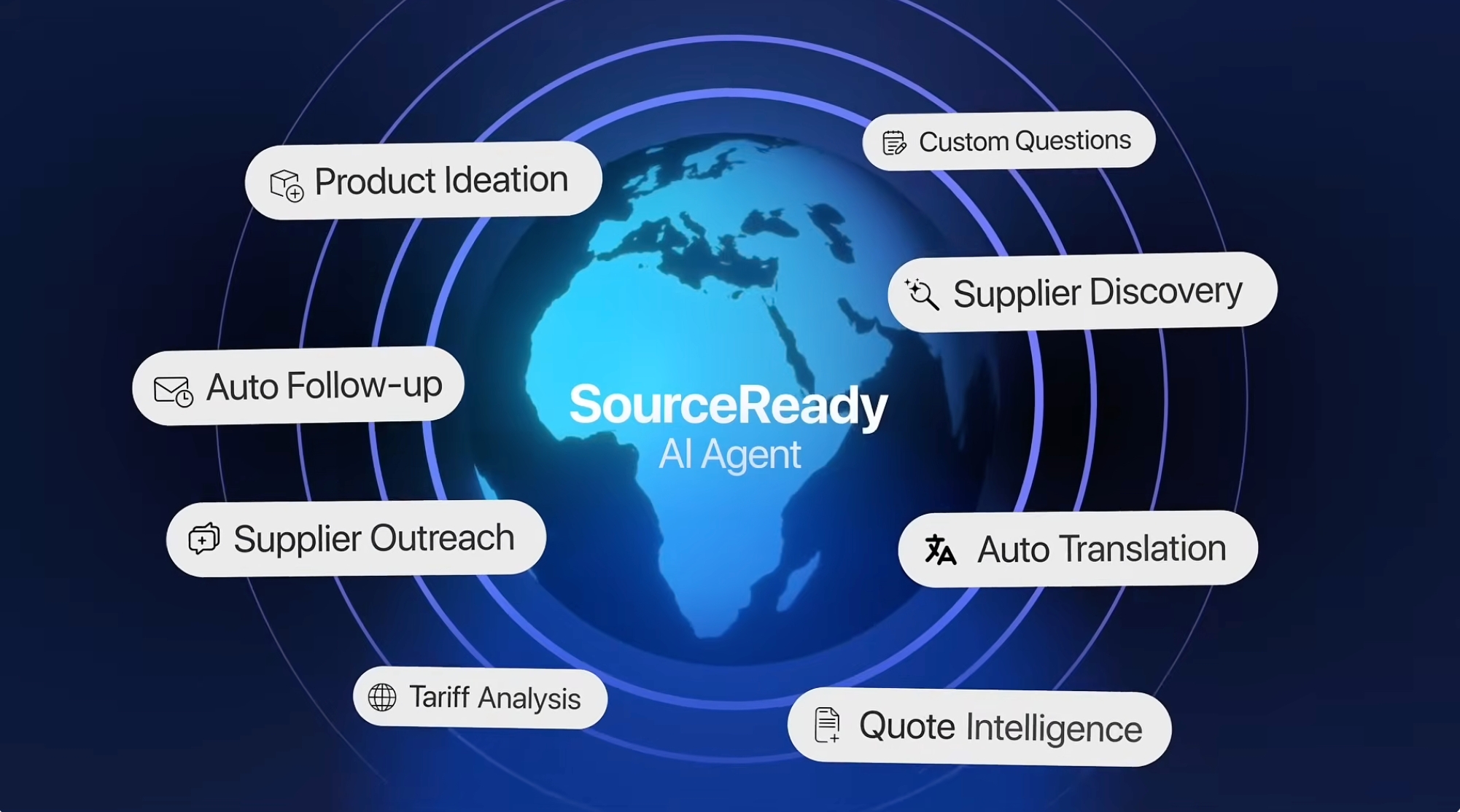
Watch the video to see how SourceReady helps brands move from product ideas to trusted supplier relationships faster
Watch the VideoWhat should a supplier data enrichment tool actually do?
At minimum, enrichment should turn a thin record—perhaps a supplier name, website, and country—into a structured profile you can verify and use.
Useful enrichment normally covers five layers:
- Identity: legal name, aliases, registration details, address, website, corporate hierarchy, and unique identifiers.
- Sourcing: products, manufacturing capabilities, certifications, export markets, shipment history, customers, and facility information.
- Real trading activity: Shipment records, shipment frequency, trading partners, customers, destination markets, product descriptions, and import-export history.
- Risk and compliance: sanctions, forced-labor exposure, ownership, financial risk, geopolitical risk, ESG signals, and adverse events.
- Master-data quality: entity matching, normalization, duplicate detection, missing-field completion, confidence scoring, and refresh dates.
The audit question is simple: Can you explain where a field came from, when it was updated, and why you trust the match?
That matters because enrichment can create false confidence. If AI infers a capability from marketing copy, that is not the same as a certification record from an issuing body.
How should you compare tools without getting distracted by database size?
Do not buy on record count alone. A database with millions of companies is not automatically better for sourcing than a smaller dataset with stronger factory, shipment, and certification evidence.
Run a controlled test using 100 to 500 suppliers from your real vendor master. Score every tool on the same criteria:
- Match rate: How many suppliers resolve to the correct legal entity?
- False-match rate: How often does the tool enrich the wrong company?
- Field coverage: Which required fields are actually populated?
- Source traceability: Can reviewers see the source or source category?
- Freshness: Is there a source date, refresh date, or monitoring cadence?
- Confidence handling: Can low-confidence matches go to human review?
- Integration: Can data flow into your ERP, SRM, warehouse, or sourcing system?
- Evidence export: Can you preserve the enriched record and supporting evidence?
Give false matches a heavier penalty than missing fields. A blank certification is inconvenient. A certification attached to the wrong legal entity is a compliance problem.
Which supplier data enrichment tools are strongest in 2026?
There is no universal winner. Some tools are built for finding manufacturers. Others are better at cleaning ERP records, resolving corporate identities, enriching compliance data, or monitoring supplier risk.
1. SourceReady
SourceReady combines AI with real-world supplier data to help sourcing teams discover, enrich, and evaluate suppliers. Instead of relying on AI-generated answers alone, it grounds supplier intelligence in external data and evidence that procurement teams can verify.
- What it enriches: Products, manufacturing capabilities, certifications, company details, customers, export markets, shipment history, and risk signals.
- How the data is verified: SourceReady cross-verifies supplier data across 40+ trusted sources, including customs and shipment data, trade shows, supplier directories, certification databases, government and corporate filings, sanctions databases, and other public and commercial sources.
- Where it stands out: Bringing AI, verified supplier data, and sourcing workflows together in one platform rather than treating enrichment as a standalone database lookup.
- Why sourcing teams use it: You can compare what a supplier claims with external evidence showing what it manufactures, where it exports, and which customers or markets it has served.
- Best fit: Teams finding, evaluating, and qualifying manufacturers across multiple countries.
This combination matters because AI is most useful when it has reliable data to work with. A supplier's website may describe broad capabilities, while customs records, certifications, company filings, and other independent sources provide evidence that AI can use to build a more complete and defensible supplier profile.
2. Veridion
Veridion is a strong fit when supplier enrichment needs to operate as part of a larger data infrastructure.
- What it enriches: Company identity, location, industries, employee information, websites, commercial activities, and other firmographic attributes.
- Where it stands out: Entity matching and large-scale structured enrichment.
- Why procurement teams use it: It can help clean and enrich large supplier datasets through automated workflows rather than manual research.
- Best fit: Procurement, MDM, and data teams that want enrichment through APIs or data pipelines.
Its entity-matching capabilities are especially useful when supplier names, addresses, or company details vary across different internal systems.
3. TealBook
TealBook focuses heavily on improving the quality of an existing supplier master.
- What it enriches: Company details, revenue, employee counts, industry classifications, contact information, and supplier diversity data.
- Where it stands out: Matching existing supplier records and filling missing fields.
- Why procurement teams use it: It helps turn incomplete or inconsistent vendor-master records into more usable profiles.
- Best fit: Organizations that already have a large supplier base but struggle with incomplete or outdated data.
Its trust-scoring approach can also help teams distinguish higher-confidence data from records that need additional review.
4. Dun & Bradstreet
Dun & Bradstreet (D&B) is particularly strong in enterprise identity resolution and corporate hierarchy data.
- What it enriches: Legal entities, firmographics, corporate relationships, hierarchy, financial information, and business identifiers.
- Where it stands out: Connecting different subsidiaries, locations, and legal entities to the correct corporate structure.
- Why enterprises use it: Large organizations often have the same supplier represented differently across procurement, finance, compliance, and ERP systems.
- Best fit: Enterprise master-data programs where legal-entity consistency matters.
D&B can be more comprehensive than a sourcing team needs if the primary objective is simply finding and qualifying factories.
5. Craft
Craft sits closer to supplier intelligence and risk monitoring than traditional master-data enrichment.
- What it enriches: Financial, cybersecurity, geopolitical, regulatory, compliance, ESG, and operational risk information.
- Where it stands out: Continuous monitoring rather than one-time enrichment.
- Why procurement teams use it: Supplier conditions change after onboarding, and important risks may emerge months or years into a relationship.
- Best fit: Strategic supplier programs where disruption or deterioration needs to be identified early.
Craft therefore works well as an ongoing intelligence layer around suppliers that are already important to your organization.
6. Sayari
Sayari is strongest when supplier enrichment becomes a deeper compliance or ownership investigation.
- What it enriches: Corporate ownership, beneficial ownership, trade relationships, sanctions information, and cross-border networks.
- Where it stands out: Showing connections between companies, owners, trade activity, and potentially restricted entities.
- Why compliance teams use it: Risk can sit several layers beyond the supplier named on your purchase order.
- Best fit: Sanctions, UFLPA, export-control, ownership, and complex supply-chain investigations.
It is less useful for questions such as whether a factory has the right machinery or product capabilities, but much stronger for understanding who sits behind the supplier and whom it does business with.
Conclusion: What matters most when choosing a supplier data enrichment tool?
The best supplier data enrichment tool is the one that closes the gaps in your existing data and gives your team evidence it can actually use. Focus on entity accuracy, sourcing relevance, real trading activity, data freshness, source transparency, and integration rather than database size alone.
More data is only valuable if it improves supplier decisions. Your goal should be a supplier profile that helps you qualify faster, identify risks earlier, and understand why the supplier belongs on your shortlist.
If you want to enrich and evaluate suppliers in one workflow, SourceReady help you turn fragmented supplier data into sourcing-ready intelligence backed by cross-verified sources.
FAQ
1. How can customs data help evaluate suppliers?
Customs and shipment data can show whether a supplier is actively exporting, what products it ships, how frequently it ships, which markets it serves, and sometimes which buyers it supplies. This provides evidence of actual trading activity, rather than relying only on self-reported capabilities.
2. Can customs data show every shipment a supplier makes?
No. Customs-data coverage varies significantly by country, trade lane, and reporting regime. Some markets provide detailed bill-of-lading or customs records, while others provide limited or no public shipment-level data. Trade data should therefore be treated as one source within a broader supplier-verification process.

Find the sourcing tools you need.
Explore how SourceReady helps you research products, discover suppliers, verify factory information, analyze trade data, and manage your sourcing workflow in one place
Explore Features
Graduating from USC with a background in business and marketing, Judy Chen has spent over a decade working in e-commerce, specializing in sourcing and supplier management. Her experience includes developing strategies to optimize supplier relationships and streamline procurement processes for growing businesses. As SourceReady’s blog writer, Judy leverages her deep understanding of sourcing challenges to create insightful content that helps readers navigate the complexities of global supply chains.