Most sourcing teams start with large marketplaces, but quickly run into issues around data reliability, supplier fit, and scalability. As sourcing becomes more strategic, you need better tools and methods to reduce risk and improve decision-making. This guide breaks down practical alternatives—from direct factory sourcing to data-driven platforms like SourceReady, which aggregates verified supplier data across multiple signals. Instead of relying on listings alone, you’ll learn how to build a more structured, audit-ready sourcing approach that prioritizes accuracy, efficiency, and long-term supplier performance.
There’s a better way to source ❤️
Watch the video to see how SourceReady helps brands move from product ideas to trusted supplier relationships faster
What’s actually broken with marketplace-style sourcing sites?
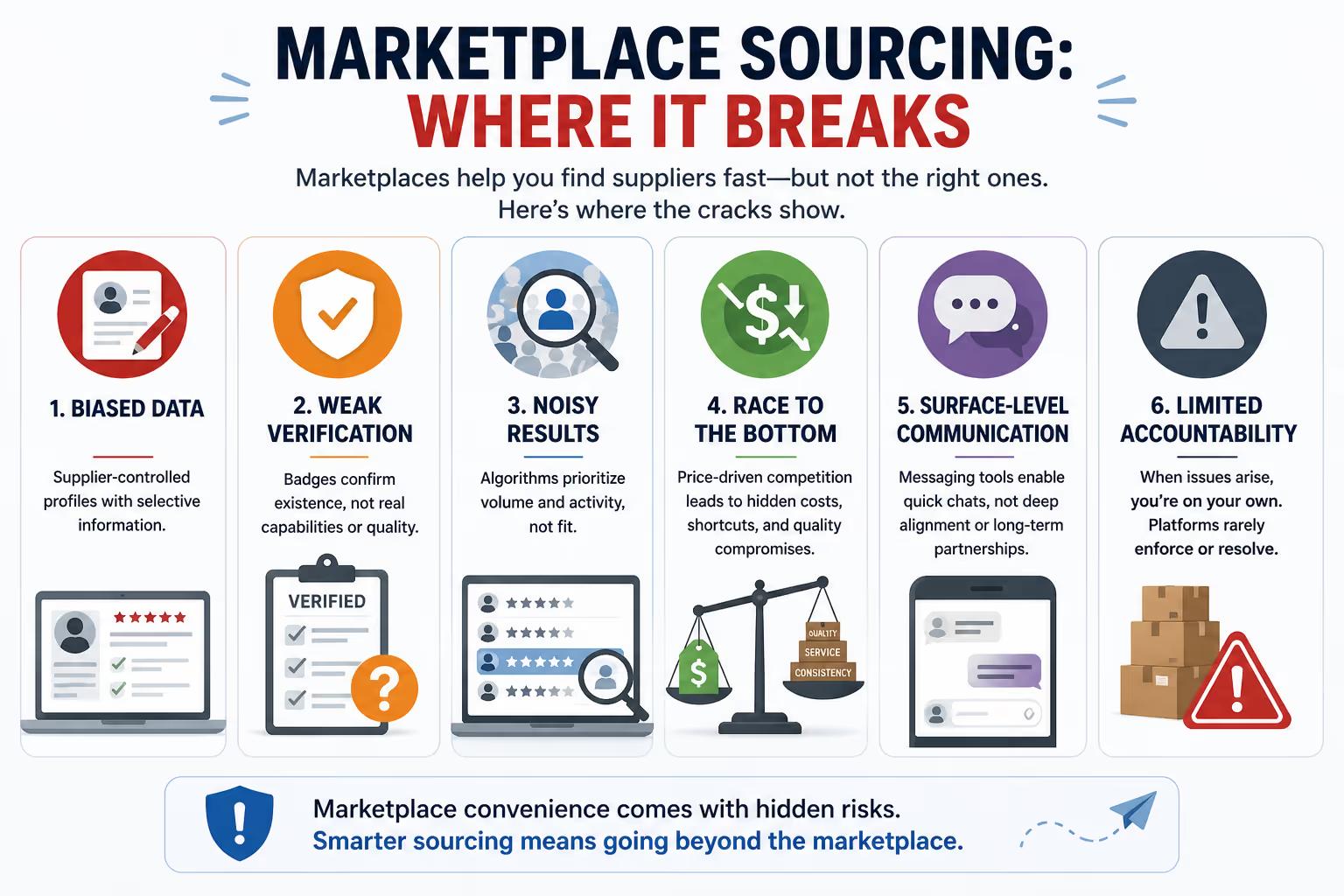
Marketplace platforms are built for scale, not precision. They help you find suppliers quickly, but they don’t help you confidently choose the right one. That gap is where most sourcing risk shows up.
Here’s where things typically fall apart:
Self-reported data: Most supplier profiles are created and managed by the suppliers themselves, which means the information you see is inherently biased. Capabilities, certifications, and client references are often selectively presented, making it difficult to distinguish between actual expertise and good marketing.
Shallow verification: Verification badges are commonly misunderstood. In most cases, they confirm that a company exists and has submitted documents, but they do not validate production capabilities, quality systems, or operational consistency.
Noisy search results: Marketplace algorithms prioritize volume and activity, not fit. As a result, you end up filtering through large numbers of suppliers that are irrelevant to your specific requirements, which slows down decision-making.
Price-driven competition: Suppliers are incentivized to win orders by quoting aggressively. While this may look attractive upfront, it often leads to compromises later in the process, such as material substitutions, hidden costs, or inconsistent quality.
Transactional communication: Messaging systems are designed for quick exchanges rather than structured collaboration. This makes it harder to align on specifications, expectations, and long-term partnership terms.
Limited accountability: When issues arise—whether related to quality, delays, or compliance—you are largely responsible for resolving them. The platform rarely plays an active role in enforcement or dispute resolution.
What are the most effective alternatives to marketplace sourcing?
To build a reliable sourcing system, you need channels that offer better data, stronger signals, and more control. The following alternatives each solve a different part of that problem.
1. Direct factory sourcing — when you want control and margin
Full pricing visibility: Working directly with manufacturers allows you to understand how costs are structured, which improves your ability to negotiate and manage margins over time.
Stronger relationships: Without intermediaries, communication is more direct and transparent. This often leads to better alignment, improved responsiveness, and preferential treatment as the relationship matures.
Higher upfront effort: You are responsible for identifying and vetting suppliers yourself, which requires a structured process and internal expertise.
2. Sourcing agents — when speed and local expertise matter
Faster supplier access: Agents can quickly shortlist suppliers because they already understand the local market and know which factories specialize in specific categories.
On-the-ground support: They can conduct factory visits, manage inspections, and handle communication in the local language, reducing friction throughout the process.
Incentive misalignment risk: Many agents operate on commission, which can influence supplier selection and pricing unless expectations and fee structures are clearly defined.
3. Trade shows — when you need high-confidence signals
Physical product validation: You can inspect materials, workmanship, and finishing quality in person, which immediately filters out a large number of unsuitable suppliers.
Direct interaction: Meeting suppliers face-to-face allows you to evaluate professionalism, communication style, and decision-making speed.
Higher cost, lower risk: While attending trade shows requires time and budget, it significantly reduces sourcing uncertainty, especially for new or complex products.
4. Data-driven platforms (e.g., SourceReady) — when you need precision at scale
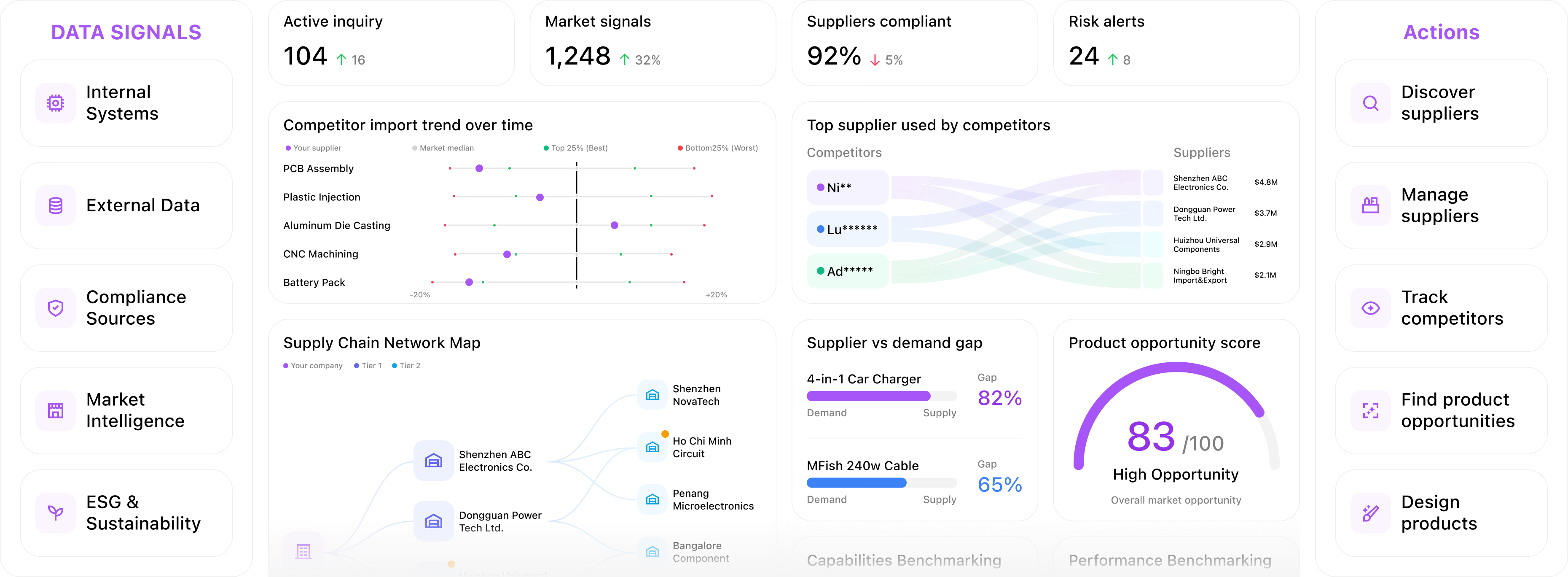
Structured supplier data: Platforms like SourceReady aggregate and organize supplier information from multiple sources, including customs data, certifications, and trade show records, allowing you to filter based on meaningful criteria.
Cross-verified insights: Instead of relying on supplier claims, you can validate activity such as export history or product specialization through independent data sources.
Efficient shortlisting: By reducing noise and highlighting high-fit suppliers, these platforms significantly shorten the time required to move from discovery to evaluation.
SourceReady
5. Referrals and networks — when trust is critical
Pre-vetted suppliers: Recommendations from trusted partners provide an additional layer of validation based on real-world experience.
Faster trust-building: Since the supplier comes with context, alignment on expectations and communication tends to happen more quickly.
Limited scalability: This approach depends on your network, but when available, it is one of the lowest-risk sourcing methods.
How do you properly vet suppliers without relying on marketplaces?
Once you move beyond marketplaces, you need a consistent evaluation framework. This is where sourcing becomes a disciplined process rather than a search exercise.
Legitimacy verification: Start by confirming business registration, ownership structure, and operational history. Cross-referencing export data can provide additional confidence that the supplier is actively producing relevant goods.
Production capability assessment: Evaluate whether the supplier has the infrastructure, equipment, and capacity to meet your requirements. It is important to distinguish between general capability and true specialization.
Certification validation: Treat certifications as starting points, not proof. Always verify issuing bodies, expiration dates, and relevance to your product category.
Sample testing: Use samples to assess both quality and consistency. Variability across samples is often an early indicator of production issues.
Communication quality: Evaluate how clearly and consistently the supplier communicates. Strong communication early on is a reliable indicator of smoother operations later.
Pilot order execution: Place a small initial order to test real-world performance, including timelines, defect rates, and logistics coordination.
When should you move beyond marketplaces entirely?
Marketplaces are useful at the beginning, but their value decreases as your requirements become more demanding.
Early-stage exploration: They are effective for quickly understanding supplier availability and pricing ranges in a new category.
Scaling limitations: As production volumes increase and quality expectations tighten, the lack of reliable data and verification becomes a constraint.
Brand and compliance needs: If your business depends on consistent quality, regulatory compliance, or strong supplier relationships, relying solely on marketplaces introduces unnecessary risk.
Final takeaway: what actually gives you an edge?
Sourcing is no longer about who can find the most suppliers—it’s about who can filter, verify, and execute better than everyone else. Marketplaces give you access, but they rarely give you confidence. The real advantage comes from combining structured data, disciplined validation, and direct supplier relationships into a repeatable system. That’s where platforms like SourceReady become powerful—they help you move faster without sacrificing quality. If you’re still relying on marketplaces alone, you’re likely leaving margin, control, and reliability on the table. It might be time to rethink how you source.
Find the sourcing tools you need.
Explore how SourceReady helps you research products, discover suppliers, verify factory information, analyze trade data, and manage your sourcing workflow in one place
Graduating from USC with a background in business and marketing, Judy Chen has spent over a decade working in e-commerce, specializing in sourcing and supplier management. Her experience includes developing strategies to optimize supplier relationships and streamline procurement processes for growing businesses. As SourceReady’s blog writer, Judy leverages her deep understanding of sourcing challenges to create insightful content that helps readers navigate the complexities of global supply chains.