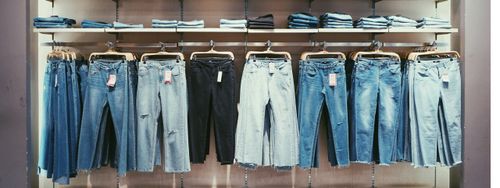
The global apparel market is heading into 2026 with slower growth, tighter margins, and more demanding consumers. Inflation, tariffs, and economic uncertainty have changed how people buy clothing. Shoppers are purchasing fewer items, but they are thinking more carefully about each one. This shift has profound implications for what brands design, how they position products, and which categories still deserve investment.
In this environment, success is no longer driven by how many SKUs you launch or how aggressively you chase trends. It is driven by clarity—clarity of product purpose, target customer, material choice, and brand values. Consumers expect apparel to deliver either clear function, clear value, or clear emotional resonance. Anything that sits in between struggles to justify its existence.
This guide breaks down the six core consumer and product trends shaping the apparel market in 2026, explains why they matter, and outlines how brands can respond with focus rather than noise.


There's a better way to source ❤️
Watch the video to see how SourceReady helps brands move from product ideas to trusted supplier relationships faster
Watch the VideoMacro Context: Slow Growth Is Reshaping Consumer Behaviour
Before looking at trends, it is important to understand the environment they exist in.
The economic backdrop
Across major markets:
- Cost-of-living pressure remains elevated
- Discretionary spending is cautious
- Apparel competes directly with travel, wellness, and experiences
Consumers are not disengaged. They are deliberate.
What this means for apparel demand
Instead of broad-based growth, you see:
- Premiumisation at the top (clear value, story, quality)
- Value concentration at the bottom (price-sensitive essentials)
- Pressure on undifferentiated mid-market brands
In practice, this creates a demand curve where clarity wins and “good enough” loses.
2026 takeaway: Consumers are not buying less because they don’t want clothing. They are buying less because they reject products without purpose.
The 6 Trends That Will Separate Winning Apparel Brands in 2026
Trend 1: Demand Polarisation Is Reshaping Apparel Categories
The apparel market in 2026 is not moving in one direction. It is splitting into distinct demand lanes, with limited overlap between them.
What’s actually growing
- Functional basics: Core items such as T-shirts, underwear, socks, and athleisure continue to perform because they meet everyday needs. Consumers repurchase these items regularly, prioritising comfort, fit consistency, and acceptable pricing over trend-driven design.
- Performance and technical apparel: Apparel that delivers measurable benefits—breathability, durability, moisture management, temperature control—retains strong demand. Consumers are willing to pay more when performance claims are clear and repeatable.
- Value-driven private label: Retailer-owned and platform-owned brands gain share by offering “good enough” quality at aggressive prices. As consumers become more price-conscious, private label fills the gap for non-emotional purchases.
- Niche premium with strong storytelling: Smaller premium brands succeed when they offer clear identity, craftsmanship, or cultural relevance. Consumers justify higher prices when products feel intentional and differentiated.
Meanwhile, mid-tier, trend-led fashion without a clear value proposition continues to lose ground.
Trend 2: Principled Consumption Becomes a Purchase Filter
In 2026, many consumers evaluate apparel through a values-based lens before committing to a purchase.
What consumers are actively considering
- Ethical production: Shoppers increasingly expect brands to meet basic labor standards and avoid obvious risk, even if they do not investigate deeply.
- Environmental responsibility: Interest in recycled fibers, lower-impact materials, and waste reduction continues to influence decisions, particularly among repeat customers.
- Quality and longevity: As wardrobes become smaller, consumers want items that last longer and remain wearable across seasons.
- Transparency and credibility: Overly broad sustainability claims are losing trust. Consumers respond better to specific, verifiable explanations of how products are made.
This does not mean every consumer will pay a premium. It means many will walk away if they feel misled or uninformed.
Trend 3: Circular Fashion Moves From Narrative to Product Design
Circular fashion in 2026 is no longer limited to sustainability messaging. It increasingly shapes how products are designed from the outset.
How circularity shows up in the market
- Resale and rental as standard channels: Secondhand and rental are now mainstream for categories such as outerwear, denim, and occasion wear.
- Repair and take-back programs:: Brands extend product life through repair services and structured take-back initiatives, reinforcing durability as a selling point.
- Design for multiple life cycles Products are designed to survive repeated wear, cleaning, and ownership changes without rapid degradation.
Circularity forces brands to think more carefully about construction, materials, and finishes.
Trend 4: AI Enables Sense-and-Respond Product Models
Technology in 2026 is less about automation for its own sake and more about making better product decisions earlier.
What sense-and-respond means in practice
- Earlier demand signals: Brands use sales data, browsing behavior, and customer feedback to identify winning styles before committing to large production runs.
- Shorter product decision cycles: Design and merchandising teams adjust quantities, colors, or replenishment plans closer to real demand.
- Reduced overproduction: Better forecasting lowers excess inventory and reduces the need for heavy discounting.
Consumer impact
- Shoppers experience better availability of popular items and fewer forced promotions that devalue products.
- From an operational standpoint, brands increasingly rely on structured data—across sales, suppliers, and materials—to support faster decisions.
Trend 5: Personalization Scales Beyond Niche
Personalized and customized apparel is moving from novelty to repeatable business model.
What’s driving adoption
- Improved print-on-demand and small-batch production: Quality and reliability improvements make customization viable beyond promotional products.
- Desire for individuality: Consumers increasingly want apparel that reflects personal identity rather than mass trends.
- Limited-run and co-created drops: Brands use personalization to test ideas, create scarcity, and reduce inventory risk.
Rising expectations
Even for customized products, consumers expect:
- Clear quality standards
- Transparent production timelines
- Consistent fit and finish
Customization no longer excuses inconsistency.
Trend 6: Emotional Design and Material Innovation Reassert Fashion’s Role
As uncertainty persists, apparel in 2026 leans back into emotion and expression, balanced with practicality.
Key aesthetic directions
- Romantic and tactile elements: Lace, ruffles, draped silhouettes, and textured fabrics add softness and sensory appeal.
- Bold prints and nostalgic references: ’80s influences, animal prints, and expressive graphics reflect confidence and escapism.
- Dark luxury tones: Rich colors and heavier textures signal comfort, depth, and longevity, especially for Fall/Winter.
Material innovation as a differentiator
- Recycled and regenerative fibers improve sustainability credibility
- Bio-based alternatives reduce reliance on traditional synthetics
- Functional textiles enhance comfort and durability
Materials are no longer invisible inputs—they are part of the product story.
How SourceReady Supports Product Research for 2026 Trends
As apparel trends become more regional, shorter-lived, and category-specific, product teams need continuous, localized market intelligence—not static reports. SourceReady’s product research feature is designed to support early-stage product decisions with real-world signals.
1. Continuous product discovery across global markets
SourceReady’s AI agents continuously scan global supplier websites and online marketplaces to surface emerging products, new designs, and category-level patterns. This provides teams with a steady stream of in-market inspiration, rather than relying solely on seasonal trend forecasts.
2. Smarter, more local market insight
When you run a product research query, SourceReady prioritizes local and regional signals. For example, a search for top-selling jackets in Japan emphasizes Japanese platforms and sources first, producing insights that reflect actual local demand, not global averages.

3. Market analysis to evaluate category potential
To support go/no-go decisions, SourceReady provides structured market views, including:
- Estimated market size and growth direction
- Key consumer regions
- Signals of category maturity
This helps teams quickly assess whether a trend represents a real opportunity or short-term noise.

Trend insights for timing decisions
SourceReady tracks:
- Search interest patterns
- Seasonal demand shifts
- Product launch and refresh cycles
These insights support better timing for product development and launches.
Price and competitor context
Product teams can review:
- Price ranges across platforms and regions
- Relative positioning of leading brands and sellers
- Sales and pricing signals from competing products
This enables clearer product positioning before committing to design or pricing.
Why this belongs in a 2026 trends article
In a slower-growth environment, advantage comes from earlier insight, broader visibility, and better filtering. SourceReady helps product teams move from trend awareness to defensible product decisions, using continuous, localized market data rather than assumptions.
Conclusion: Fewer Products, Better Insight
The apparel market in 2026 is not defined by rapid growth or constant novelty. It is defined by discernment—from consumers and from brands. Shoppers are buying fewer items, but they expect each product to deliver clear value, whether through function, emotion, price, or principles. At the same time, trends are becoming more regional, more short-lived, and more category-specific.
For brands, this shifts the challenge from creating more products to making better product decisions earlier. Winning teams are grounding creativity in real market signals, validating demand before committing, and designing with intent rather than excess.
This is where product research becomes a strategic capability. By combining localized market insight, trend tracking, pricing context, and competitive visibility, tools like SourceReady help teams turn trend awareness into defensible product choices. In 2026, success belongs to brands that do less guessing—and more informed, deliberate action.

Find the sourcing tools you need.
Explore how SourceReady helps you research products, discover suppliers, verify factory information, analyze trade data, and manage your sourcing workflow in one place
Explore Features
Graduating from USC with a background in business and marketing, Judy Chen has spent over a decade working in e-commerce, specializing in sourcing and supplier management. Her experience includes developing strategies to optimize supplier relationships and streamline procurement processes for growing businesses. As SourceReady’s blog writer, Judy leverages her deep understanding of sourcing challenges to create insightful content that helps readers navigate the complexities of global supply chains.