BYD’s lawsuit against the U.S. government does not change existing tariffs on Chinese electric vehicles or batteries, which remain fully enforceable. However, by challenging the legal authority used to impose these tariffs, the case introduces uncertainty around future trade policy and enforcement.
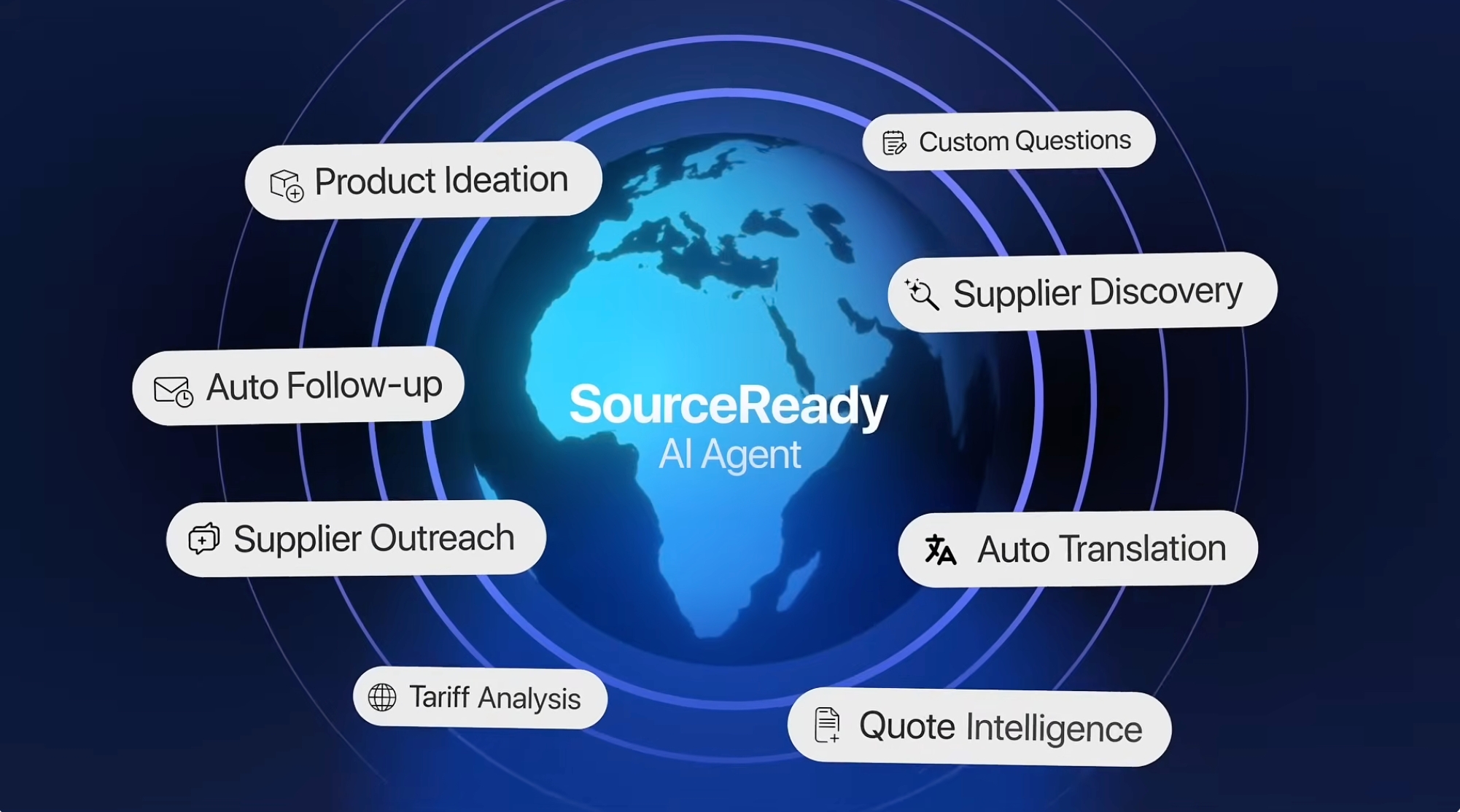
The situation highlights why supply chain planning now requires greater flexibility, how legal and industry experts view the broader implications, and why many companies are accelerating sourcing diversification beyond China. As firms explore alternatives, tools like SourceReady help identify and verify EV-experienced suppliers outside China, including those with prior BYD exposure.
There's a better way to source ❤️
Watch the video to see how SourceReady helps brands move from product ideas to trusted supplier relationships faster
Watch the VideoWhat’s the Background of the Case and the Current Tariff Situation?
The BYD lawsuit must be understood within the broader context of escalating U.S. trade restrictions targeting Chinese clean-energy supply chains.
Key background points include:
Expansion beyond finished vehicles
U.S. tariffs no longer focus solely on fully assembled EVs. They increasingly apply to:
- Battery cells and modules
- Battery packs
- Key EV components and materials
This widens the impact on suppliers several tiers upstream.
Reliance on executive authority
Recent tariffs were imposed using the International Emergency Economic Powers Act (IEEPA), which grants the president broad authority during national emergencies.
Why this is controversial
IEEPA was historically used for sanctions and financial restrictions, not long-term trade policy. Using it for tariffs blurs the line between emergency response and industrial policy.
BYD’s strategic response
Rather than withdrawing from the U.S. market, BYD chose to challenge the legal basis of the tariffs in U.S. courts, signaling a shift toward formal legal defense.
This creates a situation where tariffs are enforced, but their legal durability is being tested.
Check out BYD's supplier network outside China!
What Exactly Is BYD Challenging in This Lawsuit?
BYD is not negotiating tariff rates. It is questioning the legality of the process.
The challenge focuses on three core issues:
1. Did the executive branch overstep its authority?
BYD argues that tariff-setting power belongs to Congress, and that the executive branch cannot use emergency powers as a substitute.
2. Was there a genuine “emergency”?
IEEPA requires a national emergency. BYD claims that using it for long-term trade policy stretches the law beyond its original intent.
3. What remedies is BYD seeking?
BYD is asking the court to:
- Declare the tariff orders invalid
- Refund tariffs already paid
- Prevent future enforcement under the same authority
This legal framing matters because it could limit how future tariffs are imposed, even if current ones remain.
Why Does This Lawsuit Matter for Supply Chain Planning?
This is where the case becomes highly relevant for supply chain leaders.
1. How does it affect tariff predictability?
Tariffs are typically treated as a known cost. This lawsuit challenges that assumption. If courts rule that executive authority was exceeded, future tariffs may:
- Require longer political processes
- Be more vulnerable to injunctions
- Face higher legal scrutiny
For supply chain planning, this reduces confidence in long-term tariff forecasts.
2. How does it change sourcing risk assessments?
Traditionally, sourcing risk is evaluated based on:
- Cost
- Capacity
- Quality
- Logistics
Now, legal durability becomes another factor. A tariff that can be legally challenged carries different risk than one embedded in statute. Companies may need to:
- Reevaluate China-heavy sourcing models
- Balance cost savings against policy volatility
- Avoid strategies that rely on “temporary” tariff assumptions
3. How does it affect capital investment decisions?
Large investments—battery plants, tooling, long-term capacity—require policy stability. Legal uncertainty can cause companies to:
- Delay investment decisions
- Favor modular or flexible capacity
- Avoid irreversible commitments tied to one jurisdiction
In short, the lawsuit turns tariffs from a financial issue into a strategic planning variable.
How Are Experts and Industry Leaders Interpreting This Case?
What are legal experts saying?
Trade and constitutional law experts see this case as part of a broader pattern where courts are increasingly asked to define the limits of executive power.
Key interpretations include:
- Even if the government wins, courts may narrow how IEEPA can be used in the future
- Future administrations may need stronger justification to invoke emergency trade powers
- Congress may be pushed to reassert authority over tariff policy
The outcome may not eliminate tariffs—but it could change how quickly and aggressively they are imposed.
How does the EV and battery industry view this?
Industry leaders are less focused on BYD specifically and more focused on predictability.
Common industry concerns include:
- EV supply chains span multiple countries, so tariffs rarely affect just one company
- Battery costs are highly sensitive to small tariff changes
- Sudden policy shifts disrupt pricing, contracts, and product roadmaps
From this perspective, the lawsuit is seen as a potential stabilizing force—even if it creates short-term uncertainty.
What Alternative Sourcing Destinations Are Companies Actively Exploring?
With tariffs still in place, companies are acting now—not waiting for court decisions.
1. Mexico
Mexico offers:
- Geographic proximity to the U.S.
- Potential USMCA tariff benefits
- Rapid growth in EV and battery assembly
However, companies must carefully manage:
- Rules of origin compliance
- “Substantial transformation” standards
- Increased U.S. customs scrutiny
Mexico is attractive, but not a shortcut.
2. Southeast Asia
Countries like Vietnam, Thailand, and Indonesia are attractive because:
- They have growing battery material ecosystems
- They host significant Chinese manufacturing investment
- They currently face lower direct U.S. tariff exposure
That said, supply chains must be structured carefully to avoid:
- Transshipment risks
- Origin misclassification
- Compliance violations
3. South Korea and Japan
These countries offer:
- Advanced battery technology
- Strong IP protection
- Lower geopolitical risk
They are often chosen for:
- High-spec components
- Sensitive applications
- Long-term strategic sourcing
The trade-off is higher cost.
4. United States
Domestic sourcing is encouraged by incentives, but:
- Capacity is still limited
- Costs remain higher
- Scaling takes years, not months
Many companies treat U.S. sourcing as a long-term hedge, not an immediate replacement.

How Can Companies Use SourceReady to Find BYD-Experienced Suppliers Outside China?
One challenge supply chain teams face is finding credible suppliers with real EV or battery experience outside China—not just “new” factories with no track record.
This is where tools like SourceReady become useful.
Using SourceReady, companies can:
- Identify suppliers that have worked with BYD or similar Tier-1 EV manufacturers
- Filter suppliers by country, excluding China while keeping technical capability
- See supplier history across multiple regions, including Southeast Asia, Mexico, Eastern Europe
More importantly, SourceReady helps teams:
- Cross-check supplier claims with historical data
- Reduce reliance on self-reported information
- Shortlist manufacturers already integrated into global EV supply chains
For companies reacting to tariff risk, this approach is faster and more reliable than starting supplier discovery from scratch.
What’s the Bottom Line for Supply Chain Leaders?
Will U.S. tariffs on Chinese EVs or batteries change because of the BYD lawsuit?
- Short term: No material change
- Medium term: Increased legal and policy uncertainty
- Long term: Possible constraints on how tariffs are imposed
The smartest response is not speculation—it’s preparation:
- Diversify sourcing
- Strengthen compliance
- Model multiple tariff scenarios
- Avoid single-country dependency
Tariffs may be political, but supply chain decisions must stay practical.
FAQ
1. Should companies delay long-term sourcing decisions until the case is resolved?
Most experts advise against waiting. Legal cases like this can take years, and business operations cannot pause. Instead, companies should:
- Build flexible sourcing options
- Avoid irreversible commitments tied to one country
- Maintain optionality across regions
- Delay increases operational risk more than it reduces tariff risk.
2. How does this affect battery raw materials like lithium, nickel, or cathodes?
While the lawsuit targets finished goods and components, upstream materials may still be affected if:
- They are classified as EV-critical inputs
- They pass through Chinese processing stages
- This means raw-material sourcing strategies may also need diversification.

Find the sourcing tools you need.
Explore how SourceReady helps you research products, discover suppliers, verify factory information, analyze trade data, and manage your sourcing workflow in one place
Explore Features
Graduating from USC with a background in business and marketing, Judy Chen has spent over a decade working in e-commerce, specializing in sourcing and supplier management. Her experience includes developing strategies to optimize supplier relationships and streamline procurement processes for growing businesses. As SourceReady’s blog writer, Judy leverages her deep understanding of sourcing challenges to create insightful content that helps readers navigate the complexities of global supply chains.