Sourcing consumer electronics suppliers requires more than broad discovery—it demands precision and verification. The right tools help you identify capable manufacturers, validate real production activity, and reduce supplier risk early. Platforms like SourceReady streamline this process by combining structured data, natural language search, and cross-verified sources to surface relevant suppliers quickly. With a focused approach, you can shorten sourcing cycles, improve supplier quality, and make more defensible procurement decisions.
Top Tools for Consumer Electronics Supplier Sourcing

Judy Chen
·
April 25, 2026
AI
Technology

Turn your product idea into supplier quotes
START YOUR FREE TRIAL
Table of contents
What Makes Electronics Supplier Sourcing Different
Top Tools for Finding & Verifying Consumer Electronics Suppliers
Final Takeaway
FAQ
Turn your product idea into supplier quotes
See how SourceReady helps you research products, discover verified factories, and start sourcing faster.
Get started for free
No credit card required

There’s a better way to source ❤️
Watch the video to see how SourceReady helps brands move from product ideas to trusted supplier relationships faster
Watch the Video
What Makes Electronics Supplier Sourcing Different
Sourcing consumer electronics is not the same as sourcing apparel or simple goods. The margin for error is smaller, and the cost of a bad supplier is significantly higher.
You are not just buying a product—you are buying into a supplier’s engineering capability, quality systems, and consistency at scale.
What you need to evaluate upfront
Before even looking at tools, you should be clear on what matters:
- Technical capability: Can the supplier actually build your product? This includes PCB assembly, firmware integration, materials, and tolerances.
- Certification and compliance: Electronics require strict standards (e.g. CE, FCC, RoHS). Missing this can block entire markets.
- Production scale: A supplier that works for prototypes may fail at mass production.
- Quality control systems: Do they have structured QC processes, or are they relying on manual checks?
- Supply chain stability: Can they source components reliably, especially during shortages?
Why most sourcing goes wrong
Most teams fail not because they can’t find suppliers—but because they:
- Rely on surface-level listings
- Skip verification steps
- Confuse traders with manufacturers
- Optimize for price too early
The result is predictable: delays, quality issues, and costly rework.
What good sourcing looks like
A strong process does three things:
- Filters for relevance early (right category, capability, certifications)
- Verifies claims with real data (exports, production history)
- Confirms capability before commitment (audits, samples)
Only after this should you move into RFQs and negotiations.

Top Tools for Finding & Verifying Consumer Electronics Suppliers
1. SourceReady
Best for: High-quality supplier discovery with built-in relevance filtering
If you want to avoid wasting time on irrelevant suppliers, this is your strongest starting point.
What it does well
- AI-driven supplier search across structured datasets
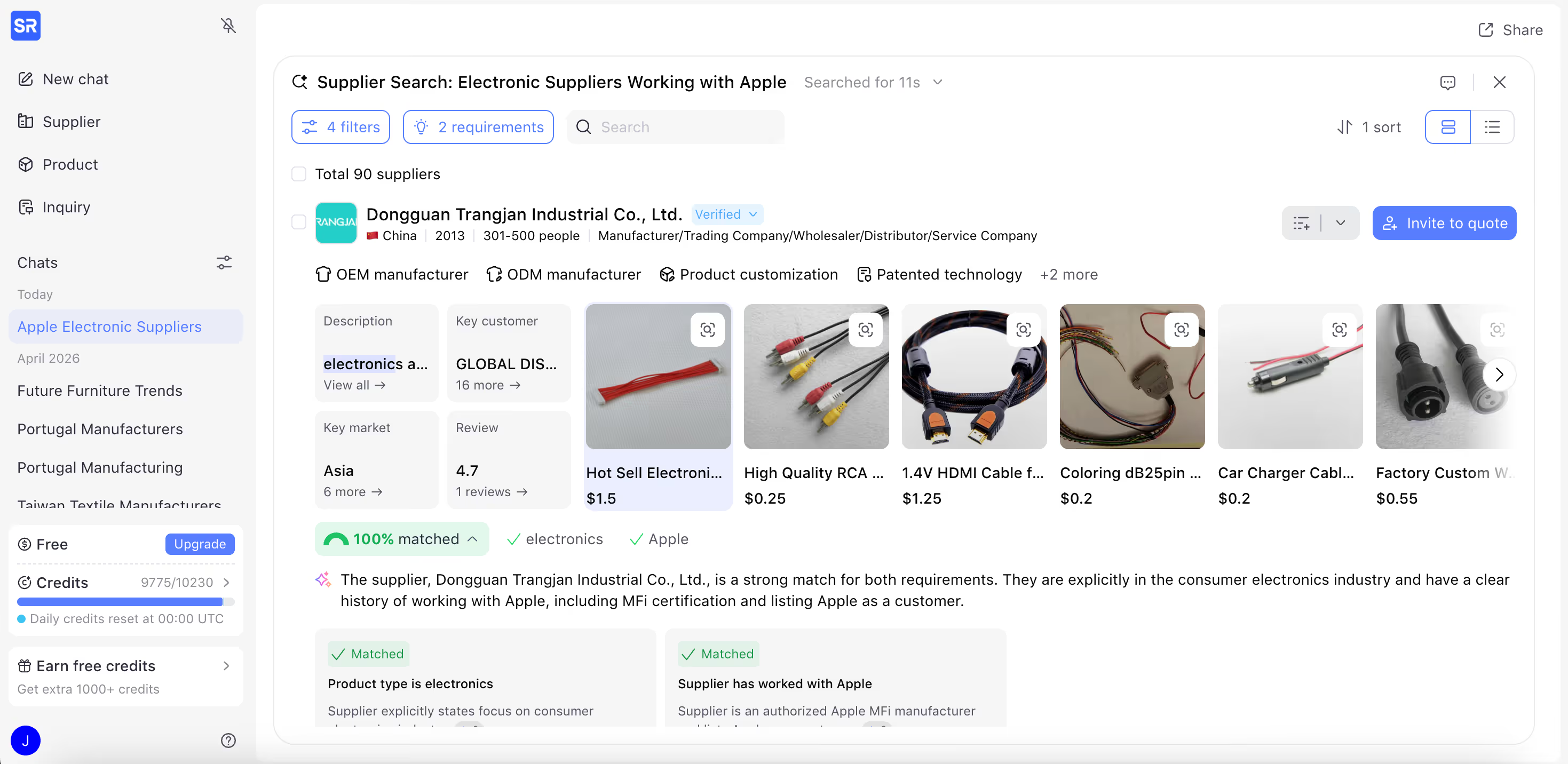
- Natural language search — you can describe what you need (e.g. “Bluetooth earbuds manufacturer with CE certification and low MOQ”), and get relevant matches
- Coverage of 4M+ suppliers across 200+ countries
- Data is aggregated and cross-verified from multiple sources, including custom datasets, trade shows, directories and industry sources
- You can filter results by, Product category (e.g. PCB, EMS, IoT devices), Certifications (ISO, CE, RoHS), Capabilities (OEM/ODM, scale, materials) and etc
- Provides match scores + reasoning, so you understand exactly why each supplier fits your requirements
Why it matters
- Most tools give you lists. This gives you ranked, relevant suppliers.
👉 Use it when you want a clean, qualified starting list — fast.
2. ImportYeti
Best for: Verifying real export activity and customer relationships
This is your reality check.
What it does well
- Shows actual shipment records
- Reveals: Who the supplier ships to, Shipment frequency and Product categories exported
Why it matters
- A supplier’s claims are marketing.
- Shipping data is operational truth.
What to look for
- Consistent shipment volume
- Relevant product descriptions
- Repeat buyers
👉 Use it to confirm the supplier is actually producing and exporting what you need.
3. Alibaba
Best for: Broad supplier discovery and initial screening
Still one of the largest supplier databases — if used carefully.
What it does well
- Huge supplier pool
- Fast RFQ outreach
- Basic supplier filters
How to use it properly
- Prioritize: Verified suppliers and 5+ years operating history
- Review: Product consistency across listings and Factory images (not stock photos)
Where it falls short
- Traders mixed with manufacturers
- Limited verification depth
👉 Use it to widen your search — not to validate suppliers.
4. Global Sources
Best for: Pre-vetted Asian electronics manufacturers
More curated than Alibaba, especially for electronics.
What it does well
- Focus on consumer electronics and components
- Suppliers are generally pre-screened
- Strong presence of: OEM/ODM manufacturers and Export-ready factories
Why it matters
- You get higher baseline quality, less noise.
Trade-off
- Smaller supplier pool
- Less pricing flexibility
👉 Use it when you want fewer, but more credible supplier options.
Final Takeaway
Finding suppliers is not the challenge. Finding the right ones—and proving they can deliver—is where most sourcing breaks down.
The difference comes from how you approach verification. You need to move beyond listings and look for real signals: production capability, export history, and operational consistency. Every step should reduce uncertainty, not introduce more guesswork.
If your current process still relies on manual filtering and back-and-forth validation, you’re moving slower than you should.
Start with a stronger foundation. Use SourceReady to quickly identify suppliers that actually match your product requirements and cut through irrelevant options from day one.
FAQ
1. How do I know if a supplier is a real manufacturer or a trader?
Look for production capability signals: factory photos, consistent product lines, certifications, and export history. Cross-check using tools like trade data platforms and request factory audit reports when possible.
2. What information should I request in an RFQ?
At minimum:
- Unit pricing (by volume tiers)
- MOQ
- Lead times
- Tooling costs
- Certifications
- Quality control process

Find the sourcing tools you need.
Explore how SourceReady helps you research products, discover suppliers, verify factory information, analyze trade data, and manage your sourcing workflow in one place
Explore Features
Graduating from USC with a background in business and marketing, Judy Chen has spent over a decade working in e-commerce, specializing in sourcing and supplier management. Her experience includes developing strategies to optimize supplier relationships and streamline procurement processes for growing businesses. As SourceReady’s blog writer, Judy leverages her deep understanding of sourcing challenges to create insightful content that helps readers navigate the complexities of global supply chains.