Alibaba is one of the easiest places to start supplier research. It gives you access to thousands of factories, trading companies, and exporters in a few clicks.
But convenience is also the limitation.
If every buyer searches the same marketplace using the same keywords, they often end up talking to the same visible suppliers. Meanwhile, many established manufacturers never actively list on Alibaba at all. They may rely on long-term brand relationships, trade shows, export networks, local directories, or direct sales.
If you want a stronger supplier base, you need to search beyond marketplaces. The goal is not simply to find more manufacturers. You need to identify suppliers with the right capabilities, real production evidence, relevant customers, compliance credentials, and commercial fit.
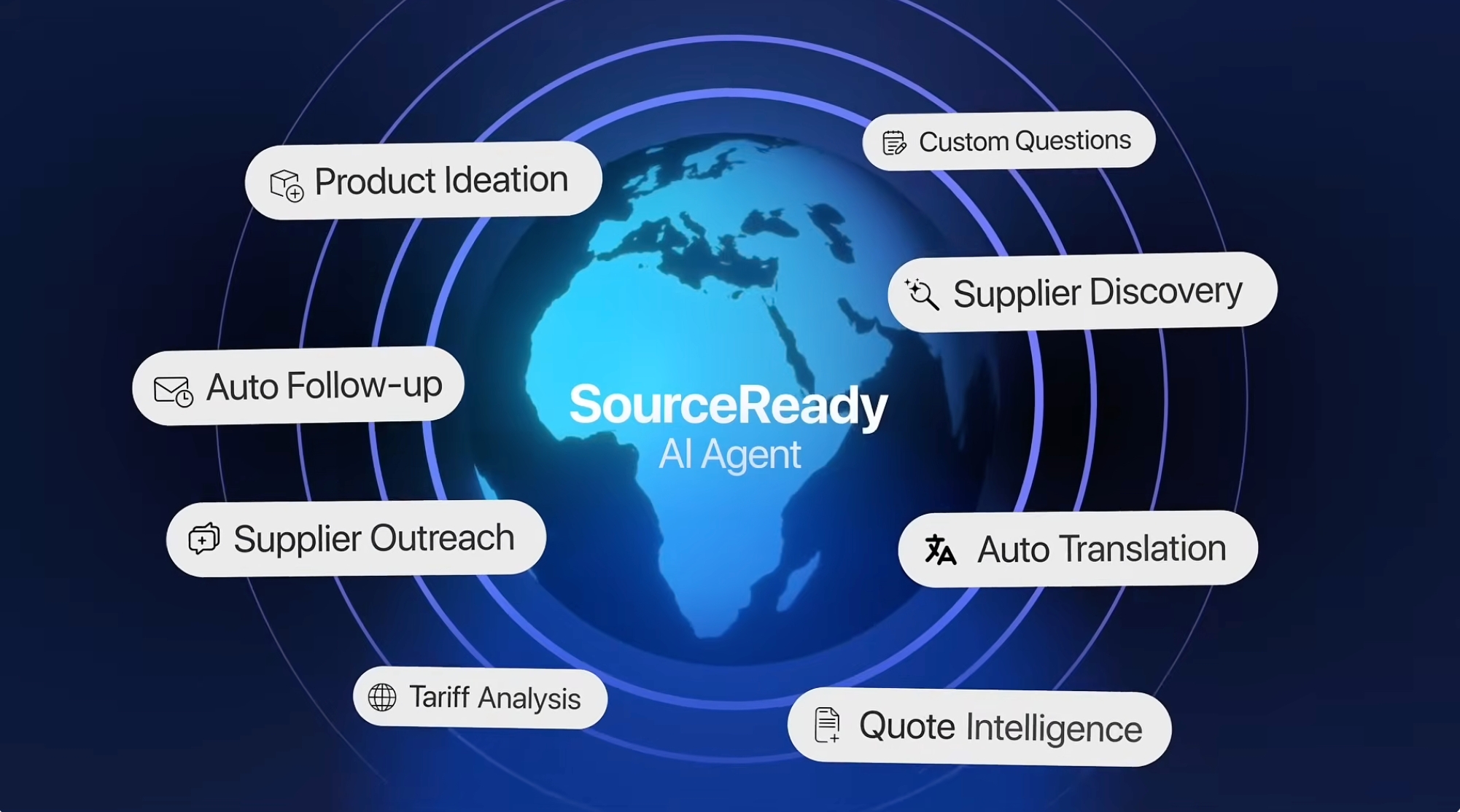
There’s a better way to source ❤️
Watch the video to see how SourceReady helps brands move from product ideas to trusted supplier relationships faster
Watch the Video
Why is Alibaba not enough for serious supplier sourcing?
Marketplace visibility does not equal manufacturing capability
Alibaba is primarily a discovery channel. Supplier pages tell you how companies present themselves, but they do not always tell you how those companies actually operate.
Profiles can contain useful information, but much of it is supplier-submitted. You still need independent evidence before treating a company as qualified.
- Self-reported capabilities: A supplier may list dozens of products or production processes without demonstrating that it manufactures all of them internally.
- Trading companies: Some listings belong to intermediaries rather than factories. That is not necessarily a problem, but you should know who will actually produce your goods.
- Limited verification: Marketplace badges can support screening, but they should not replace business-registration checks, factory audits, certification verification, or shipment-history research.
- Broad product catalogs: A company claiming to manufacture everything from water bottles to electronics accessories deserves additional scrutiny.
Marketplace data gives you limited supply-chain context
A supplier page rarely tells you enough about where the company sits within the broader market.
You may want to know whether the manufacturer exports regularly, what markets it serves, whether it supplies comparable brands, or whether its shipments are increasing or declining.
- Export activity: Marketplace listings do not necessarily show consistent real-world shipment history.
- Customer relationships: You usually cannot see which categories of buyers already purchase from the supplier.
- Production specialization: A profile may not reveal whether your product represents a core manufacturing category or an occasional side business.
- Risk signals: Corporate changes, sanctions exposure, expired certifications, regulatory issues, or unusual trade patterns may sit outside the marketplace entirely.
Alibaba can therefore be part of your supplier search, but it should not become your supplier universe.
Why does supplier selection need to account for a constantly changing supply chain?
A good supplier today may not be the best supplier tomorrow
Supplier sourcing used to be treated as a relatively static decision. Find a capable factory, agree on pricing, approve quality, and continue buying.
That model no longer reflects reality.
Tariffs can change landed costs. Trade restrictions can affect sourcing routes. Political instability can disrupt production or logistics. Sanctions can create compliance exposure. Port congestion, freight volatility, export controls, raw-material restrictions, and regional conflicts can all alter the economics of a supplier relationship.
A supplier should therefore be evaluated not only on factory capability, but also on how exposed your total supply chain is around that supplier.
- Tariff exposure: A low factory price can become uncompetitive once duties, Section 301 tariffs, anti-dumping duties, or other import costs are included.
- Country-of-origin risk: Changes in trade policy can make one sourcing country materially more expensive or difficult to use.
- Geopolitical risk: Conflicts, sanctions, diplomatic disputes, and regulatory changes can affect production, payments, shipping routes, or market access.
- Logistics exposure: Port dependency, transit routes, shipping capacity, and freight costs can materially change landed cost and lead time.
- Regulatory changes: New product, environmental, forced-labor, traceability, or due-diligence requirements can affect whether a supplier remains compliant.
- Concentration risk: Relying on one country, cluster, or factory can turn a manageable disruption into a major operational problem.
The problem is that sourcing decisions are rarely recorded properly
Many sourcing organizations perform significant research before selecting a supplier, but the reasoning behind the final decision is often scattered across spreadsheets, emails, presentations, browser tabs, and individual buyers' knowledge.
Months later, the company may know which supplier was selected but not clearly remember why.
That creates an auditability problem.
- Missing decision history: Teams may not retain the original reasons one supplier was chosen over another.
- Disconnected evidence: Trade data, quotations, compliance checks, tariff assumptions, audit results, and risk assessments often live in separate systems.
- Outdated assumptions: A supplier may have been approved under a tariff, freight, or regulatory environment that has since changed.
- Key-person dependency: Important sourcing knowledge can disappear when employees change roles or leave.
- Weak re-evaluation: Without a recorded baseline, teams struggle to determine whether a sourcing decision still makes sense six or twelve months later.
A modern sourcing process should preserve the evidence, assumptions, and rationale behind the supplier decision.
That means recording not just the supplier's quoted price, but also why the team believed the supplier was the best option at the time.
Supplier evaluation should be continuous, not one-and-done
Qualification should not end when a purchase order is issued.
The factors that made a supplier attractive can change. Your sourcing data should therefore be revisited as the market changes.
- Cost changes: Recalculate landed cost when tariffs, freight rates, exchange rates, or input costs move.
- Trade changes: Monitor shifts in shipment activity, customer concentration, or export patterns.
- Compliance changes: Recheck certifications, sanctions, regulatory issues, and corporate status.
- Geopolitical changes: Reassess country and route exposure as external risks evolve.
- Alternative supply: Continue identifying backup suppliers rather than waiting for a disruption to begin sourcing again.
The objective is not to react to every news headline. It is to maintain enough structured evidence that your team can respond quickly when something materially changes.
How can SourceReady help you find and verify manufacturers?
Search across a global supplier database
SourceReady combines AI-driven supplier discovery with real-world supplier, trade, corporate, certification, tariff, and market data. Its database covers more than 4 million suppliers across 200 countries, giving sourcing teams a much broader view of the global manufacturing market than a single marketplace can provide.
Instead of searching one directory at a time, you can describe what you need and evaluate suppliers against multiple signals.
- Natural-language search: Describe your product, materials, processes, target country, certifications, volumes, and other requirements.
- Supplier matching: Identify manufacturers whose capabilities align with your sourcing criteria rather than relying only on exact keyword matches.
- Customs intelligence: Review shipment activity to see whether suppliers have exported similar products and which markets they serve.
- Customer mapping: Identify manufacturers connected to comparable brands, buyers, or product categories.
- Certification data: Check available compliance and certification information alongside supplier profiles.
- Corporate intelligence: Review company information and risk indicators before progressing a supplier.
- Tariff and landed-cost analysis: Compare sourcing-country economics, duties, and tariff exposure before making a decision.
The goal is not simply to give you a longer list. It is to help you find the right suppliers with evidence behind why they are a fit.
Automate the sourcing workflow and keep every decision traceable
Supplier discovery is only the first part of sourcing.
Once you identify potential manufacturers, someone still needs to contact them, collect missing information, follow up, compare quotations, and document why one supplier was selected over another.
SourceReady can automate this end-to-end sourcing workflow while keeping the supplier communication, commercial data, and decision context connected in one place.
- Supplier outreach: Start conversations with shortlisted manufacturers using your product requirements and sourcing criteria.
- 24/7 follow-up: AI agents can continue supplier conversations, send follow-ups, and request missing information while your team is offline.
- RFQ and quote management: Send consistent RFQs, extract key commercial terms such as pricing, tooling, MOQ, payment terms, and lead times, then compare responses against the same requirements.
- Decision context: Keep supplier capabilities, trade history, compliance signals, pricing, risk factors, and communication history connected to the evaluation.
- Research continuity: Give anyone on the team visibility into what has already been discussed, what information is still missing, and why certain suppliers were shortlisted or rejected.
- Re-evaluation: Revisit previous sourcing decisions when tariffs, geopolitical conditions, compliance requirements, or landed costs change.
- Audit trail: Preserve the evidence and reasoning behind the final supplier recommendation instead of leaving it scattered across emails and spreadsheets.
This means you are not just using AI to find suppliers. You can use it to keep sourcing projects moving around the clock while maintaining a clear record of how each decision was made.
A supplier in Asia may respond after your U.S. team has finished for the day. Instead of waiting until the next morning, an AI agent can continue the conversation, collect missing information, and update the sourcing process automatically. When your team comes back online, the latest supplier responses, commercial terms, and decision context are already there.
AI should accelerate sourcing, not replace professional judgment. Samples, audits, testing, and supplier due diligence still matter. The difference is that your team can spend less time on searching, emailing, chasing, and rebuilding spreadsheets, and more time deciding which supplier actually deserves the business.
Conclusion
Alibaba can be a useful starting point, but reliable supplier sourcing should go much further. The strongest teams combine marketplaces with customs data, trade shows, industry directories, certification records, and direct supplier research to build a broader, more defensible supplier base. They also account for tariffs, geopolitical risk, compliance changes, and landed cost as conditions evolve.
SourceReady brings these signals together across 4 million suppliers in 200 countries while helping automate supplier outreach, follow-up, RFQs, and comparison. Explore SourceReady to find better-fit manufacturers and keep your sourcing workflow moving around the clock.
FAQ
1. Are trading companies always worse than manufacturers?
No. A good trading company can provide useful services such as supplier coordination, quality control, consolidation, and product development. The important thing is knowing who you are working with and understanding who actually manufactures your product.
2. What are the biggest red flags when choosing a manufacturer?
Common warning signs include inconsistent company information, reluctance to provide documentation, vague answers about production, unusually low pricing, constantly changing payment details, expired certifications, and unwillingness to support inspections or audits.