Supplier risk rating has become a critical capability for modern procurement teams. As supply chains grow more complex and regulatory expectations increase, organizations need reliable ways to assess supplier stability, compliance, operational performance, and exposure to disruption. The best procurement tools go beyond maintaining supplier records by providing risk scoring, continuous monitoring, and documented decision-making. Whether your priority is third-party risk, ESG compliance, supply chain resilience, or supplier discovery, selecting the right platform depends on the specific risks you need to manage and the actions you want those insights to drive.
There's a better way to source ❤️
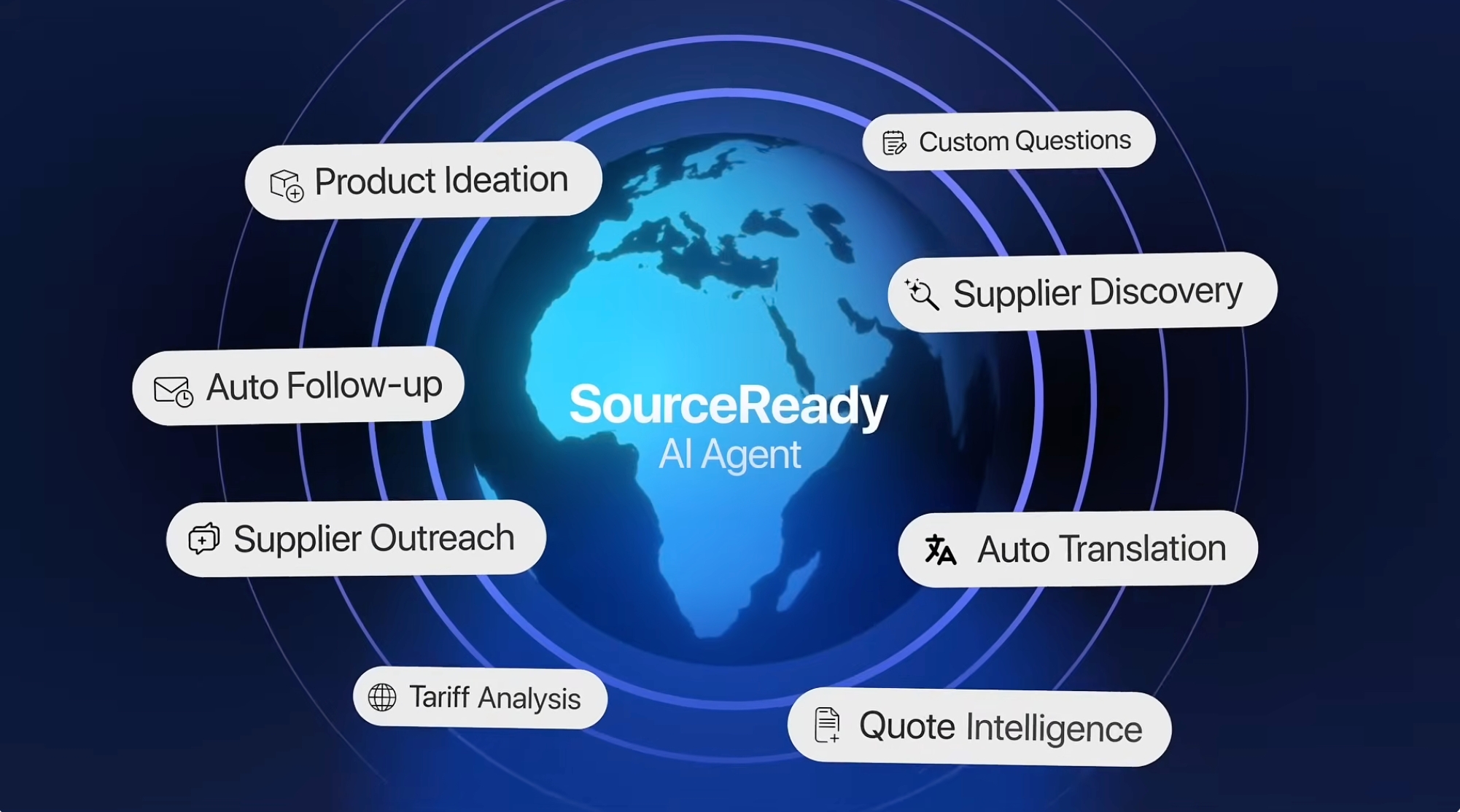
Watch the video to see how SourceReady helps brands move from product ideas to trusted supplier relationships faster
Watch the VideoWhy Supplier Risk Rating Matters
Supplier risk rating is no longer just an optional dashboard feature—it has become a fundamental part of effective procurement management.
Organizations need visibility into whether suppliers can consistently deliver products, meet compliance requirements, scale operations when needed, and withstand unexpected disruptions. Just as importantly, procurement teams must be able to demonstrate how supplier decisions were made. As a result, procurement platforms should do more than maintain supplier records; they should enable teams to assess supplier risk, track changes over time, and maintain a clear audit trail.
The ideal solution depends on the types of risks most relevant to your business. Some platforms specialize in third-party risk management, while others focus on ESG and sustainability performance. Certain tools monitor geopolitical, financial, and operational threats, while platforms such as SourceReady combine supplier risk insights with sourcing intelligence, supplier benchmarking, and supply chain visibility.
Here is a practical framework for evaluating the different categories of supplier risk tools:

What should a supplier risk rating actually measure?
A useful supplier risk rating should combine risk signals, business context, and decision logic.
A score by itself is not enough. A supplier rated “72” means very little unless you know what created the score, what changed recently, and what action the score should trigger.
At minimum, your procurement tool should evaluate these areas:
1. Supplier-level risk
This is the supplier’s own condition.
Look for:
- Financial stability: revenue signals, bankruptcy risk, payment issues, credit indicators.
- Operational reliability: delivery performance, production capacity, lead time consistency.
- Quality risk: defect history, certifications, audit findings, complaint patterns.
- Compliance status: sanctions, licenses, certifications, regulatory issues.
- Reputation signals: news, legal disputes, adverse media, ownership concerns.
2. Location-level risk
A strong supplier in a fragile region may still expose you to disruption.
Track:
- Political instability.
- Tariff exposure.
- Port congestion.
- Natural disaster risk.
- Labor disruptions.
- Trade restrictions.
- Regional compliance requirements.
3. Category-level risk
Some product categories are naturally riskier than others.
For example:
- Electronics may carry higher component shortage and compliance risk.
- Apparel may carry higher labor, factory audit, and country-of-origin risk.
- Food and cosmetics may carry higher regulatory and traceability risk.
- Furniture may carry higher material, sustainability, and freight risk.
4. Relationship-level risk
This is where many teams get caught.
A supplier may be low risk in general but high risk for you because you depend on them too much.
Measure:
- Share of spend.
- Single-source dependency.
- Tier 2 concentration.
- Switching difficulty.
- Contract exposure.
- Strategic importance.
This is why supplier risk rating must connect to procurement reality. A risk score without spend, category, and dependency context is just a weather app with no location turned on.
Which procurement tools are worth evaluating?
Below is a practical shortlist of procurement tools and risk platforms that include supplier risk rating or risk scoring capabilities.
1. SourceReady
Best for: Supplier discovery, supplier benchmarking, sourcing intelligence, and supply chain visibility.
SourceReady is useful when you want risk rating to support supplier selection, not just supplier monitoring. It helps you compare suppliers against market data, understand supplier capabilities, map Tier 1 and Tier 2 supply chain exposure, and identify dependency or concentration risks.
Use SourceReady when you want to answer:
- Which suppliers are worth considering?
- How does this supplier compare with the market?
- Where are we overexposed by country, category, or supplier?
- Are there alternative suppliers with better fit or lower risk?
- What does customs, sourcing, and market intelligence say about this supplier?
Good fit for: Brands, importers, sourcing teams, and procurement teams that need supplier intelligence before they commit.
Audit angle: Strong for documenting why a supplier was shortlisted, compared, or replaced.
2. SAP Ariba Supplier Risk
Best for: Large enterprises that already use SAP procurement workflows.
SAP Ariba Supplier Risk supports supplier risk management with alerts, risk insights, and third-party assessments. It fits teams that need risk data embedded into sourcing, onboarding, and supplier management.
Use it when you need:
- Enterprise-grade supplier governance.
- Risk alerts inside procurement workflows.
- Third-party assessments.
- Integration with SAP spend and supplier data.
Good fit for: Large organizations with complex approval chains and formal compliance programs.
Audit angle: Strong when procurement decisions must flow through controlled enterprise processes.
3. Coupa Supplier Risk and Performance
Best for: Teams that want supplier risk, performance, onboarding, and spend management in one environment.
Coupa focuses on third-party risk across areas such as information security, anti-bribery and corruption, GDPR, supplier health, and performance. It is especially useful when risk management needs to sit close to supplier information management.
Use it when you need:
- Supplier onboarding workflows.
- Risk monitoring.
- Performance tracking.
- Internal controls before supplier approval.
- Alerts when risk increases.
Good fit for: Mid-market and enterprise procurement teams that want one system for supplier data, spend, risk, and workflow.
Audit angle: Strong for showing approval steps, supplier status, and remediation actions.
4. EcoVadis IQ Plus
Best for: ESG, sustainability, and responsible sourcing risk.
EcoVadis IQ Plus helps teams classify supplier sustainability risk before or during supplier engagement. It is especially relevant for modern slavery, human rights, environmental risk, and business ethics.
Use it when you need:
- ESG risk screening.
- Sustainability due diligence.
- Supplier prioritization for deeper assessment.
- Responsible sourcing documentation.
- Evidence-based risk segmentation.
Good fit for: Procurement teams with sustainability mandates, regulatory reporting pressure, or supplier due diligence obligations.
Audit angle: Strong for ESG and responsible sourcing records.
5. Prewave, Interos, and Sphera SCRM
These platforms are more specialized in continuous supply chain risk monitoring.
Prewave focuses on real-time supplier risk scoring and monitoring across disruption, sustainability, compliance, and resilience signals.
Interos focuses on operational resilience and extended supply chain visibility, including supplier network exposure and multi-domain risk.
Sphera SCRM, which includes capabilities from riskmethods and SupplyShift, focuses on supply chain risk intelligence, supplier engagement, compliance, and monitoring.
Use these tools when you need:
- Continuous monitoring.
- Real-time alerts.
- Multi-tier supplier visibility.
- Risk scoring across multiple domains.
- Faster response to disruption.
Good fit for: Procurement, supply chain, and risk teams managing critical suppliers across global networks.
Audit angle: Strong for showing ongoing monitoring, alerts, and response history.
How supplier risk ratings improve procurement decisions
The real value of supplier risk rating is not the score itself—it is the decisions that score enables.
When risk insights are integrated into sourcing and supplier management processes, procurement teams can make more informed decisions before problems occur. Rather than reacting to disruptions, organizations can proactively identify vulnerabilities and strengthen supplier portfolios.
1. Better supplier selection
Risk ratings help procurement teams evaluate suppliers beyond price and capacity.
By incorporating financial health, compliance history, operational performance, and geographic exposure into supplier evaluations, teams can identify suppliers that are both competitive and resilient.
Benefits include:
- More informed sourcing decisions.
- Reduced likelihood of supplier failure.
- Improved supplier qualification processes.
- Stronger supplier comparisons during RFQs and sourcing events.
2. Stronger supply chain resilience
Supplier risk ratings help organizations understand where they are vulnerable.
By identifying concentration risks, geographic dependencies, and critical supplier relationships, procurement teams can develop contingency plans before disruptions occur.
This can support:
- Supplier diversification strategies.
- Alternative sourcing initiatives.
- Business continuity planning.
- Faster response to geopolitical or operational disruptions.
3. Improved compliance and governance
Many organizations face increasing pressure to demonstrate supplier due diligence.
Risk rating tools help centralize supplier assessments, maintain documentation, and create a consistent process for evaluating supplier risk.
This supports:
- Regulatory compliance.
- ESG reporting requirements.
- Third-party risk management programs.
- Internal audit readiness.
4. Greater visibility across the supplier base
One of the biggest challenges in procurement is knowing where to focus attention.
Risk ratings help teams prioritize suppliers based on business impact and risk exposure, ensuring resources are directed toward the suppliers that matter most.
Organizations can use risk ratings to:
- Segment suppliers by criticality.
- Prioritize audits and assessments.
- Allocate supplier management resources effectively.
- Monitor high-risk suppliers more closely.
Ultimately, supplier risk rating is most effective when it becomes part of everyday procurement decision-making. The strongest organizations use risk insights not only to avoid problems but also to build more resilient, compliant, and competitive supply chains over the long term.
Conclusion
Supplier risk rating is no longer just a compliance task—it is a core part of making better sourcing decisions. The best tools help procurement teams identify financial, operational, compliance, ESG, and supply chain risks early, so they can act before issues become disruptions.
For organizations that want to strengthen supplier selection from the start, SourceReady combines supplier discovery, benchmarking, supply chain visibility, and risk intelligence in one platform. This helps teams evaluate suppliers more confidently, reduce exposure, and maintain a clear audit trail.
Ready to improve your supplier risk assessment process? Explore SourceReady to discover, evaluate, and monitor suppliers with greater visibility and confidence.
FAQ
1. What is the difference between supplier risk rating and supplier performance management?
Supplier risk rating looks at potential issues that may affect future reliability or compliance. Supplier performance management focuses on how the supplier has already performed, such as delivery accuracy, defect rates, responsiveness, and service quality. You need both for a complete supplier view.
2. How often should supplier risk ratings be updated?
Supplier risk ratings should be updated regularly, especially for critical suppliers. High-risk or strategic suppliers may require continuous monitoring, while lower-risk suppliers can be reviewed quarterly, semi-annually, or during contract renewal.

Find the sourcing tools you need.
Explore how SourceReady helps you research products, discover suppliers, verify factory information, analyze trade data, and manage your sourcing workflow in one place
Explore Features
Graduating from USC with a background in business and marketing, Judy Chen has spent over a decade working in e-commerce, specializing in sourcing and supplier management. Her experience includes developing strategies to optimize supplier relationships and streamline procurement processes for growing businesses. As SourceReady’s blog writer, Judy leverages her deep understanding of sourcing challenges to create insightful content that helps readers navigate the complexities of global supply chains.