The Philippines is a viable alternative for electronics manufacturing in 2026, particularly in semiconductor assembly (OSAT) and specialized electronics manufacturing services. While it cannot match China’s ecosystem scale or Vietnam’s mass consumer electronics clusters, it offers strong technical depth, investor-friendly tax incentives, and strategic Western trade alignment. Challenges include high power costs and limited upstream component integration. For companies diversifying production under a China Plus One strategy, the Philippines represents a targeted, semiconductor-driven option — and platforms like SourceReady can streamline the process of identifying export-ready, capability-aligned manufacturers.
Is the Philippines a Viable Alternative for Electronics Manufacturing in 2026?

Judy Chen
·
March 11, 2026
Electronics
Manufacturing
Sourcing Guide
Philippines
Turn your product idea into supplier quotes
START YOUR FREE TRIAL
Table of contents
Why Are Companies Considering the Philippines for Electronics Manufacturing?
What Types of Electronics Are Manufactured in the Philippines?
What are Key Advantages of Manufacturing Electronics in the Philippines
Philippines vs. Vietnam vs. China: A Strategic Comparison (2026)
What Are the Challenges of Electronics Manufacturing in the Philippines?
How Can Companies Use SourceReady to Find Electronics Manufacturers in the Philippines?
Conclusion
FAQ
Turn your product idea into supplier quotes
See how SourceReady helps you research products, discover verified factories, and start sourcing faster.
Get started for free
No credit card required
There’s a better way to source ❤️
Watch the video to see how SourceReady helps brands move from product ideas to trusted supplier relationships faster
Watch the Video
Why Are Companies Considering the Philippines for Electronics Manufacturing?
The global supply chain is shifting as manufacturers reduce reliance on China. This strategy — commonly called China Plus One — has increased investment across Southeast Asia.
While Vietnam and Malaysia dominate large-scale electronics assembly, the Philippines has long been a semiconductor and high-value EMS hub.
Electronics account for more than 50% of Philippine exports, making it one of the country’s most critical industries.
In 2026, exports are projected to approach $48 billion, driven by growth in:
- Semiconductor assembly and testing (OSAT)
- Automotive electronics
- Medical device manufacturing
- Industrial electronics
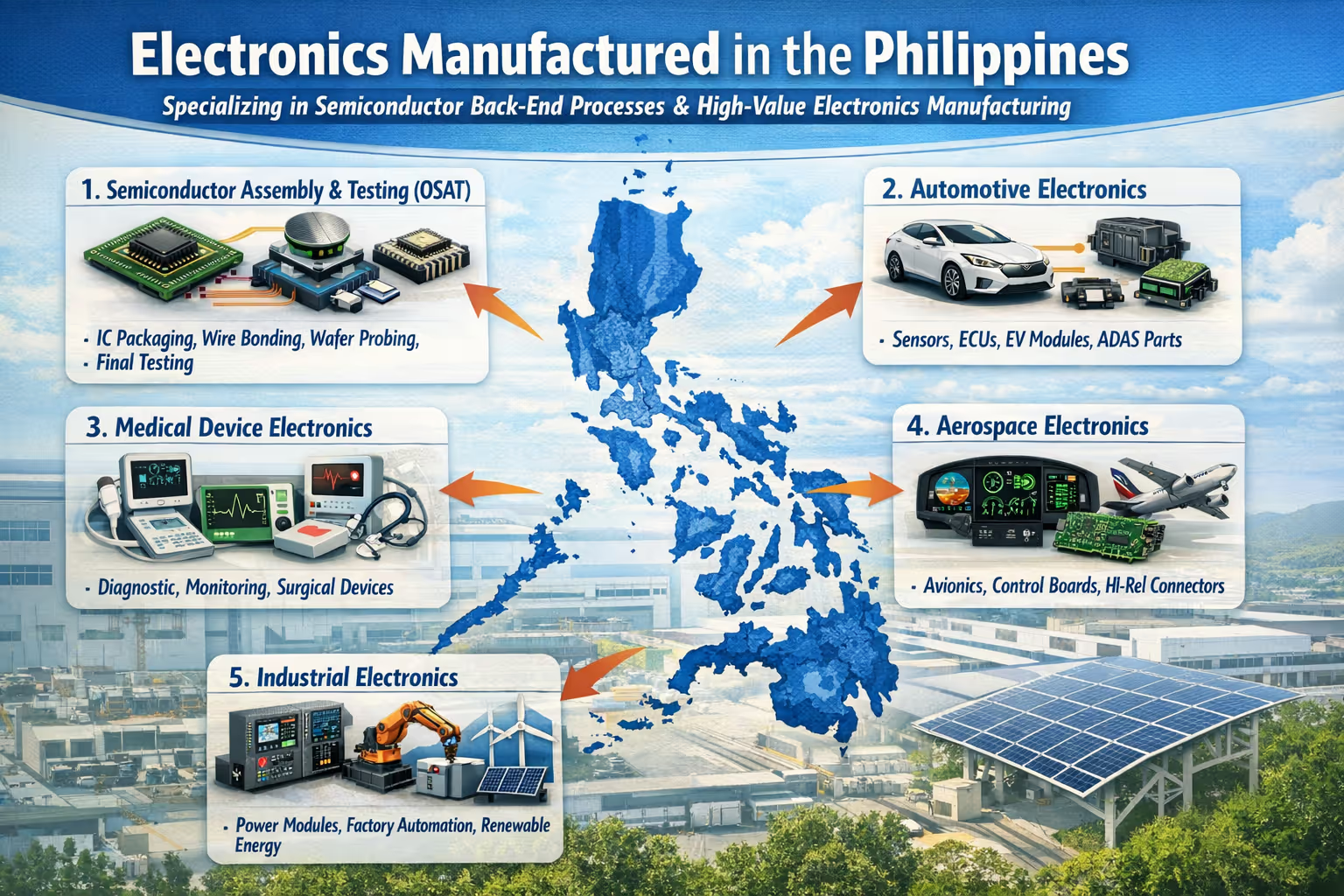
What Types of Electronics Are Manufactured in the Philippines?
The Philippines is not a mass smartphone assembly powerhouse like Vietnam. Instead, it has built a strong specialization in semiconductor back-end processes and high-value electronics manufacturing services (EMS).
Here’s a deeper look:
1. Semiconductor Assembly and Testing (OSAT)
The Philippines is one of the world’s established hubs for Outsourced Semiconductor Assembly and Test (OSAT) services.
This includes:
- IC packaging
- Wire bonding and flip-chip processes
- Wafer probing
- Final testing and burn-in
- System-in-package (SiP) assembly
Many global chipmakers rely on Philippine facilities for back-end processing before chips are shipped to OEMs.
The country has decades of experience in:
- Power management chips
- Memory packaging
- Automotive-grade semiconductors
- Industrial microcontrollers
This makes the Philippines especially relevant in the post-chip-shortage era, where supply chain diversification is critical.
2. Automotive Electronics
The Philippines plays a growing role in the global automotive electronics supply chain.
Manufacturing includes:
- Sensors (temperature, pressure, position)
- Control units (ECUs)
- Power modules for electric vehicles
- ADAS-related sub-assemblies
- Industrial relays and connectors
With the global EV market expanding, demand for automotive-grade semiconductor assembly and electronic modules continues to rise.
Automotive electronics require:
- High reliability
- ISO/TS certification
- Long product lifecycle support
The Philippines’ experience in precision semiconductor packaging makes it a natural fit for this segment.
3. Medical Device Sub-Assemblies
The Philippines is an important location for electronics used in:
- Diagnostic imaging devices
- Monitoring equipment
- Surgical instruments
- Wearable health technology
Medical electronics manufacturing requires:
- Cleanroom environments
- Strict quality management (ISO 13485)
- Traceability systems
Because of its skilled English-speaking workforce and regulatory compliance familiarity, the Philippines is attractive for medical OEMs seeking high-quality EMS partners.
4. Aerospace-Grade Electronics
Although smaller in scale, the Philippines supports aerospace electronics assembly such as:
- Avionics sub-assemblies
- High-reliability connectors
- Control boards for aircraft systems
Aerospace manufacturing demands:
- Extremely low defect rates
- Robust testing standards
- Long-term documentation control
This segment reinforces the country’s reputation as a precision electronics destination rather than a mass-production hub.
5. Industrial Electronics
Industrial electronics manufacturing includes:
- Power supply modules
- Factory automation components
- Control boards for heavy machinery
- Renewable energy electronics
As Southeast Asia industrializes, the Philippines increasingly supports industrial OEMs serving both regional and global markets.
What are Key Advantages of Manufacturing Electronics in the Philippines
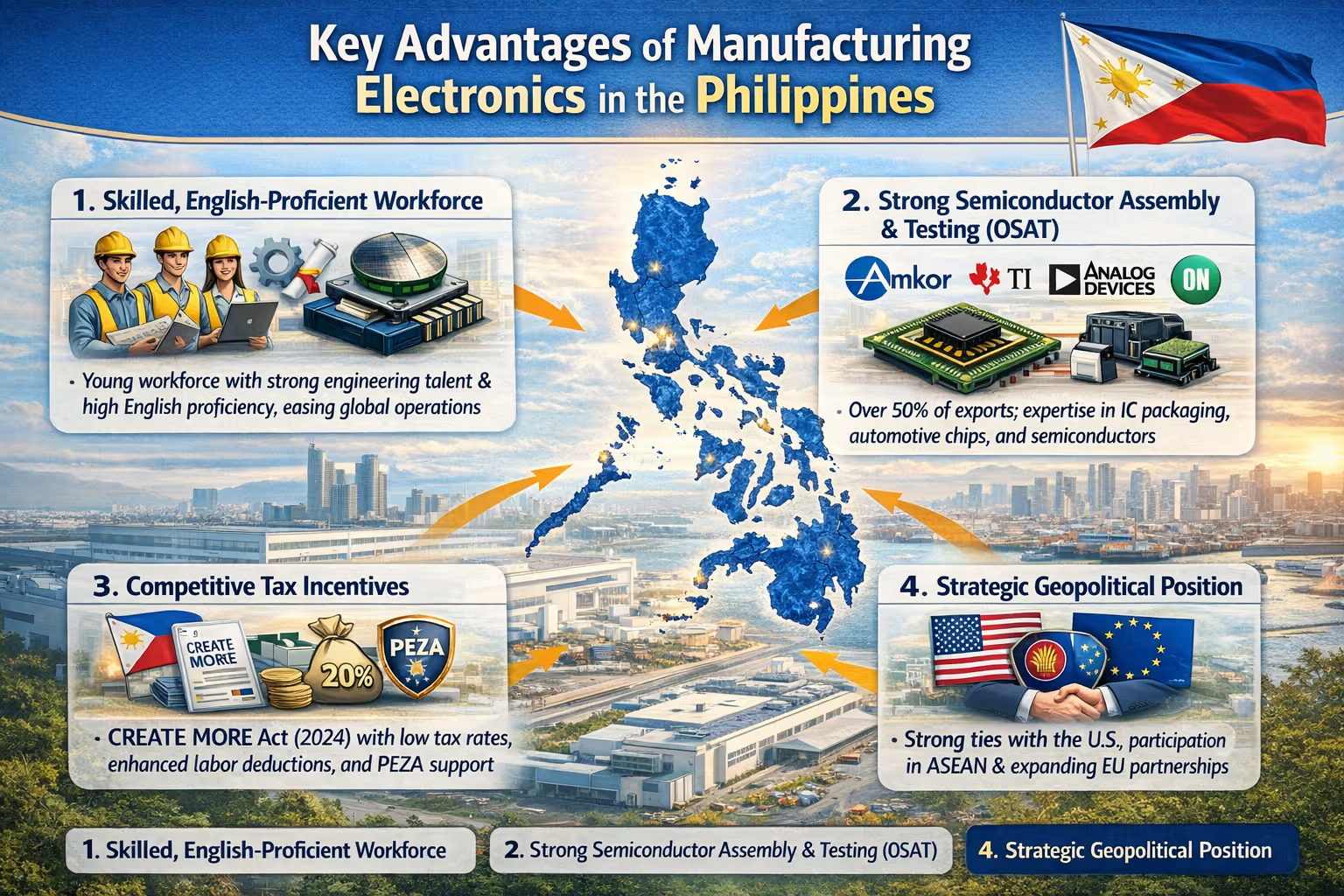
1. Skilled, English-Proficient Workforce
The Philippines has one of the youngest populations in Asia, with a median age of around 25–26 years. The labor force continues to expand, providing long-term workforce stability.
The country produces thousands of engineering and technical graduates annually, supporting electronics, semiconductor, and industrial manufacturing sectors.
English proficiency is a major advantage. For multinational manufacturers, this reduces friction in:
- Technical documentation
- Quality control coordination
- Engineering collaboration
- Cross-border management
This lowers communication barriers compared to many regional alternatives.
2. Strength in Semiconductor Assembly and Testing (OSAT)
Semiconductors form the backbone of Philippine electronics exports, which account for over 50% of the country’s total export revenue.
The Philippines has developed deep expertise in:
- IC packaging (QFN, BGA, flip-chip)
- Automotive-grade chip testing
- Power semiconductor assembly
- Memory chip packaging
Major global firms such as Amkor, Texas Instruments, Analog Devices, ON Semiconductor, and SFA Semicon operate locally.
Unlike Vietnam’s focus on large-scale final assembly, the Philippines specializes in back-end semiconductor processing — a critical link in the global chip supply chain.
3. Competitive Tax Incentives Under the CREATE MORE Act
The CREATE MORE Act (Republic Act No. 12066), signed in 2024, strengthened incentives for export-oriented manufacturers.
Key benefits include:
- Corporate income tax rates as low as 20% for registered enterprises
- Enhanced deductions for labor and power expenses
- Clarified VAT exemptions for local purchases
- Support through PEZA economic zones
For electronics manufacturers operating on long investment cycles, tax predictability improves capital planning and ROI stability.
4. Strategic Geopolitical Positioning
Geopolitical diversification is increasingly central to supply chain strategy.
The Philippines maintains:
- Strong trade and defense ties with the United States
- Participation in ASEAN and RCEP trade frameworks
- Expanding economic partnerships with the EU
Compared to China, the Philippines faces less tariff exposure and fewer technology export restrictions from Western markets.
Although regional tensions exist, many multinational firms view the country’s Western alignment and diversified trade relationships as supportive of long-term supply chain resilience.
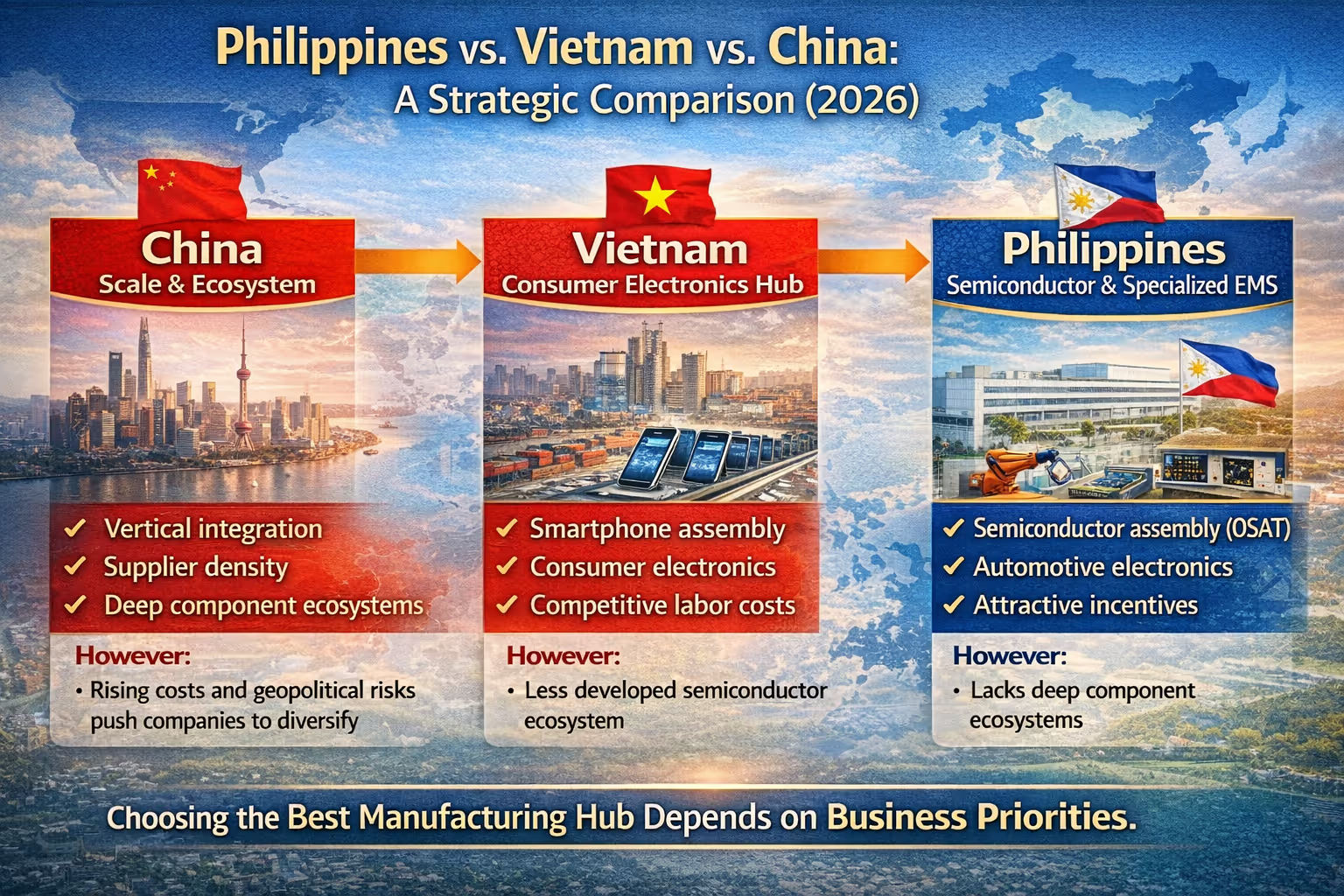
Philippines vs. Vietnam vs. China: A Strategic Comparison (2026)
Choosing between these three manufacturing hubs depends on business priorities.
China: Scale and Ecosystem Dominance
China remains unmatched in:
- Vertical integration
- Supplier density
- Raw material access
- Component ecosystem depth
If a company requires:
- End-to-end manufacturing
- Rapid scaling
- Complete local sourcing
China still offers advantages.
However, rising labor costs and geopolitical exposure have pushed many companies to diversify.
Vietnam: Mass Consumer Electronics Powerhouse
Vietnam has become the preferred destination for:
- Smartphone assembly
- Consumer electronics
- Large-scale OEM manufacturing
Advantages include:
- Competitive labor costs
- Aggressive FDI attraction
- Strong export growth
However, Vietnam’s semiconductor ecosystem remains less mature than China’s, and its specialization is more focused on final assembly rather than back-end chip processing.
Philippines: Semiconductor and Specialized EMS Focus
The Philippines occupies a distinct niche.
It is strongest in:
- Semiconductor assembly and testing (OSAT)
- Automotive electronics
- Medical device electronics
- High-reliability industrial electronics
Compared to Vietnam, it offers:
- Higher English proficiency
- Stronger semiconductor legacy
- More mature OSAT infrastructure
Compared to China, it offers:
- Lower geopolitical exposure for Western firms
- Competitive labor costs (though not the lowest in ASEAN)
- Attractive tax incentives via CREATE MORE Act
However, it lacks:
- Deep upstream component ecosystems
- Ultra-large-scale consumer electronics clusters
What Are the Challenges of Electronics Manufacturing in the Philippines?
Despite its strengths in semiconductor assembly and high-value EMS, the Philippines faces structural constraints that companies must evaluate before investing.
1. High Electricity Costs
The Philippines has some of the highest industrial electricity rates in Southeast Asia.
Electronics manufacturing — particularly semiconductor assembly — requires:
- Climate-controlled environments
- 24/7 production lines
- Precision testing equipment
Power-intensive operations can significantly impact margins compared to Vietnam or Malaysia.
While the government is expanding renewable energy capacity and grid upgrades, electricity pricing remains a key consideration for cost-sensitive manufacturers.
2. Infrastructure Concentration in Key Zones
Electronics manufacturing is heavily concentrated in PEZA zones such as:
- Laguna
- Cavite
- Batangas
- Cebu
Within these hubs, infrastructure is relatively stable. However, outside major economic zones:
- Road logistics can be slower
- Port congestion in Manila can create delays
- Inter-island transport adds complexity
Compared to China’s deeply integrated logistics ecosystem, the Philippines’ infrastructure is still developing.
3. Limited Upstream Component Ecosystem
Unlike China, the Philippines does not yet have a fully integrated electronics component supply chain.
Many raw materials and intermediate components are still imported from:
- China
- Taiwan
- South Korea
This creates:
- Exposure to external supply shocks
- Longer lead times
- Dependence on regional trade flows
Although the government aims to increase local value-added production, ecosystem depth remains moderate compared to China.
How Can Companies Use SourceReady to Find Electronics Manufacturers in the Philippines?
One challenge sourcing teams face when shifting production to the Philippines is identifying manufacturers with real semiconductor or high-value EMS experience — not just factories offering generic assembly services.
This is where tools like SourceReady become useful.
Using SourceReady, companies can:
- Identify Philippine suppliers specializing in semiconductor assembly (OSAT), automotive electronics, or medical devices
- Filter manufacturers by export history and compliance certifications
- Compare Philippine suppliers against Vietnam or China alternatives for the same product category
More importantly, SourceReady helps teams:
- Cross-check supplier capabilities with structured data
- Verify industry focus rather than relying solely on self-reported claims
- Shortlist manufacturers already integrated into global electronics supply chains
For companies implementing a China Plus One strategy, this approach reduces switching risk and accelerates supplier validation compared to starting discovery from scratch.
Conclusion
The Philippines is not positioned to replace China’s scale or Vietnam’s dominance in mass consumer electronics, but it has established a defensible niche in semiconductor assembly (OSAT), automotive electronics, medical devices, and high-reliability industrial applications. With electronics contributing over 50% of national exports, a strong English-proficient workforce, and competitive incentives under the CREATE MORE Act, it presents a credible option for specialized manufacturing diversification. Constraints such as electricity costs and ecosystem depth remain. For companies pursuing a China Plus One strategy, the Philippines works best as a focused complement — and tools like SourceReady can help identify and validate qualified manufacturers efficiently.
FAQ
1.Is Southeast Asia becoming a semiconductor hub?
Yes. Countries like Malaysia, Vietnam, the Philippines, and Singapore are strengthening their roles in semiconductor assembly, testing, and electronics manufacturing services as global firms adopt China Plus One strategies.
2. What certifications are important for electronics manufacturers?
Key certifications include:
ISO 9001 (quality management)
ISO 13485 (medical devices)
IATF 16949 (automotive)
ISO 14001 (environmental management)
RoHS and REACH compliance
Certification requirements depend on the industry segment.

Find the sourcing tools you need.
Explore how SourceReady helps you research products, discover suppliers, verify factory information, analyze trade data, and manage your sourcing workflow in one place
Explore Features
Graduating from USC with a background in business and marketing, Judy Chen has spent over a decade working in e-commerce, specializing in sourcing and supplier management. Her experience includes developing strategies to optimize supplier relationships and streamline procurement processes for growing businesses. As SourceReady’s blog writer, Judy leverages her deep understanding of sourcing challenges to create insightful content that helps readers navigate the complexities of global supply chains.