Pickleball has moved from niche pastime to global growth engine. Participation in the U.S. alone has surged past 13 million players, and the global equipment market is projected to exceed USD 250–300 million within a few years. Retailers are expanding assortments. Brands are launching performance lines. Private-label sellers are crowding in. Demand for paddles—especially composite and carbon-fiber rackets—is rising faster than many factories can scale.
If you're sourcing pickleball rackets, this guide helps you map the landscape quickly. You’ll see where the strongest suppliers sit, which countries fit which product tiers, and how to check for compliance without slowing down your timelines. You’ll also get a step-by-step sourcing playbook—pragmatic, concise, and built for audits. And when the process gets messy (it will), tools like SourceReady can streamline supplier due diligence and shortlisting.
Let's dive in now!

There's a better way to source ❤️
Watch the video to see how SourceReady helps brands move from product ideas to trusted supplier relationships faster
Watch the VideoGlobal Market Size
The global pickleball market is expanding at 9–12% CAGR, supported by several overlapping growth drivers that signal sustained demand—rather than a short-term trend.
Primary Market Dynamics
Participation Growth: The sport is attracting younger athletes, recreational adults, and senior players, creating a rare multi-generational customer base.
Institutional Adoption: Schools, clubs, and community centers are adding courts, increasing recurring demand for paddles and replacement gear.
Retail Expansion: Major sporting-goods chains and online marketplaces now treat pickleball as a standalone category. This pushes factories to increase capacity and invest in higher-performance construction methods.
Innovation Pull: The shift toward thermoformed carbon paddles, elongated shapes, and advanced core materials has created a premium segment with strong margins and fast iteration cycles.
Accessibility: Compared with tennis or squash, pickleball is easier to learn and cheaper to equip. That keeps entry-level demand healthy and predictable.
Category Composition
Paddles represent 35–40% of total category revenue. Composite and carbon-fiber paddles dominate growth, while entry-level polypropylene-core paddles hold steady volume. As performance expectations rise, the supplier landscape becomes more specialized—meaning your sourcing decisions matter much more than in generic sporting-goods categories.

Top Countries to Find Suppliers for Pickleball Rackets
1. China
China remains the dominant manufacturing base for pickleball paddles, backed by decades of composites experience, deep material supply chains, and a factory ecosystem that can scale from small batches to mass-market global volumes.
Strengths
- Deep expertise in carbon fiber, fiberglass, and thermoforming.
- Broad range of factories covering entry, mid-tier, and premium.
- Strong vertical integration for materials and surface treatments.
- Competitive tooling and MOQs.
Risks / Considerations
- U.S. import duties (Section 301).
- IP sensitivity—especially for branded surface textures and core designs.
- Large supplier pool → need stronger due diligence.
Best For: Mid- to high-end composite and carbon-fiber paddles; fast iteration cycles; ODM development.
2. Taiwan
Taiwan is a precision-composites powerhouse, leveraging its heritage in badminton, table-tennis, and tennis equipment to produce highly consistent, high-performance pickleball paddles for premium brands.
Strengths
- Excellent carbon-fiber layup quality.
- Mature manufacturing for racket-sport goods.
- Predictable lead times and strong engineering talent.
Risks / Considerations
- Higher labor and material costs.
- Smaller factory pool compared to China.
Best For: Premium paddles, OEM customization, consistent QC.
3. Vietnam
Vietnam has quickly emerged as a diversification hub as brands look for alternatives to China, with growing clusters of composite-goods factories supported by foreign investment and competitive labor economics.
Strengths
- Increasing investment from Chinese and Korean sporting-goods manufacturers.
- Attractive duty savings for U.S. importers (no Section 301).
- Good for mid-tier paddles as capabilities expand.
Risks / Considerations
- Not all factories are vertically integrated; some import cores and laminates.
- Engineering depth still developing.
Best For: Mid-range paddles with competitive landed cost.
4. Thailand
Thailand hosts a developing niche for composite sporting equipment, supported by industrial stability, trained labor, and a reputation for producing durable, technically consistent composite products.
Strengths
- Skilled in composite goods manufacturing.
- Stable political environment, predictable export processes.
Risks / Considerations
- Limited pickleball-specific capacity.
- Higher MOQs and less flexibility.
Best For: Brands needing stable, specialty composite manufacturing and valuing consistency over rapid iteration.

5. Pakistan
Pakistan’s long-standing sports-equipment industry—especially in stitched goods and certain composites—positions it as a low-cost option for basic paddles and high-volume promotional SKUs.
Strengths
- Low labor costs.
- Flexible MOQs for basic paddles.
Risks / Considerations
- Limited capability with carbon-fiber and thermoformed high-performance paddles.
- QC variance across suppliers.
Best For: Entry-level paddles and promotional SKUs.

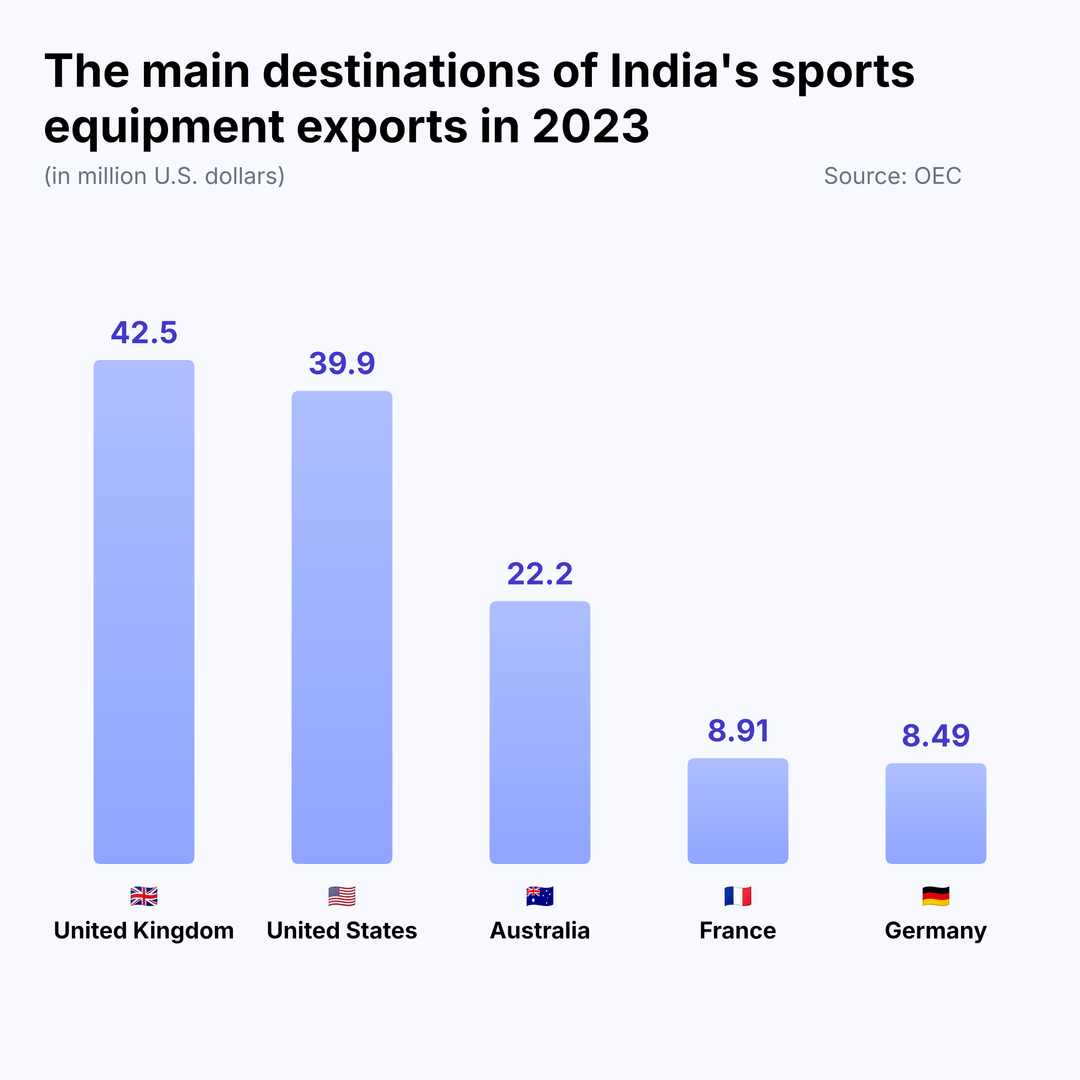
6. India
India is expanding into paddle-sports manufacturing, encouraged by government export incentives and increasing interest in composite manufacturing, though capability remains less mature than neighboring markets.
Strengths
- Cost-competitive.
- Government incentives for exports.
Risks / Considerations
- Small supplier base with limited composite specialization.
- Longer product-development cycles.
Best For: Entry-tier paddles, bundles, beginner sets.
Sourcing Checklist
Below is a practical, no-nonsense checklist you can use internally or share with your compliance team.
1. Define Your Product Requirements
Before contacting any factory, lock your spec sheet:
- Core: Nomex, polymer honeycomb, or PP foam. State density and thickness (commonly 14–16 mm).
- Surface: Carbon fiber (T700/T800), fiberglass composite, or hybrid.
- Edging: Edge-guard width, adhesive type, durability rating.
- Weight Targets: Standard 7.5–8.5 oz; tolerance must be explicit.
- Play Characteristics: Control vs. power mapping.
- Certifications: USA Pickleball approval if you plan to target competitive players.
Your goal: no room for interpretation. Ambiguity is the #1 cause of delays and rework.
2. Build a Country Shortlist Using a Fit-for-Purpose Model
Map each need to capabilities:
- Complex carbon-fiber construction → China / Taiwan.
- Cost-optimized SKUs → Vietnam / Pakistan / India.
- Stable premium OEM → Taiwan / Thailand.
Weight each country against:
- Landed cost
- Lead time
- Engineering depth
- Tariff exposure
- Capacity flexibility
Tools like SourceReady can filter suppliers using material capability, certifications, and past performance—saving you days in pre-screening.
3. Run a Compliance-First Supplier Evaluation
Check for:
- Factory ownership transparency (avoid multi-layered intermediaries).
- ISO 9001 or equivalent QC systems.
- Composite handling expertise (ask for past production records).
- Material sourcing (traceability for carbon fiber, resin, and cores).
- Labor practices: Written policies, on-site conditions, age-verification system.
- Environmental controls: VOC management for resin-based production.
Request documents upfront. If they hesitate, that’s your answer.
4. Sample, Stress Test, and Benchmark
Request 2–3 rounds of samples:
- Round 1: Proof of capability—basic construction, weight consistency.
- Round 2: Performance tuning—sweet spot alignment, deflection, edge adhesion.
- Round 3: Production-ready tolerance check.
Your tests should include:
- Drop tests from multiple heights.
- Edge-guard peel strength.
- Surface abrasion testing.
- Moisture-resistance checks.
Record everything in a standardized benchmarking sheet. This becomes part of your audit trail.
5. Build a Transparent Cost Model
Break your quote into:
- Materials (core + laminate + resin).
- Labor.
- Tooling.
- Packaging.
- Compliance testing.
- Freight.
- Duties and taxes.
Then model landed cost across countries. China may give you a low FOB, but Vietnam might win after duties. Taiwan may cost more, but reduce defect-related losses.
Track your cost drivers monthly. Composite material prices move.
6. Run Data-Driven Supplier Due Diligence
Analyze:
- On-time delivery rate.
- Defect rate history.
- Customer concentration risk (factories overloaded by one major brand often push small buyers aside).
- Capacity transparency (ask for monthly max and current utilization).
- Engineering responsiveness (time from request → updated spec).
7. Lock a Manufacturing Agreement With Clear Tolerances
Your contract should include:
- Weight tolerance ± grams.
- Thickness tolerance ± mm.
- Surface roughness range.
- Edge-adhesion specifications.
- Packaging specs.
- Warranty terms.
- Confidentiality and IP clauses.
Add non-performance penalties only if appropriate for your relationship stage.
8. Establish Pre-Shipment Inspection and Testing Protocols
Implement:
- AQL levels for cosmetic and structural defects.
- Random sampling across weight, thickness, and deflection.
- Photo and video proof on every batch.
- Periodic third-party lab tests for resiliency and composite bonding.
Your inspection matrix is your insurance policy.
9. Optimize for Long-Term Collaboration
Great suppliers invest in you when you invest in them.
Align on:
- Quarterly cost reviews.
- Forecast sharing.
- Joint development for new paddle technologies.
- Co-owned tooling arrangements if needed.
- Transparent communication around delays or engineering changes.
High-performance paddles require iterative partnerships, not transactional behavior.
Conclusion
Sourcing pickleball rackets isn’t complicated—but it is strategic. Each country offers a different blend of cost, engineering depth, compliance maturity, and risk exposure. China and Taiwan excel in advanced composites. Vietnam delivers cost advantages with improving capabilities. Thailand provides steady niche capacity. Pakistan and India handle entry-level SKUs well.
Your best approach is a portfolio that matches product tiers to country strengths while modeling true landed cost, not just quoted FOB. Pair that with a compliance-first sourcing process, rigorous sampling, and ongoing performance tracking, and you’ll build a supply chain that scales without surprises.
When you’re ready to shortlist suppliers, validate certifications, or benchmark factories, SourceReady can help you move from guesswork to data-driven selection. The paddle market is competitive—but with the right mix of countries and controls, you’ll stay ahead.
FAQ
1. What materials should I look for in a quality pickleball paddle?
High-quality paddles typically use:
Carbon fiber (T700/T800) for power and durability
Fiberglass for softer feel and control
Polymer honeycomb cores (most common), or Nomex for a stiffer, faster response Clear specifications on core density, thickness, and laminate quality matter more than brand names.
2. How do I determine whether a supplier is actually a factory and not a trader?
Look for:
Production-line photos with staff and machinery
Business license matching the factory address
Ability to discuss materials and engineering details in depth
Reasonable MOQs and transparent lead times

Find the sourcing tools you need.
Explore how SourceReady helps you research products, discover suppliers, verify factory information, analyze trade data, and manage your sourcing workflow in one place
Explore Features
Graduating from USC with a background in business and marketing, Judy Chen has spent over a decade working in e-commerce, specializing in sourcing and supplier management. Her experience includes developing strategies to optimize supplier relationships and streamline procurement processes for growing businesses. As SourceReady’s blog writer, Judy leverages her deep understanding of sourcing challenges to create insightful content that helps readers navigate the complexities of global supply chains.