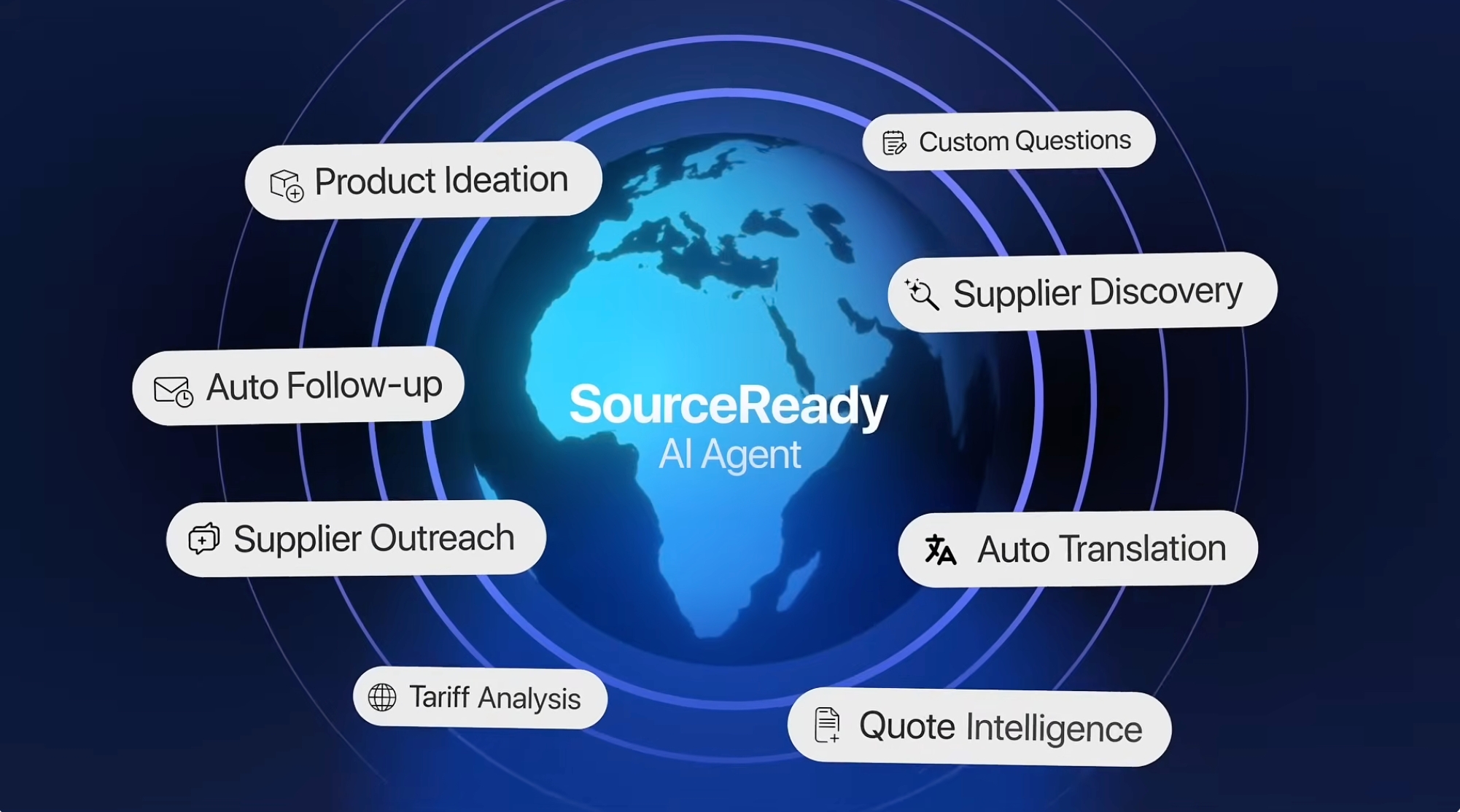
In 2026, scaling a brand is no longer about adding more suppliers — it is about deploying the right sourcing tools early enough to prevent breakdowns in visibility, compliance, and speed. The modern sourcing stack is tool-led: AI supplier discovery, real-time production management, structured product data, and automated compliance monitoring.
Brands that implement an integrated tool stack — combining AI discovery, SRM/PLM systems, and ESG automation — are reducing operational overhead by up to 30% while building diversified manufacturing networks that are far more resilient to geopolitical and regulatory shocks.
This guide breaks down the exact tools scaling brands are using in 2026, how they fit together, and when each becomes non-negotiable.
The Growth Inflection Point: Why "Manual" No Longer Scales
In the early stages, sourcing is often founder-led and highly manual. However, once a brand reaches the "Scale Phase"—defined by multiple SKU lines and international distribution—the reliance on spreadsheets leads to Information Asymmetry.
The Three Scaling Friction Points:
- The Transparency Gap: As you add sub-tier suppliers (who supply your suppliers), visibility drops.
- The Compliance Burden: Scaling into the US or EU in 2026 requires meeting strict ESG (Environmental, Social, and Governance) reporting standards that manual vetting cannot track.
- The Velocity Problem: Your competitors are using AI to find factory openings in real-time. If you are waiting on email replies, you are already behind.
The Tool Stack That Scaling Brands Actually Use
Before diving into theory, it’s worth being explicit: brands that scale smoothly in 2026 almost always deploy tools in four layers:
- AI Supplier Discovery & Verification – finding and validating factories fast
- Supplier Relationship Management (SRM) – running production in real time
- Product Lifecycle Management (PLM) – locking technical specifications
- Compliance & Supply Chain Mapping – staying audit-ready by default
Trying to scale without one of these layers usually works — until it suddenly doesn’t.
1. AI Supplier Discovery: The First Tool You Should Adopt
The earliest scaling failures almost always start at discovery. Founder-led sourcing and spreadsheets work at low volume, but they collapse once a brand manages multiple SKUs, regions, or backup suppliers.
Why AI Discovery Becomes Mandatory
AI-led discovery tools are now table stakes because they solve three problems simultaneously:
- Speed: identifying viable factories in days, not weeks
- Verification: validating suppliers beyond self-reported profiles
- Optionality: maintaining backup suppliers before disruption hits
Brands that maintain a 3:1 ratio of backup-to-primary suppliers are consistently more resilient during supply shocks.
SourceReady AI (Discovery & Verification)
SourceReady AI is used as the discovery layer because it functions as a verification engine, not just a supplier directory. In complex categories like Personal Care, Fragrance, or regulated consumer goods, this distinction matters.
Key capabilities include:
- Deep-tier verification: by cross-referencing factory IDs with government tax, export, and customs records in regions such as Vietnam and India
- Intent-based matching: allowing technical queries like: “Find a lab in India capable of cold-press botanical extraction with a 5,000-unit MOQ”
- Delivery reliability scoring: derived from B2B reviews, shipment data, and logistics performance rather than marketing claims
At scale, discovery speed directly translates into competitive advantage.
2. SRM Tools: Where Scaling Brands Gain or Lose Control
Once suppliers are selected, execution becomes the bottleneck. This is where many brands fail — not because they chose the wrong factory, but because communication and visibility break under volume.
SRM tools such as Anvyl or Kodiak Hub become the operational backbone.
They replace fragmented communication (email, WhatsApp, spreadsheets) with a single source of truth that includes:
- Automated production milestones, logged directly by factories
- Real-time visibility into material arrival, production start, and shipment readiness
- Integrated quality control, where inspectors upload photos and reports for immediate approval
For scaling brands, SRMs are not about convenience — they are about preventing silent delays.
3. PLM Systems: Preventing Technical Drift at Scale
As production volumes increase or manufacturing regions shift, technical consistency becomes fragile.
PLM systems such as Centric store and govern tech packs, materials, measurements, and construction details.
For categories like Footwear or complex consumer products, PLMs ensure:
- Identical specifications across factories
- Faster supplier onboarding when production shifts regions
- Protection against sample drift during rapid scale-up
Without a PLM, scaling introduces invisible quality risk.
4. Compliance & ESG Tools: From “Nice to Have” to Mandatory
In 2026, being scale-ready means being audit-ready by default.
ESG & Supply Chain Mapping Tools
- EcoVadis / Worldly provide standardized ESG scoring that retailers and distributors increasingly require
- Exiger maps supply chains down to Tier 3 and Tier 4, flagging risks before shipments are seized or delayed
If restricted materials or labor practices appear anywhere in the supply chain, these tools surface issues early — when action is still possible.
How the Tools Work Together (End-to-End Workflow)
Scaling brands use tools as a connected system, not as standalone software. The goal is to create a continuous flow of data from supplier discovery all the way through production and delivery, so decisions are made proactively rather than in response to problems.
A typical end-to-end workflow looks like this:
- Discovery – Use AI discovery tools to identify 8–12 verified suppliers in low-risk or strategically important regions. At this stage, the focus is on capability fit, capacity availability, and verification — not pricing alone.
- Filtering & Risk Screening – Apply ESG and compliance tools to narrow the longlist down to 2–3 suppliers that meet regulatory, labor, and sustainability requirements. This prevents wasted time onboarding partners that will fail audits later.
- Onboarding & Specification Lock-in – Transfer technical drawings, formulations, and tech packs from your PLM directly to the selected supplier. This ensures all parties are working from identical specifications from day one.
- Execution & Monitoring – Launch production milestones in your SRM. Factories update progress in real time, QC uploads inspection results, and delays are flagged early — before they cascade into missed launch dates.
When these tools are integrated, sourcing shifts from a reactive firefighting function into a predictable operating system.
Technical Checklist Before You Commit to Any Tool
Before adopting any sourcing or supply chain software, scaling brands evaluate tools through a technical — not just functional — lens. A tool that works today but cannot integrate or scale will quickly become a liability.
Key questions to ask include:
- Is it API-first? Can the tool integrate cleanly with your ERP (NetSuite, SAP), WMS, or finance systems without manual data re-entry?
- Does it support mobile uploads? Factory-floor updates, QC photos, and inspection reports must be captured in real time, often on mobile devices.
- Does it centralize data ownership? You should be able to export supplier, production, and compliance data if you ever change tools.
- Can it generate forward-looking insights? For example: identifying which suppliers are most at risk due to weather patterns, port congestion, or geopolitical shifts.
- Does it scale across regions and categories? Tools should support multiple currencies, units of measurement, regulatory frameworks, and product types.
If a tool cannot grow with your operational complexity, it will eventually slow you down rather than accelerate you.
Conclusion: Tool-Led Scaling Is the New Default
In 2026, supplier networks are no longer managed manually — they are orchestrated through software.
The brands that scale successfully are not the ones with the most suppliers, but the ones with the highest-quality data about them. Tools enable speed, visibility, and optionality — the three pillars of modern sourcing.
Treat your supplier network as digital infrastructure, not a spreadsheet. The difference compounds faster than most brands expect.
FAQ
1. How does AI help with supplier verification?
AI tools analyze customs data, regulatory records, logistics performance, and third-party signals to generate reliability scores that manual audits cannot match in speed or depth.
2. What is the most cost-effective way to scale a supplier network?
Regional clustering. Concentrating suppliers within compatible trade hubs reduces freight costs and simplifies SRM management.
3. Can small brands realistically use these tools?
Yes. Early adoption allows small teams to operate with enterprise-level visibility and access factories that were previously unreachable.