Coffee isn’t a “nice-to-have” SKU anymore. It’s a global staple with tight margins, emotional branding, and zero tolerance for quality or compliance mistakes.
Depending on the methodology, the global coffee market in 2022 is valued at USD 27 billion, with most analysts projecting steady mid-single-digit CAGR into the 2030s. Consumption keeps rising in Europe, North America, and Asia, driven by specialty cafes, Ready to Drink coffee, and workplace consumption.
If you’re buying green or roasted beans, you’re not just choosing a flavor profile. You’re locking in:
- Origin-linked quality and risk
- Compliance exposure (deforestation, labor, residues)
- Landed cost and FX sensitivity
- Supply resilience under climate volatility
This guide gives you a country-by-country view plus a practical, sourcing checklist. You’ll walk away knowing where to buy, how to structure a compliant supply base, and how tools like SourceReady can help you filter suppliers before you sign anything.
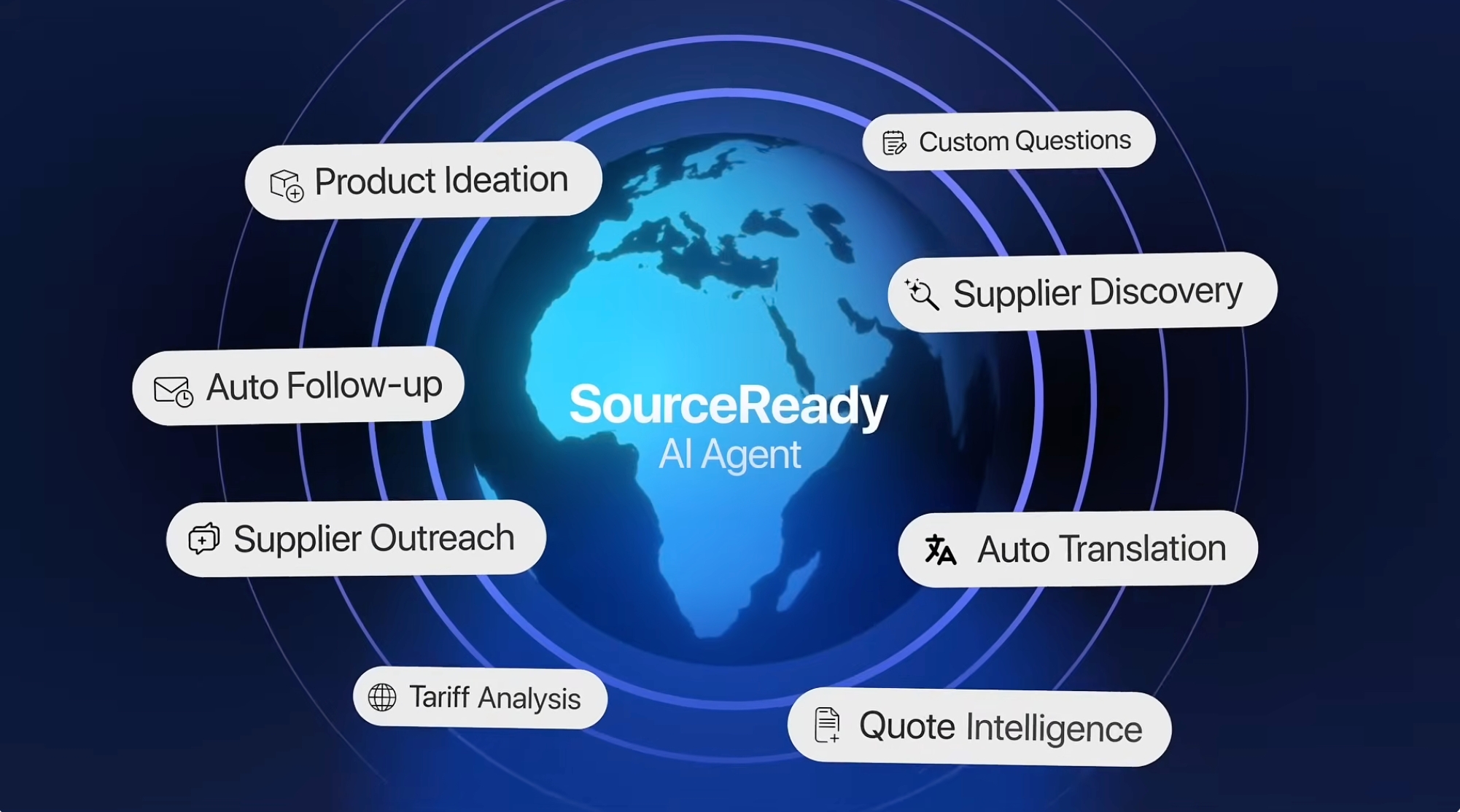
There's a better way to source ❤️
Watch the video to see how SourceReady helps brands move from product ideas to trusted supplier relationships faster
Watch the VideoGlobal Coffee Market Size
- In 2022, the Global Specialty Coffee Market was valued at USD 27.0 Billion
- expected to reach USD 80.1 Billion in 2032 from 2023 to 2032, this market is estimated to register a CAGR of 11.8%.
- Europe, North America, and Asia-Pacific drive most demand growth, with premium and sustainably sourced coffees gaining share.

On the supply side:
- Brazil and Vietnam alone account for ~55% of global coffee production, and the top 10 producers supply almost 90% of the world’s coffee.
- World production of green coffee was about 11.1 million tonnes in 2023.
For you, this means three things:
- You can’t ignore Brazil or Vietnam.
- You shouldn’t rely only on Brazil or Vietnam.
- Your sourcing strategy has to balance price, flavor, and policy risk—especially climate and deforestation regulation.
Introduction to Four Coffee Bean Varieties
1. Arabica
Origin and Cultivation: Native to the southwestern highland forests of Ethiopia, it later spread to Yemen, the Middle East, and then to South America, Central America and other regions through trade. It thrives at high altitudes of 1,000 - 2,200 meters, requiring cool temperatures and fertile volcanic soil. However, it is vulnerable to pests and diseases and has low yields.
Bean and Flavor Traits: The beans are medium-sized and oval with a curved crease. It has a mild and complex flavor, often with sweet floral, fruity, or chocolate notes, and low bitterness. Its caffeine content is between 0.8% - 1.5%, which is relatively low among coffee beans.
Market Status: It accounts for 60% - 70% of global coffee production and is the core raw material of specialty coffee, widely used in freshly brewed coffee in cafes and households.
2. Robusta
Origin and Cultivation: Originating from sub-Saharan Africa, it is now mainly grown in West Africa, Indonesia, Vietnam and other regions. It is suitable for low-altitude areas below 1,000 meters, with hot and humid climates. It has strong adaptability, is resistant to diseases and pests, and has high yields, which makes its planting cost relatively low.
Bean and Flavor Traits: The beans are small and round with a straight crease. Its flavor is strong and bitter, with earthy, nutty or woody notes, and low acidity. Its caffeine content is as high as 1.8% - 2.7%, almost twice that of Arabica.
Market Status: It accounts for 30% - 40% of global production. Due to its bold flavor and high crema production, it is often used in instant coffee, espresso blends, and as a filler in ground coffee.
3. Liberica
Origin and Cultivation: Native to Liberia and other western African countries, it is now mainly commercially cultivated in Southeast Asia such as the Philippines and Malaysia. It grows in lowland tropical areas, tolerating heat and humidity. The trees are the tallest among coffee species, up to 9 - 20 meters, which brings certain difficulties to harvesting.
Bean and Flavor Traits: It has the largest beans among the four types, which are elongated and irregular. Its flavor is very unique, showing a combination of fruity, floral and smoky notes, with a woody and nutty undertone. Its caffeine content is about 1.2% - 1.7%, at a medium level.
Market Status: It accounts for less than 2% of global trade. It is a niche coffee bean, but it has important cultural significance in the Philippines and other regions, and is occasionally used in specialty coffee or local traditional brews.
4. Excelsa
Origin and Cultivation: It was first discovered in Africa and is now mainly grown in Southeast Asia. It was once regarded as an independent species, but now it is reclassified as a subspecies of Liberica. It has similar growth conditions to Liberica and is adaptable to diverse soil environments.
Bean and Flavor Traits: The beans are medium-sized and teardrop-shaped. It has a unique tart and fruity flavor, with bright fruitiness, and can also show notes of dark berries and roasted grains. It is often used in blends to increase the acidity and layering of coffee.
Market Status: Its production scale is extremely small. It is rarely sold as a single-origin coffee in the market and is mostly used in niche specialty coffee blends to enrich the flavor of the coffee.
Top Coffee-Producing Countries You Should Actually Source From
The table below focuses on major producers that are also practical, scalable sourcing bases for B2B buyers.
1. Brazil
Brazil is your primary volume anchor. It dominates global production and offers huge capacity, diverse regions, and mature export infrastructure. If you’re planning serious volume, Brazil will almost always be part of the conversation.
Main Bean Types: Arabica and robusta (conillon), with a wide range of grades and processing styles.
Key Strengths
- Massive, scalable production suitable for long-term contracts.
- Strong logistics and a large pool of experienced exporters.
- Versatile profiles for blends, retail SKUs, foodservice, and RTD bases.
Key Risks
- Climate shocks (frost, drought) that can move global prices.
- High scrutiny on deforestation and land-use for EU and ESG-focused buyers.
- FX volatility (BRL) impacting landed cost.

2. Vietnam
Vietnam is your robusta powerhouse. It’s built for cost-efficient, high-volume supply and underpins many instant coffee and mainstream blends globally.
Main Bean Types: Predominantly robusta, with a smaller but growing arabica segment.
Key Strengths
- Very competitive robusta pricing for blends, instant, and RTD.
- Large, consistent production that supports big, recurring contracts.
- Emerging higher-quality segments as farming practices improve.
Key Risks
- Perception of “cheap robusta” unless quality is managed and communicated.
- Need tight control on pesticide use and MRL compliance in stricter markets.
- Documentation and ESG quality can vary—stick to experienced exporters.
3. Colombia
Colombia is your go-to for premium washed arabica with a strong origin story. It’s ideal for branded products where you can highlight country of origin.
Main Bean Types: Arabica, mostly washed, from regions like Huila, Nariño, Antioquia, etc.
Key Strengths
- Recognized, marketable origin (“100% Colombian”) for packaging.
- Consistent quality with balanced acidity and sweetness.
- Strong institutional support and professional export ecosystem.
Key Risks
- Weather and crop cycles can create year-to-year volatility.
- Higher FOB prices vs some other Latin origins at comparable grades.
- Regional disruptions can affect specific growing areas and routes.

4. Indonesia
Indonesia brings distinctive flavor and depth to your portfolio. Names like Sumatra and Java add character to dark roasts and blends.
Main Bean Types: Arabica and robusta, with notable regional styles (Sumatra, Java, Sulawesi).
Key Strengths
- Unique profiles with heavy body and earthy complexity.
- Wide range from commercial grades to specialty lots.
- Useful to differentiate blends beyond Latin American flavor profiles.
Key Risks
- Fragmented smallholder base increases traceability and QC workload.
- Weather and infrastructure can impact harvest timing and logistics.
- ESG and documentation quality vary—supplier selection is critical.
5. Ethiopia
Ethiopia is the specialty hero in your origin mix. It’s essential if you sell to specialty roasters, cafes, or subscription models that lean into origin storytelling.
Main Bean Types: Arabica, including heirloom varieties, both washed and natural, from regions like Yirgacheffe, Sidamo, Guji.
Key Strengths
- High-value, distinctive flavor profiles (floral, fruity, complex).
- Strong appeal for single-origin, micro-lot, and “third-wave” products.
- Good margin potential when positioned as premium or limited release.
Key Risks
- Infrastructure and bureaucracy can make planning and lead times tricky.
- Smallholder fragmentation makes lot-level traceability resource-intensive.
- Documentation may lag stricter ESG and regulatory expectations without top-tier partners.

6. Honduras
Honduras is a fast-rising arabica origin that offers solid quality at a more accessible price point than some traditional “premium” origins.
Main Bean Types: Arabica, mainly washed, from multiple growing regions.
Key Strengths
- Strong quality-to-price ratio for mid- to upper-tier blends.
- Growing specialty segment and improved post-harvest practices.
- Increasing availability of certifications (organic, fair-trade, etc.).
Key Risks
- Weather and disease pressure can impact consistency.
- Infrastructure and smaller farm sizes complicate aggregation and logistics.
- Quality can vary more between exporters—requires disciplined QC and supplier evaluation.

Sourcing Checklist
1. Define SKU Specs First
- Cup profile, grade, moisture, processing type.
- Certifications required (organic, fair-trade, etc.).
- Target markets so you know which MRL and labeling rules apply.
2. Find Your Suppliers
- Decide each origin’s role: volume (Brazil, Vietnam), premium/specialty (Colombia, Ethiopia, Honduras), certified/organic (Peru, Honduras, etc.).
- Use SourceReady’s AI supplier search to find suppliers in those origins, filtered by certifications, capacity, and product focus.
- Shortlist only suppliers that match your region, export history to your target markets, and realistic MOQs.
3. Check Compliance & ESG by Origin and Supplier
- Deforestation and land-use risk (especially for EU).
- Food safety: MRL policies, HACCP, lab test reports.
- Labor and social: audit reports and corrective actions.
- Keep a simple risk rating per supplier and origin.
4. Sample and Cup Before Committing
- Get multiple samples per origin/supplier.
- Run standardized cupping with documented scores and notes.
- Decide which lots tie to which SKUs.
5. Run Pilot Shipments for QC
- Place 1–3 trial orders with chosen suppliers.
- Inspect pre-shipment and on arrival.
- Compare against your original specs and cupping records.
- Only then promote suppliers to “approved” for larger volumes.
6. Model Landed Cost, Not Just FOB
- Include FOB, freight, duties, port costs, financing, and FX.
- Compare origins side by side for each SKU.
7. Contract With Specs and Docs Attached
- Attach technical and quality specifications as annexes.
- Define inspection rights, penalties, and dispute processes.
- Specify required documentation per shipment (CO, phytosanitary, tests, sustainability evidence).
8. Maintain a Traceable Data Trail
- Link SKU → origin → supplier → lot → documents.
- Use SourceReady as a source of truth for supplier profiles, certificates, and which SKUs they serve.
- Update this after each season and major audit.
Conclusion
The global coffee market has evolved into an indispensable global staple, driven by unrelenting demand for specialty offerings, convenient RTD options, and workplace consumption—with steady growth set to persist through the 2030s. Success here hinges on navigating concentrated supply chains, mitigating climate and regulatory risks, and meeting strict ESG standards. For B2B buyers, the winning strategy requires diversifying sourcing, rigorous supplier vetting, and end-to-end traceability—non-negotiables that shape brand trust and margins. Ready to build a resilient, compliant supply chain that capitalizes on growth? Start with your tailored sourcing checklist and lock in partners that align with your quality and responsibility goals today.
FAQ
1. How can buyers ensure traceability in their coffee supply chain?
Link SKUs to specific origins, suppliers, and lots; require detailed documentation (certificates, lab reports) per shipment; and use tools to map and track supplier data end-to-end.
2. Are RTD coffee products driving more market growth than traditional brewed coffee?
RTD is a fast-growing segment (paired with specialty cafes) as consumers seek convenience, though traditional brewed coffee remains a staple for households and foodservice.
3. How do climate changes affect coffee sourcing timelines?
Frost, drought, or extreme rainfall can delay harvests or reduce yields—buyers should build flexible lead times and partner with suppliers with climate-resilient farming practices.
Find the sourcing tools you need.
Explore how SourceReady helps you research products, discover suppliers, verify factory information, analyze trade data, and manage your sourcing workflow in one place
Explore Features
Graduating from USC with a background in business and marketing, Judy Chen has spent over a decade working in e-commerce, specializing in sourcing and supplier management. Her experience includes developing strategies to optimize supplier relationships and streamline procurement processes for growing businesses. As SourceReady’s blog writer, Judy leverages her deep understanding of sourcing challenges to create insightful content that helps readers navigate the complexities of global supply chains.