South Korea Battery Supply Chain Report 2025
Created by SourceReady AI agent·2026-1-6
South Korea Battery Supply Chain Report 2025
Executive Summary
South Korea's battery industry stands at a critical juncture in 2025. While the country remains home to three of the world's top six battery manufacturers—LG Energy Solution, SK On, and Samsung SDI—the sector faces mounting pressures from Chinese competition, supply chain vulnerabilities, and evolving market dynamics. This report examines the current state of South Korea's battery ecosystem, identifying 90+ manufacturers in the country, analyzing supply chain dependencies that reach 99.7% for critical minerals, and documenting the aggressive diversification strategy being implemented to secure the industry's future.
Industry Landscape and Market Position
Current Market Performance
South Korea's battery manufacturers are experiencing a period of contraction in global market share despite overall industry growth. From January to October 2025, the combined market share of LG Energy Solution, SK On, and Samsung SDI in global EV battery usage reached 16.0%—a decline of 3.5 percentage points year-over-yearBattery Tech Online (batterytechonline.com). By November 2025, this share had further declined to 15.7%SNE Research (sneresearch.com).
This decline contrasts sharply with China's dominance, which surpassed 77% in the first half of 2025Invest Korea (investkorea.org). In the European market, Chinese battery sales have surged from 47.6% to 60.7% from Q2 2024 onwards, driven by lower-cost optionsInvest Korea (investkorea.org).
However, the broader market context remains positive. The global lithium-ion battery market is projected to grow approximately 31.7% in 2025, reaching around 1,897 GWhInvest Korea (investkorea.org). The South Korean battery materials market alone is expected to expand from $1,073.5 million in 2024 to $2,098.0 million by 2033, representing a CAGR of 6.93%IMARC Group (imarcgroup.com).
Manufacturing Ecosystem
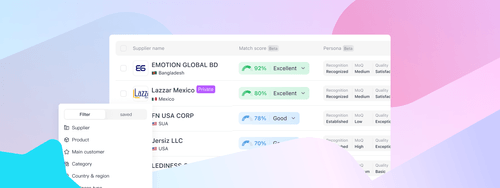
Our research identified 90 battery-related manufacturers operating in South Korea, spanning the entire value chain from raw materials processing to finished battery production. These companies represent diverse capabilities across battery types, components, and manufacturing equipment.
The manufacturing landscape includes:
-
Tier-1 Battery Producers: Major players like LGE Energy Co., Ltd. dominating global markets with advanced lithium-ion technology for EVs, mobility, and energy storage systems
-
Specialized Component Manufacturers: Companies like YOUNGHWATECH Co., Ltd. focusing on secondary battery components, junction boxes, and energy storage solutions
-
Wiring and Integration Systems: Firms such as Leoni Wiring Systems Korea Inc. providing high voltage battery solutions and system integration
-
Materials and Packaging: Diversified manufacturers like Dongwon Systems producing secondary battery components alongside packaging materials
-
Equipment and Machinery: Contract manufacturers like MOOJIN SERVICE CO., LTD. specializing in battery production equipment across assembly, finishing, and plate-making lines
Critical Supply Chain Vulnerabilities
Extreme Import Dependency
The most significant challenge facing South Korea's battery industry is its 99.7% net import reliance for critical mineralsKEIA (keia.org). This dependency is particularly acute for materials sourced from China:
| Critical Material | China Dependency | Strategic Risk |
|---|---|---|
| Precursor cathode materials | 96.6% | Supply disruption, price volatility |
| Synthetic graphite | 93.7% | Limited alternative sources |
| Lithium hydroxide | 80.4% | Geopolitical exposure |
This concentration creates multiple vulnerabilities:
- Supply disruption risk from geopolitical tensions or trade restrictions
- Price volatility exposure with limited negotiating leverage
- Technology transfer concerns as Chinese suppliers control critical processes
- Competitive disadvantage compared to China's vertically integrated supply chains
The Chinese Advantage
Chinese battery manufacturers have leveraged their integrated supply chains and economies of scale to drive battery prices down by 30% in 2024KEIA (keia.org). With nearly 100 producers in the market, China has created intense price competition that Korean manufacturers—with their higher cost structures—struggle to match.
The Chinese dominance extends across the value chain:
- Control of approximately 80% of the global precursor marketDiscovery Alert (discoveryalert.com.au)
- Majority position in cathode materials production
- Significant control over midstream processing and refining
- Increasingly competitive finished battery products, particularly in LFP chemistry
Strategic Response: Supply Chain Diversification
Policy Framework
South Korea has implemented a comprehensive policy framework to address supply chain vulnerabilities:
Special Act on National Resource Security (Effective February 2025):
- Established a Resource Security Council for coordinated response
- Created an early warning system to monitor and respond to supply threats
- Mandated stockpiling requirements for core resources
- Promoted international cooperation to increase resource securityKEIA (keia.org)
National Targets:
- Reduce import dependency on critical minerals to 50% by 2030KEIA (keia.org)
- Establish "China-free" supply chains for critical components
- Build domestic midstream processing capacity
Domestic Production Initiatives
South Korea is making substantial investments in localizing critical supply chain segments:
Completed and Operational (2025)
POSCO Future M Precursor Plant (Gwangyang) - Completed June 2025:
- Produces high-nickel precursors for "China-free" cathode material supply chain
- Supplies Ultium Cells (GM-LG Energy joint venture)
- Annual capacity targets domestic market needsIMARC Group (imarcgroup.com)
LLBS Precursor Plant (Gunsan) - Operational approval April 2025:
- Construction completed September 2025
- Trial production expected before end of 2025
- Critical for domestic precursor production containing nickel, cobalt, manganese, and aluminum
- Addresses Chinese control of 80% of global precursor marketDiscovery Alert (discoveryalert.com.au)
LG Chem and B&M Cathode Material Plant (Gumi) - Expansion completing end of 2025:
- Annual capacity of 60,000 tonnes of cathode materialsAranca (aranca.com)
Under Construction (2026-2029)
LS MnM Nickel Sulfate Plants:
- Onsan facility: Completing first half of 2026, annual capacity of 20,000 tons of nickel sulfate, supplying LLBS for vertical integrationMK Pulse (pulse.mk.co.kr)
- Saemangeum facility: Operational by 2029, annual capacity of 62,000 tonnes, direct supply to LLBS precursor facilityDiscovery Alert (discoveryalert.com.au)
International Partnerships
South Korea is pursuing aggressive diversification through strategic international partnerships:
Canada Partnership
Canada possesses significant reserves of lithium, cobalt, nickel, graphite, and rare earth elements. Key agreements include:
- LG Energy Solution receiving lithium hydroxide from Avalon Advanced Materials Inc. and Snow Lake Resources Inc. starting 2025EAI (eai.or.kr)
- Electrica Battery supplying cobalt sulfateEAI (eai.or.kr)
Indonesia Investment
Korean companies are investing heavily in Indonesian nickel refining:
- LG Energy Solution and LX/POSCO/Huayou Cobalt consortium building nickel refinery with 150,000-ton annual capacityEAI (eai.or.kr)
- Integration with domestic nickel sulfate production for vertical supply chain
Africa Engagement
The Korea-Africa Critical Minerals Dialogue was established following the 2024 Korea-Africa Summit to enhance cooperation. Africa holds approximately 30% of the world's critical mineral reservesKEIA (keia.org).
Tanzania Graphite Supply
POSCO International signed a 25-year contract in June 2023 to receive 750,000 tons of natural graphite from Tanzania, reducing reliance on Chinese graphite imports (which currently represent 93.7% of supply)EAI (eai.or.kr).
Market Dynamics and Strategic Shifts
The ESS Pivot
As EV market growth slows, Korean battery manufacturers are strategically pivoting toward the Energy Storage System (ESS) market, which is experiencing surging demand due to:
- Renewable energy intermittency requiring grid stabilization
- AI data center build-outs creating massive power demands
- Government incentives for renewable energy integration
LG Energy Solution and SK On are actively:
- Expanding ESS battery production capacity
- Converting EV-focused facilities to ESS production
- Developing LFP (Lithium Iron Phosphate) batteries specifically for ESS applicationsKorea Times (koreatimes.co.kr)
Technology Development
Battery Solution Testbed Zone (BST Zone) - Inaugurated April 2025:
- South Korea's largest rechargeable battery research center
- Advances research across entire battery production process
- Focuses on next-generation technologies including solid-state batteriesIMARC Group (imarcgroup.com)
AI Integration Initiative:
Battery manufacturers are integrating AI into:
- Factory operations optimization
- Product development acceleration
- Material development research
- Target: 30%+ productivity increase by 2030Korea Times (koreatimes.co.kr)
Regulatory Landscape
US Market
Korean battery makers maintain a dominant 49% market share in the US marketInvest Korea (investkorea.org). The preservation of the Advanced Manufacturing Production Credit (AMPC) through coordinated government-industry efforts has alleviated uncertainty for Korean firms with US manufacturing investments.
EU Battery Law
Taking effect in 2027, the EU Battery Law mandates a "battery passport" to track lifecycle data including carbon emissions and raw material origin. This presents challenges for Korean manufacturers due to:
- Weaknesses in domestic carbon tracking platforms
- Underdeveloped recycling infrastructure
- Need for comprehensive supply chain documentationKEIA (keia.org)
Competitive Challenges
Financial Pressure
Some Korean battery manufacturers face significant financial challenges:
- SK On has experienced financial overstretch from aggressive global expansion, leading to credit rating downgradesGeopolitical Monitor (geopoliticalmonitor.com)
- Industry-wide pressure from 30% price declines in 2024
- High capital intensity of new facility construction
Individual Company Performance
| Company | Market Performance | Key Challenges | Strategic Response |
|---|---|---|---|
| LG Energy Solution | Growth in installed battery usage | Price competition, margin pressure | ESS market expansion, technology leadership |
| SK On | Growth but financial strain | Overinvestment, credit concerns | Cost reduction, facility optimization |
| Samsung SDI | Declining usage | Dependency on European premium market | Prismatic battery specialization, LFP development |
Raw Materials Supply Chain Strategy
Material-by-Material Sourcing Strategy
Lithium Supply:
- Diversification from Canadian sources (Avalon Advanced Materials, Snow Lake Resources) starting 2025
- Exploration in Argentina for lithium triangle access
- Long-term supply agreements replacing spot market purchases
Nickel Supply:
- Domestic refining through LS MnM plants (20,000 tons by 2026, 62,000 tons by 2029)
- Indonesian refinery investments (150,000-ton capacity)
- Australian and South African sourcing exploration
Cobalt Supply:
- Canadian partnerships for cobalt sulfate
- Indonesian processing integration
- South African mining partnerships under development
Graphite Supply:
- Tanzania natural graphite (25-year contract for 750,000 tons)
- Canadian synthetic graphite development
- Reducing 93.7% China dependency
Recycling and Circular Economy
Advanced recycling capabilities are being developed to reduce raw material dependency:
- LG Chem developing hydrometallurgical processes for nickel, cobalt, and lithium recovery
- Closed-loop supply chains for battery-grade materials
- EU Battery Law compliance through lifecycle tracking
Strategic Recommendations
For Korean Battery Manufacturers
-
Accelerate Domestic Midstream Capacity: Complete planned precursor and cathode material plants on schedule to achieve "China-free" supply chain targets by 2027-2028
-
Deepen International Partnerships: Expand beyond current Canada, Indonesia, and Africa agreements to include Australia, South America, and other resource-rich regions
-
Technology Differentiation: Invest in next-generation technologies (solid-state, silicon anodes) where Chinese competitors have less established leadership
-
ESS Market Capture: Aggressively pursue ESS market opportunities with LFP and specialized chemistry offerings as EV growth moderates
-
Cost Structure Optimization: Implement AI and automation to achieve 30%+ productivity gains and narrow cost gap with Chinese competitors
For Government Policy
-
Financial Support Mechanisms: Consider targeted support for financially strained manufacturers to prevent industry consolidation that could weaken national capability
-
R&D Investment: Increase funding for Battery Solution Testbed Zone and solid-state battery research to maintain technology leadership
-
Trade Agreements: Negotiate critical mineral access in bilateral agreements, particularly with resource-rich developing nations
-
Recycling Infrastructure: Invest in domestic recycling capability to meet EU requirements and create circular supply chains
-
Diplomatic Engagement: Expand critical minerals dialogues beyond current partners to secure diversified supply sources
Outlook for 2025-2030
Positive Indicators
- Market Growth: Global lithium-ion battery market growing 31.7% in 2025 with continued expansion expected
- Domestic Production: Multiple major facilities becoming operational, reducing China dependency from 96.6% to targeted 50% by 2030
- US Market Strength: Maintaining 49% US market share provides revenue stability
- Government Support: $29 billion five-year investment plan demonstrates national commitmentGeopolitical Monitor (geopoliticalmonitor.com)
Continuing Challenges
- Market Share Erosion: Combined Korean manufacturer share declining from 21.1% to 15.7% year-over-year
- Chinese Competition: China's 77%+ global market share and continued cost advantages
- Financial Viability: Some manufacturers facing profitability challenges amid price wars
- Supply Chain Transition: 2025-2027 period remains vulnerable during domestic capacity ramp-up
Critical Success Factors
The South Korean battery industry's trajectory through 2030 will depend on:
- Execution Speed: On-time completion and ramp-up of domestic precursor and cathode material facilities
- Cost Competitiveness: Achieving productivity gains to narrow gap with Chinese manufacturers
- Technology Leadership: Successful commercialization of next-generation battery technologies
- Market Diversification: Successful pivot to ESS and other growth markets beyond EVs
- Supply Chain Resilience: Effective implementation of international partnerships and domestic processing capacity
Conclusion
South Korea's battery industry stands at a crossroads in 2025. While facing significant headwinds from Chinese competition and supply chain vulnerabilities, the country is implementing a comprehensive, multi-pronged strategy to secure its position as a global battery leader. The combination of major domestic production facilities coming online, aggressive international partnership development, substantial government support, and strategic market pivots toward ESS creates a foundation for resilience.
However, success is not assured. The 2025-2027 period represents a critical transition phase where Korean manufacturers must execute flawlessly on facility ramp-ups, cost reduction initiatives, and technology development while defending existing market positions against intensifying Chinese competition. The industry's ability to reduce critical mineral import dependency from 99.7% to 50% by 2030 while maintaining technological leadership and financial viability will determine whether South Korea remains a tier-one global battery power or cedes ground to more vertically integrated competitors.
The strategic initiatives documented in this report—from the LLBS and POSCO Future M precursor plants to the Tanzania graphite contract and Indonesian nickel refineries—represent billions of dollars in investment and years of diplomatic effort. Their successful implementation, combined with the resilience and innovation capabilities of Korean manufacturers, provides cautious optimism for the industry's long-term competitiveness in an increasingly challenging global landscape.