
Comparing supplier quotations manually is time-consuming, especially when evaluating multiple suppliers across different pricing structures, minimum order quantities, lead times, and payment terms. Procurement teams need to standardize these details, calculate total costs, and identify discrepancies before making a fair comparison. As the number of quotations increases, this process becomes more complex and prone to errors.
AI simplifies supplier quotation analysis by automatically extracting key information, organizing supplier offers into comparable formats, and highlighting pricing differences, missing details, and potential risks. This helps you evaluate suppliers more efficiently and make informed purchasing decisions.
This guide explains how to use AI to compare quotations, assess costs, identify risks, and select the right suppliers.
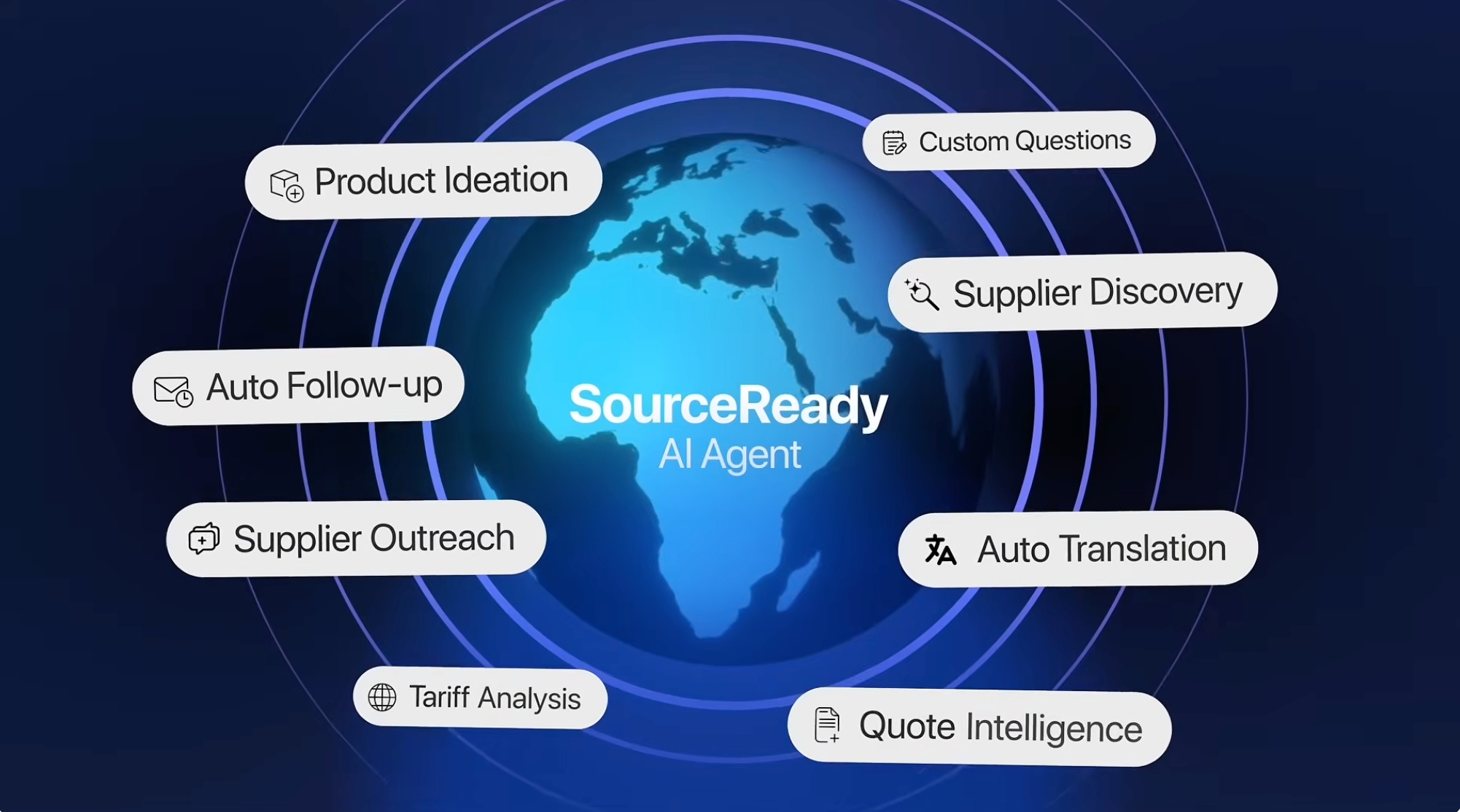
There's a better way to source ❤️
Watch the video to see how SourceReady helps brands move from product ideas to trusted supplier relationships faster
Watch the VideoWhy Is Comparing Supplier Quotations Manually Difficult?
Supplier quotations contain several variables that affect purchasing decisions. Comparing unit prices alone rarely provides enough information to determine which supplier offers the best overall value.
When you evaluate multiple quotations manually, you need to account for differences in:
- Pricing structures: Suppliers may offer different unit prices, quantity discounts, or pricing tiers.
- Minimum order quantities (MOQs): Lower unit prices may require larger orders, increasing your total purchasing commitment.
- Product specifications: Materials, dimensions, quality standards, and packaging requirements may differ between offers.
- Commercial terms: Payment schedules, production lead times, and shipping terms affect total costs and purchasing conditions.
- Additional charges: Tooling, sampling, testing, and packaging fees may not be included in the initial unit price.
These differences make direct comparisons difficult, even when suppliers are quoting the same product.
Manual analysis also requires you to transfer quotation details into spreadsheets, calculate costs, and follow up on missing information. The more suppliers and products you evaluate, the greater the risk of overlooking important differences.
AI reduces this workload by organizing quotation data and identifying the factors that require closer review.
How Can AI Extract and Compare Supplier Quotations?
AI can process supplier quotations, identify relevant commercial information, and organize the results into structured comparison tables.
Instead of reviewing each offer separately, you can compare suppliers using consistent evaluation criteria.
Extract key information from quotations
AI document processing can identify information from quotation spreadsheets, PDFs, and other supported document formats.
The main information to extract includes:
- Product details: Product names, SKUs, materials, dimensions, and technical specifications.
- Pricing information: Unit prices, currencies, quantity discounts, and pricing validity periods.
- Order requirements: MOQs, order multiples, and minimum purchasing commitments.
- Production details: Manufacturing lead times, sample availability, and delivery schedules.
- Commercial terms: Payment conditions, Incoterms, and additional charges.
AI can structure these details into a common format, making it easier to compare offers without manually consolidating every field.
Standardize supplier quotations for comparison
Once information is extracted, AI can help normalize different quotation structures.
For example, three suppliers might quote the same product using different currencies, order quantities, and shipping terms.
Supplier B has the lowest unit price, but its higher MOQ, longer lead time, and EXW terms may reduce its cost advantage.
AI helps highlight these differences so you can evaluate quotations on a comparable basis.
Missing or unclear information should be flagged for confirmation, rather than filled with assumptions.

How Can AI Evaluate Supplier Costs and Risks?
The best supplier quotation is not necessarily the cheapest. You also need to consider logistics expenses, commercial requirements, product quality, and potential sourcing risks.
AI can support this evaluation by combining quotation data with additional cost calculations and supplier information.
Compare total purchasing costs
AI can calculate and compare estimated costs using consistent order quantities and purchasing assumptions.
Important cost components include:
- Product costs: Calculate the total purchase value based on quoted unit prices and planned order quantities.
- Logistics costs: Account for freight, insurance, handling, and delivery expenses where applicable.
- Import duties: Estimate duties and tariffs using verified product classifications and import requirements.
- Additional fees: Include tooling, sampling, testing, packaging, and other relevant expenses.
- Inventory commitments: Evaluate how MOQs and payment terms affect purchasing budgets.
For example, a supplier offering a lower unit price may become more expensive once additional freight and tooling expenses are included.
AI can calculate different purchasing scenarios to help you understand how quantity, shipping arrangements, or supplier selection affects total costs.
Estimated costs should remain clearly distinguished from confirmed supplier quotations and verified logistics expenses.
Identify quotation discrepancies and supplier risks
AI can also flag potential issues that may require additional investigation before placing an order.
These include:
- Pricing discrepancies: Identify unusually high or low quotations compared with other supplier offers.
- Specification differences: Highlight mismatches in materials, dimensions, packaging, or quality requirements.
- Missing information: Detect absent charges, unclear delivery commitments, or incomplete commercial terms.
- Delivery risks: Identify suppliers whose quoted production timelines exceed your requirements.
- Supplier qualifications: Highlight missing certifications or supplier information that requires verification.
You can also combine quotation analysis with available supplier intelligence, such as company records, certification information, and historical trade data.
This provides additional context when evaluating whether a supplier is suitable for your requirements.
However, AI-generated risk indicators should support supplier due diligence, not replace it. Your team should verify critical findings before making purchasing decisions.
How Can You Use AI to Improve Your Quotation Review Process?
AI quotation analysis works best when integrated into a consistent sourcing workflow.
Your goal should be to reduce manual processing while maintaining clear evaluation criteria and documented purchasing decisions.
Build a structured quotation evaluation process
Follow these steps to make quotation comparisons more consistent:
- Define your requirements: Establish product specifications, expected order quantities, delivery deadlines, and evaluation criteria.
- Collect supplier quotations: Gather offers and record their dates, versions, and validity periods.
- Standardize quotation data: Use AI to extract pricing and commercial terms into a common comparison format.
- Review differences: Identify cost variations, missing information, specification mismatches, and potential risks.
- Evaluate and select suppliers: Compare qualified offers based on total costs, product requirements, delivery capabilities, and commercial terms.
For audit purposes, retain the original quotations, calculation assumptions, supplier clarifications, and final selection rationale.
How SourceReady helps analyze supplier quotations
SourceReady connects AI-powered supplier discovery, quotation comparison, and supplier intelligence to help procurement teams evaluate suppliers more efficiently.
With SourceReady, you can:
- Automatically compare supplier quotations: SourceReady's AI reads supplier emails, extracts quotation details such as pricing, MOQs, lead times, and payment terms, and automatically organizes them into side-by-side comparisons.
- Discover alternative suppliers: Search a global supplier database to identify manufacturers that match your sourcing needs.
- Research supplier capabilities: Access available company information, trade records, and other supplier intelligence to support evaluation.
- Streamline supplier communication: Manage inquiries, track responses, and follow up on outstanding supplier information through connected workflows.
By combining quotation analysis with supplier research, you can evaluate existing offers while identifying alternative manufacturers worth considering.
This helps your team make more informed decisions without relying on manual comparisons alone.
How Can AI Help You Make Better Supplier Decisions?
AI makes supplier quotation analysis faster and more consistent by automating data extraction, standardizing commercial terms, and highlighting differences between competing offers.
Instead of spending time manually organizing quotation details, you can focus on evaluating costs, verifying supplier qualifications, and negotiating better terms.
Effective quotation analysis still requires accurate source information, consistent comparison criteria, and human review of important purchasing decisions. AI supports these activities by making relevant information easier to access and evaluate.
Want to simplify supplier quotation analysis? Explore how SourceReady helps you compare supplier offers, research alternative manufacturers, and make better sourcing decisions using AI-powered supplier intelligence.
FAQ
1. Can AI identify whether a supplier's quotation is overpriced?
AI can compare quotations against competing offers, historical purchasing prices, and available market benchmarks to identify potential overpricing. However, price differences should be evaluated alongside product specifications, order quantities, manufacturing capabilities, and commercial terms.
2. What should you do when a supplier quotation is incomplete?
Identify missing information and request clarification before finalizing the comparison. Common gaps include unclear Incoterms, missing tooling charges, unspecified lead times, and incomplete product specifications. AI can help detect these gaps and prepare follow-up questions for suppliers.

Find the sourcing tools you need.
Explore how SourceReady helps you research products, discover suppliers, verify factory information, analyze trade data, and manage your sourcing workflow in one place
Explore Features
Graduating from USC with a background in business and marketing, Judy Chen has spent over a decade working in e-commerce, specializing in sourcing and supplier management. Her experience includes developing strategies to optimize supplier relationships and streamline procurement processes for growing businesses. As SourceReady’s blog writer, Judy leverages her deep understanding of sourcing challenges to create insightful content that helps readers navigate the complexities of global supply chains.