
Strategic sourcing used to be relatively linear. Define the requirement. Build a supplier list. Run an RFQ. Negotiate terms. Select the right supplier. Revisit the category when requirements or market conditions change.
That model is becoming less effective.
Today, sourcing decisions sit inside a moving system of tariffs, geopolitical risk, regulation, commodity volatility, supplier capacity constraints, and increasingly complex multi-tier supply chains.
The future of strategic sourcing is therefore not simply about finding better suppliers. It is about continuously improving the information behind sourcing decisions.
In this article, we’ll look at why strategic sourcing is changing, which capabilities will matter most, how AI will reshape sourcing workflows, and what an audit-ready sourcing model should look like.
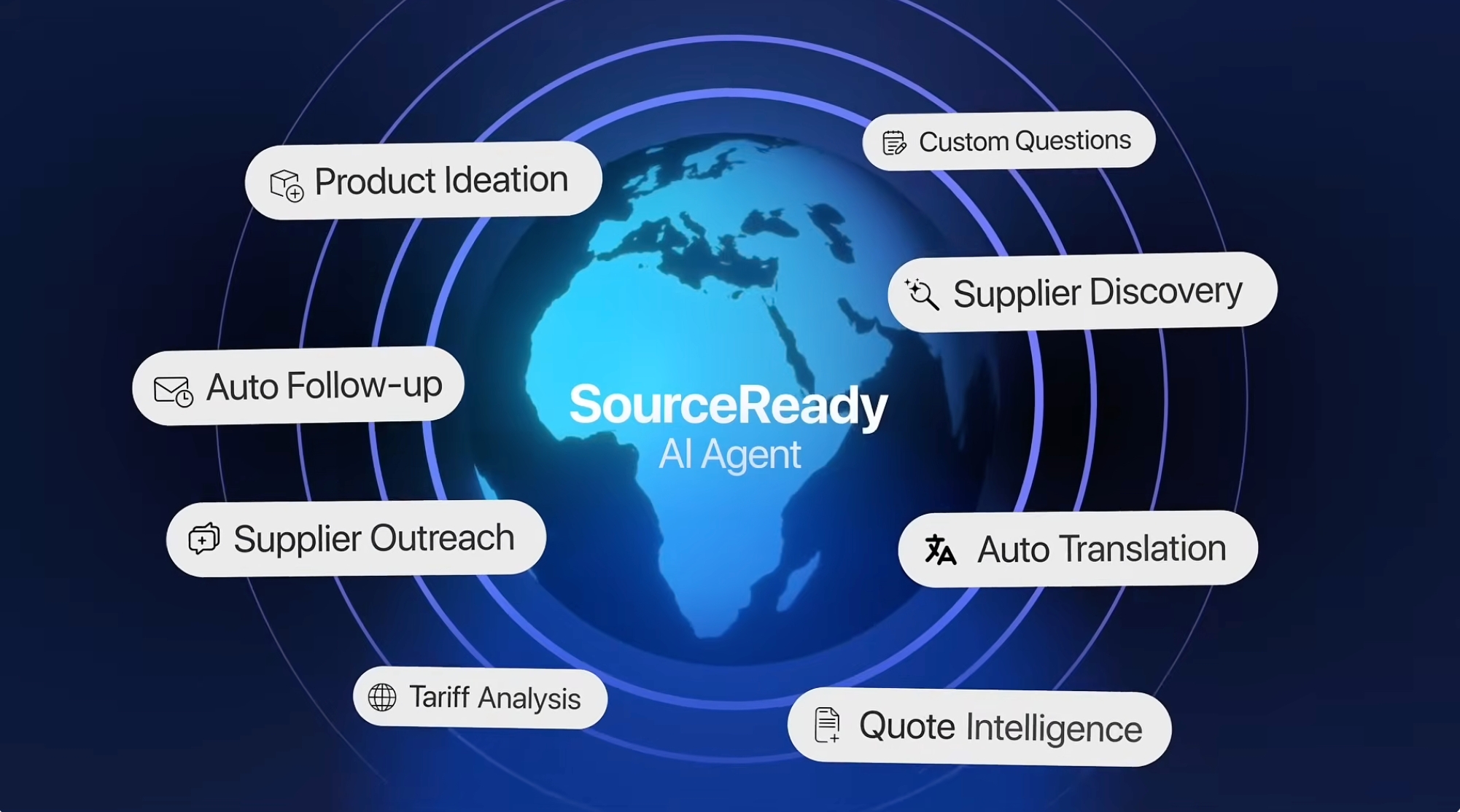
There's a better way to source ❤️
Watch the video to see how SourceReady helps brands move from product ideas to trusted supplier relationships faster
Watch the VideoWhy is the traditional strategic sourcing model changing?
Sourcing cycles are becoming too slow for the market
Traditional strategic sourcing often works through periodic category reviews. You analyze spend, identify suppliers, negotiate contracts, and revisit the category months or years later.
The problem is that the environment around that decision may change much faster than the sourcing cycle.
A supplier that looked competitive six months ago may now face higher duties, constrained capacity, expiring certifications, financial pressure, or disruption within its upstream supply chain.
You need sourcing intelligence between sourcing events, not only during them.
Supplier conditions: Ownership, capacity, certifications, customers, export activity, financial health, and operational status can change after onboarding.
Trade conditions: Tariffs, sanctions, trade restrictions, and country-of-origin rules can materially change landed cost or supplier eligibility.
Market conditions: Commodity movements, logistics costs, consumer demand, and competitor activity can change what and where you should source.
Business requirements: Sustainability, traceability, resilience, and regulatory obligations increasingly affect supplier selection alongside price and quality.
The sourcing event still matters. It just becomes one point inside a much more continuous process.
Strategic sourcing is becoming a decision system
The bigger shift is from project-based sourcing toward continuous sourcing intelligence.

This does not mean every sourcing activity needs to happen in real time. It means the information supporting your decisions should stay current enough to remain useful. Instead of rebuilding your view of the market every time a sourcing project begins, you maintain an evolving picture of suppliers, costs, risks, and opportunities.
The goal is not to generate more data. It is to give sourcing teams better evidence at the moment a decision needs to be made.
What capabilities will define the next generation of strategic sourcing?
Supplier intelligence will replace basic supplier discovery
Finding a company that claims to manufacture your product is no longer enough.
You need to understand whether that supplier has the relevant capabilities, where it manufactures, which markets it serves, whether its certifications are valid, what products it exports, who its customers may be, and what risks sit behind the relationship.
That moves supplier discovery toward supplier intelligence.
- Capability evidence: Verify machinery, materials, product history, certifications, export records, and previous customer relationships where available.
- Commercial fit: Compare MOQ, capacity, pricing structure, lead times, payment terms, and geographic advantages.
- Compliance evidence: Check sanctions, certifications, corporate registrations, regulatory requirements, and supporting documentation.
- Relationship evidence: Understand whether suppliers already serve similar brands, markets, product categories, or distribution channels.
The important word is evidence. Supplier declarations remain useful, but you should not treat them as the only source of truth.
Market intelligence will become part of sourcing
Strategic sourcing teams have traditionally looked inward at spend and supplier performance. Increasingly, you also need to look outward.
Changes in products, competitors, consumer demand, raw materials, production locations, and international trade can reveal sourcing opportunities before they appear in an RFQ.
- Product signals: Monitor emerging products, materials, specifications, and consumer preferences that could change future sourcing requirements.
- Competitor signals: Track where relevant competitors manufacture, which suppliers they use, and how their sourcing footprint evolves.
- Trade signals: Watch import and export movements to identify growing manufacturing regions or shifts between sourcing countries.
- Cost signals: Combine supplier pricing with tariffs, transportation, duties, and other landed-cost factors rather than comparing FOB price alone.
This is where sourcing becomes more strategic. You are not merely responding to an internal request. You are helping the business understand what it should source, where it should source it, and which options offer the strongest balance of cost, capability, and risk.
How will AI change the sourcing workflow?
AI will compress the research and analysis layer
AI is most useful when it removes the repetitive work surrounding a sourcing decision.
Today, sourcing teams may spend hours searching databases, reading supplier websites, checking certificates, comparing spreadsheets, reviewing quotations, and summarizing findings.
Much of that work can increasingly be automated.
- Supplier research: AI can search large supplier datasets and external sources against detailed product and capability requirements.
- Document analysis: AI can extract certificate numbers, expiration dates, prices, MOQs, Incoterms, specifications, and other structured information from documents.
- Supplier comparison: AI can normalize quotations and compare suppliers across commercial, operational, compliance, and risk criteria.
- Market monitoring: AI agents can monitor selected industries, suppliers, countries, competitors, or regulations and surface material changes.
- Sourcing execution: AI can support RFQ preparation, supplier outreach, follow-ups, quotation collection, and first-pass analysis.
This changes the economics of sourcing research. You can investigate more suppliers and more signals without proportionally increasing headcount.
How does SourceReady fit into this model?
SourceReady is built around this shift from supplier search to continuous supplier and sourcing intelligence.
The platform combines AI workflows with a supplier database covering 4M+ suppliers across 200+ countries, supported by more than 40 data sources, including customs records, trade shows, business directories, certifications, and other supplier intelligence sources.
That allows sourcing teams to move beyond a simple directory search.
- Supplier discovery: Search for suppliers using product, capability, geography, certification, customer relationship, and other sourcing criteria.
- Supplier verification: Cross-check supplier claims against external trade, corporate, certification, and compliance signals.
- Cost benchmarking: Compare supplier pricing, sourcing regions, trade data, tariffs, and market signals to assess whether quoted costs are competitive.
- Market intelligence: Monitor supplier activity, competitor sourcing patterns, trade movements, tariffs, regulations, and disruption signals.
- Workflow automation: Use AI agents to support supplier research, qualification, RFQs, quotation analysis, and ongoing monitoring.
- Decision support: Bring external intelligence and internal sourcing data into the same workflow so teams can compare suppliers using consistent evidence.
The aim is not to replace the sourcing professional. It is to remove the information-gathering bottleneck so you can spend more time evaluating trade-offs, managing suppliers, and making decisions.
AI should recommend, not obscure
Automation does not remove the need for sourcing judgment. It makes governance more important.
You should always be able to understand why a supplier was recommended and what information supported the recommendation.
A useful sourcing system should separate three things:
- Evidence: What does the underlying data actually show?
- Analysis: What conclusions does the system draw from that evidence?
- Decision: What does your sourcing team ultimately approve?
That distinction matters when decisions involve compliance, supplier qualification, commercial awards, or material supply-chain risk.
What will an audit-ready sourcing process require?
Every important conclusion should lead back to evidence
As more sourcing work becomes automated, auditability becomes a design requirement rather than an administrative afterthought.
If an AI system flags a supplier as high risk, recommends an alternative factory, or rejects a document, your team should be able to understand the basis for that conclusion.
- Source traceability: Record where supplier, trade, certification, corporate, or market information originated.
- Timestamped evidence: Preserve when information was collected or verified because supplier conditions change.
- Decision history: Record who reviewed, changed, approved, or overrode important sourcing decisions.
- Document lineage: Keep supplier submissions, extracted fields, validation results, and later revisions connected.
- Human approvals: Require explicit review for decisions involving supplier qualification, compliance exceptions, contract awards, or high-risk findings.
This is especially important as sourcing becomes connected to supply-chain due diligence, product traceability, forced-labor controls, sustainability reporting, and Digital Product Passports.
A strong sourcing process should make it easier to explain what decision was made, what evidence supported it, who approved it, and what changed over time. If your systems cannot answer those questions, adding more data or automation will not fix the underlying governance problem.
What does the future of strategic sourcing look like?
The future of strategic sourcing is continuous, evidence-driven, and increasingly AI-assisted.
You will still negotiate, qualify suppliers, run RFQs, and manage commercial relationships. What changes is the intelligence surrounding those decisions. Supplier research becomes deeper. Market signals arrive earlier. Risks become easier to detect. Routine analysis gets faster. And every important sourcing decision can be tied back to evidence you can defend.
That is the real opportunity: not autonomous procurement, but a sourcing function that sees more, responds faster, and makes better-informed decisions.
If you want to move from supplier search to supplier intelligence, SourceReady help you build that sourcing layer. Explore SourceReady to see how AI, supplier data, trade intelligence, and sourcing workflows can work together in one platform.
FAQ
1. How is strategic sourcing different from procurement?
Procurement covers the broader process of acquiring goods and services, including purchasing, contracting, supplier management, and payment. Strategic sourcing focuses more specifically on analyzing supply markets, evaluating suppliers, negotiating commercial terms, and determining where and how the business should source.
2. How is supplier intelligence different from supplier discovery?
Supplier discovery answers the question, “Which suppliers could make this product?” Supplier intelligence goes further by helping you determine whether those suppliers have the right capabilities, experience, compliance profile, cost structure, and risk level for your sourcing requirements.

Find the sourcing tools you need.
Explore how SourceReady helps you research products, discover suppliers, verify factory information, analyze trade data, and manage your sourcing workflow in one place
Explore Features
Graduating from USC with a background in business and marketing, Judy Chen has spent over a decade working in e-commerce, specializing in sourcing and supplier management. Her experience includes developing strategies to optimize supplier relationships and streamline procurement processes for growing businesses. As SourceReady’s blog writer, Judy leverages her deep understanding of sourcing challenges to create insightful content that helps readers navigate the complexities of global supply chains.