Chile may not have the scale of China or Brazil, but it has something equally valuable: stability, transparency, and high-quality production. Ranked among the most open and business-friendly economies in Latin America, Chile has built a reputation for strong institutions, reliable logistics, and trade discipline.
With over 30 trade agreements covering 65 markets—including the U.S., EU, and China—Chile’s exporters enjoy unparalleled access to global buyers. Its GDP of USD 350 billion may seem modest, but its export diversity tells a bigger story: from minerals and wine to food processing, packaging, and technology-driven manufacturing, Chile delivers precision and trust.
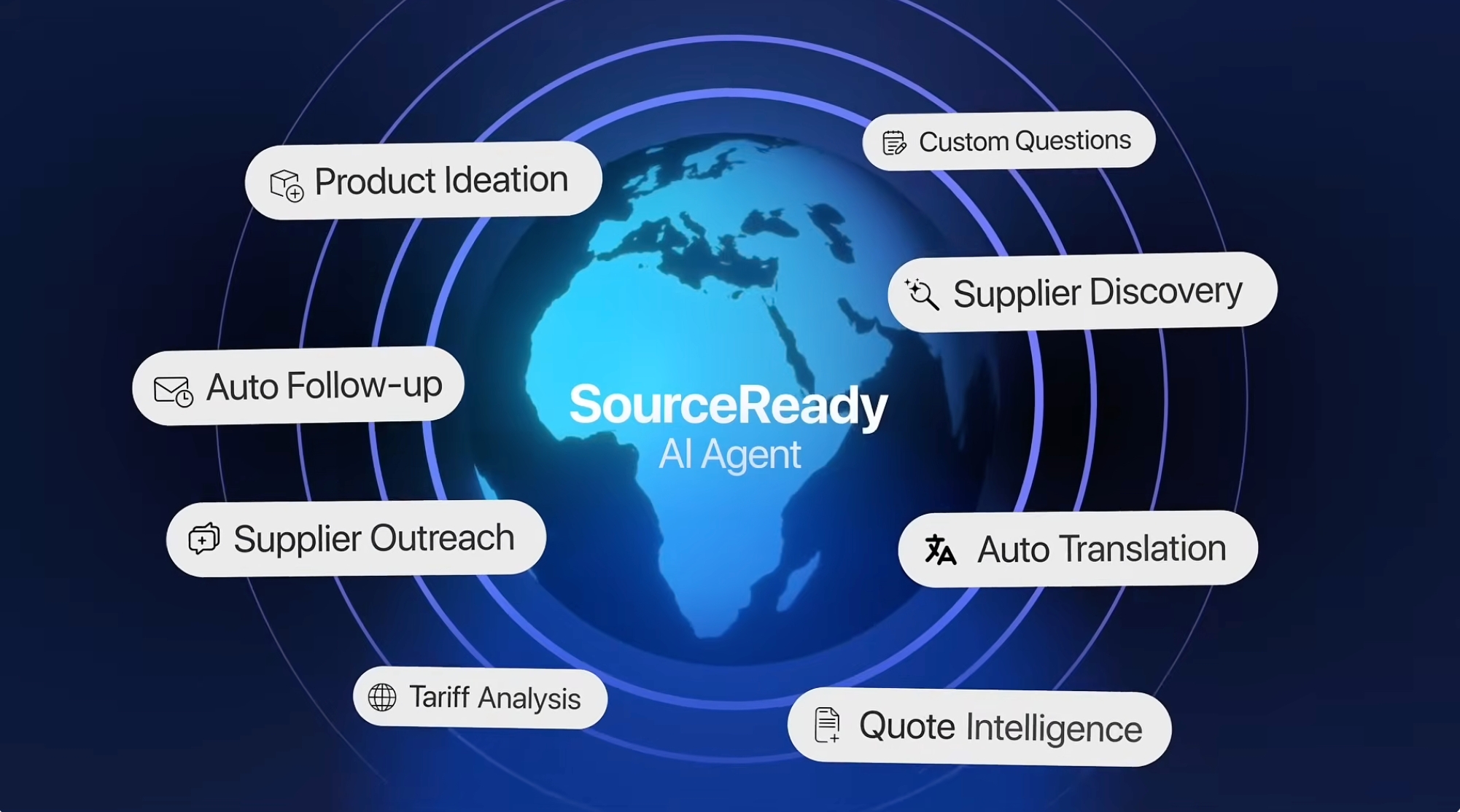
This guide walks you through how to find and verify suppliers in Chile: why sourcing here makes sense, which sectors perform best, what challenges to expect, and how to build a compliant sourcing strategy using tools like SourceReady.
There’s a better way to source ❤️
Watch the video to see how SourceReady helps brands move from product ideas to trusted supplier relationships faster
Chile’s greatest export might just be predictability. It consistently ranks as one of Latin America’s most politically stable and least corrupt countries, according to Transparency International. For procurement teams, this translates into low policy risk, consistent regulation, and reliable contract enforcement—three things that de-risk international sourcing.
Inflation and currency swings are moderate, and the legal system protects foreign investments. For industries requiring long-term supplier continuity, Chile’s governance offers a safer alternative to more volatile regional peers.
2. Extensive Trade Network and Free Trade Agreements
Chile operates one of the world’s most comprehensive FTA networks, connecting it to major global economies including the U.S., EU, Japan, Korea, and China. Its membership in CPTPP (Comprehensive and Progressive Agreement for Trans-Pacific Partnership) also gives exporters preferential access to Asia-Pacific markets.
For buyers, these agreements mean reduced tariffs, simplified customs processes, and faster cross-border movement. Chile’s customs authority is digitally advanced—exporters often clear goods within hours rather than days.
3. Skilled Workforce and Sustainable Manufacturing
Chile’s labor market emphasizes technical training, especially in mining, engineering, forestry, and agribusiness. With a literacy rate above 95% and growing investment in R&D, local industries combine craftsmanship with process control.
The country is also a leader in sustainability. Over 50% of its energy comes from renewables, and environmental regulations are well-enforced. For companies sourcing under ESG frameworks, Chile offers a cleaner, traceable footprint.
Top Categories Chile Excels At
Chile’s industrial profile blends natural resource strength with export-oriented value chains. Here’s what stands out—organized into introduction, specialties, pros, and cons for each key category.
1. Food and Beverage Processing
Chile is a global powerhouse in agri-food exports, known for quality, traceability, and compliance with strict international standards. The country’s geography supports year-round production across multiple climates, from fruit valleys to seafood-rich coastlines.
Specialties
Processed fruits, nuts, and vegetables
Seafood, salmon, and aquaculture products
Wine, juices, and alcoholic beverages
Pros
High compliance culture: Chilean food exporters follow HACCP, ISO 22000, and BRC standards, ensuring consistent safety and quality.
Efficient cold-chain logistics: Proximity to major ports and advanced refrigeration networks reduce spoilage and lead time.
Strong export credibility: Decades of trade with the U.S., Japan, and EU build trust and lower inspection frequency.
Cons
Seasonal constraints: Fresh produce exports are cyclical, requiring inventory planning.
Limited scale for mass-market FMCG: Most suppliers target mid- to premium segments.
Shipping costs: Longer sea routes to North America and Europe can offset price advantages.
2. Mining Equipment and Industrial Components
Chile is the world’s largest copper producer, responsible for roughly a quarter of global copper output. This long-established mining foundation has cultivated a mature ecosystem of industrial machinery, metal component manufacturing, and engineering services. Over decades, Chilean suppliers have developed strong technical expertise, international certifications, and reliable export capabilities, serving both domestic mining operations and global industrial supply chains.
Specialties
Mining machinery and spare parts
Industrial pumps, pipes, and valves
Fabricated metals and precision-engineered parts
Pros
Advanced technical know-how: Local suppliers have decades of experience serving global mining corporations like BHP and Codelco.
Robust material standards: Products adhere to ASTM and ISO quality norms.
Strategic logistics: Northern industrial hubs like Antofagasta are close to export ports, simplifying freight consolidation.
Abundant renewable raw materials: FSC and PEFC certifications are standard, supporting ESG compliance.
Efficient logistics: Southern ports like Concepción and Valdivia are optimized for timber exports.
Consistent quality: Chilean wood products meet global standards for moisture control and strength.
Cons
Limited customization: Smaller manufacturers often prioritize volume exports over bespoke orders.
Longer production cycles: Sustainable forestry practices can extend lead times.
Freight sensitivity: Bulky shipments mean transport costs heavily affect landed pricing.
4. Chemicals and Lithium-Based Materials
Chile is a key player in the global transition to electric mobility. The country holds 36% of the world’s lithium reserves and produces over 20% of global lithium supply, positioning it as a strategic source for the battery and chemical industries. Its mining and processing sectors are rapidly advancing, with increasing emphasis on sustainability, renewable energy integration, and technological innovation to support next-generation energy materials.
Specialties
Lithium carbonate and hydroxide
Industrial chemicals, fertilizers, and reagents
Bio-based and renewable chemical derivatives
Pros
Global lithium leadership: Backed by major producers like SQM and Albemarle.
Transparent regulations: Strong environmental oversight for chemical exports.
R&D investment: Government incentives support technology partnerships in battery and energy materials.
Cons
Export restrictions: Certain lithium forms require state approval.
Environmental scrutiny: ESG audits are strict, increasing documentation requirements.
Limited midstream processing: Many materials still exported in raw or semi-processed form.
Challenges of Sourcing from Chile
1. Smaller Manufacturing Scale
Chile’s industries tend to be specialized but limited in volume. For large-scale buyers seeking mass production, supplier capacity can be a constraint. Expect higher per-unit costs compared to Asian suppliers but stronger quality consistency.
2. Logistics Distance and Freight Costs
Despite its efficient ports, Chile’s geographic isolation adds shipping costs. Sea freight to North America averages 20–25 days, and container rates fluctuate with global demand. Planning shipments in advance and consolidating freight helps mitigate cost spikes.
3. Bureaucratic Delays in Documentation
Chile’s customs are efficient, but certain export sectors—like chemicals and food—require strict paperwork for traceability, labeling, and certifications. Delays usually stem from missing technical sheets or language inconsistencies. Partnering with experienced brokers smooths the process.
Future Trends in Chile’s Manufacturing
1. Green Energy and Electrification
Chile is transforming its industrial landscape with renewable energy. Over 50% of power generation now comes from solar, wind, and hydro sources.
Impact:Manufacturers benefit from stable, low-emission energy—ideal for ESG-conscious buyers.
Opportunity: Expect growth in battery materials, electric components, and clean-tech supply chains.
Action Step: Partner with suppliers using renewable certifications (IREC, ISO 14064) for sustainability reporting.
2. Value-Added Diversification
Chile is moving beyond raw materials toward higher-value manufacturing. Government programs promote innovation in packaging, precision agriculture, and materials science.
Impact: More midstream processing and finished goods exports across chemicals, food, and wood products.
Opportunity: Early partnerships with local SMEs can lock in favorable terms before competition rises.
Action Step: Monitor CORFO and InvestChile initiatives to identify emerging industrial clusters.
3. Nearshoring and Trade Integration
As supply chains shift closer to end markets, Chile’s stable trade framework positions it as a South American logistics and production hub.
Impact: Increasing investment in industrial parks and bonded logistics zones to serve the U.S. and Asia-Pacific.
Opportunity: Buyers gain faster shipping and tariff advantages through CPTPP and Mercosur cooperation.
Action Step: Use trade-data tools like SourceReady to compare supplier readiness across FTAs and simulate landed costs.
Conclusion
Chile’s sourcing advantage lies in stability, transparency, and trade connectivity. It’s not about chasing the lowest cost, but about building reliability, traceability, and ESG alignment into your supply chain. From food processing and wood products to chemicals and industrial equipment, the country offers a clean, well-regulated manufacturing base.
To succeed, focus on fundamentals: map your BOM to Chile’s sector strengths, model landed costs including freight and tariffs, and validate supplier compliance before scaling production.
Tools like SourceReady streamline this process—helping you filter verified exporters, compare regional sourcing options, and simulate cost scenarios backed by real customs data.
Done right, sourcing from Chile delivers a supply chain that’s stable, compliant, and future-ready—an investment in quality that pays off beyond the purchase order.
FAQ
1. How competitive is Chile compared to Asian suppliers?
Unit prices are generally higher, but total landed cost can be competitive due to lower risk, tariff benefits under free trade agreements, and consistent compliance standards.
2. How can I find reliable small or medium suppliers in Chile?
Platforms like SourceReady aggregate verified suppliers with export records, certifications, and trade history, helping you identify compliant SMEs ready for international buyers.
Find the sourcing tools you need.
Explore how SourceReady helps you research products, discover suppliers, verify factory information, analyze trade data, and manage your sourcing workflow in one place
Graduating from USC with a background in business and marketing, Judy Chen has spent over a decade working in e-commerce, specializing in sourcing and supplier management. Her experience includes developing strategies to optimize supplier relationships and streamline procurement processes for growing businesses. As SourceReady’s blog writer, Judy leverages her deep understanding of sourcing challenges to create insightful content that helps readers navigate the complexities of global supply chains.