Thailand is no longer a “low-cost alternative.” And that is precisely why serious buyers still source there.
As the second-largest economy in Southeast Asia, Thailand exports over USD 300 billion annually, with manufacturing accounting for roughly 30% of GDP. It is a long-established production base for food, automotive, electronics, and consumer goods—supported by modern ports, stable infrastructure, and suppliers that understand global compliance requirements.
What makes Thailand relevant today is not labor arbitrage. It is reliability. Thai suppliers have lived through COVID disruptions, trade wars, freight shocks, and regulatory tightening—and adapted. For buyers diversifying away from single-country risk, Thailand offers a mature, predictable option with fewer operational surprises.
This guide breaks down why Thailand works, what it manufactures best, where the country is heading next, and how to approach sourcing with discipline. If you care about quality, compliance, and long-term stability, Thailand deserves a closer look.
There’s a better way to source ❤️
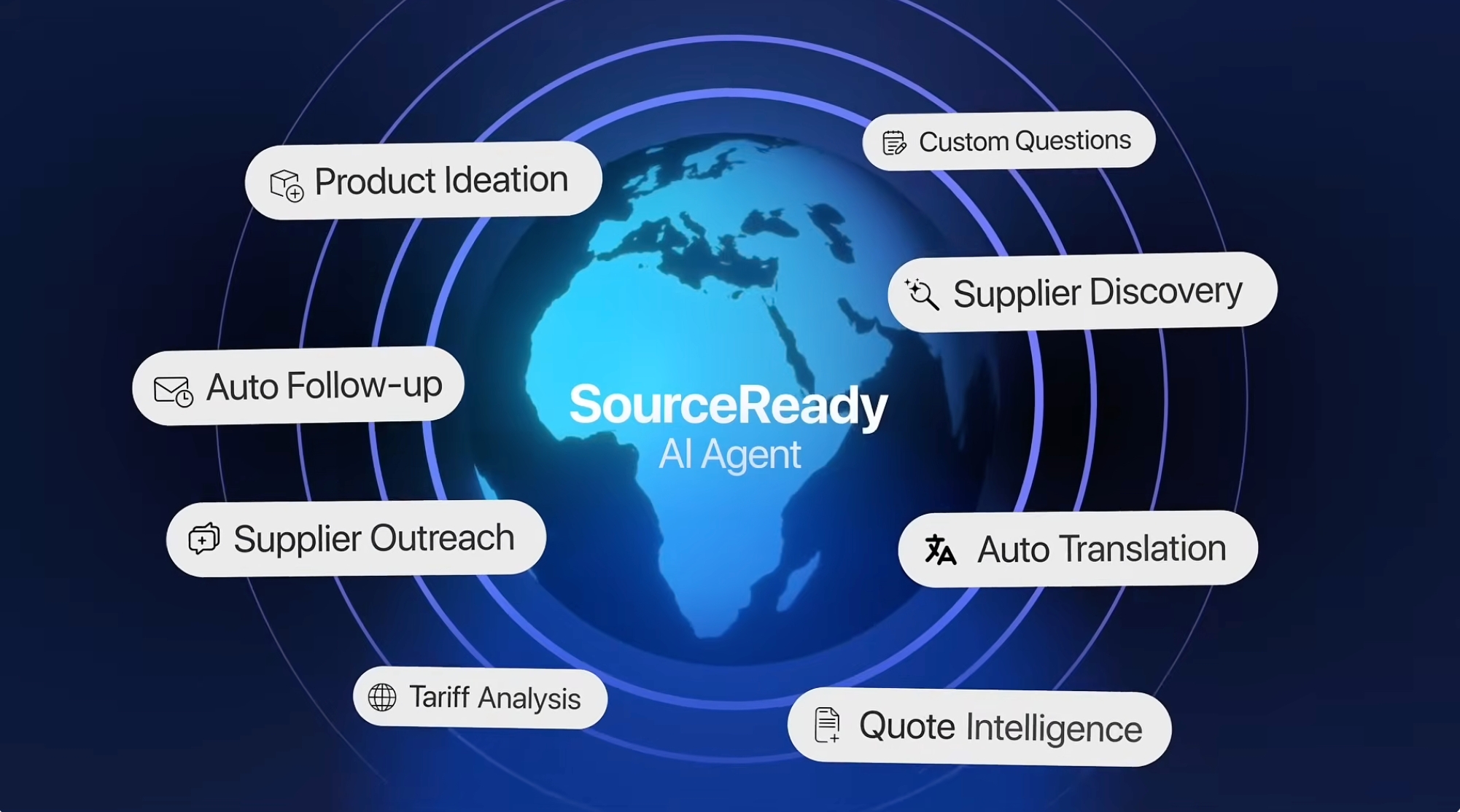
Watch the video to see how SourceReady helps brands move from product ideas to trusted supplier relationships faster
Thailand sits in a practical middle ground: not the cheapest, not the riskiest, and not operationally fragile. For many categories, it delivers superior total value once you account for quality, compliance, and execution risk.
1. Manufacturing Maturity, Not Just Capacity
Thailand has been exporting manufactured goods for decades. This matters because:
Factory managers understand spec changes, audits, and global buyer expectations
Labor skills are stable, with lower turnover than many emerging markets
Production planning tends to be structured, not reactive
You spend less time “educating” suppliers and more time executing.
2. Category-Specific Depth
Thailand does not try to manufacture everything. Instead, it has deep specialization in selected sectors such as food processing, rubber, automotive components, and packaging.
This specialization means:
Better upstream material access
More experienced quality systems
Fewer hidden subcontracting layers
The result is more predictable output.
3. Trade Agreements & Landed Cost Advantages
Thailand participates in multiple regional and bilateral FTAs, including ASEAN-wide agreements and partnerships with Japan, Australia, and China.
For many buyers, this translates to:
More stable customs clearance
Better long-term tariff planning
Thailand often wins on landed cost, even if the FOB price is higher.
4. Compliance Familiarity
Thai factories are generally comfortable with:
ISO, BSCI, Sedex, GMP, HACCP
Third-party audits
Documentation requests
If you sell into the US, EU, or major retail channels, this significantly reduces onboarding friction.
Top Categories Thailand Is Good at Manufacturing
Thailand performs best when you source aligned product categories. Below are the strongest segments—and why they work.
1. Food, Beverages & Agro-Processed Products
Thailand is one of the world’s largest food exporters, especially in shelf-stable and value-added categories.
Common products
Canned tuna, fruits, and vegetables
Ready-to-eat meals and sauces
Coconut-based products
Premium pet food
Why it works / Key advantages
Thailand has a strong agricultural base, ensuring consistent raw material supply
Food factories are typically export-oriented, with HACCP, GMP, and FDA experience
Processing quality is high, with good shelf-life control and traceability
For food-grade products, Thailand often delivers better safety and consistency than lower-cost alternatives.
2. Natural Rubber & Latex Products
Thailand is the largest natural rubber producer globally, giving it a structural advantage.
Common products
Medical and industrial gloves
Latex mattresses and pillows
Rubber components and seals
Why it works / Key advantages
Direct access to raw rubber reduces quality variability
Factories have long experience with latex formulation and curing processes
Less reliance on imported synthetic substitutes
This is why many global brands still source rubber goods from Thailand despite higher labor costs.
3. Automotive Parts & Industrial Components
Thailand is often referred to as the “Detroit of Southeast Asia.”
Common products
Engine and drivetrain components
Wiring harnesses
Molded plastic and metal parts
Motorcycle and EV components
Why it works / Key advantages
Long-standing presence of Japanese and global OEMs raised quality standards
Suppliers are familiar with PPAP, tolerance control, and long-term supply contracts
Strong Tier-1 and Tier-2 supplier ecosystem
This category is ideal for buyers who value precision and consistency over lowest cost.
Thailand is not a cutting-edge electronics R&D hub, but it is strong in stable, mid-complexity manufacturing.
Common products
Power supplies
Wire harnesses
Control units
Consumer electronics sub-assemblies
Why it works / Key advantages
Suitable for products with mature designs and predictable volumes
Better quality control than many lower-cost SEA alternatives
Good balance between cost, yield, and delivery reliability
Thailand works best here when your design is locked and production discipline matters.
5. Packaging, Plastics & FMCG Components
Thailand is a strong base for plastic and packaging manufacturing, especially for consumer goods.
Common products
Rigid plastic containers
Flexible packaging
Cosmetic and personal care packaging
Household product components
Why it works / Key advantages
Many factories are vertically integrated, handling molding, finishing, and decoration
Strong material sourcing and process control
Suitable for brands that need visual consistency and scale
This category is often underestimated but critical for FMCG brands.
Future Trends of Thailand Manufacturing (and What They Mean for You)
Thailand’s manufacturing sector is not standing still. The direction it is moving in has direct implications for cost control, supply reliability, and compliance risk. Understanding these trends helps you source with fewer surprises over the next 3–5 years.
1. Automation Is Improving Consistency, Not Just Cutting Costs
What’s happening
As labor costs rise, Thai manufacturers are investing heavily in automation, CNC machining, robotics, and semi-automated production lines. This shift is most visible in automotive, electronics, plastics, and food processing.
Why this matters
Automation reduces dependence on manual labor, which is often the biggest source of quality variation, delays, and rework.
Direct benefits for you
More consistent quality across production batches
Lower defect rates and fewer incoming QC issues
More reliable lead times, even during labor shortages
Easier scaling once production is stabilized
In practice, this means fewer firefights after mass production starts and more predictable execution.
Factories are investing in cleaner production, energy efficiency, and formal compliance systems.
Why this matters
Non-compliance is no longer just a reputational issue—it leads to shipment delays, customer audits, chargebacks, and blocked market access.
Direct benefits for you
Lower risk of compliance failures during audits
Faster onboarding with major retailers and brands
Better documentation and traceability
Reduced exposure to regulatory changes in the EU and US
For buyers selling into regulated markets, this translates to fewer last-minute compliance surprises.
3. Thailand Is Becoming a Stability Anchor in Diversified Supply Chains
What’s happening
As companies move away from single-country dependency, Thailand is increasingly positioned as a China+1 manufacturing base, especially for ASEAN and Asia-Pacific distribution.
Why this matters
Supply chains are shifting from lowest-cost optimization to risk-balanced sourcing.
Direct benefits for you
Reduced geopolitical and tariff exposure
More stable export operations compared to newer low-cost countries
Better continuity during global disruptions
Shorter lead times for regional markets
Thailand acts as a buffer country—less volatile than emerging markets, but more flexible than fully saturated manufacturing hubs.
How to Use These Trends in Your Sourcing Strategy
If you source from Thailand today, these trends suggest a clear approach:
Prioritize suppliers investing in automation and systems, not just capacity
Treat Thailand as a long-term production base, not a short-term cost play
Use it to stabilize key SKUs while experimenting elsewhere
Platforms like SourceReady help surface suppliers already aligned with these trends—factories with export experience, compliance readiness, and scalable operations—so you are not guessing based on surface-level signals.
Key Challenges of Sourcing from Thailand
1. Higher Cost Structure Limits Pure Price-Driven Sourcing
What’s happening
Thailand’s labor costs are higher than most Southeast Asian alternatives, and many factories operate with structured wages, social security contributions, and regulated working hours.
Why this matters
If your sourcing strategy is driven primarily by lowest unit cost, Thailand will often lose on paper—especially against Vietnam, Indonesia, or Cambodia.
What this means for you
Unit prices are typically 10–30% higher than emerging SEA markets
Suppliers are less flexible on deep price concessions
Cost-down opportunities rely more on process efficiency than labor savings
How to handle it
Compare landed cost, not FOB price
Use Thailand for SKUs where quality stability matters more than pennies
Avoid using Thailand for highly commoditized, price-sensitive products
2. Upstream Material Dependence Outside Core Categories
What’s happening
Outside of food, rubber, and automotive clusters, many Thai factories still import key raw materials from China, Japan, or Korea.
Why this matters
Imported inputs add:
Lead time risk
FX exposure
Price volatility you do not directly control
What this means for you
Quoted lead times can hide upstream delays
Raw material price increases pass through faster
Disruptions in China can still affect your Thailand supply chain
Strategic implication
Thailand reduces manufacturing risk, not full upstream dependency risk. You still need to audit material origins.
3. Scale Constraints for Hyper-Growth Products
What’s happening
Thailand has strong mid-scale factories, but fewer mega-factories capable of absorbing explosive volume growth.
Why this matters
If your product suddenly scales 3–5×, capacity expansion may be slower than in China.
What this means for you
Longer ramp-up periods
Capacity reservation requirements
Higher risk of production bottlenecks during peak seasons
Strategic implication
Thailand is ideal for stable, repeat SKUs, not unpredictable viral demand or extreme seasonality.
Conclusion: Using Thailand Where It Fits Best
Thailand is generally a better fit for stable, repeat production programs than for price-driven or highly speculative sourcing. Its strength lies in manufacturing consistency, export experience, and compliance familiarity—not in aggressive cost arbitrage.
Buyers see the best outcomes when Thailand is used for categories where it has depth, such as food processing, rubber and latex products, automotive components, packaging, and mid-complexity electronics. In these areas, suppliers deliver predictable quality and reliable execution over time.
Effective sourcing from Thailand starts with BOM-level alignment, not country-first assumptions. Landed cost modeling, upstream material verification, and realistic capacity planning matter more than unit price alone. Thailand works best as part of a balanced sourcing mix, supporting continuity while other regions absorb higher volatility.
Tools like SourceReady help procurement teams identify verified Thai manufacturers, assess category fit, and evaluate compliance signals early in the process. Used deliberately, Thailand strengthens supply chains by reducing operational and execution risk—without overpromising on cost.
FAQ
1. Is Thailand suitable for small or early-stage brands?
Thailand can work for small brands if product designs are stable and volumes are realistic. However, MOQs may be higher, and Thailand is less suitable for experimental or rapidly changing products.
2. Can Thailand replace China as a primary sourcing country?
Thailand is often used as part of a China+1 or China+2 strategy, not a full replacement. It works best for selected SKUs rather than entire product portfolios.
Find the sourcing tools you need.
Explore how SourceReady helps you research products, discover suppliers, verify factory information, analyze trade data, and manage your sourcing workflow in one place
Graduating from USC with a background in business and marketing, Judy Chen has spent over a decade working in e-commerce, specializing in sourcing and supplier management. Her experience includes developing strategies to optimize supplier relationships and streamline procurement processes for growing businesses. As SourceReady’s blog writer, Judy leverages her deep understanding of sourcing challenges to create insightful content that helps readers navigate the complexities of global supply chains.