Surf and water sports are no longer a niche. Surfing alone counts over 35 million active participants worldwide, and related categories like SUP, foil, wing foiling, wake, and recreational paddling keep growing as coastal tourism and outdoor fitness expand. That means more demand for boards, wetsuits, paddles, foils, leashes, PFDs, and accessories—not just from “core” brands, but also from retailers, DTC labels, and resort operators.
This growth brings procurement complexity. You aren’t just buying “gear.” You’re responsible for technical materials, safety standards, environmental claims, and margin under freight volatility. The wrong country or supplier fit shows up later as QC failures, compliance issues, or squeezed contribution margin.
This guide walks you through the global landscape for surf and water-sports sourcing. You’ll see key market drivers, how the product mix breaks down, and how different countries stack up. By the end, you’ll have a practical, defensible sourcing plan—and a checklist you can act on immediately.
There’s a better way to source ❤️
Watch the video to see how SourceReady helps brands move from product ideas to trusted supplier relationships faster
The broader surf and water-sports equipment market (boards, wetsuits, paddles, foils, safety gear, and accessories) sits in the multi-billion-dollar range globally. Growth is steady rather than explosive—typically mid-single to low double-digit percentages—driven by three main forces:
Participation growth: More people trying surfing, SUP, and kayak/SUP hybrids, especially in emerging coastal markets.
Premiumization: Experienced users trading up into lighter, stiffer, more technical gear.
Lifestyle adoption: Surf and water sports positioned as part of wellness, travel, and “work-from-anywhere” lifestyles.
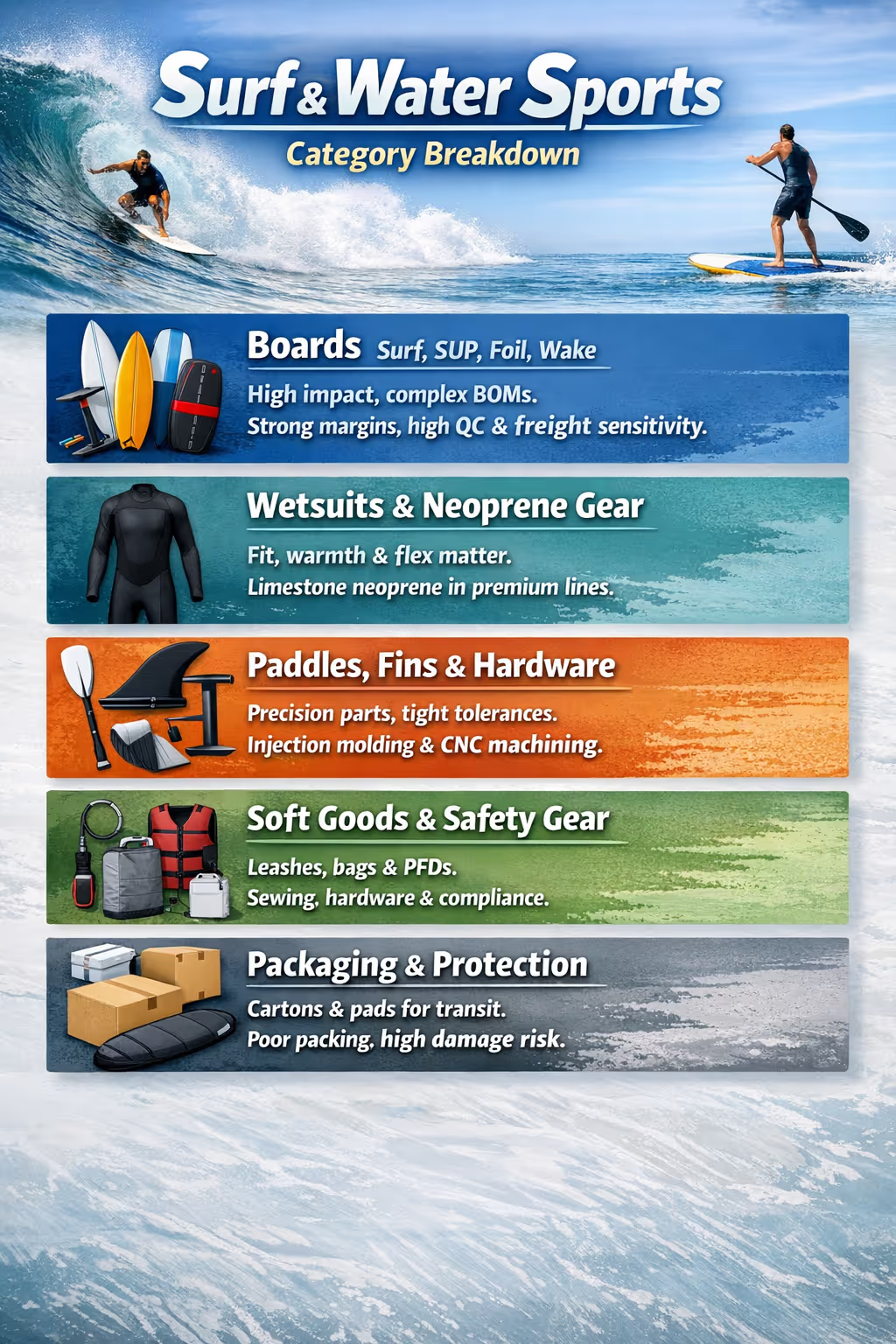
2. Category Breakdown (Shortened + Scannable)
Boards (Surf, SUP, Foil, Wake)
High impact, high visibility. Complex BOMs (cores, resins, fabrics, inserts). Strong margin potential but higher QC and freight sensitivity.
Wetsuits & Neoprene Gear
Fit, warmth, and stretch drive value. Panel cutting and seam bonding matter as much as material quality. Premium lines often rely on limestone neoprene.
Paddles, Fins, Foils & Hardware
Precision parts that define performance. Involve injection molding, CNC machining, and composite layups. Small tolerances = big differences.
Soft Goods & Safety Gear
Leashes, board bags, PFD shells, straps, drybags. Mix of sewing, simple hardware, and compliance requirements for select items.
Packaging & Protection
Cartons, pads, and board bags for transit. Underestimated cost driver; poor packaging leads to high transit damage rates.
Top Countries to Find Suppliers for Surf & Water Sports
1. China
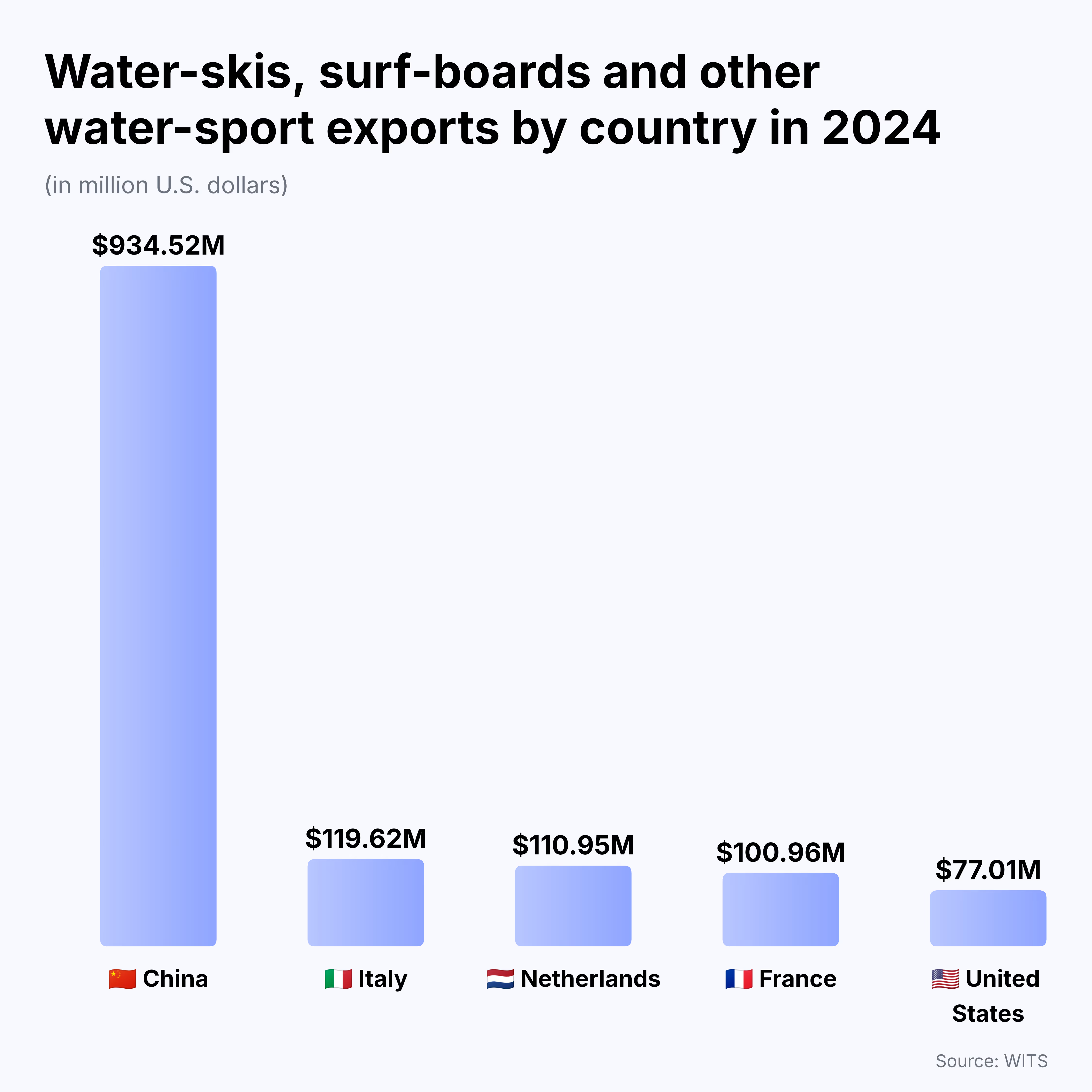
China remains the most complete ecosystem for surf and water-sports manufacturing. From boards to wetsuits to foils to soft goods, the supply chain is integrated and scalable.
Specialties
High-volume board production (surf, SUP, foil)
Injection-molded and CNC hardware
Mid-tier to premium wetsuit programs
Full-line accessory manufacturing
Strengths
Broad capability: China is the only country where you can build almost your entire catalog under one ecosystem. This reduces onboarding time and simplifies logistics.
Fast development speed: Tooling, CNC shaping, resin layups, and mold-making move quickly. Factories can revise shapes or constructions mid-season with minimal downtime.
Competitive price–performance: You generally get a solid mix of cost efficiency and technical competence, especially in established coastal manufacturing zones.
Watch-outs
Large quality spread: Top-tier factories perform well, but mid- or lower-tier factories can produce inconsistent weights, resin saturation issues, or QC drift if not tightly supervised.
Compliance inconsistency: VOC, chemical, and labeling compliance can vary by factory. Without documentation requirements built into your PO, you risk shipment delays or market-entry issues.
IP and tooling exposure: Without strict contracts, molds and designs may be reused or shared. Subcontracting is common unless explicitly restricted.
2. Taiwan
Taiwan is the engineering and premium-materials center of the surf and water-sports world. If performance matters, Taiwan is almost always involved.
Specialties
Limestone neoprene & premium laminates
Carbon paddles, carbon foils, and precision fins
Engineering-driven composite layups
Strengths
Premium neoprene quality: Taiwanese mills control cell structure, stretch, and durability better than any region. Products built with these materials feel warmer and lighter.
High-tolerance composites: Carbon shafts, foil masts, and high-end fins come out with tighter weight and stiffness tolerances, improving consistency across batches.
Engineering clarity: Factories communicate in data—flex modulus, tensile results, curing curves—making development more predictable and repeatable.
Watch-outs
Higher cost base: Taiwan is exceptional for premium SKUs, but cost structures rarely suit entry-level or high-volume basics.
Higher MOQs: Factories prefer stable programs, not constant spec revisions or small runs. Development flexibility is lower.
Capacity bottlenecks: Peak seasons (cycling, outdoor, triathlon) affect neoprene mills and composite shops, extending lead times.
3. Vietnam
Vietnam is strong in sewn goods and structured textile products, supported by experienced factories accustomed to global audits.
Specialties
Board bags, PFD shells, straps, and soft accessories
Technical sewing for outdoor and water-sport soft goods
Mid-tier plastic and nylon-injection components
Strengths
Soft-goods reliability: Vietnam excels in stitch consistency, reinforcement placement, and panel alignment. This reduces failure rates in bags and straps.
Audit-ready operations: Factories often maintain strong documentation for social, environmental, and quality compliance, reducing regulatory risk.
Cost-effective production: Competitive labor costs and improving skill sets make Vietnam a strong China+1 option for accessories.
Watch-outs
Limited high-end composites: Vietnam’s strengths are textiles and soft goods, not carbon fiber layups or advanced board construction.
Longer sampling cycles: Product development can take more rounds due to more conservative engineering processes.
Holiday shutdowns: Tet leads to multi-week closures that disrupt production if calendars aren’t adjusted.
4. Thailand
Thailand is a neoprene and wetsuit assembly hub, producing reliable mid-range products with good labor stability.
Specialties
Mid-tier neoprene production
Wetsuit cutting, gluing, and seam bonding
Entry- to mid-level neoprene accessories
Strengths
Consistent neoprene quality: Thailand produces reliable neoprene suitable for recreational and mid-tier wetsuits without major stretch or durability issues.
Competent assembly lines: Factories have long experience with panel cutting, seam bonding, and glue application—key for comfort and longevity.
Balanced cost proposition: Pricing typically beats Taiwan while delivering better consistency than China’s lower-tier wetsuit producers.
Watch-outs
Not ideal for premium lines: If you need ultra-stretch, ultra-light, or brand-story neoprene, Taiwan still outperforms.
Imported critical materials: Some adhesives, laminates, and specialty fabrics are sourced abroad, which can cause delays or cost swings.
Limited composites industry: Thailand isn’t suitable for carbon foils, high-end paddles, or advanced board constructions.
5. Indonesia
Indonesia has a deep surfing culture and strong shaping craftsmanship, especially for premium and custom boards.
Specialties
Premium surfboard shaping and lamination
Small-batch, custom, and artistic finishes\
Boutique and story-driven board programs
Strengths
Authentic shaping expertise: Many shapers come from surf backgrounds, giving them a strong feel for rocker lines, rails, and flex profiles.
Flexible for small runs: Custom art, limited editions, and prototype boards are easier to execute here than in large-scale factories elsewhere.
Brand-aligned positioning: “Made near the waves” adds authenticity and marketing value for premium board lines.
Watch-outs
Variation risks: Without strict SOPs, board weight, finish quality, and lamination thickness can vary more than acceptable for higher-volume retail.
Limited lab testing: Many factories rely on rider testing rather than formal documentation, which is insufficient for big retailers.
Narrow category scope: Indonesia is excellent for boards but not suitable for wetsuits, paddles, soft goods, or hardware.
Sourcing Checklist Playbook
1. Map Your BOM
Identify which SKUs are premium, core, or entry-level. Flag items with safety or structural risk: PFDs, foils, board cores, leashes.
Use SourceReady early here to benchmark similar products and see which countries typically manufacture each component type.
2. Assign Countries by Category Strengths
China → full-line production & rapid development.
Taiwan → high-performance neoprene & composites.
Vietnam → soft goods & audit-heavy categories.
Thailand → mid-tier wetsuits.
Indonesia → premium board craftsmanship.
3. Validate With Data
Ask for test reports for flex, tensile strength, cell structure, seam strength, and resin specs. Use SourceReady to validate supplier history and materials.
4. Landed Cost Modeling
Calculate true unit economics: ex-works, duties, freight, compliance costs, and expected defect rates. Compare blended models (e.g., Taiwan + Vietnam vs. China-only).
5. Compliance First
Map requirements for your target markets (USA/EU/AU). Add checks at PP, inline, and FGI to prevent late surprises.
6. Control Tooling & Materials
Document mold ownership. Require written approval for any process or material change. Inspect mold conditions annually.
7. Start Small, Scale Smart
Pilot production runs in each country. Track defects, transit damage, and return rates. Scale only when a full season validates consistency.
Conclusion
Building a strong sourcing strategy for surf and water-sports equipment isn’t about chasing the “best” country—it’s about aligning each part of your BOM with the region that excels at producing it. China gives you range, scale, and development speed. Taiwan delivers the precision materials and composites needed for high-performance products. Vietnam and Thailand offer dependable, audit-ready soft-goods and mid-tier neoprene programs. Indonesia provides craftsmanship and storytelling value for premium board lines. When you map these strengths to your product architecture, you reduce risk, stabilize quality, and protect margin.
The next step is execution: model landed cost early, validate every material input, and maintain airtight documentation across tooling, compliance, and production changes. A balanced multi-country approach keeps your supply chain flexible and resilient.
If you want to operationalize this faster, SourceReady can help you filter suppliers, verify certifications, and track performance—so every sourcing decision is grounded in data, not guesswork.
FAQ
1. How do I know if a supplier can handle my technical requirements?
Ask for test data—tensile strength, flex, seam strength, resin specs, density reports. Then cross-check using tools like SourceReady to verify past exports, certifications, and category experience.
2. How can I reduce transit damage for boards?
Upgrade packaging: honeycomb pads, reinforced rails, double-wall cartons, and salt-spray-tested zippers. Conduct drop tests for long boards. Packaging failures often cost more than the upgrade.
Find the sourcing tools you need.
Explore how SourceReady helps you research products, discover suppliers, verify factory information, analyze trade data, and manage your sourcing workflow in one place
Graduating from USC with a background in business and marketing, Judy Chen has spent over a decade working in e-commerce, specializing in sourcing and supplier management. Her experience includes developing strategies to optimize supplier relationships and streamline procurement processes for growing businesses. As SourceReady’s blog writer, Judy leverages her deep understanding of sourcing challenges to create insightful content that helps readers navigate the complexities of global supply chains.