Finding great product ideas in 2026 is no longer about luck or scrolling until inspiration hits. It’s a discipline. A repeatable workflow. And most importantly, a sourcing-ready process that ensures you don’t fall in love with an idea before you validate demand, margin, and supply-side feasibility.
Product categories are getting saturated faster. Trends break in weeks, not months. Compliance requirements are stricter. And customers—across DTC, Amazon, Shopify, and wholesale—expect useful design improvements, not copy-paste replicas. The brands that win are the ones that treat product research like due diligence, not guesswork.
This guide gives you a straightforward, no-fluff playbook: what product research actually is, the methods that work in 2025, the tools worth using, and how to pressure-test ideas before investing. It’s written for operators who care about product-market fit and supply-chain reality—because a good idea that can’t be made profitably isn’t a good idea at all.
Let’s get into it.
There’s a better way to source ❤️
Watch the video to see how SourceReady helps brands move from product ideas to trusted supplier relationships faster
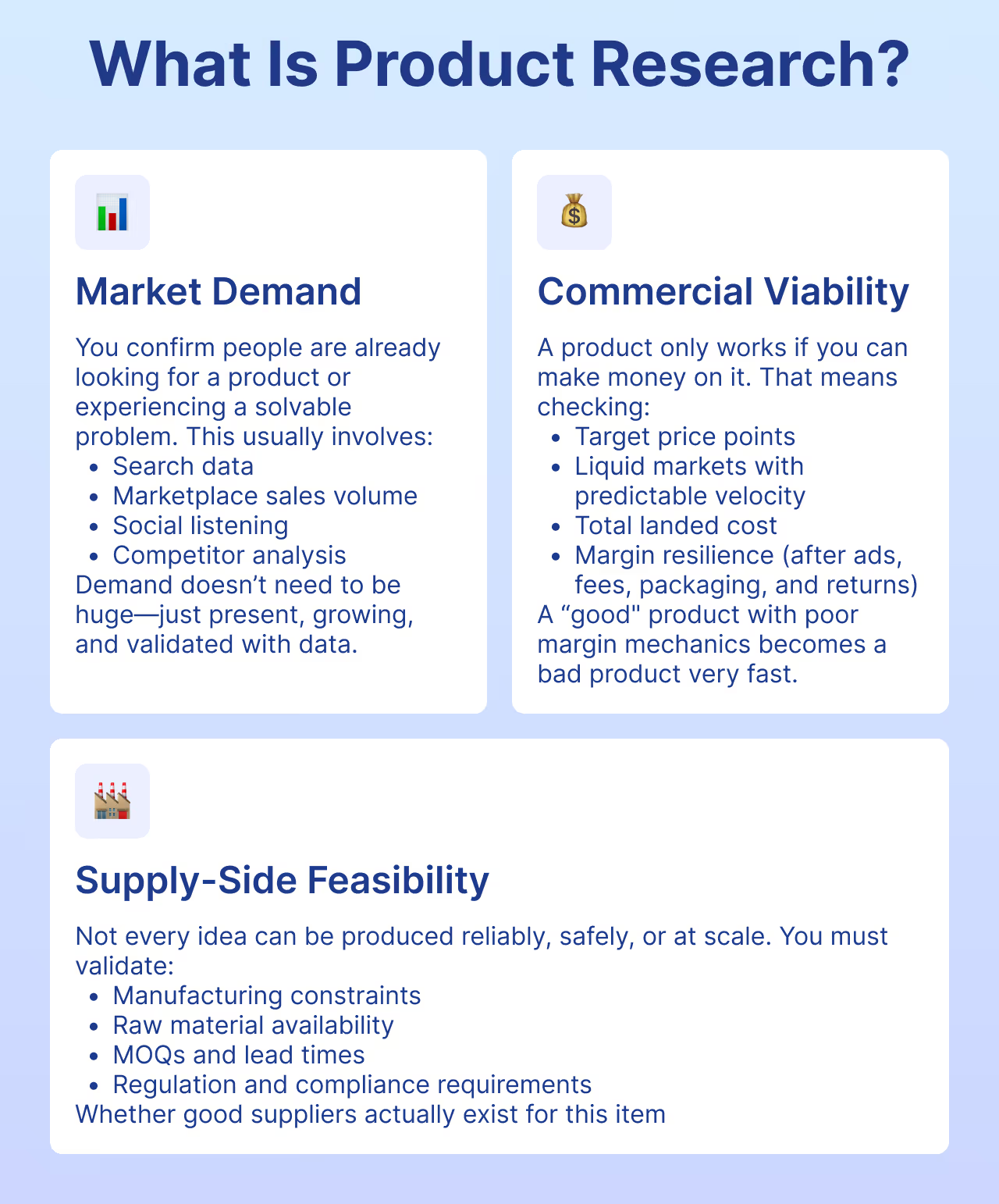
Product research is the structured process of identifying, evaluating, and validating product opportunities before you commit capital. It covers three key angles:
1. Market Demand
You confirm people are already looking for a product or experiencing a solvable problem. This usually involves:
Search data
Marketplace sales volume
Social listening
Competitor analysis
Demand doesn’t need to be huge—just present, growing, and validated with data.
2. Commercial Viability
A product only works if you can make money on it. That means checking:
Target price points
Liquid markets with predictable velocity
Total landed cost
Margin resilience (after ads, fees, packaging, and returns)
A “good" product with poor margin mechanics becomes a bad product very fast.
3. Supply-Side Feasibility
Not every idea can be produced reliably, safely, or at scale. You must validate:
Whether good suppliers actually exist for this item
Tools like SourceReady help here because you can filter qualified suppliers, verify certifications, and model sourcing scenarios early—before committing to prototypes.
When you combine demand, commercial reality, and supply-side feasibility, you get real product opportunities—not guesses.
How to Do Product Research
Below is a tactical, repeatable process you can use for any category.
Step 1: Start With Problems, Not Products
The strongest ideas come from observed pain points, not random browsing. Ask:
What do customers complain about?
What breaks, leaks, frays, stains, or loses charge?
What design feature is consistently missing?
Which items customers buy frequently but are not emotionally attached to?
What are the “include more of this” or “please fix this” patterns in reviews?
You’re not solving everything. You’re fixing something small but valuable.
Ways to spot real problems:
50–100 one-star competitor reviews
Reddit threads
TikTok “I wish this existed” clips
Amazon Q&A
Your own customer inbox
This step stops you from developing products nobody asked for.
Step 2: Identify Trend Momentum Early
2025 product discovery is about speed and signal detection. You're looking for momentum—not fads.
Look for:
Rising micro-trends: Products with 2–6 months of consistent upticks in:
Search volume
Social mentions
Short-form demos
Creator endorsements
Problem-driven trends: Not aesthetics. Not novelty. Tangible improvements.
Cross-category shifts: E.g., “wellness x electronics,” “pets x smart home,” or “office x ergonomic.”
Avoid:
One-week viral TikTok spikes
Highly regulated categories you can’t enter easily
Products with collapsing margins (visible on marketplace data)
Anything with patents you can’t work around
Trend validation is about eliminating noise before you proceed.
Step 3: Validate Market Demand With Data
This is where most founders overestimate. You want layered validation.
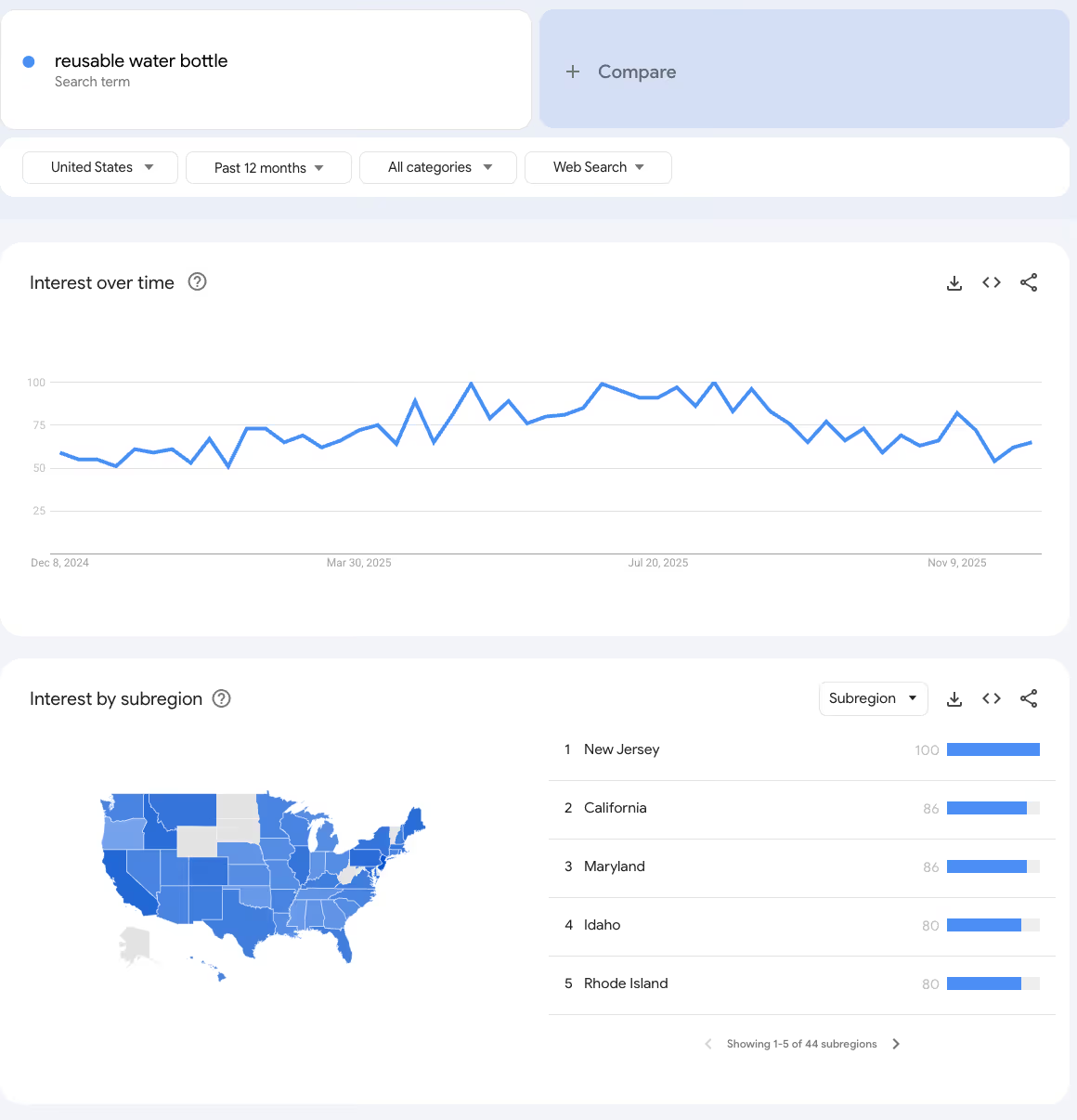
Search Volume Trends
Tools like Google Trends, Keyword Tool, or Semrush help you check:
Whether searches are rising
Whether interest is seasonal
Whether certain markets show early adoption
Look for consistent 3–12 month upward trajectories.
Marketplace Signals
Amazon, Etsy, Temu, and TikTok Shop give clear demand patterns:
Best Seller Rank (BSR)
Review velocity
Category growth rate
Frequent restocks
If listings are growing but velocity is rising, you might have a healthy market.
Audience Validation
Check:
Reddit upvote trends
Problem-focused posts
Community discussions
TikTok search volume
This is especially useful for niche categories with passionate user groups.
Combine these data points. You're not hunting for perfection—just evidence.
Step 4: Perform Competitor Analysis
You need to understand what you’re up against.
Build a fast competitor matrix:
Look for:
Pricing clusters
Gaps in features
Weak materials
Complaint patterns
“Invisible taxes” like heavy packaging or high defect rates
A strong product idea usually comes from systematically fixing two or three weaknesses competitors ignore.
Step 5: Evaluate Margin and Unit Economics
Before you fall in love with a product, run the numbers.
Calculate:
COGS (from real supplier data)
Packaging
Freight
Duties
Platform fees
Return risk
Ad CAC (based on category norms)
You’re aiming for:
65–75% gross margin for DTC
30–45% contribution margin after marketing
>25% net margin on replenishable SKUs
Lower return rates than industry benchmarks
If you cannot survive discounting, your product is not financially robust.
Step 6: Check Supply-Side Feasibility Early
Great ideas die in production because founders skip this step.
Validate:
Material availability
Tooling requirements
Customization options
MOQs
Production risks
Regulatory obligations
This is where SourceReady fits naturally into the workflow. You can:
Filter verified suppliers with relevant certifications
Compare lead times, MOQs, and pricing
Model sourcing scenarios across countries
Review supplier performance data
Most “great ideas” disappear once you realize the material is price-volatile or the production method requires capital-heavy tooling. Good sourcing tools save you weeks of blind outreach.
Off-the-shelf components you can assemble yourself
You want to validate:
Ergonomics
Material feel
Functionality
Packaging fit
Edge-case failure modes
A strong prototype is one step away from sample production.
Step 8: Stress-Test Compliance Requirements
Regulation is stricter across electronics, children’s items, food-contact products, cosmetics, and anything with batteries.
Do this early:
List all required certifications
Check lab testing requirements
Identify restricted materials
Confirm labeling rules
Estimate compliance costs
Skipping this step is a guaranteed margin killer.
Step 9: Conduct Pre-Launch Validation
Before you invest in tooling or bulk inventory, validate demand with:
Waitlists
Landing pages
Micro-ad tests
Creator seeding
Community polls
You’re collecting directional signals. You’re not looking for viral traction—just confirmation that the product solves the right problem for the right audience.
Best Product Research Tools in 2025
You don’t need a bloated stack. You need a focused toolkit that covers demand, competition, and sourcing feasibility end to end.
Look at 12–24 months of data, not just a 30-day blip
De-prioritize products with clear, long-term downward trends
2. Semrush – Market & Keyword Depth
This is your “how big is this problem and who else is chasing it?” tool.
What it’s good for:
Estimating search demand around problems and product types
Understanding keyword difficulty and the level of competition
Discovering adjacent pain points and related product angles
How to use it:
Start with problem phrases (e.g. “pet hair on sofa,” “small closet storage”)
Look for keywords with meaningful volume and moderate difficulty
Use related terms reports to spot new ideas or feature directions
3. Jungle Scout – Amazon Category Proof
Jungle Scout gives you Amazon-specific clarity when you want to sanity-check viability in a marketplace environment.
What it’s good for:
Estimating sales volumes and demand on Amazon
Checking category competitiveness and saturation
Understanding realistic price bands and review expectations
How to use it:
Analyze the top 10–20 listings for your primary keyword
Look for categories with healthy demand across multiple sellers (not just one winner)\Avoid niches where everyone is racing to the bottom with price and coupons
4. Helium 10 – Deeper Marketplace Intelligence
Helium 10 complements Jungle Scout when you want more granular Amazon tooling.
What it’s good for:
Digging into Amazon keyword demand, search behavior, and listing performance in a very category-specific way
Identifying product and keyword gaps where demand is strong but existing listings are weak or poorly positioned
Using TikTok Shop data (where available) to see which products are gaining traction in short-form, creator-driven environments
How to use it:
Run reverse ASIN lookups on top Amazon competitors to see what actually drives traffic and conversions in your niche
Track how competitors move on pricing, keywords, and positioning over time to spot openings for differentiation
Cross-check TikTok Shop signals against Amazon data to find products that work both in search-driven and content-driven channels before you commit to them
5. SourceReady – Product Research with Market Intelligence You Can Act On
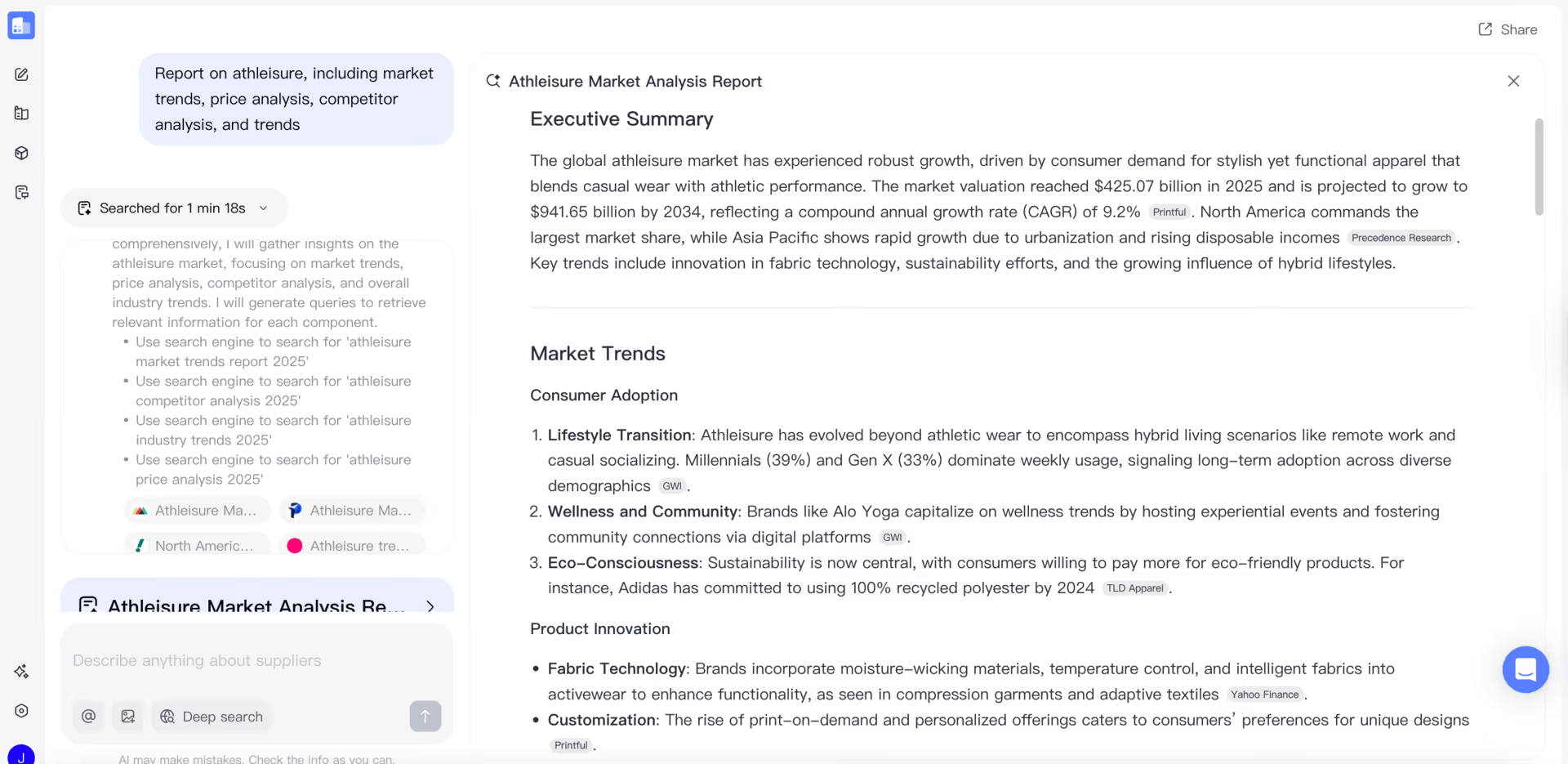
SourceReady connects data from global marketplaces like Amazon and Shopify (24/7) and transforms it into structured insights you can actually use—helping you cut through the noise and make confident product decisions.
What it’s good for:
Market analysis: Showing market size, growth trends, and key consumer regions so you can quickly judge if a category is worth pursuing
Trend insights: Tracking search trends, seasonal demand shifts, and product launch cycles, giving you early signals on what’s gaining momentum
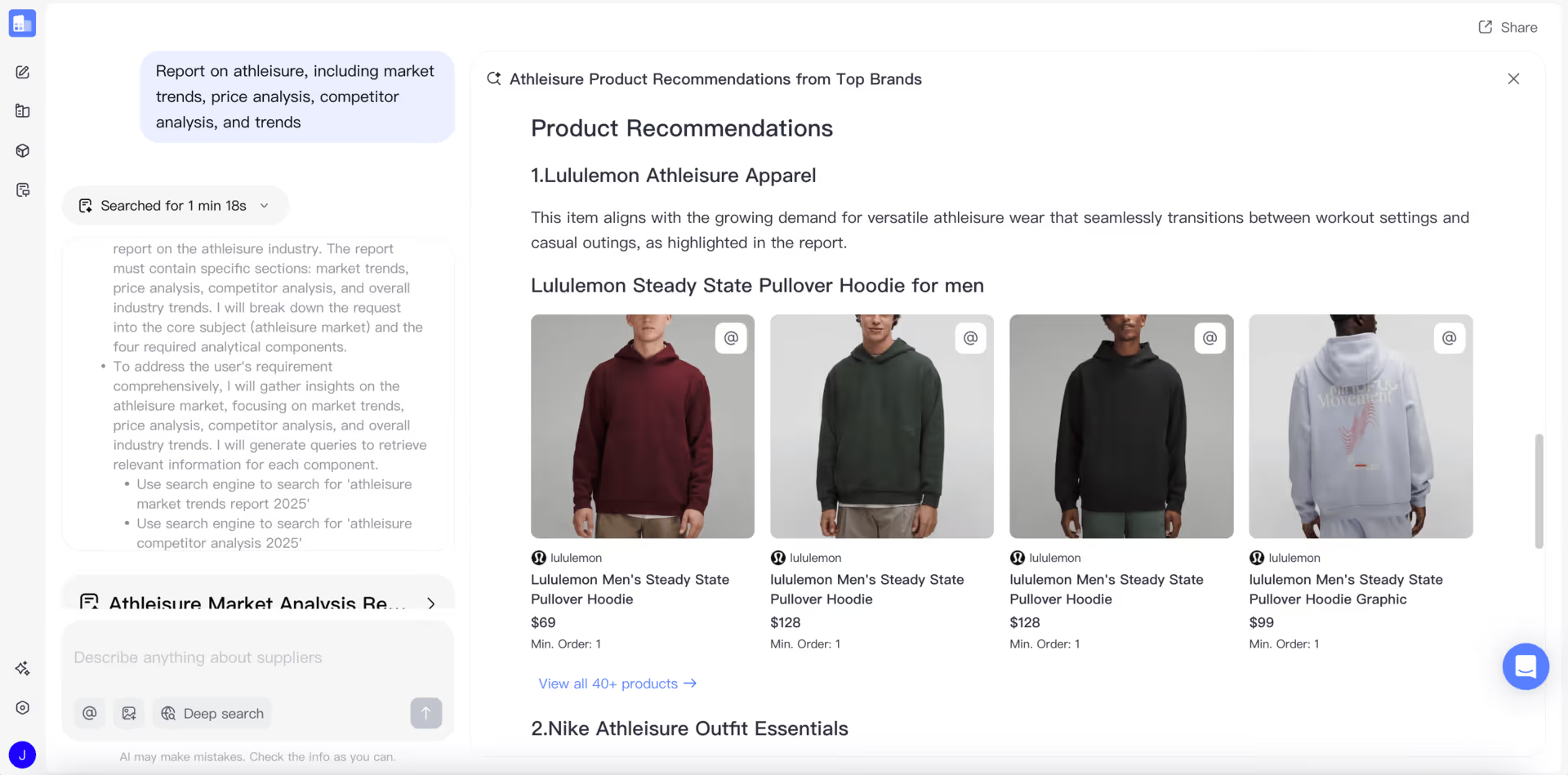
Price and competition clarity: Surfacing price ranges across regions and highlighting top brands, bestselling products, and competitive strategies
How to use it:
Use market analysis reports to quickly evaluate if a product category deserves deeper research
Review trend insights to anticipate seasonal shifts and align your launch timing with real buying behavior
Use pricing and competitor intelligence to set competitive yet profitable price points and position your offer smartly against leading sellers
Conclusion
Great product ideas don’t come from inspiration—they come from a disciplined research process that blends demand signals, competitive clarity, and supply-side feasibility. When you treat product discovery like an audit, you eliminate guesswork and avoid chasing trends that won’t survive margin pressure, compliance requirements, or manufacturing constraints.
The goal isn’t to find “hot products.” It’s to identify opportunities where real customer problems meet viable economics and dependable production. Structured tools make this process predictable, but your judgment as an operator is what turns data into decisions. Platforms like SourceReady help tighten this loop by giving you actionable market intelligence from marketplaces such as Amazon and Shopify, plus pricing and competitor insights you can use immediately.
A strong product idea is only the starting point. A rigorous, sourcing-aware research workflow is what turns that idea into something you can launch, scale, and defend.
FAQ
1. What’s the biggest mistake beginners make?
Falling in love with a product before validating margin and manufacturability. Demand alone doesn’t matter if the product can't be produced reliably or profitably.
2. What’s a “red flag” during product research?
High demand + terrible margins. This usually means the category is mature, heavily optimized, and dominated by low-cost incumbents.
Find the sourcing tools you need.
Explore how SourceReady helps you research products, discover suppliers, verify factory information, analyze trade data, and manage your sourcing workflow in one place
Graduating from USC with a background in business and marketing, Judy Chen has spent over a decade working in e-commerce, specializing in sourcing and supplier management. Her experience includes developing strategies to optimize supplier relationships and streamline procurement processes for growing businesses. As SourceReady’s blog writer, Judy leverages her deep understanding of sourcing challenges to create insightful content that helps readers navigate the complexities of global supply chains.