As of 2026, the Asian beauty market has moved beyond the "10-step routine" to a focused, science-led era. While South Korea is the epicenter of biotech-integrated "System Beauty", Japan has reclaimed its status as the leader in "Minimalist Longevity" and advanced clinical safety. This guide leverages SourceReady AI metrics to provide a granular comparison of regional clusters, manufacturing agility, and the mandatory 2026 ESG reporting standards.
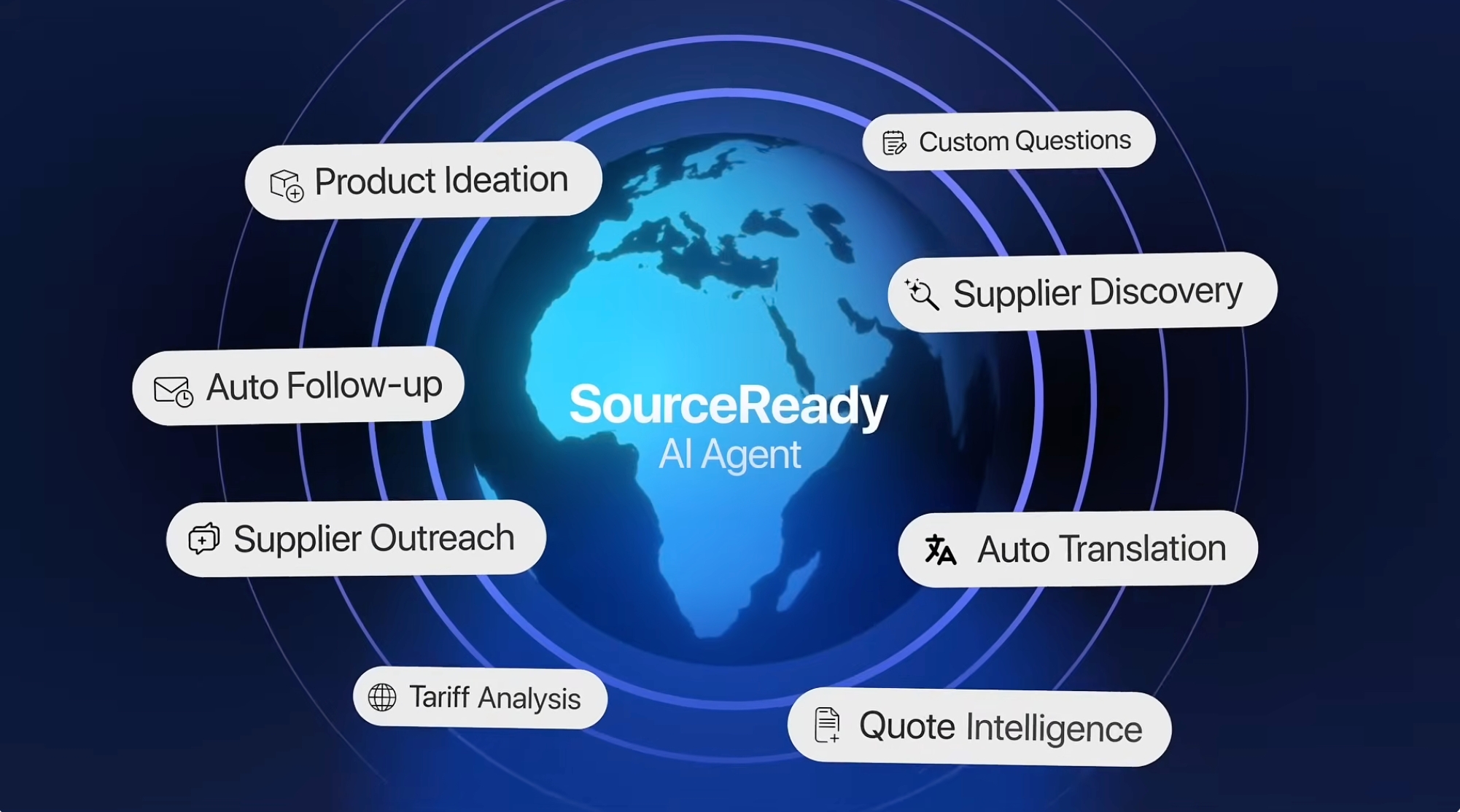
There's a better way to source ❤️
Watch the video to see how SourceReady helps brands move from product ideas to trusted supplier relationships faster
Watch the VideoWhat is the difference between K-Beauty and J-Beauty manufacturing?
In 2026, the distinction between these two hubs is no longer just geographic; it is foundational. SourceReady data shows a shift toward "Hybrid Sourcing," where brands utilize Korea for rapid-cycle innovation and Japan for their core, high-stability "hero" formulations.
The Korea Model: "System Beauty" & Rapid Biotech
South Korean manufacturing is optimized for Information Gain and trend-capture.
- The "Bio-Regenerative" Wave: 2026 has seen the definitive entry of PDRN (Salmon DNA) and Exosomes into consumer skincare. Korean OEMs have successfully bridged the gap between clinical dermatology and daily-use serums.
- Smart Personalization: AI-driven formulation is now standard in the Gyeonggi corridor. Factories use advanced algorithms to create "Climate-Adaptive" skincare that adjusts its barrier-forming properties based on local humidity and UV indices.
- Check the comprehensive report on K-beauty here!
The Japan Model: "Skinimalism" & Stability
Japanese J-Beauty manufacturing focuses on Bio-Preservation and "Takumi" (craftsmanship).
- Minimalist Logic: Rather than "stacking" actives, Japanese labs focus on the stability of a single, high-potency formula.
- The Longevity Advantage: 2026 trends in Japan center on "Neurocosmetics"—ingredients that interact with skin sensory receptors to reduce stress-induced inflammation, a category where Japan’s R&D currently leads the world.

Where are the top K-Beauty manufacturing hubs located?
Korea’s beauty industry is built on hyper-specialized clusters that allow for unprecedented speed-to-market.
The Incheon-Gyeonggi Corridor: The Global OEM Engine
This is the densest cosmetics ecosystem on the planet.
- Anchor Hubs: Home to Kolmar Korea and Cosmax. In 2026, these giants have transitioned into "Tech-Beauty" firms, integrating 3D-printed skincare patches and smart-packaging directly into their OEM offerings.
- The RBF Advantage: Similar to the electronics sector, Gyeonggi offers "Ready-Built Labs" where indie brands can rent R&D space and tap into shared manufacturing lines, reducing entry costs by up to 60%.
Osong Bio-Cluster: The Science of High-Functionals
Osong is where "Cosmeceuticals" are born.
- Regulatory Proximity: Being near the Ministry of Food and Drug Safety (MFDS) allows factories here to expedite testing for "Functional Cosmetics" (whitening, anti-wrinkle, and the new 2026 category: Barrier-Repair Certification).
- Biotech Powerhouses: Specialized firms like Caregen and Medytox are clustered here, providing the peptides and exosome-complexes that define the 2026 K-Beauty "biotech renaissance."
Which Japanese regions lead in J-Beauty production?
Japan’s hubs are defined by proximity to high-purity resources and a century of pharmaceutical-grade engineering.
The Osaka-Kyoto Hub: The "Takumi" ODM Center
Osaka is the industrial heart of J-Beauty, offering the highest level of formulation complexity.
- Key Player: Toyo Beauty: A leader in stabilizing "Oil-in-Water" hybrids that other regions struggle to replicate. Their Osaka facilities are famous for "Small-Batch Agility," producing 3,000-unit luxury runs with 1,000,000-unit precision.
- Advanced Sunscreens: Japan’s 2026 UV-protection standards are the world's most rigorous. Osaka-based labs like TOA Corporation specialize in high-SPF formulations that feel weightless, utilizing "Nano-dispersion" technology.
The Shizuoka Cluster: Water Purity & ESG Leadership
Shizuoka leverages Mount Fuji’s water tables to produce the purest skincare in the world.
- Water Stewardship: In 2026, water scarcity is a material financial risk. Shizuoka factories lead in "Circular Water Systems," recycling up to 90% of production water.
- Green Energy: This region is a pioneer in Zero-Landfill manufacturing. Using SourceReady, you can filter for factories that utilize 100% wind-powered production lines, meeting the new mandatory ESG reporting requirements for US/EU export.

2026 Trend Forecast: What’s Next for Sourcing?
To stay ahead of the curve, brands must move toward these 2026-specific categories:
- Post-Procedure Care: With the global rise in aesthetic treatments (lasers, fillers), there is a massive demand for "Post-Aesthetic" skincare. Korea's Osong hub is the leader in formulas rich in Centella Asiatica and growth factors designed specifically for weakened barriers.
- Scalp Biology: Haircare is becoming "Skincare for the Scalp." Japanese labs in Shizuoka are using their anti-aging expertise to create scalp serums that focus on follicle longevity and microbiome balance.
- Eco-Refillable Systems: Both hubs have moved beyond "biodegradable" to "perpetual packaging." In 2026, the focus is on Smart Refills—packaging that uses NFC chips to track your product usage and alert you when to reorder.

Compliance 2026: The "Market Passport"
Navigating the MFDS (Korea) and MHLW (Japan) is the biggest barrier for 2026 sourcing.
- Korea (MFDS) 2026 Updates: Korea has implemented "AI-Assisted Safety Reviews," which has shortened the approval time for new ingredients to just 45 days. However, documentation must be perfect. SourceReady’s Compliance Agent automates this by pre-vetting your INCI list against the latest MFDS restricted list.
- Japan (MHLW) Standards: The "Quasi-Drug" license remains the gold standard. To claim "brightening" or "acne-prevention" in Japan, you must partner with an MHLW-certified factory. SourceReady provides a verified database of these licensed ODMs.
How to Scale with SourceReady: Your AI Sourcing Command Center
Sourcing in 2026 isn't about finding more options; it's about reducing the "Decision Debt" created by unverified data. SourceReady functions as an autonomous intelligence layer that filters through 1.5M+ global suppliers to find your perfect technical match.
1. The "Match Score" Advantage
Unlike marketplaces that prioritize suppliers who pay for ads, SourceReady uses a proprietary Matching Score.
- How it works: You input your SKU's specific needs—such as "ISO 22716 certification," "MOQ under 1,000," or "MHLW-certified for Quasi-Drugs."
- The Result: The AI ranks manufacturers based on their actual capabilities and shipment history, ensuring you only spend time talking to labs that can actually deliver.
2. Competitor Benchmarking via Customs Data
SourceReady leverages verified U.S. Customs records and global trade data to give you an insider’s view of the supply chain.
- Identify the "Hidden" Powerhouses: See exactly which ODMs in Osaka or Gyeonggi are currently shipping for the world’s leading beauty brands.
- Verify Legitimacy: Don't rely on a factory's website. Use SourceReady to verify their real-world trade volumes and export frequency over the last 24 months.
3. Automated Quote Intelligence (No More Spreadsheets)
Managing different quote formats from five different suppliers is the "spreadsheet nightmare" of procurement. SourceReady’s AI Brain solves this:
- Quote Extraction: When you receive a PDF, email, or WhatsApp message with pricing, SourceReady automatically extracts the data into a standardized dashboard.
- Side-by-Side Comparison: The platform generates a "Landed Cost" simulation, factoring in unit price, packaging, and regional tariffs (like RCEP) so you can compare a Korean quote to a Japanese one on a 1:1 basis.
Conclusion: The Hybrid Advantage in 2026
The "Victory" in 2026 beauty sourcing belongs to brands that don't pick a side. The most resilient supply chains are Dual-Hub: sourcing your viral trend-drops from the high-velocity Gyeonggi corridor and your hero anti-aging staples from the "Takumi" labs of Osaka.
With SourceReady, you aren't just finding a factory; you are orchestrating an intelligent, data-backed network that is resilient to global shocks and ready to scale.
FAQ
1. Which region is better for a brand prioritizing "Sustainability"?
A: Both hubs are advanced, but Japan’s Shizuoka cluster leads in water stewardship and zero-landfill manufacturing. However, Korea’s Gyeonggi corridor excels in "Refillable Ecosystems" and biodegradable packaging innovation.
2. How does SourceReady verify that a factory is "authentic"?
A: SourceReady cross-references supplier data from U.S. Customs filings, government business registries, and trade-show rosters. If a factory hasn't shipped a verifiable order in 24 months, its Match Score drops.
3. Can I use one supplier for both my formula and packaging?
A: Yes, many Korean ODMs offer "Turnkey" services. However, SourceReady data shows that for premium J-Beauty, brands often source high-end primary packaging from Japanese specialty molding firms and have it shipped to the filler to maintain a specific "aesthetic feel."

Find the sourcing tools you need.
Explore how SourceReady helps you research products, discover suppliers, verify factory information, analyze trade data, and manage your sourcing workflow in one place
Explore Features
Graduating from USC with a background in business and marketing, Judy Chen has spent over a decade working in e-commerce, specializing in sourcing and supplier management. Her experience includes developing strategies to optimize supplier relationships and streamline procurement processes for growing businesses. As SourceReady’s blog writer, Judy leverages her deep understanding of sourcing challenges to create insightful content that helps readers navigate the complexities of global supply chains.