Soap remains a cornerstone of global personal care, with a combined market size of USD 48 billion across bar soaps, liquid cleansers, syndet bars, and specialty formats. Demand is driven by hygiene awareness, premium ingredients, hospitality procurement, and the growth of natural and “free-from” brands. Yet building a reliable soap supply chain requires more than contacting a few factories. Regulations differ by market. Ingredient disclosures must hit exact standards. Preservatives, fragrances, and colorants come with compliance rules. Manufacturing capability varies widely from small-batch to high-volume operations.
This audit-ready sourcing guide gives you a clear comparison of the top countries for soap manufacturing, what each country does well, and where the risks sit. You’ll also see how platforms like SourceReady help you screen suppliers by certification, and pressure-test sourcing scenarios before committing budget.

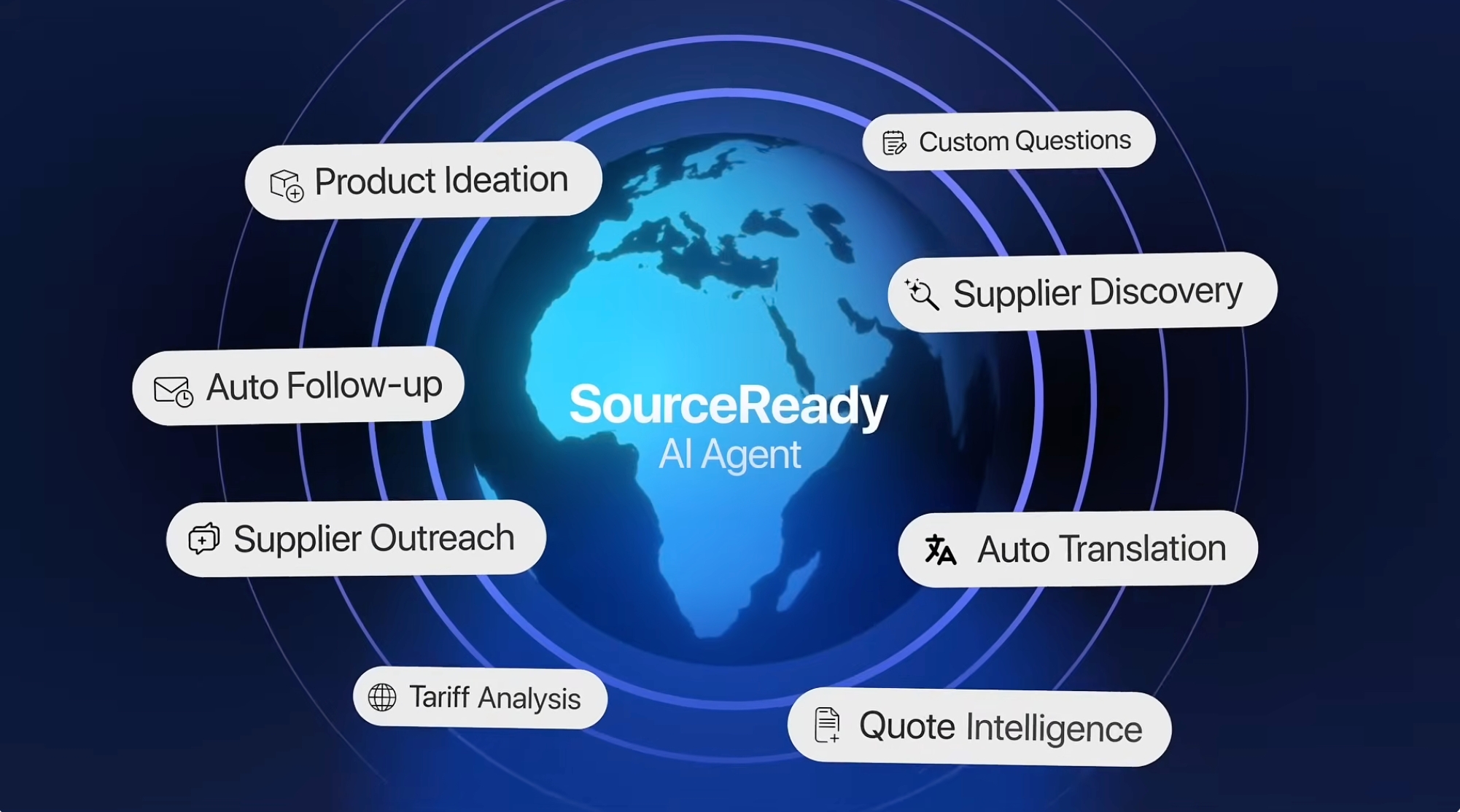
There's a better way to source ❤️
Watch the video to see how SourceReady helps brands move from product ideas to trusted supplier relationships faster
Watch the VideoGlobal Market Overview & Soap Category Breakdown
Global Market Overview
Market size: USD 48 million
Growth: ~6%, driven by stable hygiene demand and trading up into premium and “clean” products
Demand is concentrated in three practical buckets:
- Everyday hygiene: Supermarkets, drugstores, e-commerce. You optimize for cost, consistency, and stable supply.
- Institutional & hospitality: Hotels, gyms, hospitals, schools. You optimize for bulk formats, strict specs, and compliance.
- Branded & story-driven: Natural, derm-backed, or design-led soaps. You optimize for documentation depth, ingredients, and differentiation.
Your sourcing plan should follow these demand types—not just the headline market number.
Category Breakdown
1. Bar Soap
Bar soaps include cold-process bars, hot-process soaps, triple-milled bars, glycerin soaps, and syndet bars (synthetic detergent bars). Bar soap manufacturing varies significantly: cold process offers artisan flexibility, while triple-milled machinery supports mass production with excellent hardness and longevity. Syndet bars target sensitive-skin and sulfate-free categories, making them attractive for dermatology-focused brands.
Key requirements:
- TFM (total fatty matter) measurement
- Hardness + moisture stability
- Color + fragrance migration testing
- Pressing/milling consistency
- Allergen labeling compliance
2. Liquid Soap & Body Wash
Liquid soaps include castile-style oils, surfactant blends, sulfate-free formulas, exfoliating washes, gels, and foaming formats. Liquid soap manufacturing requires precise control over viscosity, rheology, preservative systems, and microbial stability—especially important for large-batch filling lines. Production also requires compatibility between formula and packaging (bottle, pump, cap).
Key requirements:
- Preservative challenge tests
- pH stability + drift testing
- Microbial load results
- Viscosity consistency across batches
- Material compatibility (PET, HDPE, aluminum)
3. Specialty & Premium Soap
Specialty soaps include herbal bars, aromatherapy blends, hotel amenities, spa-grade bars, essential-oil soaps, charcoal bars, exfoliating formulations, and palm-free oils or unique surfactant systems. These SKUs typically require stricter ingredient traceability, more complex fragrance handling, and low-batch flexibility.
Key requirements:
- Ingredient provenance documentation
- IFRA-compliant fragrance load
- Natural/organic certifications (COSMOS, USDA)
- Small-batch repeatability
- Enhanced allergen declarations

Top Countries to Find Suppliers for Soap
United States
The United States is a strong sourcing hub for premium, small-batch, and regulatory-heavy soap production. Many manufacturers specialize in dermatologist-tested, hypoallergenic, and “clean” formulations aligned with strict FDA and GMP expectations. U.S. factories also excel at shorter lead times for domestic brands and fast-growing DTC launches.
Specialty
- High-end liquid soap formulations
- Hypoallergenic and sensitive-skin lines
- OTC-adjacent antibacterial soaps
- Small-batch artisanal bars with unique ingredients
- “Made in USA” premium-positioned SKUs
Strengths
- Regulatory reliability (FDA + GMP): Strong documentation, batch traceability, and compliance standards reduce regulatory risk.
- High-quality liquid soap production: Excellent surfactant systems, viscosity control, and stability testing for premium cleansers.
- Fast lead times: Short development cycles and domestic shipping for U.S. brands.
Challenges
- Highest production cost: Labor, compliance overhead, and insurance make U.S.-made soap expensive.
- Limited large-scale bar soap capacity: Few factories have the industrial lines needed for mass retail bars.
- Packaging cost is high: Bottles, pumps, and labels sourced domestically cost significantly more than Asia.
Germany
Germany is one of the world’s most precise and compliance-driven soap manufacturing hubs. German factories excel at high-performance formulations, engineering-grade machinery, and extremely consistent bar and liquid soap production. Their documentation practices are among the strongest globally, making them attractive for brands selling in strict regulatory markets.
Specialty
- Syndet bars for sensitive-skin lines
- Dermatology-oriented liquid cleansers
- Fragrance-engineered bars with complex profiles
- Hotel amenities for luxury hotels
- Eco-forward certified formulations
Strengths
- Best-in-class compliance: Exceptional documentation (EU Cosmetic Regulation, ISO 22716) and traceability.
- Precision manufacturing: Highly automated milling, blending, and filling ensure extremely consistent batches.
- Advanced specialty formulations: Strong expertise in syndet bars, dermatology-driven cleansers, and fragrance engineering.
Challenges
- Very high production cost: Typically the most expensive option globally.
- Longer onboarding cycles: Strict documentation and testing requirements slow down development.
- Higher MOQs for automated lines: Many plants require large runs due to machinery configuration.
Indonesia
Indonesia is a global leader in vegetable-oil-based bar soaps thanks to abundant palm and coconut derivatives, deep manufacturing capacity, and competitive pricing. Indonesian factories supply large retail chains, hotel amenities, and natural/herbal soap brands across Asia, the Middle East, and Africa.
Specialty
- High-volume bar soaps
- Natural/herbal bars: turmeric, lemongrass, tamarind, charcoal
- Coconut-based formulas
- Affordable hotel amenities
- Export-ready private-label bars
Strengths
- Mass-scale bar soap production: Large continuous-saponification lines ideal for supermarkets and hotels.
- Low cost driven by local raw materials: Palm, coconut, and oleochemicals reduce ingredient costs.
- Strong natural/herbal heritage: Turmeric, charcoal, lemongrass, and botanical formulations widely available.
Challenges
- Documentation quality varies: Some factories lack EU-ready allergen, IFRA, or microbial reports.
- Sustainability scrutiny: Palm-oil sourcing raises compliance or brand-image issues for certain markets.
- Weak in advanced liquid-soap R&D: Less capability for specialty surfactant systems vs. Western markets.
Malaysia
Malaysia is a strategic sourcing location for brands seeking bar soap or liquid soap manufacturers that balance competitive pricing with stronger sustainability credentials, especially for palm-oil derivatives like RSPO-certified materials. The country offers stable regulatory oversight and reliable export processes.
Specialty
- RSPO-certified bar soaps
- Halal-certified production
- Herbal and botanical soaps
- Balanced mid-range liquid soaps
- Amenity soaps for hotels and airlines
Strengths
- RSPO-certified palm derivatives: Strong sustainability credentials for vegetable-oil–based bars.
- Halal-certified production: Broad availability for Muslim-majority markets and MENA exports.
- Balanced mid-market manufacturing: Good quality at moderate cost for bar soaps and hotel amenities.
Challenges
- R&D depth is moderate: Advanced surfactant systems often require imported ingredients or external chemists.
- Smaller factory ecosystem: Fewer options than China or Indonesia.
- MOQ inconsistency: Production batch sizes vary widely between suppliers.

China
China remains the most comprehensive, scalable, and packaging-rich environment for sourcing soap globally. Manufacturers cover everything from low-cost bar soaps to mid-tier liquid washes, custom molds, private-label collections, and integrated packaging solutions—all within a single supply ecosystem.
Specialty
- Mass-market bar soaps
- Syndet bars for large retailers
- ODM liquid soaps
- Complete gift sets and amenity bundles
- Packaging-integrated soap production
Strengths
- Largest and most complete ecosystem: Formulation, packaging, molds, and assembly available in one region.
- Highly competitive pricing: Works for both mass-market bars and private-label liquid soaps.
- Flexible MOQs and fast ODM development: Suitable for both small DTC brands and large retailers.
Challenges
- Quality and documentation vary widely: Buyer must enforce SDS, COA, IFRA, and microbial testing requirements.
- Requires strong QC oversight: Batch consistency and packaging defects can occur without inspections.
- Longer logistics for Western markets: Extended transit and potential DG requirements for certain fragrances.

How to Find and Vet Soap Suppliers – Step-by-Step
Step 1: Be Clear About What You Want
Before you talk to any factory, write down:
- What you want to make: bar soap, liquid soap, or both
- Your price level: budget, mid-range, or premium
- Any rules you care about: Vegan / palm-free / fragrance-free / “natural” and markets you will sell to (U.S., EU, UK, etc.)
- Rough order size and timeline
If you can’t explain this in one page, suppliers will give you random ideas instead of what you actually need.
Step 2: Make a Short List of Suppliers
Don’t stop at the first factory you find. Use:
- Trade shows and industry events
- Local export or cosmetic associations
- Referrals from packaging or ingredient vendors
- Tools like SourceReady to search by country, product type, and certifications
Try to end up with 5–10 serious candidates. Too many is noise, too few is risk.
Step 3: Quick Filter – Are They Even a Good Fit?
Before you spend time on calls:
- Check if they already make soap, not just “cosmetics in general”
- Ask if they already export to your target market
- Ask for basic info: years in business, main customers (no need for names), main product lines
- Drop suppliers who clearly don’t match your product or scale
This step saves you from months of back-and-forth with factories that were never right.
Step 4: Ask for Documents, Not Just Photos
Before you pay for samples, ask for:
- Ingredient list (INCI)
- Safety sheet (SDS)
- Basic lab tests (microbial, stability, etc.)
You don’t need to be a chemist. Look for:
- Are the files complete, or half-empty?
- Are dates recent, not 5–10 years old?
- Do they refuse to send anything? (big red flag)
If a supplier can’t send basic documents now, they won’t magically improve later.
Step 5: Test Samples Like a Customer and Like a Buyer
When you get samples:
- Use them like a normal person: smell, feel, rinse, after-feel
- Then think like a buyer:
Do bars crack, sweat, or lose color?
Do liquids separate, thin out, or leak?
Does the label scratch off easily?
Take simple notes. You’re building your own “internal benchmark” for future comparisons.
Step 6: Do a Small Test Order (Not Just Samples)
If samples look good:
- Place a small but real order, not just 10 free pieces
- Ship to your warehouse or 3PL and check:
Did everything arrive on time?
Any damage, leaks, wrong labels, wrong barcodes?
Is the product the same as the samples?
This is where you find out if they can handle real life, not just “sample mode.”
Step 7: Score Each Supplier and Decide Who to Grow With
Make a simple scorecard for each supplier:
- Product quality (1–5)
- On-time delivery (1–5)
- Communication speed and clarity (1–5)
- Document quality (1–5)
- Price level (1–5)
You can track this in a spreadsheet or in a tool like SourceReady, where you can link suppliers and compare different sourcing options by country and risk.
Pick:
- 1–2 core suppliers you want to grow with
- 1 backup supplier in another country, in case something goes wrong
Conclusion
Building a reliable soap supply chain is less about chasing “best country” headlines and more about matching the right region to the job. The United States and Germany shine when you need tight regulation, clinical positioning, and deep documentation. Indonesia and Malaysia are strong choices for vegetable-oil bar soaps, natural positioning, and large runs at workable cost. China still offers the broadest ecosystem when you need scale, packaging options, and speed on private label.
Your real advantage comes from process: clear specs, a sensible shortlist, document checks, real-world test orders, and ongoing scorecards. Do that consistently and most “sourcing surprises” disappear. Tools like SourceReady make this easier by helping you map BOMs, filter suppliers by capability and certification, and model country-by-country scenarios before you commit. With structure, data, and a bit of discipline, you can turn soap sourcing from a headache into a repeatable growth lever.
FAQ
1. Do I need certifications to sell soap internationally?
You need compliance, not necessarily certifications. Examples:
U.S.: FDA cosmetic rules + correct labeling
EU: PIF, CPSR, CPNP registration
UK: Notification + compliance documentation Certifications (e.g., GMP, COSMOS, Halal) help but aren’t always mandatory.
2. What documents should I request from a soap supplier?
At minimum:
INCI list
SDS
COA
Microbial test reports
IFRA compliance (if fragranced)
Packaging compatibility tests (for liquids)
3. How do I avoid fragrance issues or instability?
Make sure the supplier supports:
IFRA-compliant fragrance loads
Proper emulsifiers (for liquids)
Color/fade testing
Stability testing at multiple temperatures Never skip fragrance tests across at least two batches.

Find the sourcing tools you need.
Explore how SourceReady helps you research products, discover suppliers, verify factory information, analyze trade data, and manage your sourcing workflow in one place
Explore Features
Graduating from USC with a background in business and marketing, Judy Chen has spent over a decade working in e-commerce, specializing in sourcing and supplier management. Her experience includes developing strategies to optimize supplier relationships and streamline procurement processes for growing businesses. As SourceReady’s blog writer, Judy leverages her deep understanding of sourcing challenges to create insightful content that helps readers navigate the complexities of global supply chains.