The US promotional products industry achieved record sales of around $26.6 billion in 2024. As businesses tighten brand budgets yet demand faster delivery, regional sourcing is no longer optional—it’s a competitive edge.
Mexico has emerged as a smart alternative to Asia, offering shorter lead times, tariff advantages under USMCA, and growing manufacturing sophistication. For U.S. buyers, sourcing from Mexico can cut logistics costs by up to 30% and simplify customs processes.
This guide breaks down why Mexico works for promotional goods, what categories make sense, where the traps are, and how to structure your sourcing strategy—compliance included. You’ll also learn how tools like SourceReady help you vet suppliers before committing to production.
There’s a better way to source ❤️
Watch the video to see how SourceReady helps brands move from product ideas to trusted supplier relationships faster
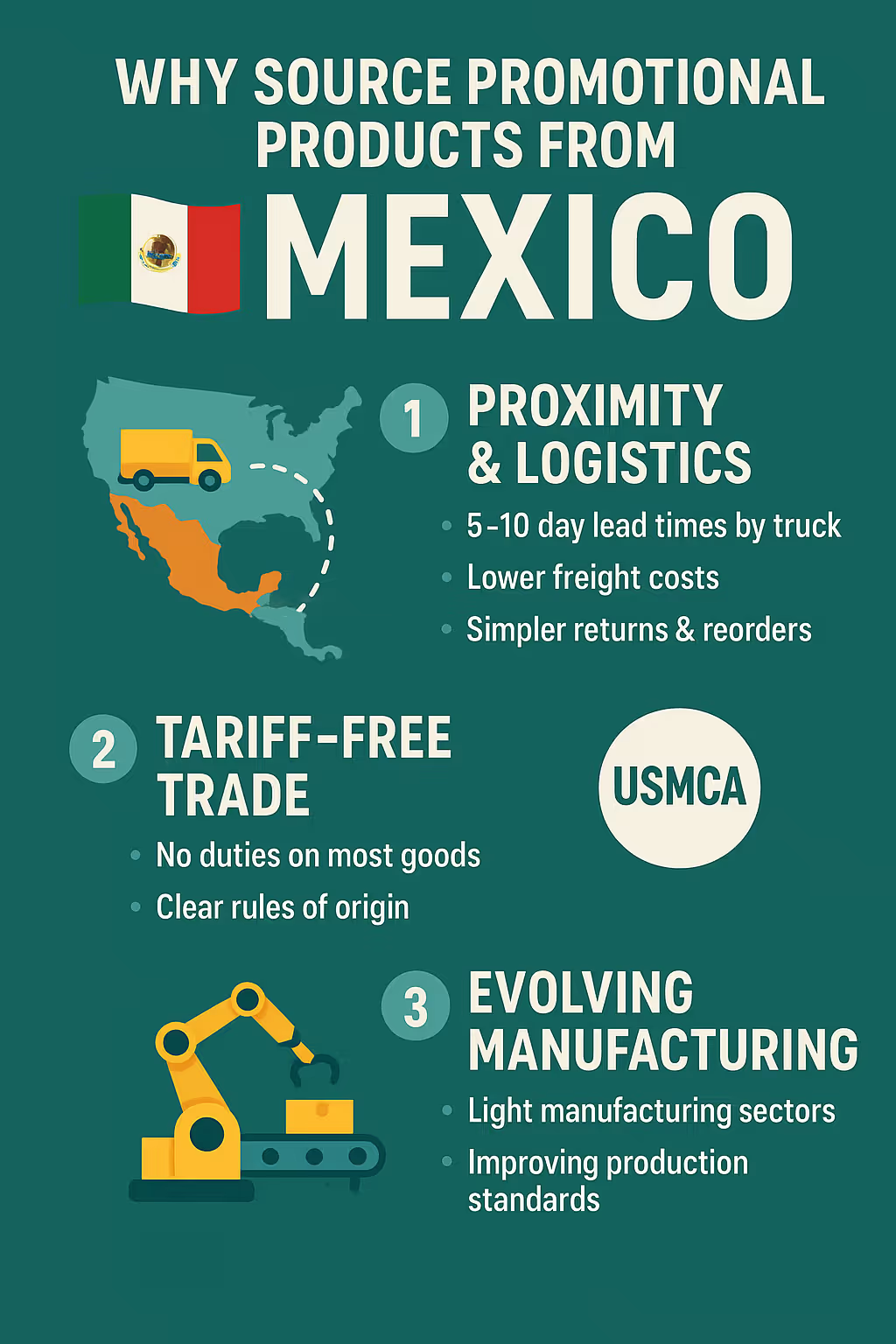
Mexico offers three key advantages for promotional product sourcing: proximity, trade agreements, and maturing industrial capacity.
1. Proximity and Logistics Efficiency
Geographically, Mexico’s proximity to the U.S. means:
Shorter lead times (average 5–10 days by truck versus 30–45 by sea from Asia).
Lower freight costs—ground transport is 60–70% cheaper than air freight from Asia.
Simpler returns and reorders, ideal for seasonal or campaign-based promotions.
For companies running just-in-time or on-demand promotional campaigns, this agility can be the difference between relevance and waste.
2. Tariff-Free Trade Under USMCA
The United States–Mexico–Canada Agreement (USMCA) eliminates tariffs on most goods produced within North America. Compared to importing from China (with 15–25% duties on some categories), sourcing from Mexico can directly improve gross margin by 8–12%.
Additionally, compliance paperwork is simpler. Rules of origin are transparent, and many Mexican suppliers already operate under NAFTA-era certification systems.
3. Evolving Manufacturing Landscape
Mexico’s manufacturing has matured far beyond automotive and electronics. Regions like Guadalajara, Monterrey, and Puebla now specialize in light manufacturing—apparel, packaging, plastics, and consumer goods—all core to promotional merchandise.
The workforce is skilled, production standards are improving, and factories often hold ISO 9001 or Sedex certifications. While China still leads on scale, Mexico competes on flexibility, communication, and turnaround—a trifecta that matters in B2B gifting.
Main Promotional Product Categories
Mexico’s production landscape covers a broad mix of customizable, short-lead-time items ideal for B2B promotions. Below are the top categories worth exploring—each with its own sourcing logic.
1. Apparel and Textiles
The apparel sector leads Mexico’s promotional manufacturing exports. Cotton and blended fabrics are locally available, and embroidery, screen-printing, and heat transfer are mature services.
You’ll find:
T-shirts, polo shirts, and uniforms with fast customization options.
Tote bags and caps using recycled or organic fabrics.
Aprons and lightweight outerwear for branded hospitality or industrial campaigns.
Why it works: Strong textile heritage, consistent quality, and easier import compliance for U.S. retailers.
2. Drinkware and Kitchenware
Factories in Monterrey and León specialize in molded plastics and stainless-steel fabrication, supporting drinkware and small kitchen items.
You can source:
Tumblers, reusable bottles, and mugs with laser engraving or pad printing.
Thermal flasks with local metal finishing.
Reusable cutlery or containers for eco-friendly campaigns.
Why it works: Excellent access to food-grade materials and fast mold turnaround.
3. Stationery and Office Supplies
Paper-based products are strong exports from Puebla and Mexico City, where print finishing is a core industry.
You’ll see:
Notebooks, planners, and folders in recycled paper.
Pens, pencils, and markers (some factories assemble components from imported parts).
Branded desk organizers made from molded pulp or biodegradable plastics.
4. Eco-Friendly Products
Sustainability is no longer niche—it’s mainstream in Mexico’s promotional industry.
Expect to find:
Bamboo or corn-based pens and utensils.
Recycled cotton tote bags and biodegradable packaging.
Organic-fabric pouches for luxury branding campaigns.
Why it works: Many Mexican suppliers now hold GRS or FSC certification and are responsive to ESG audit requirements.
5. Packaging and Gift Sets
Packaging factories near the U.S. border offer agility that Asian suppliers can’t match.
You can customize:
Gift boxes, sleeves, inserts, and tissue wraps.
Kitting and assembly for multi-item promo sets.
Labeling and barcoding in compliance with U.S. retail standards.
Why it works: Shorter sampling cycles, lower MOQs, and better cost control on shipping-heavy packaging items.
Challenges of Sourcing Promotional Products from Mexico
Sourcing in Mexico offers speed and compliance advantages—but it’s not frictionless. The following are the key challenges you should plan for.
1. Limited Product Variety Compared to Asia
Mexico doesn’t yet match China’s vast range of ready-to-brand items. For commodity or tech-driven giveaways, options may be fewer or more expensive.
Expect less variety in novelty or electronic items.
Some components are still imported (e.g., pen cartridges, zippers).
Customization options can be limited unless MOQs are met.
Mitigation: Use SourceReady to compare product availability across markets and mix sourcing regions within your BOM.
2. Variable Supplier Maturity
Many small-to-mid-size Mexican suppliers are still transitioning to digital quoting and structured QA systems.
Response times can be slower.
Pricing may fluctuate due to manual quoting.
Some suppliers lack English-language documentation for audits or compliance.
Mitigation:
Verify supplier certifications (ISO, Sedex, or equivalent).
Ask for sample invoices and QA reports.
3. Quality and Consistency Gaps
Some smaller workshops rely heavily on manual labor, which can lead to minor inconsistencies.
Print misalignment or color mismatching are common first-order issues.
Quality may vary between production runs if SOPs aren’t documented.
Lack of automated inspection increases rework risk.
Mitigation:
Request pre-production samples and define tolerance limits.
Implement AQL-level inspections for each batch.
Work only with suppliers offering in-house QC documentation.
4. Logistics and Customs Complexities
Even under USMCA, customs processes still require precision. Documentation or labeling errors can delay shipments at the border.
Incomplete HS codes or incorrect certificates of origin can cause holdups.
Limited rail connectivity inland adds to lead-time risk.
Mitigation:
Partner with cross-border freight forwarders familiar with promotional goods.
Include logistics clauses in contracts covering rework or reconsignment.
Build a one-week buffer into time-sensitive campaigns.
Future Trends in Mexico Manufacturing
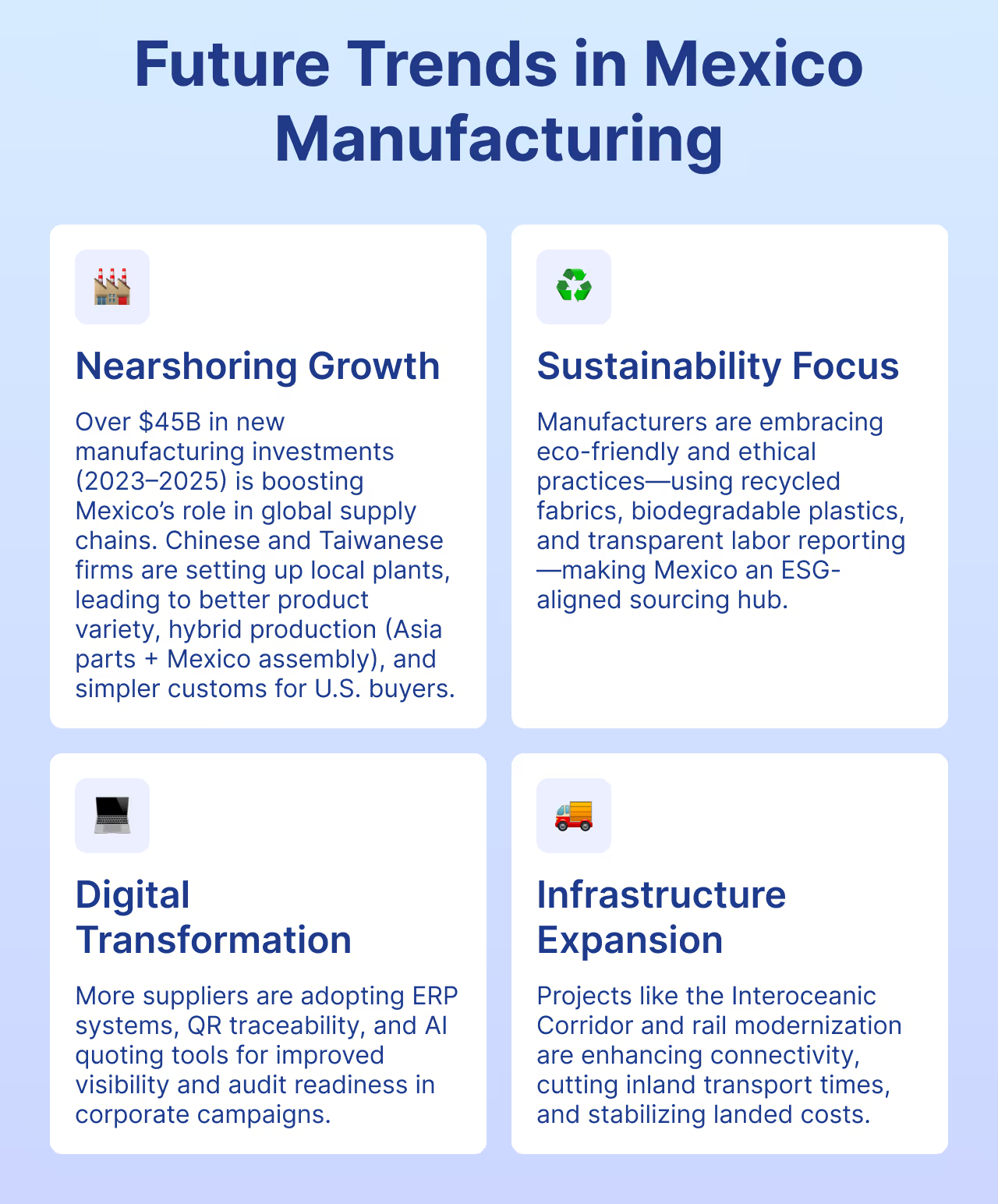
Mexico’s industrial evolution is accelerating under three clear trends: nearshoring, sustainability, and digital adoption.
1. Nearshoring Momentum
As U.S. companies diversify away from China, Mexico has attracted over $45 billion in new manufacturing investments (2023–2025 pipeline). Promotional product suppliers are following suit, with Chinese and Taiwanese firms setting up local plants for assembly and printing.
This means:
Better product variety coming online.
Hybrid production models (components from Asia, assembly in Mexico).
Reduced customs complexity for U.S. buyers.
2. Sustainability and ESG Compliance
Mexico’s younger manufacturing generation is investing in green materials and ethical production practices. Expect more:
Recycled fabrics, biodegradable plastics, and FSC-certified paper.
Waste-minimized dyeing and printing processes.
Transparent labor compliance reporting.
For buyers under ESG pressure, this shift makes Mexico a practical, compliant source within regional regulations.
3. Digitization and Traceability
Software adoption is still uneven, but the curve is steep. More suppliers now integrate:
ERP systems for order tracking,
QR-based product traceability
Digital traceability supports audit-readiness, crucial for large promotional campaigns under corporate compliance frameworks.
4. Infrastructure Expansion
The Mexican government continues investing in logistics infrastructure:
Interoceanic Corridor of the Isthmus of Tehuantepec (CIIT) connecting Pacific and Gulf coasts.
Rail modernization linking Querétaro and Laredo.
Expansion of industrial parks near the U.S. border.
This will improve inland freight efficiency and reduce total landed cost volatility.
Best Practices for Sourcing Promotional Products from Mexico
Before locking in suppliers, conduct a structured sourcing audit.
Step 1. Define Your Product Concept & Spec
Start with a tight concept: audience, use-case, materials, finishes, branding method, packaging, target unit cost, and timeline.
Use SourceReady to generate a product concept brief (spec template + visual references).
Shortlist suppliers by category, location, certifications, and MOQ.
Step 2. Validate Suppliers
Ask for:
Company registration and export license.
Certifications (ISO, Sedex, GRS, or equivalent).
Two client references and sample QC reports.
Photos or live video of production lines.
Avoid suppliers unwilling to provide documentation.
Step 3. Model Landed Costs
Include:
Product unit cost
Inland transport (factory → border)
Customs clearance fees
Duty (if any under USMCA)
Final-mile freight
Step 4. Inspect and Test
Even for low-value promotional goods, maintain sampling discipline:
Review first article samples for quality and branding accuracy.
Run random AQL checks before mass shipment.
Use neutral inspection firms if your team isn’t local.
Step 5. Manage Compliance and Labeling
Confirm country-of-origin marking and safety compliance, especially for:
Children’s items (CPSIA rules).
Food-contact products (FDA, Prop 65).
Electrical giveaways (UL or CE marks).
Mexico’s suppliers generally follow U.S. labeling norms but may need templates or translations for bilingual packaging.
Conclusion
Sourcing promotional products from Mexico is about strategic proximity—balancing cost, speed, and compliance. You gain quicker turnaround and lower freight expenses, but you must vet suppliers carefully and standardize quality control.
The best approach combines:
A BOM-to-country mapping strategy (decide which parts belong in Mexico, which abroad),
Landed cost modeling for total visibility, and
Consistent supplier due diligence for compliance assurance.
SourceReady can help you structure this workflow—filtering verified suppliers, and modeling your sourcing scenarios for transparency and speed.
In an era of unpredictable global logistics, Mexico offers the right mix of agility, trade access, and cost control. Done right, it’s not just nearshoring—it’s smart sourcing with a shorter feedback loop.
FAQ
1. What documents are required for importing promotional goods from Mexico to the U.S.?
Typically, you’ll need:
Commercial invoice (in English or bilingual).
Bill of lading / truck manifest.
Certificate of Origin (USMCA form).
Packing list and HS codes.
Any safety or labeling certificates (CPSIA, FDA, Prop 65).
Working with a customs broker experienced in USMCA trade ensures faster clearance.
2. Which Mexican cities specialize in promotional manufacturing?
Guadalajara: Textiles and embroidery.
Monterrey: Plastics, drinkware, and metal items.
Puebla: Paper goods and printing.
Tijuana/Baja California: Packaging and cross-border assembly.
Mexico City: High-end printing, labeling, and boutique packaging.
Inconsistent safety labeling on food-contact or children’s items.
Always audit suppliers for traceability, labor conditions, and material sourcing—even for low-value promo goods.
Find the sourcing tools you need.
Explore how SourceReady helps you research products, discover suppliers, verify factory information, analyze trade data, and manage your sourcing workflow in one place
Graduating from USC with a background in business and marketing, Judy Chen has spent over a decade working in e-commerce, specializing in sourcing and supplier management. Her experience includes developing strategies to optimize supplier relationships and streamline procurement processes for growing businesses. As SourceReady’s blog writer, Judy leverages her deep understanding of sourcing challenges to create insightful content that helps readers navigate the complexities of global supply chains.