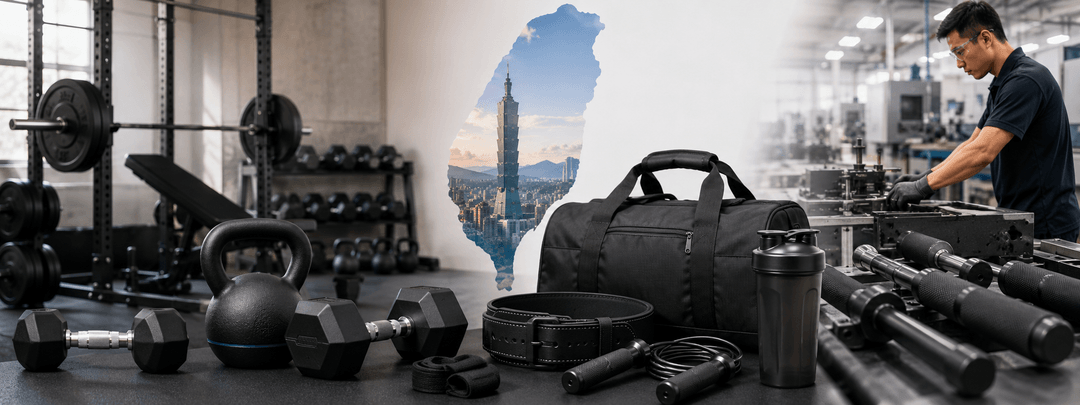
If you run a Shopify store and want to sell professional-grade fitness gear, Taiwan should be on your shortlist. Not because it is “cheap.” It isn’t. Not because every factory there is world-class. They aren’t. Taiwan is worth your attention because it consistently delivers the mix that matters in fitness: engineering quality, reliable execution, and manageable risk.
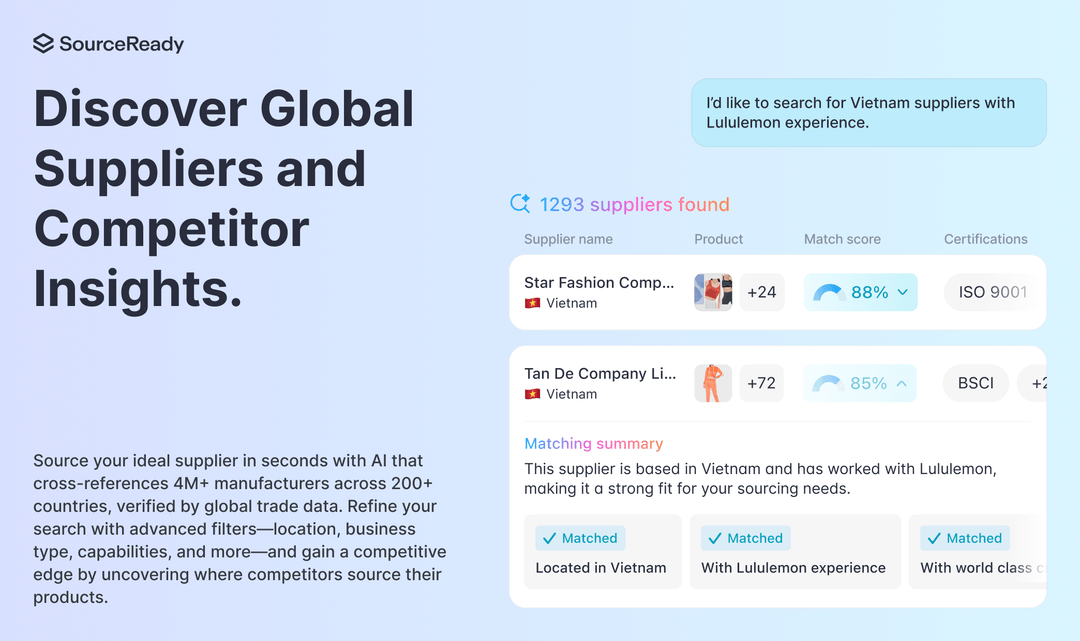
The challenge isn’t finding suppliers—it’s knowing which ones are actually worth your time. That’s where tools like SourceReady can help, by giving you structured supplier data and faster validation before you even start outreach.
This guide is built for operators, not browsers. You’ll get a practical framework for sourcing from Taiwan ODMs (Original Design Manufacturers), with a focus on products that can survive real use, real returns, and real customer reviews.

There's a better way to source ❤️
Watch the video to see how SourceReady helps brands move from product ideas to trusted supplier relationships faster
Watch the VideoWhy Taiwan for Fitness Gear
Taiwan sits in a useful middle lane between low-cost mass production and premium specialist manufacturing.
You get:
- Strong mechanical and materials engineering
- Mature supplier ecosystems for metals, plastics, electronics, and textiles
- Better IP discipline than many low-cost sourcing hubs
- Consistent QC systems and documentation practices
- Export experience with U.S. and EU compliance standards
For fitness gear, that matters. A yoga block can be forgiving. A resistance machine cable attachment, adjustable dumbbell mechanism, or weighted vest buckle is not. If the product fails, you don’t just get a return. You get a safety complaint.
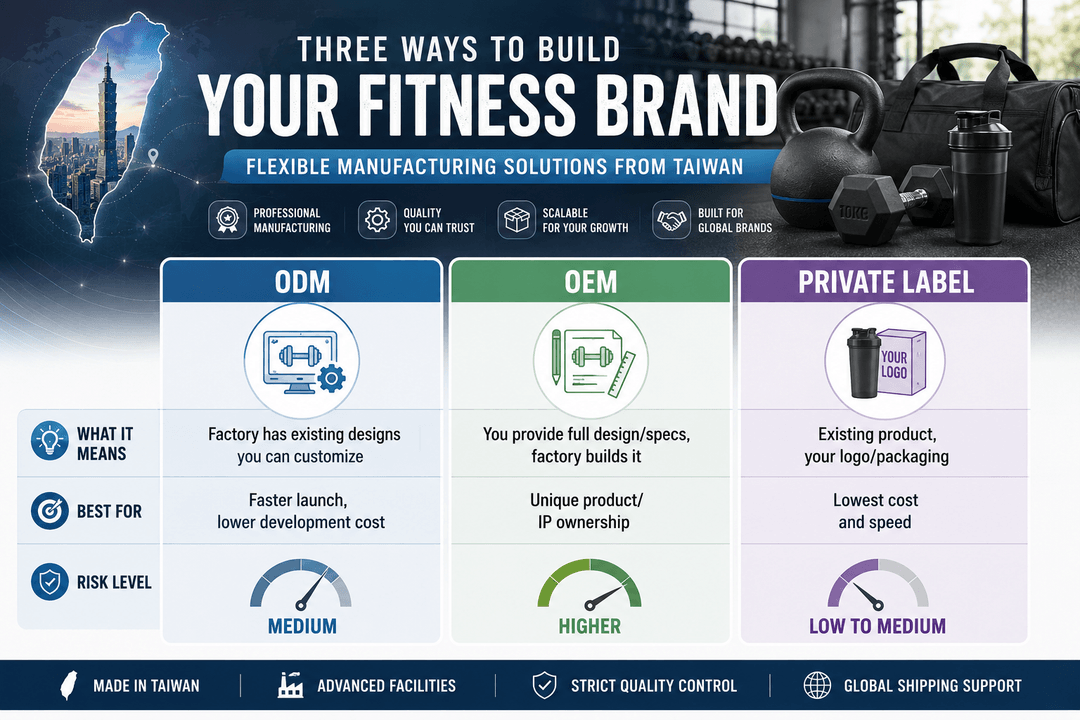
ODM vs OEM vs Private Label
Before you start outreach, be clear on what you’re buying.
For most Shopify fitness brands, ODM is the sweet spot. You can move faster than OEM while still creating a product that doesn’t look like a generic marketplace listing.
Define “Professional-Grade” Before You Contact Anyone
Most sourcing failures happen before the first email. Why? Because buyers ask for “high quality” and factories hear “I don’t have specs.”
“Professional-grade” is not a vibe. It is a specification.
Build a Product Requirement Sheet (PRS)
Your PRS should include:
1. Product use case
- Home use, studio use, or commercial gym use?
- Frequency: 2x/week or 8 hours/day?
2. Load and durability standards
- Max load in kg/lbs
- Cycle test target (e.g., 20,000 repetitions)
- Drop test requirement (height + surface)
3. Material requirements
- Steel grade (e.g., Q235 vs stainless)
- Foam density (kg/m³)
- Fabric denier and abrasion resistance
4. Safety and compliance
- U.S. CPSIA (if applicable)
- California Prop 65
- REACH, RoHS, EN standards (for EU sales)
- Labeling requirements (country of origin, warnings)
5. Packaging requirements
- Drop-test ready carton spec
- Retail-ready or e-commerce-ready?
- Barcode placement and carton marks
6. Branding and customization
- Logo method (laser, embroidery, silk print)
- Pantone color
- Instruction manual language
7. Target price and margin
- Landed cost target (not just EXW)
- Margin target after shipping, duties, and returns
If your PRS is weak, your quote is fiction. Factories will fill in the blanks with assumptions, and those assumptions will cost you later.
What Taiwan ODMs Are Good At in Fitness
Taiwan is not equally strong in every category. You want to source where local capability is deep.
Categories That Usually Perform Well
Strength accessories
- Lifting belts
- Wrist wraps
- Knee sleeves
- Cable attachments
- Pull-up accessories
Functional training gear
- Resistance bands (premium grades)
- Suspension straps
- Agility ladders
- Speed ropes
Bike and cardio accessories
- Indoor trainer accessories
- Pedal systems
- Heart-rate compatible add-ons
Connected fitness components
- Sensor housings
- Plastic injection parts
- Electronics assembly (select ODMs)
Categories to Treat Carefully
- Heavy cast iron products (price pressure can be brutal)
- Large welded equipment (shipping and dimensional tolerance issues)
- Ultra-low-cost textile-only goods (Taiwan may not be cost competitive)
If your category is labor-heavy and low-tech, Taiwan may lose on price. If your category is performance-sensitive, Taiwan often wins on total cost once returns and defects are included.
How SourceReady Helps You Find and Validate the Right Suppliers
Sourcing from Taiwan is not a discovery problem—it’s a validation problem. There are plenty of suppliers. The challenge is knowing which ones are actually worth your time.
This is where SourceReady comes in.
Instead of starting from cold outreach and fragmented information, SourceReady gives you structured supplier data upfront, so you can make faster, more informed decisions.
What SourceReady Helps You Do
- Do product and market research upfront: AI agents analyze Amazon, Google trends, and TikTok Shop to surface emerging opportunities. When you find a product, SourceReady compiles images, pricing, reviews, and specs into a structured list for easy comparison.
- Move from idea to product faster: Use AI to generate variations, visuals, and first-pass BOMs—so you can refine concepts before engaging suppliers.
- Find relevant ODMs faster: Filter suppliers by product category, capabilities, and certifications instead of relying on generic directories.
- Validate before you engage: See supplier profiles built from multiple data points—so you’re not relying solely on what a factory tells you.
- Compare suppliers objectively: Evaluate options side by side based on match score, capabilities, and risk factors.
- Reduce trial-and-error: Spend less time emailing unqualified suppliers and more time working with the right ones.
Why It Matters
Most sourcing timelines are slow because of poor initial filtering. You waste weeks talking to suppliers that were never a fit.
Using SourceReady doesn’t replace audits, sampling, or negotiation. It simply ensures that by the time you reach those steps, you’re working with suppliers that already meet your baseline.
That’s how you compress a 6–8 week sourcing cycle into something far more efficient—without increasing risk.
How to Vet a Factory?
You are not looking for the “best factory.” You are looking for the best fit for your product, volume, and quality standard.
Step 1: Pre-Qualification (Email + Documents)
Ask for these first:
- Company profile and factory location
- Main product categories
- Export markets (U.S., EU, Japan)
- Certifications (ISO 9001, BSCI, etc.)
- Test reports for similar products
- MOQ and lead times
- Incoterms they support (EXW, FOB, DDP)
Red flag: They reply with a generic catalog and no direct answers.
Step 2: Technical Fit Check
Send your PRS and ask:
- Which specs can they meet as-is?
- Which specs need tooling changes?
- What are the likely failure points?
- What tests do they run in-house vs third-party?
A good ODM will push back intelligently. If they say “yes” to everything in 10 minutes, they either didn’t read your specs or they are desperate.
Step 3: Sample Plan (Not “Send Me a Sample”)
Request a sample plan, not just a sample.
Your sample plan should include:
- Prototype sample (fit and function)
- Pre-production sample (final materials and branding)
- Golden sample (signed reference for mass production)
Each stage should have acceptance criteria. If you skip this, your “approved sample” won’t match production.
Audit-Ready Factory Due Diligence Checklist
You asked for audit-ready, so here is the practical version. Use this before placing any PO above your pain threshold.
Factory Audit Checklist (Core)
Operational
- Number of production lines
- Daily output by SKU
- Peak season capacity
- Subcontracted processes (and where)
Quality
- Incoming material inspection process
- In-process QC checkpoints
- Final AQL inspection standard (e.g., AQL 2.5)
- Traceability by lot/batch
Engineering
- Tooling ownership terms
- Change control process (ECR/ECN)
- Tolerance control methods
- Failure analysis capability
Compliance
- Chemical compliance documentation
- Product safety test records
- Labor and social compliance (if relevant to your brand)
- Country-of-origin declaration process
Commercial
- Payment terms
- Currency risk handling
- Warranty and defect liability terms
- Dispute resolution jurisdiction
Final Take: Taiwan ODM Is a Quality Strategy, Not a Shortcut
Taiwan isn’t about lowering cost—it’s about controlling outcomes. In fitness gear, inconsistency kills brands faster than price ever will. Taiwan ODMs excel at repeatability: the same materials, the same tolerances, the same performance across every batch. That’s what keeps returns low and reviews strong. But they only work as well as your inputs—clear specs, disciplined sampling, and proper vetting are non-negotiable. Tools like SourceReady can help you identify, compare, and validate suppliers with real data before you commit. If you’re serious about building a brand that lasts, start with the right sourcing foundation—and use SourceReady to get there faster.
FAQ
1. What certifications are important for fitness gear?
Common requirements include:
REACH / RoHS (EU compliance)
CPSIA (U.S. safety, if applicable)
Prop 65 (California)
Specific products may require additional testing.
2. How can I find trending fitness products before sourcing?
Use data-driven research—analyze Amazon, Google trends, and TikTok Shop. Tools like SourceReady automate this by aggregating product data and surfacing opportunities.

Find the sourcing tools you need.
Explore how SourceReady helps you research products, discover suppliers, verify factory information, analyze trade data, and manage your sourcing workflow in one place
Explore Features
Graduating from USC with a background in business and marketing, Judy Chen has spent over a decade working in e-commerce, specializing in sourcing and supplier management. Her experience includes developing strategies to optimize supplier relationships and streamline procurement processes for growing businesses. As SourceReady’s blog writer, Judy leverages her deep understanding of sourcing challenges to create insightful content that helps readers navigate the complexities of global supply chains.