
Knowing your direct suppliers is necessary. It is also nowhere near enough.
Your Tier-1 supplier may assemble the product, issue the invoice, and answer your emails. But the actual risk can sit several steps upstream: the mill producing the fabric, the smelter processing the metal, the farm growing the commodity, or the subcontractor your supplier quietly uses when capacity gets tight.
That matters because regulators, customers, and internal compliance teams increasingly care about where products and materials actually come from, not simply who sold them to you.
In this guide, you will learn why Tier-1 supplier management leaves important blind spots, where upstream risks typically appear, how far you should trace your supply chain, and what evidence you need to verify the relationships behind your finished products.
There's a better way to source ❤️
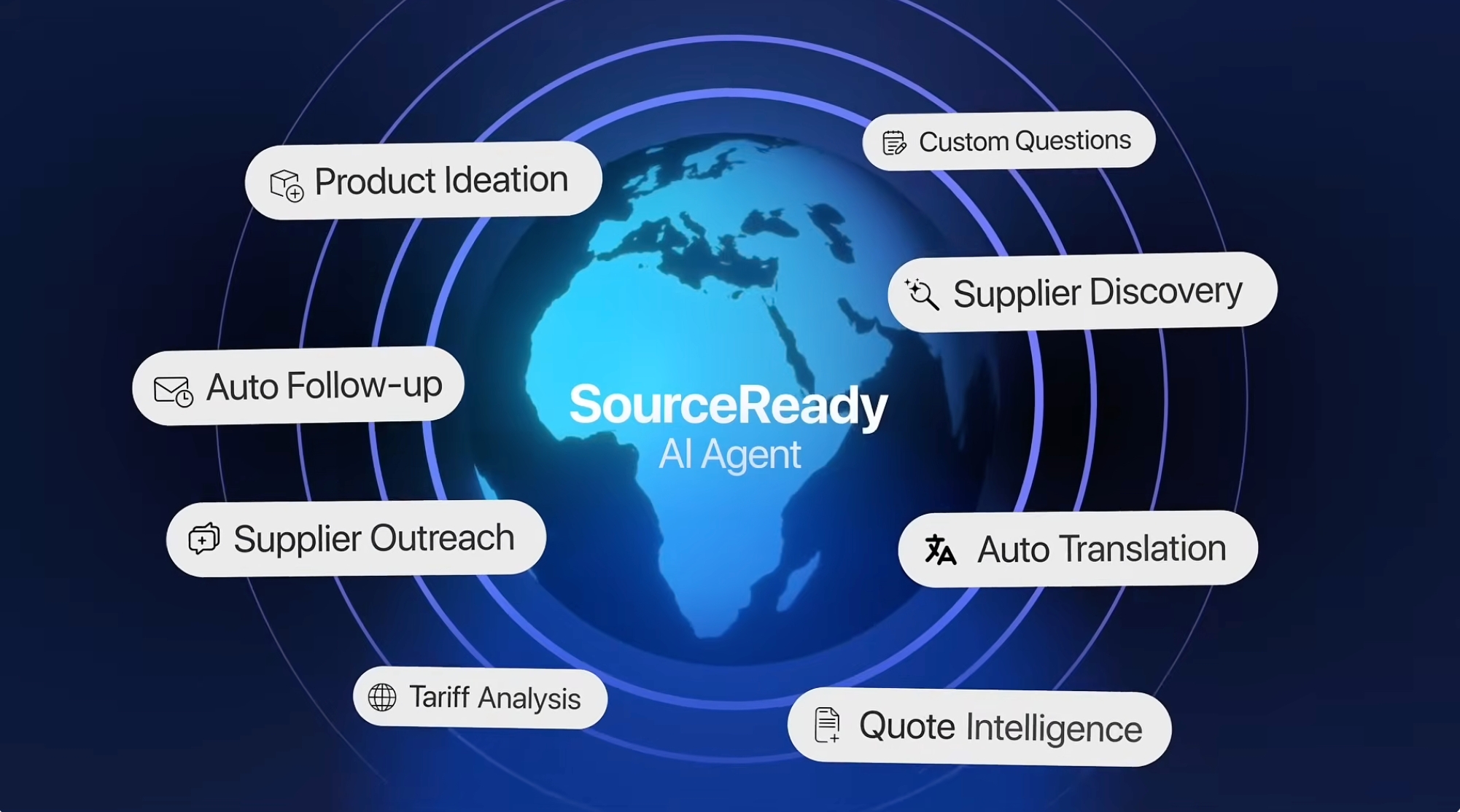
Watch the video to see how SourceReady helps brands move from product ideas to trusted supplier relationships faster
Watch the VideoWhy is managing Tier-1 suppliers no longer enough?
Tier-1 supplier management answers one useful question: Who am I buying from?
It does not necessarily tell you who manufactured critical components, where raw materials originated, whether production was subcontracted, or which companies handled the product before it reached your direct supplier.
Consider a cotton T-shirt.
You may buy it from a garment factory in Vietnam. That factory may buy fabric from a mill in China. The mill may buy yarn from a spinner sourcing cotton through several traders. Those traders may purchase cotton from different gins, which in turn source from multiple farms and regions.
Your approved supplier is only one point in that chain.
The same problem appears across categories:
- Apparel: Your garment factory may source fabric, yarn, cotton, trims, dyes, and packaging from multiple independent suppliers.
- Electronics: Your assembler may rely on component manufacturers, semiconductor suppliers, refiners, and mineral processors you have never contracted with directly.
- Food: Your finished-goods manufacturer may buy ingredients through processors or commodity traders several steps removed from farms.
- Furniture: Your factory may source timber, veneers, foam, adhesives, hardware, and textiles through unrelated upstream networks.
Where does upstream risk actually enter your supply chain?
Not every Tier-2 or Tier-3 supplier creates the same level of risk. Your job is to identify where upstream visibility has the greatest business and compliance value.
Start with the material, geography, production process, and regulatory exposure of the product.
Where are compliance risks hiding?
Many compliance requirements effectively push companies beyond direct-supplier declarations.
For example, U.S. forced-labor enforcement under the Uyghur Forced Labor Prevention Act (UFLPA) can require importers to provide supply-chain tracing and evidence showing how goods and inputs were produced. U.S. government guidance specifically emphasizes due diligence and effective supply-chain tracing.
The EU Deforestation Regulation provides another example. For covered commodities, operators may need traceability information that reaches back toward production origin rather than stopping with the immediate vendor. The regulation begins applying to large and medium operators on December 30, 2026, following amendments adopted in 2025.
Typical upstream risks include:
- Forced labor: A raw material, processing facility, or upstream manufacturer may be linked to a high-risk region or entity even when your direct supplier is not.
- Sanctions exposure: An upstream supplier, beneficial owner, or intermediary can create exposure despite your Tier-1 supplier passing sanctions screening.
- Deforestation risk: Timber, rubber, cocoa, coffee, soy, palm oil, and cattle-derived products may require evidence that extends toward the point of production.
- Origin risk: Buying a material through an intermediary country does not necessarily establish where that material was originally grown, extracted, or manufactured.
- Unauthorized subcontracting: An approved factory may transfer work to another facility that has never gone through your compliance process.
Which supply chains should you prioritize?
You do not need the same level of traceability for every SKU.
Prioritize deeper investigation where an upstream unknown could create material exposure.
- Material risk: Prioritize commodities or components associated with forced labor, environmental concerns, conflict minerals, deforestation, or limited global supply.
- Country risk: Increase scrutiny where production occurs in jurisdictions associated with sanctions, trade restrictions, weak enforcement, or geopolitical instability.
- Supplier risk: Investigate suppliers with limited transparency, complex ownership, unusual trade patterns, or repeated documentation problems.
- Spend risk: Go deeper when a product, material, or supplier represents substantial purchasing volume.
- Dependency risk: Prioritize components that would be difficult to replace quickly.
- Regulatory risk: Trace further when applicable laws require evidence about production location, material origin, or upstream parties.
What evidence should you collect beyond supplier declarations?
Supplier declarations can become outdated. Suppliers may rely on information provided by their own vendors. Some may provide trading-company names rather than actual manufacturers.
For higher-risk supply chains, combine supplier-provided records with independent evidence.
What should your evidence file contain?
Your traceability record should allow another reviewer to understand how you reached your conclusion.
- Supplier identity: Record legal names, registration details, manufacturing locations, and relevant ownership information.
- Supplier relationships: Identify which company provides each important material, component, or manufacturing process.
- Commercial records: Use purchase orders, invoices, contracts, and related documentation to connect one supplier tier to another.
- Shipping records: Review bills of lading, customs records, packing lists, and transportation documents to corroborate trade relationships.
- Production records: Collect manufacturing orders, batch records, processing documentation, or similar records where deeper traceability is required.
- Certification records: Verify relevant environmental, social, quality, or industry certifications against issuing bodies where possible.Risk-screening records: Maintain evidence of sanctions, ownership, forced-labor, regulatory, and adverse-risk checks.
- Origin records: Retain evidence showing where sensitive materials were grown, extracted, harvested, processed, or manufactured.
Then look for inconsistencies.
If Supplier A says it sources fabric from Mill B, but shipment records repeatedly point to another producer, investigate the discrepancy. If a manufacturer claims local production while trade data shows substantial imports of finished goods matching the products it sells, that deserves further review.
You are not looking for one perfect document. You are looking for multiple pieces of evidence that tell a consistent story.
How can SourceReady help you map supply chain visibility?
This is where AI can make multi-tier mapping much more practical.
Instead of asking your team to manually search individual companies across customs databases, company registries, certification websites, and supplier documents, SourceReady can start with a known Tier-1 supplier and build outward from it.
The process looks like this:
- Resolve the Tier-1 entity: AI matches the supplier you know to the correct legal entity, locations, company records, and SourceReady supplier profile so searches are not dependent on one spelling of a company name.
- Analyze its trading relationships: Where trade data is available, SourceReady examines bills of lading and customs records to identify exporters, importers, products, shipment activity, origins, destinations, and trading counterparties connected to that Tier-1 supplier. Exporter and importer records can be linked back to normalized SourceReady supplier entities.
- Identify likely upstream suppliers: AI analyzes product descriptions, HS codes, shipment patterns, trading frequency, geography, and other signals to surface companies that may supply materials or components to your Tier-1 supplier. These should be treated as candidate relationships until supporting evidence confirms them, rather than automatically declaring every trading counterparty a Tier-2 supplier.
- Enrich and verify each connection: SourceReady connects potential upstream entities with corporate information, ownership, certifications, trade history, sanctions and risk signals, and other available supplier intelligence. Its supply-chain mapping capability is designed to cover direct and upstream supplier connections, trade relationships, parent-company relationships, and geographic dependencies.
- Continue upstream where risk justifies it: Once a relevant Tier-2 supplier is identified, the same approach can be applied again to investigate its relationships and uncover potential Tier-3 suppliers, processors, or material sources. AI can then correlate those upstream relationships with external risks and internal supplier information.
For example, you could begin with a garment factory you already source from. SourceReady may identify trading relationships with fabric mills. From those mills, AI can investigate relevant yarn or material suppliers and combine those connections with other available data.
The important part is the distinction between discovery and verification.
AI can uncover relationships that would be extremely time-consuming to find manually. Trade data can provide evidence that two companies transact. Supplier documents can provide another link. Certifications, corporate records, and other sources add context.
What should you take away from Tier-1 visibility?
Tier-1 supplier management remains essential, but it cannot tell you everything you need to know about modern supply chains.
The biggest risks often sit behind the company you contract with: shared mills, component producers, subcontractors, processors, traders, and raw-material sources. You do not need perfect visibility into every tier. You need a risk-based process for knowing where to look deeper and evidence that supports what you find.
SourceReady helps sourcing and compliance teams uncover these upstream relationships using supplier, trade, certification, and risk intelligence. Explore SourceReady to start mapping the suppliers and dependencies behind your Tier-1 network.
FAQ
1. What is the difference between Tier-1, Tier-2, and Tier-3 suppliers?
A Tier-1 supplier sells directly to you. A Tier-2 supplier typically supplies your Tier-1 supplier, while a Tier-3 supplier supplies companies further upstream. The exact structure varies by industry, and important risks do not always sit neatly within a specific tier.
2. How far upstream should you map your suppliers?
There is no fixed number of tiers you should always map. The right depth depends on the material, product, geography, regulatory exposure, supplier dependency, and business risk involved. Higher-risk products may require tracing all the way to a processor, smelter, mill, farm, or raw-material origin.
Find the sourcing tools you need.
Explore how SourceReady helps you research products, discover suppliers, verify factory information, analyze trade data, and manage your sourcing workflow in one place
Explore Features
Graduating from USC with a background in business and marketing, Judy Chen has spent over a decade working in e-commerce, specializing in sourcing and supplier management. Her experience includes developing strategies to optimize supplier relationships and streamline procurement processes for growing businesses. As SourceReady’s blog writer, Judy leverages her deep understanding of sourcing challenges to create insightful content that helps readers navigate the complexities of global supply chains.