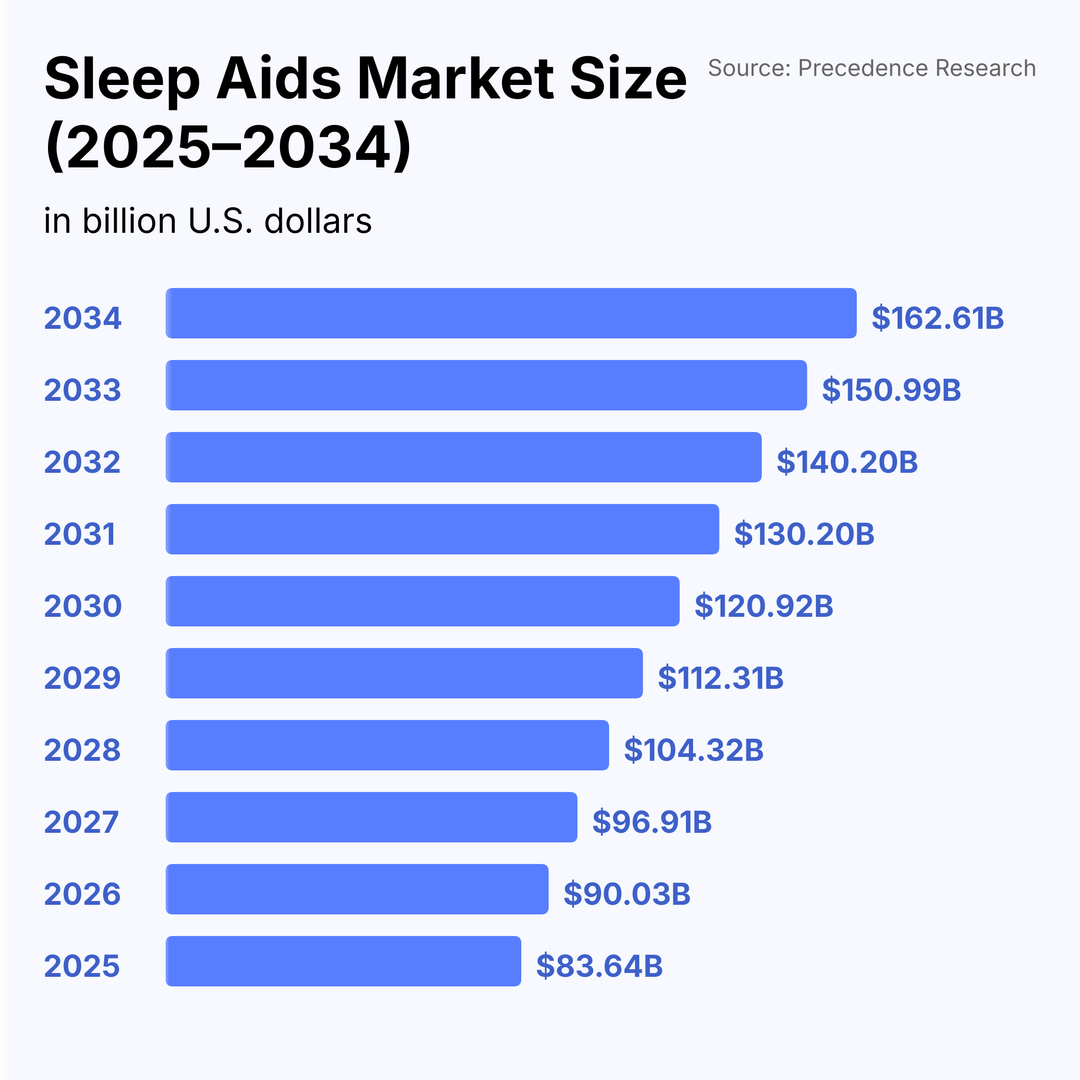
Sleep is big business. The global sleep economy—from mattresses to pillows, masks, and sound machines—is worth hundreds of billions of dollars and keeps growing as consumers obsess over “sleep hygiene” and wellness. Within that, sleep accessories (pillows, bedding, sleep masks, weighted blankets, aromatherapy items, etc.) are a high-margin, brandable category where quality, compliance, and user comfort all collide.
If you pick the wrong suppliers, you don’t just get returns. You get allergies, skin reactions, regulatory risk, and nasty customer reviews. The right suppliers, on the other hand, help you launch lines faster, stay compliant in multiple markets, and keep your landed cost under control.
This guide walks you through:
- The global market size so you can sanity-check your business case.
- The top countries to source sleep accessories from and what each is good at.
- A pragmatic playbook to find and vet suppliers like an auditor is watching.

There's a better way to source ❤️
Watch the video to see how SourceReady helps brands move from product ideas to trusted supplier relationships faster
Watch the VideoGlobal Market Size: Is This Category Worth Your Time?
You’re not choosing a niche hobby category here. You’re entering a space with real scale.
Key market segments relevant to sleep accessories
- Bedding & bed linen: One of the largest subsegments of the home textiles market.
- Pillows & cushions: Includes memory foam, latex, feather/down, microfiber, and specialty ergonomic pillows.
- Sleep masks & small soft goods: Eye masks, pillowcases, travel sets.
- Weighted blankets & comfort products: Often marketed for stress and anxiety, but functionally part of the sleep category.
Why the category keeps growing
Main demand drivers:
- Wellness & self-care boom: Sleep is now marketed like skincare—daily, essential, and upgradeable.
- E-commerce friendly: Small parcel, easy to ship, and high potential for DTC and marketplace brands.
- Customization: Monograms, colours, fabrics, fills, “cooling” tech, and packaging all give you room to differentiate.
- Upgrade cycles: Pillows and soft goods get replaced far more often than furniture, which supports repeat revenue.
Put simply: there is enough market volume and complexity here to justify building a serious supplier base, not just a one-off factory relationship.
Top Countries to Find Suppliers for Sleep Accessories
1. China: Scale and Innovation, With Compliance Caveats
You will likely look at China first, and for good reason.
Strengths:
- Huge variety across pillows, mattress toppers, sleep masks, weighted blankets, sound machines, diffusers, and more.
- Strong vertical integration from fabric weaving and cutting to filling, sewing, packaging, and electronics assembly.
- Ability to support ODM/white-label and fully custom designs with relatively short development cycles.
Watchpoints:
- US–China trade tensions can mean tariffs and changing duty structures for US-bound goods.
- Quality ranges wildly. You must filter heavily.
- IP and design protection require NDAs, contracts, and cautious sharing.
Best use cases:
- Launching wide product lines fast.
- Combining soft goods + simple electronics sets (e.g., mask + sound machine bundles).
- Value to mid-price brands with aggressive MOQs and assortment needs.

2. India: Cotton-Rich, Story-Friendly Textiles
India is strong in cotton and home textiles, including bed sheets, duvet covers, and pillow covers.
Strengths:
- Good access to organic and sustainable fibres: GOTS-certified organic cotton, BCI cotton.
- Strong tradition of weaving, printing, and embroidery for value-added designs.
- Appealing for brands that want a “sustainable, artisanal” narrative with real manufacturing behind it.
Watchpoints:
- Lead times may be longer than China, especially for complex designs or heavy embellishment.
- Quality can be excellent—but process control varies by factory. Lab testing is non-negotiable.
Best use cases:
- Premium bedding sets.
- Organic cotton product lines.
- Collections where design and fabric story matter more than rock-bottom FOB.
3. Pakistan: High-Volume Cotton and Value Bedding
Pakistan is a major exporter of cotton textiles, especially bedding and towels.
Strengths:
- Competitive pricing for basic and mid-tier bedding—sheets, pillowcases, and duvet covers.
- Established mills that understand large-volume retail programs.
- Often strong yarn and fabric capabilities in-house.
Watchpoints:
- Less focus on niche “sleep-tech” products (like cooling technology or weighted blankets).
- Some factories may be less experienced with direct-to-consumer brand expectations around packaging and storytelling.
Best use cases:
- Volume-driven bedding programs.
- Private label for retailers and marketplaces where price/value is the core.

4. Turkey: Fast to Europe, Solid Quality
Turkey offers a strong mix of quality textiles and geographic advantage for Europe.
Strengths:
- Shorter transit times and lower freight risk for EU and UK buyers compared to Asia.
- Good reputation for mid- to high-quality fabrics, including jacquards and sateens.
- EU-aligned compliance and documentation practices.
Watchpoints:
- Higher labour costs than South Asia.
- Negotiations may feel more like Europe than “factory-direct Asia” — expect firmer pricing.
Best use cases:
- EU brands needing fast replenishment and reliable quality.
- Mid- to premium bedding lines with stable demand.
5. Portugal: Premium Bedding and “Hotel Feel”
Portugal is known for high-end sheets and bedding—the kind you see in boutique hotels.
Strengths:
- Strong capabilities in fine weaving, finishing, and sewing for luxury bedding.
- Often strong internal quality control and EU compliance.
- Supports smaller but premium programs where brand story and quality matter more than chasing the lowest FOB.
Watchpoints:
- Higher price points.
- Smaller factory universe; you must move fast when you find a good fit.
Best use cases:
- Luxury or “hotel collection” lines.
- EU/UK brands that want Made in EU positioning and short lead times.
6. Vietnam: Diversifying Away from China
Vietnam has become a key alternative to China for many soft goods and light manufacturing categories.
Strengths:
- Competitive production of synthetic-filled pillows, quilts, and basic bedding.
- Growing export base; many factories understand Western retailer requirements.
- Beneficial trade agreements with certain markets (e.g., EU).
Watchpoints:
- Sleep accessories are still not as deep a category as in China; you may not find every niche SKU.
- Some factories rely on imported fabrics, so your cost structure needs clear breakdowns.
Best use cases:
- Brands looking to diversify out of China while keeping similar product specs.
- Medium-complexity soft goods where you need reasonable cost and solid quality.

7. Mexico: Nearshoring for the US Market
If you’re US-based and want speed, Mexico is worth a look.
Strengths:
- Short lead times and lower freight cost for US distribution centres.
- Good fit for private-label bedding and pillows that need frequent replenishment.
- Easier factory visits and audits if your team is US-based.
Watchpoints:
- Higher labour and overhead costs than typical Asian options.
- Not as broad a range as China or India, particularly in niche SKUs or “sleep gadgets.”
Best use cases:
- US brands prioritising speed, supply chain resilience, and nearshoring over absolute lowest FOB.
- Retail programs where stock-outs hurt more than margin.

How to Find and Vet Sleep Accessories Suppliers
Treat this like an audit trail. If a regulator or major retail buyer looked at your sourcing process, would it stand up?
1. Define Your Product and Compliance Requirements First
Before you send a single RFQ, lock in:
Product scope:
- Pillows (foam? latex? feather? microfiber?)
- Bedding (sheets, duvet covers, protectors)
- Sleep masks and accessories
- Weighted blankets or specialty items
Target markets and regulations:
- US: CPSIA, flammability standards, potential Proposition 65 concerns.
- EU: REACH, general product safety, textile labelling.
- UK, Canada, Australia: their own labelling and flammability rules.
Material and performance requirements:
- Fabric composition (e.g., 100% cotton, bamboo viscose, polyester blends).
- Colourfastness, pilling resistance, shrinkage standards.
- For weighted blankets: bead type, leakage tests, seam strength.
Document all this in a concise Product Requirements Document (PRD) and reuse it across suppliers.
2. Build a Shortlist of Suppliers
Sources you should combine:
Trade shows and industry fairs
- Home textiles, bedding, and lifestyle trade shows in China, India, Germany, and the US.
- Pros: face-to-face, can handle and compare products.
- Cons: time and travel cost.
Online directories and marketplaces
- Useful for initial scanning, but don’t rely on ratings alone.
- Always cross-check business registrations and export history.
AI-based supplier search engines (e.g., SourceReady)
Tools like SourceReady aggregate customs data, trade show exhibitor lists, official records, and online footprints.
This helps you quickly filter for:
- Export volume to your target markets.
- Product matches (e.g., “memory foam pillows,” “GOTS-certified bedding”).
- Certifications and company size.
- Use these tools to get a data-backed shortlist instead of starting blind.
Aim for 8–15 serious candidates per product category before you start heavy vetting.
3. Screen Suppliers on Data, Not Vibes
Create a simple comparison table. Minimum desk-check items:
- Business legitimacy: Registration details, years in operation, export records.
- Product fit: Core category vs. “yes we also can do that.” Focus on specialists.
- Certifications: Textiles: OEKO-TEX®, GOTS, BCI./ Systems: ISO 9001 (quality), ISO 14001 (environment), sometimes social audits (BSCI, Sedex)./ Capacity and MOQs: Can they support your launch and scale-up?
4. Sample, Test, and Pilot Before You Commit
Don’t compress this step.
Request structured samples
- Multiple fabric weights or thread counts.
- Different fills (e.g., foam densities, bead weights).
- Production-ready samples – not trade-show specials.
Lab testing
Use accredited labs to test for:
- Chemical safety (e.g., formaldehyde, heavy metals, azo dyes).
- Physical performance (strength, shrinkage, pilling).
- Flammability where applicable.
Make testing results part of your supplier evaluation file.
Pilot order
Place a smaller but real order to test:
- On-time delivery.
- Packaging quality and labelling accuracy.
- Defect rates and customer feedback.
Document everything—this becomes your internal audit trail and training material for your team.
5. Factory Audits and Ongoing Monitoring
If you plan to build a serious brand, factory visits or third-party audits are non-negotiable:
Audit focus areas:
- Quality systems (incoming materials, in-line checks, final inspection).
- Social compliance (working hours, safety practices).
- Environmental practices (wastewater, chemical storage).
Ongoing monitoring:
- Annual or biannual audits.
- Regular lot-based testing, especially when changing dyes, fabrics, or fills.
- Simple supplier scorecards tracking on-time delivery, defect rates, and corrective actions.
Here again, tools like SourceReady can help you continuously discover backup suppliers or diversify across countries, so you’re not locked into one region or mill.
Conclusion: Turn Sleep Accessories into a Compliant, Scalable Category
Sleep accessories look simple from the outside—pillows, sheets, masks, maybe a weighted blanket or two. In reality, you’re managing complex materials, skin contact, flammability, and cross-border regulations. If you treat this as a casual sourcing exercise, you’ll eventually pay for it in returns, penalties, or brand damage.
If you do it properly—by picking the right countries, and by building a documented, test-backed vetting process—you turn sleep accessories into a repeatable, defensible category.
Use in-person shows, your own PRDs and checklists, plus data-driven tools like SourceReady’s AI supplier search engine to shortlist and verify manufacturers with real export history, relevant certifications, and product fit. Then prove everything with samples, lab tests, audits, and a pilot order before you scale.
Do that, and you don’t just sell sleep accessories. You build a sourcing engine that can handle the next category your brand wants to launch—without losing sleep over quality or compliance.
FAQ
1. Where should I source weighted blankets?
Weighted blankets are most commonly produced in China due to its vertical integration in fabrics, fillers, and sewing. Vietnam is emerging as an alternative for simpler designs.
2. What are the most common compliance risks for sleep accessories?
Typical risk zones include:
Chemical safety (formaldehyde, azo dyes, heavy metals)
Flammability standards
Labeling (fiber composition, care instructions, country of origin)
Filling materials (foam quality, bead leakage risk for weighted blankets)
These must be tested through accredited labs before mass production.
3. How can I quickly filter suppliers without wasting weeks on emails?
Use AI supplier search engines like SourceReady. It consolidates customs data, trade show records, certifications, and online signals—helping you build a data-backed shortlist instead of starting from scratch.

Find the sourcing tools you need.
Explore how SourceReady helps you research products, discover suppliers, verify factory information, analyze trade data, and manage your sourcing workflow in one place
Explore Features
Graduating from USC with a background in business and marketing, Judy Chen has spent over a decade working in e-commerce, specializing in sourcing and supplier management. Her experience includes developing strategies to optimize supplier relationships and streamline procurement processes for growing businesses. As SourceReady’s blog writer, Judy leverages her deep understanding of sourcing challenges to create insightful content that helps readers navigate the complexities of global supply chains.