Canada Home Appliances Market Report 2026: Trends & Forecasts Insights
Created by SourceReady AI agent·2026-4-15
Canada Home Appliances Market Report 2026
Executive Summary
The Canadian home appliances market in 2026 represents a dynamic sector valued between USD 6.5 to 7.2 billion, characterized by a strategic pivot toward smart technology integration, energy efficiency, and compact living solutions. The market is experiencing a post-pandemic stabilization phase while simultaneously navigating transformative trends driven by housing market dynamics, regulatory pressures, and evolving consumer priorities.
This report synthesizes market intelligence, trade data, and consumer insights to provide a comprehensive view of the Canadian home appliances landscape as it stands in 2026.
Market Size and Growth Trajectory
The Canadian home appliances market is demonstrating steady, moderate growth despite broader economic headwinds. The market exhibits a bifurcated recovery pattern, with premium and smart segments significantly outperforming traditional value categories.
| Segment | CAGR 2021-2026 | Primary Growth Driver |
|---|---|---|
| Major Appliances (MDA) | ~3.8% | Housing completions & replacement cycles |
| Small Domestic Appliances (SDA) | ~4.5% | Health-conscious & convenience trends |
| Smart Appliances | ~12.0% | IoT integration & energy management |
The market growth rate for 2025-2026 specifically is projected at 3.5-3.8%, representing a "new normal" following supply chain volatility experienced in the early 2020s. This stabilization period is marked by normalized inventory levels and a strategic shift toward high-margin, technologically advanced units.
Critical Market Drivers for 2026
1. Housing Market Dynamics
The primary catalyst for major domestic appliance demand remains Canada's residential construction sector. The federal government's commitment to increasing housing supply to combat the affordability crisis has created a direct correlation between new home completions and first-time appliance purchases.
Key housing markets driving appliance demand include:
- Ontario (Greater Toronto Area): High-density condo construction
- British Columbia (Metro Vancouver): Urban infill and townhome developments
- Quebec (Montreal): Mixed residential projects
2. The Replacement Cycle Wave
A significant volume driver in 2026 is the maturation of the 2010-2015 housing boom's appliance base. Appliances installed during that period are reaching end-of-life, creating a substantial replacement demand. This cycle is particularly pronounced in:
- Washing machines and dryers (8-12 year average lifespan)
- Dishwashers (10-13 year average lifespan)
- Refrigerators (12-15 year average lifespan)
3. Energy Efficiency Mandates and Utility Cost Pressures
Rising electricity rates across Ontario and Alberta, combined with increasing natural gas costs, are pushing consumers toward Energy Star certified products. Federal and provincial rebate programs for heat pump technology and high-efficiency appliances are accelerating this transition.
By 2026, stricter federal efficiency standards are phasing out lower-tier models, forcing a market-wide shift toward mid-to-high-range inventory with superior energy performance.
Transformative Consumer Trends
Smart and Connected: From Novelty to Necessity
Connectivity has transitioned from premium feature to standard expectation in mid-to-high-range appliances. By 2026, the majority of appliances in these price tiers feature Wi-Fi connectivity and integration capabilities.
Functional connectivity applications dominating 2026:
- Predictive maintenance: Appliances that alert users and technicians to potential failures before breakdown
- Energy grid integration: Automated operation during off-peak hours to leverage Time-of-Use pricing
- Inventory management: Smart refrigerators tracking expiry dates and suggesting recipes
- Remote diagnostics: Reduced service costs through pre-failure intervention
Premiumization vs. Value: The K-Shaped Consumer
The market exhibits a pronounced bifurcation in consumer behavior:
Premium Segment (growing):
- High-income households investing in professional-grade, built-in appliances
- Focus on "home-tainment" as home remains the entertainment center
- Strong demand for induction cooktops, wine coolers, and integrated coffee systems
- Brands capturing this segment: Miele, Sub-Zero/Wolf, Bosch
Value Segment (cost-conscious):
- Middle-to-low-income households prioritizing longevity and repairability
- Growing interest in extended warranties and accessible parts
- Emphasis on total cost of ownership over initial price
- "Right to repair" movement gaining traction
Urbanization and Space Optimization
High-density housing development in Toronto, Vancouver, and Montreal is creating surging demand for compact solutions:
- 24-inch slimline units: Professional performance in reduced footprints
- All-in-one combination units: Washer-dryer combos saving space in urban condos
- Multi-functional countertop appliances: Air fryer-toaster-oven combinations replacing multiple single-purpose devices
Health and Wellness Integration
The small domestic appliance category is experiencing sustained growth driven by health priorities:
- Air purification systems: Heightened demand due to seasonal wildfire smoke concerns in Western Canada and Ontario
- Advanced water filtration: Growing consumer concern about water quality
- Multi-cookers and air fryers: Evolution toward healthier cooking methods in compact formats
Trade Dynamics: Import and Export Analysis
Canada's Import Dependency
Canada remains a net importer of home appliances, with domestic manufacturing limited primarily to specialized segments in Quebec and Ontario. Customs data from 2024-2025 reveals the following import landscape:
Top Origin Countries by Import Value (2024-2025):
| Origin Country | Total CIF Value (USD) | Shipment Count | Share of Market |
|---|---|---|---|
| China | $327.6 million | 9,348 | ~56% |
| South Korea | $69.2 million | 1,722 | ~12% |
| Thailand | $37.7 million | 1,921 | ~6% |
| Mexico | $31.5 million | 754 | ~5% |
| Vietnam | $25.3 million | 1,494 | ~4% |
| Malaysia | $24.9 million | 540 | ~4% |
Key Insights from Trade Data:
-
Chinese dominance: China maintains overwhelming market leadership, accounting for over half of all home appliance imports by value, with particularly strong presence in small domestic appliances and electric heating/cooking products.
-
Korean premium positioning: South Korea (Samsung, LG) captures the second-largest share with significantly higher average unit values, reflecting concentration in premium smart appliances and major domestic appliances.
-
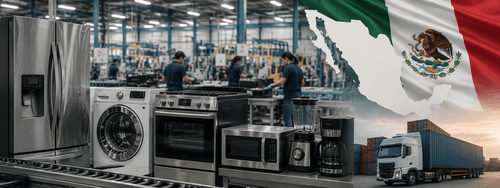
USMCA impact: Mexico's growing presence (particularly in major appliances like refrigerators and washing machines) demonstrates the competitive advantage of USMCA trade benefits and proximity.
-
Vietnam's rise: Vietnam's emergence as a significant supplier reflects the diversification of manufacturing away from China, particularly for brands establishing Southeast Asian production bases.
Top Individual Exporters to Canada (2025):
| Exporter | Country | Total CIF Value (USD) |
|---|---|---|
| Yueda Electronic Appliance | Vietnam | $2.24 million |
| Midea Consumer Electronic | Vietnam | $2.15 million |
| Hi-P Philippines Technology | Philippines | $1.64 million |
Export Profile
Canadian exports of home appliances remain minimal, with over 90% of domestically produced or re-exported units destined for the United States. Canada maintains a specialized export niche in:
- High-end commercial-grade residential appliances
- Specific heating and cooling components
- Compact refrigeration units (Danby's specialty)
Competitive Landscape and Market Share
Market Leaders (2025-2026 Estimated Share)
Tier 1 - Mass Market Leaders:
- Whirlpool Corporation: Maintains largest overall share through multi-brand strategy (Whirlpool, Maytag, KitchenAid), particularly strong in the builder/contractor channel for new construction
- Samsung Electronics: Leading the smart appliance revolution with high penetration in laundry and refrigeration segments
- LG Electronics: Strong competitor to Samsung, particularly in high-efficiency front-load washers and smart refrigerators with OLED integration
Tier 2 - Established Players:
4. GE Appliances (Haier): Dominant in builder and contract channels for new home construction
5. Bosch (BSH): Market leader in premium dishwasher segment and built-in kitchen categories
Tier 3 - Premium & Niche:
6. Miele: Growing presence in urban luxury condo market (Toronto, Vancouver)
7. Sub-Zero/Wolf: High-end built-in refrigeration and cooking
8. Danby: Canadian leader in compact appliances and refrigeration for high-density housing
Retail Distribution Channels
Primary retail destinations:
- Canadian Tire: Dominant in small appliances and entry-level major appliances
- Best Buy: Strong in electronics-integrated smart appliances
- IKEA: Growing share in compact and integrated kitchen solutions
- Home Depot/Lowe's: Builder-grade and mid-range segments
E-commerce evolution: Omnichannel sales are expected to account for nearly 35% of all small appliance sales by 2026, with consumers researching online but preferring touch-and-feel showroom experiences for major purchases before completing mobile transactions.
Strategic Product Categories for 2026
1. Induction Cooking Technology
Primary growth category as Canadian municipalities move toward electrification and away from gas hookups in new residential construction. Indoor air quality concerns and provincial energy policies are accelerating adoption beyond early-adopter segments.
2. Heat Pump Dryers
Massive market shift from traditional vented dryers to heat pump technology, offering significantly lower energy consumption. Federal and provincial rebates supporting adoption as part of net-zero emission commitments.
3. Smart Refrigeration
Integration of inventory management, energy optimization, and predictive maintenance creating differentiation in premium segment. OLED displays and internal cameras becoming standard features in $2,000+ price tier.
4. Compact All-in-One Solutions
Combination washer-dryers and multi-function countertop appliances addressing urban density challenges while maintaining performance standards.
5. Air Quality Systems
Air purifiers with integrated humidification functions experiencing sustained demand due to seasonal wildfire smoke events and heightened health consciousness post-pandemic.
Strategic Recommendations for Stakeholders
For Manufacturers
- Prioritize induction technology development: Municipal gas phase-outs creating structural demand shift
- Invest in predictive maintenance platforms: Service integration becoming competitive differentiator
- Develop compact high-performance lines: Urban density trends creating specialized market segment
- Emphasize total cost of ownership: Energy efficiency messaging resonating more than initial price in current economic climate
For Retailers
- Implement AR/VR visualization tools: Reducing return rates by allowing customers to visualize appliances in their specific spaces
- Enhance omnichannel integration: Seamless price-matching and delivery tracking essential for conversion
- Focus on installation and service: Value-added services creating loyalty in commoditized product categories
- Optimize inventory for premium segment: Higher margins in smart and energy-efficient categories justifying floor space allocation
For Marketers
- Lead with Energy Star ratings and cost savings: "Total cost of ownership" messaging more effective than feature lists
- Demonstrate smart integration value: Move beyond connectivity novelty to functional benefit demonstration
- Address repairability and longevity: Growing consumer interest in sustainable, long-lasting products
- Localize messaging by region: Different priorities in urban vs. suburban markets requiring tailored approaches
Outlook and Conclusion
The Canadian home appliances market in 2026 stands at an inflection point between tradition and transformation. While the total volume of units sold may see only moderate growth, the value of the market is rising as consumers invest in higher-quality, connected, and energy-efficient solutions to mitigate rising living costs.
Key success factors for 2026 and beyond:
- Technology integration that delivers tangible functional benefits beyond novelty
- Energy efficiency as both regulatory compliance and consumer cost-saving measure
- Space optimization addressing Canada's urban density reality
- Service integration creating differentiation in commoditized categories
- Sustainable design responding to growing right-to-repair movement
The competitive landscape will continue to intensify as Korean manufacturers (Samsung/LG) challenge traditional North American legacy brands through technological innovation, while premium European brands (Miele, Bosch) capture the growing luxury segment in major urban centers.
For stakeholders across the value chain, success in this market requires balancing the efficiency demands of a maturing market with the innovation imperatives of a technologically transforming sector. The winners will be those who can deliver intelligence and efficiency in products that genuinely improve daily life while reducing environmental impact and operating costs.