Denmark Home Décor Market Report 2026: Trends & Forecast
Created by SourceReady AI agent·2026-7-17
Denmark Home Décor Market Report 2026
Executive Summary
Denmark occupies a singular position in the global home décor landscape — not merely as a consumer market, but as a cultural originator of design philosophy. Anchored by the concepts of hygge (coziness and wellbeing) and Scandinavian minimalism, the Danish home décor market is forecast to reach approximately $1.24 billion USD in revenue by 2026, growing at a steady CAGR of around 3.5% from 2024–2026. This growth is modest in volume terms but increasingly premium in value, driven by a consumer base that prioritizes quality, sustainability, and aesthetic authenticity above all else.
Market Size & Growth Trajectory
The Danish home décor market demonstrates resilience despite broader macroeconomic pressures, underpinned by high homeownership rates, a culture of deliberate interior investment, and strong per-capita spending on lifestyle goods.
| Year | Estimated Revenue (USD) | Annual Growth Rate |
|---|---|---|
| 2024 | ~$1.15 Billion | 3.2% |
| 2025 | ~$1.19 Billion | 3.5% |
| 2026 | ~$1.24 Billion | 3.8% |
Revenue growth is increasingly driven not by volume expansion but by a premiumization effect — Danish consumers are buying fewer but better items, with sustainability credentials and design heritage commanding meaningful price premiums.
Segment Performance
- Furniture remains the single largest segment, accounting for approximately 45% of total market share, anchored by Denmark's deep tradition of craft furniture design.
- Home Textiles (rugs, cushions, throws) are the fastest-growing sub-category within small décor, as consumers use textiles for cost-effective seasonal refreshes.
- Artisanal Ceramics & Decorative Objects are experiencing an upswing driven by demand for handmade, unique pieces that resist mass-market replication.
- Lighting retains a structurally important role due to hygge culture — ambient, warm lighting is considered a domestic essential rather than a luxury.
Key Consumer & Design Trends for 2026
1. Warm Minimalism Replaces Stark Nordic
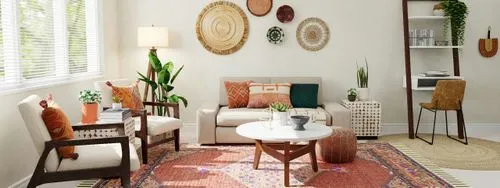
The classic cool, white-on-white Scandinavian interior is giving way to what trend analysts are calling "Warm Minimalism." This evolution preserves clean lines and functional layouts but layers in richer tactile materials — bouclé upholstery, velvet cushions, and textured ceramics — alongside warmer earth tones: terracotta, sage green, and ochre. The structure is still disciplined; the feeling is now noticeably warmer.
2. Circular Economy as Market Standard
Sustainability in Denmark has crossed a critical threshold: it is no longer a differentiator but an expectation. By 2026, circular business models are becoming normalized, including furniture rental programs, buy-back schemes for designer pieces, and a flourishing "pre-loved luxury" secondary market for branded Danish design items. Shoppers actively seek FSC-certified wood, OEKO-TEX certified textiles, and products with documented end-of-life recyclability.
3. Smart Home Integration Done Discreetly
Danish consumers embrace technology only when it disappears into the design. The trend is toward "invisible tech" — furniture with embedded wireless charging surfaces, lighting systems that replicate natural circadian rhythms, and acoustic panels styled as art objects. The aesthetic must remain uncompromised; the technology is a hidden benefit.
4. Multifunctional & Modular Living
Urban density in Copenhagen is intensifying demand for pieces that do more. Modular shelving, convertible sofa-beds, and dining tables that scale from two to eight people are seeing strong sell-through. Every square meter must justify itself in the modern Danish urban apartment.
5. High-Intent Search Trends (Denmark, 2026)
Consumer keyword data confirms the following are the highest-momentum product searches in the Danish market right now:
| Search Term | Trend Score |
|---|---|
| Hygge scented candle Scandinavian | 95 |
| Nordic ceramic vase pampas grass | 88 |
| Kay Bojesen monkey figurine | 82 |
| Scandinavian bouclé throw pillow | 76 |
| Zone Denmark soap dispenser | 72 |
The data reveals strong brand-specific intent (Kay Bojesen, Zone Denmark) alongside material-led searches (bouclé, ceramic), suggesting Danish consumers are sophisticated shoppers who research both aesthetics and provenance.
E-Commerce Penetration
Denmark's high digital literacy and world-class logistics infrastructure make it a mature e-commerce market for home décor. By 2026, an estimated 35%+ of all home décor sales will occur online. Retailers are accelerating investment in augmented reality (AR) tools that allow consumers to visualize furniture and décor in their actual homes before purchase — dramatically reducing return rates and increasing average order values.
The Danish Design Ecosystem: Key Players
Denmark is home to an exceptionally concentrated cluster of original design brands that both supply the domestic market and export Danish aesthetic to the world. These are not simply retailers — many are design houses with decades of heritage.
Spotlight on Leading Danish Design Houses
House Doctor (Ikast, est. 2001) operates under the Society of Lifestyle A/S collective and is one of the most commercially successful Scandinavian-inspired wholesale brands globally, with a product range spanning furniture, lighting, textiles, kitchen accessories, and outdoor furniture. It serves retailers and webshops across Europe and North America.
Stelton A/S (Copenhagen, est. 1960) is arguably Denmark's most internationally recognized design institution, the custodian of iconic Arne Jacobsen and Erik Magnussen designs. Its Cylinda-line and EM77 vacuum jug collections are benchmarks for Scandinavian functional design. Stelton holds Red Dot and German Design Awards and exports to over a dozen markets globally.
OYOY Living Design A/S (Herning, est. 2012) represents the new generation of Danish design brands — playful, family-oriented, and rigorously sustainable. It manages three distinct lines: OYOY Living (residential), OYOY MINI (nursery and children), and OYOY ZOO (pet accessories), serving a global B2B retail network.
Tine K Home A/S (Odense) bridges Scandinavian simplicity with global bohemian influences, sourcing naturally from Europe, Asia, and Africa. Its use of FSC-certified and recycled teak, OEKO-TEX certified cushions, and hand-woven Moroccan baskets makes it a benchmark for sustainable luxury in the mid-to-high segment.
Chic Antique (Holbæk) is a large-scale B2B wholesaler with over 3,500 products, specializing in vintage-inspired décor across furniture, textiles, lighting, and wellness. It runs a dedicated showroom and serves a global retailer network.
Studio Arhoj (Copenhagen) is a family-owned, craft-first studio producing hand-thrown pottery, hand-blown glass, beeswax candles, and hand-woven rugs from rescued fashion waste thread — a microcosm of everything distinctive about Copenhagen's independent design scene.
FineNordic A/S (Sønderborg, est. 2006) operates as an authorized distributor for premium Danish brands including GreenGate, Ib Laursen, Maileg, Bloomingville, Chic Antique, and House Doctor, managing over 7,000 SKUs from a 600m² facility with global shipping capabilities.
A2 Living ApS (Spøttrup, est. 2009) focuses on rustic and raw indoor/outdoor living, specializing in galvanized metal lanterns, rattan baskets, recycled wood storage, and weather-resistant garden furniture. It supplies its dealer network exclusively via a dedicated B2B platform.
Supply Chain: Where Denmark Sources Its Home Décor
Top Import Origin Countries
Denmark's home décor supply chain is genuinely global, though a clear hierarchy exists by product category and price tier:
| Rank | Origin Country | Primary Product Contribution |
|---|---|---|
| 1 | China | Mass-market furniture, lighting, metal/plastic décor, seasonal items |
| 2 | Netherlands | Re-exported goods, floral décor, high-end design pieces |
| 3 | Germany | Premium kitchenware, industrial-style furniture |
| 4 | Vietnam | Wooden furniture, outdoor living, handcrafted ceramics |
| 5 | India | Home textiles (rugs, cushions), artisanal metalwork, wood carvings |
Top Exporters Shipping to Denmark (by Shipment Volume)
Customs shipment data reveals the actual manufacturing organizations sending the highest volumes of home décor goods into Denmark:
| Exporter | Origin | Shipments |
|---|---|---|
| CONG TY CO PHAN NOI THAT NHAN HOANG | Vietnam | 4,962 |
| CONG TY TNHH THOI SON | Vietnam | 1,729 |
| WELSPUN GLOBAL BRANDS LIMITED | India | 993 |
| EXTREAM EXPORTS | India | 632 |
| CONG TY TNHH GOM SU MINH PHAT | Vietnam | 473 |
| CONG TY TNHH SAN XUAT THUONG MAI DIHAFO | Vietnam | 340 |
| REX CONSOLIDATED | — | 257 |
| M R S EXPORT | India | 244 |
| ASCETIC EXPORTS | India | 211 |
| CONG TY TNHH XUAT KHAU GOLDEN POTTERY | Vietnam | 177 |
Two observations stand out from this data. First, Vietnamese manufacturers dominate by shipment count, particularly furniture companies (Nhan Hoang, Thoi Son) and ceramic exporters (Gom Su Minh Phat, Golden Pottery). Second, Indian exporters are heavily represented in textiles (Welspun Global Brands is one of India's largest home textile manufacturers), confirming their strategic importance to the Danish market's "artisanal and sustainable" product tier.
Strategic Supply Chain Trends
- "China Plus One" is now standard practice among Danish home décor brands. Chinese manufacturing remains essential for cost-efficient, high-volume production (Guangdong and Zhejiang provinces are key clusters), but brands are systematically adding Vietnamese and Indian supplier relationships to de-risk geopolitical exposure.
- Vietnam's rise is structural, not cyclical. The country's furniture manufacturing cluster — particularly around Ho Chi Minh City — has matured significantly, with major trade events like VIFA ASEAN attracting growing numbers of Nordic buyers seeking direct factory relationships. 10Times (facebook.com)
- Sustainability auditing is becoming a sourcing prerequisite. Danish brands are actively vetting Indian and Vietnamese suppliers for FSC certification, fair-trade compliance, and OEKO-TEX accreditation — not as a marketing exercise but as a genuine procurement requirement.
Recommended Product Categories for Market Entry
Based on search trend scores, import data, and consumer preference signals, the following product categories represent the highest-opportunity entry points for the Danish market in 2026:
Hygge Lighting & Candles
The highest-scoring consumer search category. Scented candles with Scandinavian positioning, ambient table lamps, and warm-toned floor lighting that creates hygge atmosphere remain a perennial top performer.
Nordic Ceramic Vases & Artisanal Décor
The second-highest trend score cluster. Handcrafted ceramics — particularly neutral-toned vases, decorative bowls, and artisan pottery — align with the Warm Minimalism macro-trend.
Sustainable Home Textiles
Bouclé throws, organic cotton cushions, hand-loomed rugs — the fastest-growing sub-segment by revenue trajectory, particularly among 25–44 year old urban consumers.
Scandinavian Design Furniture
The core of the market. Oak, ash, and birch furniture with clean lines and multifunctional design continues to define the Danish interior. This is the largest segment and the most competitive.
Strategic Recommendations
For brands entering the Danish market:
The bar for aesthetic credibility is extremely high. Danish consumers are design-literate and will immediately identify products that superficially mimic the Nordic look without authentic craftsmanship or material integrity. Design story and provenance matter as much as price point.
For sourcing managers serving Danish retailers:
Prioritize Vietnamese suppliers for wood furniture and ceramics (cost-efficiency with rising quality), Indian suppliers for textiles and artisanal metalwork (unique, high-margin, sustainability-friendly), and Chinese suppliers for seasonal, volume-driven, and technology-integrated categories. Always confirm sustainability certifications before presenting to Danish buyers.
For digital commerce:
Invest in AR-enabled product visualization early. Denmark's e-commerce penetration for home décor is already at 35%+ and accelerating. Brands without digital-first retail experiences will lose ground to those that let consumers "place" products in their homes before purchasing.
Watch the design calendar:
3daysofdesign in Copenhagen sets commercial tone for the following market year. It is the single most important indicator of what Danish consumers will be buying 6–12 months later, and invaluable for any brand seeking to align product development cycles with Danish market demand.
Conclusion
The Denmark home décor market in 2026 is defined by three interlocking forces: premiumization (consumers spending more on fewer, better things), sustainability as infrastructure (not a trend but a structural market requirement), and the global reach of Danish design identity (which creates both a strong domestic ecosystem and significant export opportunity for brands that credibly speak that language). At ~$1.24 billion and growing, it is a market where quality of positioning matters far more than volume of product, and where the most enduring competitive advantage is cultural fluency with the world's most influential design tradition.