Finland Home Textiles Market Report 2026: Trends & Opportunities
Created by SourceReady AI agent·2026-7-29
Finland Home Textiles Market Report 2026
Executive Summary
The Finnish home textiles market in 2026 stands at a meaningful inflection point — domestic manufacturing volumes have declined, yet a recovering housing market, strong sustainability regulation, and evolving consumer taste are reshaping demand and creating new commercial opportunities. This report synthesizes market sizing, consumer trends, supply chain dynamics, and key suppliers active in the Finnish market.
Market Size & Economic Context
Finland's home textiles manufacturing sector is sized at approximately €205.4 million in 2026, according to IBISWorldIBISWorld (ibisworld.com), with the broader retail and import market representing an additional layer of value on top of domestic production.
Domestic production output has been in structural decline — dropping from €7.32 million in 2019 to a projected €4.54 million by 20256Wresearch (6wresearch.com). This contraction reflects a broader European trend of mass-production offshoring, leaving Finnish producers to compete on design, quality, and sustainability credentials rather than volume.
The macroeconomic backdrop is mixed. GDP growth is modest at 0.6–0.8%SEB (seb.fi), and unemployment remains elevated at approximately 10.2%Euro & Talous (eurojatalous.fi), which tempers discretionary spending. However, the recovering housing market — driven by stabilizing interest rates and rising consumer confidence — is emerging as the most important short-term demand catalyst, as new home purchases consistently trigger textile spendingMimmit Sijoittaa (mimmitsijoittaa.fi).
Consumer Trends Defining 2026
Finnish consumers are navigating two emotional axes simultaneously — a pull toward calming, nature-rooted interiors and a push toward individual expression through bold color and tactile richnessVeke (veke.fi). Four macro-trends define the landscape:
1. Biofilia: Nature as the Design Default
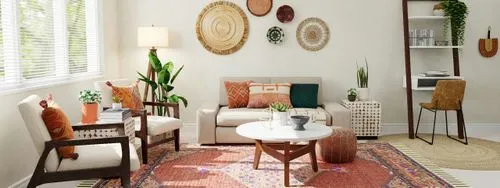
The dominant aesthetic philosophy remains biofilia — bringing the outdoors inside through organic materials, earthy palettes, and natural textures. Linen, wool, bouclé, and hemp are the materials of choice. Colors skew toward moss greens, terracotta, earthy browns, and calming neutrals, often punctuated with jewel tonesKoolmat (koolmat.fi).
2. Dopamine Decor: Joy Through Textiles
A rising countertrend to minimalism, Dopamine Decor sees Finnish consumers using textiles to inject energy and personality into their homes — bold reds, graphic checks, oversized florals (echoing the Marimekko tradition), and fringed or tasseled finishesRakentaja.fi (rakentaja.fi).
3. The Anti-Fast Fashion Investment Mentality
Finnish consumers are increasingly treating home textiles as long-term investments. The preference is for one high-quality, durable piece over multiple disposable ones — a trend that rewards producers offering strong craft credentials, provenance storytelling, and material traceabilityRakentaja.fi (rakentaja.fi).
4. Tactility Over Perfection
There is a clear consumer move away from flat, uniform surfaces toward imperfect, sensory-rich textures — bouclé, melange weaves, embossed rugs, and hand-loomed fabrics. This aligns with both the biofilia trend and the premium positioning of local Finnish design brandsVeke (veke.fi).
Material & Aesthetic Snapshot for 2026
| Dimension | Leading Preferences |
|---|---|
| Preferred Materials | Organic cotton, linen, hemp, recycled polyester, wood-based cellulose (Kuura/Ioncell) |
| Color Palette | Earthy browns, moss green, terracotta, calming neutrals + bold jewel tones |
| Trending Patterns | Large florals, traditional checks, wavy/organic lines, Marimekko-influenced graphics |
| Surface Finishes | Bouclé, embossed rugs, melange fabrics, fringed/tasseled details |
| Retail Channel | E-commerce dominant; AR/VR virtual try-on growing |
Sustainability & Regulatory Landscape
Sustainability is no longer a positioning choice in Finland — it is increasingly a regulatory baseline. Two major EU policy shifts are reshaping supply chain requirements:
- EU Waste Framework Directive (effective late 2025): Mandatory textile waste collection across all EU member states. This is accelerating investment in recycled-fiber supply chains and local recycling infrastructureUNRIC (unric.org).
- Digital Product Passports (2027–2028 implementation): Brands must provide full material traceability for textile products. Suppliers without transparent supply chains face increasing delistingsMordor Intelligence (mordorintelligence.com).
Finland is positioning itself as a global leader in textile circularity, with homegrown innovations in wood-based fibers — particularly Kuura (Metsä Group) and Spinnova — moving toward commercial scale as sustainable alternatives to cotton and polyesterScienceDirect (sciencedirect.com). VTT Research has articulated an ambition for Finland to have the world's most responsible textile industry by 2035VTT Research (vttresearch.com).
Smart & Functional Textiles: An Emerging Niche
Alongside sustainability, smart and functional textiles represent a growing premium niche:
- Health & Wellness: Anti-microbial and hypoallergenic bedding, targeting Finland's health-conscious consumer base.
- Climate Control Fabrics: Moisture-managing and temperature-regulating textiles aligned with Nordic climate preferences.
- Smart Curtains & Window Textiles: IoT-enabled automation and energy-efficiency features appeal to Finland's tech-savvy homeownersLinkedIn Industry Insights (linkedin.com).
Supply Chain: Who Supplies Finland's Home Textiles
The supply base serving Finland is genuinely global, spanning Finnish domestic design houses, European integrated manufacturers, and specialist exporters from Asia and the Middle East.
Finnish Domestic Players
Finland's domestic home textile industry is anchored by a set of design-led brands and trading companies rather than large factories. Key players include:
- Johanna Gullichsen Oy Ab — A Helsinki-based design studio founded in 1989, producing premium woven fabrics, wool blankets, cushions, and kitchen textiles. Collaborates with local weaving mills; emphasizes sustainable local manufacturing. Exports across Europe, North America, and Asia.
- Kauniste Finland Oy — A Helsinki lifestyle brand (est. 2008) known for artist-collaborated kitchen towels, cushion covers, and sauna textiles. Products use linen-cotton blends printed with solvent-free inks; OEKO-TEX certified. Exported to US, Japan, Germany, Australia, and more.
- Basic Fashion Oy — A Helsinki-based full-service private label developer for hypermarkets and chain retailers, producing over 1,000 styles annually including bed and bath linens. Certifications: GOTS, GRS, BSCI, SA8000, OEKO-TEX.
- Cotton Castle Oy — A Finnish trading company fusing Scandinavian design with Indian handcraft, specializing in hand-block printed quilts, tablecloths, and towels for the Nordic market.
- Nest Factory Ltd Oy — A Helsinki design wholesaler offering artisan-made, sustainably produced cushions, blankets, and home textiles with a boho-Scandinavian aesthetic.
- Finnish Design Shop — The world's largest online retailer for Finnish and Scandinavian design (est. 2004), distributing for 300+ brands including Artek, Marimekko, Iittala, and Muuto. Serves global B2C and B2B markets.
International Suppliers Active in the Finnish Market
The research identified 90 suppliers with documented export activity toward Finland across a wide range of product categories. The top-matched suppliers include strong representation from Turkey, Moldova, India, Pakistan, and China:
Notable international suppliers include:
- Tirotex Textile Company (Moldova) — One of Europe's largest vertically integrated cotton textile manufacturers with €112M annual revenue and 3,500+ employees. Produces bed linen, table linen, and kitchen textiles; certified ISO 9001, OEKO-TEX, BSCI, SEDEX. Has served ALDI and Williams-Sonoma.
- Zorlu Dis Ticaret A.S. (Turkey) — Europe's largest integrated polyester yarn and cotton home textile producer, with 10,000+ employees. Full product range including duvet covers, towels, bathrobes, and curtains; certified OEKO-TEX, ISO 9001, ISO 14001, GRS. IKEA is a verified customer.
- M-Tex International (China/India/Pakistan) — A vertically integrated manufacturer with 20+ years in home textiles, organic cotton, and sustainable disposables. GOTS, SA8000, SEDEX certified.
Key Growth Opportunities
Based on the full research picture, the highest-potential segments for 2026 are:
Sustainable Bedding — Organic cotton, linen, and TENCEL™ Lyocell bedding aligned with EU traceability requirements and Finnish "investment purchase" mentality.
Wellness Bathroom Textiles — Bamboo-fiber and hypoallergenic towels and bath mats addressing the growing health and wellness orientation of Finnish consumers.
Linen Home Textiles — Linen remains the quintessential biofilia material for Finnish interiors, covering bedding, kitchen textiles, and table linen.
Textured Bouclé & Wool Products — Cushions, throws, and blankets in tactile finishes are the most direct expression of the sensory texture trend dominating 2026 interior design.
Wood-Based Fiber Textiles — An early-mover opportunity tied to Finnish innovation leadership; consumer interest in Kuura and Ioncell-derived textiles is growing ahead of full commercial availability.
Strategic Recommendations
For businesses targeting Finland's home textiles market in 2026, the following principles are most likely to drive success:
- Lead with sustainability credentials — GOTS, GRS, OEKO-TEX, and BSCI certifications are increasingly table stakes for Finnish retail buyers; Digital Product Passport readiness will become a hard requirement by 2027–2028.
- Design for durability and provenance — Finnish consumers want to know the story behind their textiles. Craft narratives, material traceability, and "made to last" positioning outperform seasonal novelty.
- Align aesthetically with biofilia — Organic shapes, earthy palettes, natural fibers, and tactile finishes (bouclé, linen, wool) resonate most strongly across all demographic segments.
- Ride the housing market recovery — Target product launches and trade partnerships to coincide with the expected uptick in Finnish home transactions through 2026–2027.
- Invest in e-commerce and digital retail — Finland's home textile purchasing is shifting decisively online; AR/VR product visualization is becoming a meaningful differentiator for premium product tiers.
- Watch the wood-fiber space — Suppliers and brands that establish early partnerships with Finnish fiber innovators (Spinnova, Metsä Group/Kuura) position themselves ahead of what may become the defining material story of the late 2020s in Nordic textiles.
Report compiled July 2026. Market data sourced from IBISWorld, 6Wresearch, Mordor Intelligence, VTT Research, and Finnish domestic trade and design publications.