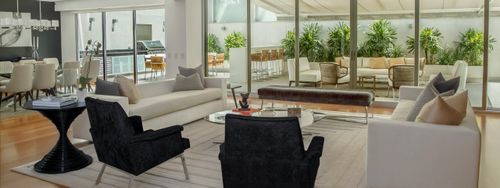
Finland Minimalist Furniture Market Report 2026: Warm Minimalism
Created by SourceReady AI agent·2026-7-29
Finland Minimalist Furniture Market Report 2026
Executive Summary
The Finnish minimalist furniture market in 2026 is navigating a nuanced moment: overall market growth is modest, but distinct segments — e-commerce, smart furniture, and sustainable design — are showing meaningful acceleration. The overarching aesthetic story is a decisive shift from cold, clinical minimalism toward "Warm Minimalism" — a richer, more tactile interpretation of Nordic design that retains clean lines while embracing warmer palettes, organic forms, and natural materials. For suppliers, brands, and buyers operating in this space, understanding this transition is critical.
Market Size & Economic Snapshot
The Finnish furniture market is valued at approximately €1.7 billion in total consumer spending, with specialist retail turnover reaching €1.6 billion.Finland Furniture Market Hub (furnilytics.com) Despite this scale, the broader market faces headwinds from a weak housing sector and cautious consumer sentiment tied to geopolitical uncertainty and employment trends.Economic Survey Spring 2026 (vm.fi)
| Metric | Value (2025/2026) | Trend |
|---|---|---|
| Total Consumer Market | €1.7 Billion | Stable (−0.3% annual change) |
| Specialist Retail Turnover | €1.6 Billion | +0.8% YoY |
| E-commerce Revenue | ~$371 Million | Growing 5–10% forecast |
| Smart Furniture Market | $17.47 Million | High growth (11.14% CAGR) |
| Import Share | 46.5% | Medium dependence |
| Durable Goods Volume Growth (2026 proj.) | 0.7%–1.0% | Cautiously positive |
One structural pressure worth noting: domestic Finnish furniture production is under strain, with an 8.5% decline in manufacturing turnover, pushing the market toward greater reliance on imports at nearly 47% of total supply.Finland Furniture Market Hub (furnilytics.com) This opens both risk and opportunity for international suppliers looking to enter the market.
The 2026 Aesthetic Shift: From Cold to Warm Minimalism
The most defining market development is the evolution of minimalist taste. The stark all-white, sharp-edged Scandinavian interiors that defined the 2010s are giving way to something more considered and sensory.
1. Warm Minimalism & Organic Shapes
The dominant 2026 aesthetic replaces cool grays and whites with enveloping neutrals — beige, cream, and caramel — while maintaining the discipline of clutter-free spaces.Warm Minimalism Trends 2026 (sukavinafurniture.com) Straight edges are being softened into curved sofas, oval dining tables, and arched cabinets. Boucle fabric is particularly prominent as the texture of the moment.
2. Material Intensity over Color
Rather than choosing furniture to fit a neutral palette, Finnish consumers in 2026 are selecting pieces for the physical properties of the materials themselves.Furniture Design Trends 2026 (monde-singulier.com) Raw stone (travertine), patinated metals, hand-textured ceramics, and natural wood grain are all surging in demand. On the metal side, angular aluminium and chrome pieces are staging a sharp comeback as statement elements within otherwise understated interiors.
3. Hidden Tech Integration
The Finnish smart furniture segment is growing at an 11.14% CAGR — and the 2026 direction is emphatically invisible. Wireless charging is being embedded into wooden tabletops, speakers are integrated into furniture frames, and interfaces disappear into clean surfaces. This is minimalism and functionality converging rather than competing.
4. Sustainability as a Baseline Requirement
Sustainability has moved from a brand differentiator to a market entry condition. FSC-certified materials — oak, birch, and ash — dominate consumer preference signals, and major brands now publish full lifecycle assessments.Interior Trends 2026 (nordicnest.fi) The secondhand and vintage market in Scandinavia grew by 23% recently, and curating vintage design pieces alongside new minimalist furniture has become a standard interior approach rather than a niche one.
Keyword Demand Signals
Consumer search and buying intent data for Finland reveals a sophisticated, specification-driven buyer. The top-performing demand signals in 2026 are:
| Keyword / Trend | Demand Score | Insight |
|---|---|---|
| Scandinavian minimalist solid wood furniture | 95 | Highest buyer intent; oak/birch primary |
| Minimalist fluted storage cabinet | 88 | Fluted texture is a breakout trend |
| FSC certified minimalist furniture | 84 | Sustainability now a search filter |
| Nordic minimalist side table oak | 82 | Accessory / accent pieces strong |
| Finnish lounge chair minimalist | 78 | Heritage design still drives premium sales |
This pattern confirms that the Finnish buyer is not searching for "furniture" generically — they are searching for specific materials, constructions, and certifications, which has significant implications for how products should be positioned and described.
The Finnish Manufacturer Landscape
Despite production pressure, Finland maintains a prestigious tier of manufacturers whose design heritage gives them outsized global influence relative to their size. Eight suppliers scored 80+ on minimalist furniture relevance in the supply search.
Notable Manufacturer Profiles
Nikari Oy (founded 1967, Fiskars) sits at the pinnacle of Finnish minimalist craft. Based in the historic Fiskars ironworks village, Nikari uses traditional Nordic joinery — including wooden nails as structural elements — to produce solid oak chairs, lounge chairs, benches, and tables under collections like the Akademia Lounge and Arkipelago series. Their work directly embodies the 2026 material-intensity trend: the furniture is designed to age and develop patina as part of its aesthetic identity. Export destinations include the US and EU.
ARTEK (founded 1935, Helsinki) remains the most globally recognized Finnish design brand, born from Alvar and Aino Aalto's mission to "combine art and technology." Now a Vitra subsidiary, ARTEK produces iconic bent-wood stools, chairs, and tables that have defined utilitarian Nordic minimalism for nine decades. They also operate a 2nd Cycle program for reselling authenticated vintage pieces — a strategic move perfectly aligned with the 2026 secondhand boom.
Fasetti (founded 1999, Hollola) occupies a unique position as a design house, custom manufacturer, and restoration specialist in one. As the maker of Ornäs furniture (100% handmade and tailormade), they serve both new bespoke commissions and the restoration of vintage Artek and Vitra classics — directly bridging new production and the growing vintage-integration trend.
Woodnotes Oy Ltd. (founded 1987, Lapua) pioneered the use of renewable paper yarn derived from food-grade kraft paper, weaving it into carpets, blinds, panels, and lounge chairs. Their material innovation aligns perfectly with 2026's emphasis on tactile, natural, and sustainable materials with a story behind them.
Inno Interior Oy (founded 1982, Espoo) focuses on public-space and corporate minimalist furniture — meeting rooms, lobbies, auditoriums, and hotels — and now offers post-consumer recycled fabrics as standard across collections. With the HORECA and corporate contract sector rebounding, Inno is well positioned.
Pohjanmaan Kaluste Oy (founded 1964, Kurikka) is the largest volume manufacturer in this group, with €19M in annual revenue, 201–300 employees, and an active export operation confirmed by customs data (56 shipments, ~$3.4M CIF). They hold the Suomen Vahvimmat Platina financial stability certificate and partner with major Nordic retailers including ISKU, Masku, Sotka, and Asko.
Export Trade Intelligence (HS Code 9403 — Furniture)
Customs shipment data for Finnish furniture exporters (HS 9403) reveals the actual trade flow behind the market narratives:
| Exporter | Total CIF (USD) | Shipments | Notes |
|---|---|---|---|
| Framery Group Oyj | ~$33.1M | 362 | Premium office pods & acoustic furniture |
| UPM Sales Oy | ~$20.0M | 14 | Large-volume industrial wood-based products |
| Framery (Singapore entity) | ~$10.6M | 201 | Asia-Pacific distribution arm |
| Framery Qy (variant) | ~$5.4M | 425 | High-frequency smaller shipments |
| Treston Oy | ~$3.8M | 127 | Ergonomic industrial workstations |
| Pohjanmaan Kaluste Oy | ~$3.4M | 56 | Residential Scandinavian design furniture |
| Isku Interior Oy | ~$2.6M | 2,514 | Highest shipment frequency; office/contract |
| Constructor Finland Oy | ~$1.3M | 4 | Storage and shelving systems |
A few trade patterns stand out. Framery dominates Finnish furniture exports by value, though their product — premium acoustic office pods — sits in a specialized category adjacent to but distinct from residential minimalist furniture. Isku Interior Oy shows the highest shipment frequency of any Finnish furniture exporter (2,514 shipments), indicating a highly active, multi-destination distribution network — significant for buyers seeking reliable supply chains. Pohjanmaan Kaluste is the clearest residential minimalist design exporter among the top names, confirming their international commercial footprint.
Growth Drivers vs. Headwinds
Where the Opportunity Is
- E-commerce now accounts for 20–25% of Finnish furniture revenue and is growing at 5–10% annuallyFinnish Furniture E-Commerce (ecdb.com) — the primary growth engine for new market entrants
- Smart furniture (hidden-tech segment) growing at 11.14% CAGR from a €17M+ base
- Contract / B2B channel (HORECA, corporate, education) is active and specification-driven
- Secondhand & vintage curation is growing 23% across Scandinavia, creating opportunities for authentication, restoration services, and curated vintage platforms
Where the Pressure Is
- Domestic production turnover down 8.5%, straining local supply chains
- Weak housing market dampening large-purchase decisions
- Consumer caution from geopolitical and employment uncertainty
Strategic Outlook: What "Tactile Minimalism" Means for Stakeholders
The 2026 opportunity in Finland's minimalist furniture market is best framed as "Tactile Minimalism" — the convergence of restrained aesthetic discipline with rich, honest materials, warm palettes, and values-driven sourcing.
For product developers and manufacturers, the actionable signals are: prioritize natural material storytelling (wood grain, handmade texture, FSC certification), embrace curved and organic silhouettes over purely rectilinear forms, and design for the integration of invisible technology.
For market entrants and e-commerce players, the Finnish buyer's high specification-literacy means generic positioning will not work. Product descriptions that lead with material origin, construction method, and certification will significantly outperform vague aesthetic claims.
For sourcing and procurement teams, the combination of Pohjanmaan Kaluste's volume capacity, Nikari's and Fasetti's artisanal differentiation, and Inno Interior's contract-sector expertise represents a tiered supplier ecosystem capable of serving everything from high-volume residential to bespoke hospitality projects — all from within Finland's established design tradition.