France Home Décor Market Report 2026: Trends & Forecasts
Created by SourceReady AI agent·2026-4-15
France Home Décor Market Report 2026
Executive Summary
The French home décor market is entering a phase of mature, conscious consumption in 2026, with an estimated market size of €13-15 billion and projected annual growth of 2-4%. After the exceptional post-pandemic surge, the market is stabilizing around quality over quantity, with sustainability, artisanal craftsmanship, and multifunctional design driving purchasing decisions. E-commerce now represents 25-30% of total sales, with mobile devices initiating over 60% of product searches.
Market Size & Growth Dynamics
The French home décor and furnishing sector demonstrates resilience despite economic headwinds. Growth is primarily fueled by three structural shifts:
1. The "Home-First" Mindset: Persistent hybrid work arrangements have elevated the importance of comfortable, personalized living spaces. French consumers are allocating stable budget shares to interior improvement.
2. Digital Transformation: Augmented Reality (AR) visualization has become standard among major retailers, allowing consumers to preview furniture in their homes before purchase. This technology is bridging the gap between online convenience and in-store confidence.
3. Circular Economy Integration: France's AGEC law and consumer pressure have accelerated the growth of second-hand platforms. Major retailers now incorporate trade-in programs and refurbished product lines as core offerings rather than side initiatives.
| Market Indicator | 2026 Estimate |
|---|---|
| Total Market Value (Furnishing & Décor) | €13-15 billion |
| Annual Growth Rate (CAGR) | 2-4% |
| E-commerce Share | 25-30% |
| Leading Product Segment | Living room furniture & textile décor |
Consumer Trends: The Three Pillars of 2026
1. Radical Sustainability (Eco-conception)
Environmental responsibility has moved from marketing claim to fundamental purchasing criterion. French consumers demand full transparency on materials, production methods, and product lifecycles.
Key Characteristics:
- Certified wood (FSC/PEFC), recycled plastics, and natural textiles (linen, hemp, jute)
- Design for disassembly and repair, extending product lifespan
- "Made in France" or "Made in Europe" labels carry premium pricing power
2. Natural & Organic Aesthetics
The 2026 French interior moves away from Scandinavian minimalism's cold geometry toward softer, earthier, and more tactile design language.
Design Elements:
- Forms: Curved lines, pebble-inspired shapes, sculptural imperfections
- Textures: Bouclé wool, corduroy velvet, raw stoneware, hand-woven textiles
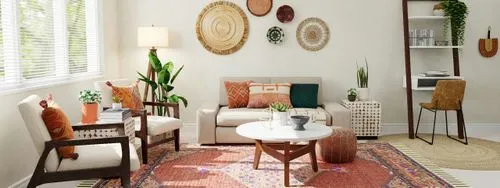
- Color Palette: Terracotta, ochre, sage green, amber, deep earth tones
This aesthetic creates sanctuaries that feel grounded and restorative—a direct response to digital fatigue and urban stress.
3. Multifunctional & Modular Living
Urban density and rising real estate costs make space optimization essential, particularly in cities like Paris and Lyon.
Product Innovation:
- Convertible dining tables that transform into workspaces
- Modular sofas with reconfigurable sections
- Intelligent storage solutions for compact apartments
Seasonal Demand Patterns
French home décor purchasing follows a distinct seasonal rhythm, with clear implications for inventory and marketing strategies:
| Period | Consumer Behavior | Marketing Opportunity |
|---|---|---|
| April - July | Low activity; light browsing and inspiration gathering | Build brand awareness; content marketing |
| August - October | Moderate growth during "la rentrée" (back-to-school) | Capitalize on autumn refresh mindset |
| November - January | Acceleration through holiday season and New Year resolutions | Heavy promotion; gift-oriented campaigns |
| February | Peak demand (index: 100) | Maximum conversion focus; new collection launches |
The dramatic spike in February 2026 search activity indicates that French consumers plan spring interior refreshes well in advance. Retailers should position new collections by late December to capture this peak.
Trending Product Categories
Based on Google Trends data and salon insights from Maison & Objet, the following categories show exceptional growth:
High-Growth Products
Cordless LED Table Lamps remain the top-performing category, combining portability, energy efficiency, and modern aesthetics. French consumers value the flexibility to move ambient lighting without outlet constraints.
Artisanal Ceramic Vases achieved the highest search interest (index: 100) in February 2026. The demand centers on raw stoneware ("grès brut") with textured finishes and sculptural, imperfect forms that showcase handmade craftsmanship.
Bohemian-Nordic Ceramics blend Scandinavian simplicity with bohemian warmth—a hybrid aesthetic particularly resonant in France. These pieces offer high transaction volumes on Amazon.fr with strong social proof.
Full-Length Arched Mirrors in gold or brass finishes serve as statement pieces that expand visual space—critical in compact urban apartments. Chrome and metallic accents are replacing lighter woods from previous years.
Botanical Scented Candles maintain steady demand with seasonality peaks in November-January. Preferred scents lean toward woody and plant-based fragrances (eucalyptus, cedarwood, fig) that reinforce the "bring nature indoors" trend.
Material & Color Trends
Chrome and Metallic Finishes are displacing pale Scandinavian woods. Consumers seek visual contrast and modern sophistication through reflective surfaces.
Amber Glass taps into retro-vintage nostalgia, particularly for lighting and decorative vessels. The warm, honey-toned glow aligns with the broader earth-tone palette.
Terracotta Textiles, especially cushions and throws, provide accent colors that complement neutral bases while adding Mediterranean warmth.
Trade Flows & Sourcing Landscape
Analysis of 2025 customs data reveals France's home décor import patterns across ceramic decorative articles (HS 6913), lamps and lighting (HS 9405), bed/table linens (HS 6302), and wooden ornaments (HS 4420).
Top Origin Countries (2025)
| Rank | Country | Import Value (USD) | Market Share |
|---|---|---|---|
| 1 | France (domestic) | $137.7M | 77.1% |
| 2 | Bangladesh | $29.2M | 16.4% |
| 3 | Vietnam | $10.0M | 5.6% |
| 4 | Pakistan | $1.6M | 0.9% |
| 5 | Belgium | $176K | <0.1% |
Key Insights:
-
Domestic production dominates with 77% of tracked shipments, reflecting strong "Made in France" preference and shorter supply chains for artisanal goods.
-
Bangladesh leads textile imports (primarily HS 6302 bed/table linens), with major textile mills shipping high volumes of finished home textiles to French retailers.
-
Vietnam emerges as the secondary Asian source, likely for lighting fixtures and decorative ceramics, offering cost-competitive alternatives to European production.
Leading Textile Exporters to France
The top suppliers are predominantly South Asian textile mills specializing in home linens, towels, and decorative fabrics:
| Exporter | Country | 2025 Value (USD) | Shipments |
|---|---|---|---|
| Yunus Textile Mills Limited | BD | $19.1M | 661 |
| Zaber and Zubair Fabrics Ltd | BD | $12.1M | 322 |
| Lucky Textile Mills Limited | BD | $10.2M | 162 |
| Gul Ahmed Textile Mills Ltd | PK | $8.8M | 429 |
| Liberty Mills Limited | BD | $7.5M | 497 |
These manufacturers supply major French retailers with bed linens, table textiles, and decorative cushions—categories where price competitiveness remains important despite the sustainability trend.
Retail Distribution Landscape
The French home décor market operates through a hybrid omnichannel model where physical and digital touchpoints are increasingly interconnected.
Major Retail Players
IKEA maintains market leadership through affordability and accessibility. The 2025-2026 strategy focuses on urban "Plan & Order" points in city centers, complementing suburban warehouses. IKEA is pushing circular economy initiatives, including Buy Back & Resell programs and 100% renewable energy in logistics by 2026.
Maisons du Monde positions as the style-led curator, currently streamlining collections to improve profitability. The shift moves away from volume-heavy assortments toward design-focused, high-margin pieces. Their omnichannel integration allows seamless transitions between inspirational catalogs and physical concept stores.
Leroy Merlin dominates the "project" segment where décor integrates with home renovation. While primarily DIY-focused, they capture significant market share in hard décor (lighting, flooring, wall coverings). The 2025-2026 strategy emphasizes energy renovation and total home solutions.
Distribution Channel Evolution
| Channel Type | Key Players | 2025-2026 Trend |
|---|---|---|
| Specialized Superstores | IKEA, Leroy Merlin, But, Conforama | Shift to smaller urban formats; click-and-collect hubs |
| E-commerce & Marketplaces | Amazon, ManoMano, La Redoute | Increasing dominance in small décor and textiles |
| Boutique & Concept Stores | Maisons du Monde, independents | Experience-focused; high-end curation |
| Second-hand/C2C | Leboncoin, Vinted Go | Rapid growth driven by sustainability and budget consciousness |
Strategic Recommendations for Market Entry
1. Embrace Circular Economy Models
Integrate product take-back programs, refurbishment services, or certified second-hand offerings. French consumers reward brands that enable sustainable consumption with loyalty and premium pricing acceptance.
2. Prioritize "Made in Europe" or Local Production
Lead times from Asia create vulnerability. European manufacturing (including France, Portugal, Italy) provides supply chain resilience and powerful marketing differentiation. The premium justifies higher costs amid transport inflation.
3. Optimize for Mobile-First Discovery
Over 60% of home décor searches begin on smartphones. Ensure mobile sites feature high-quality imagery, AR visualization tools, and streamlined checkout. Instagram and Pinterest drive significant inspiration-phase traffic.
4. Target the February Launch Window
Align new collection releases with the January-February peak. Marketing campaigns should begin in late December to capture consumers planning spring refreshes during the New Year resolution period.
5. Lead with Artisanal Aesthetic
Highlight imperfections, hand-crafted details, and material authenticity. French consumers in 2026 value unique pieces with stories over mass-produced uniformity. Raw stoneware, irregular ceramics, and visible craftsmanship resonate strongly.
Conclusion
The French home décor market in 2026 represents a sophisticated, value-conscious consumer base seeking products that balance aesthetic appeal, functional versatility, and environmental responsibility. Success requires understanding that French buyers prioritize quality of life over quantity of possessions—they will invest in fewer, better pieces that align with their values and enhance daily living.
The market favors suppliers who can demonstrate transparent sourcing, artisanal quality, and design innovation within the natural-organic aesthetic framework. With domestic production maintaining dominance and e-commerce channels maturing, the competitive landscape rewards those who master omnichannel integration while preserving the emotional connection that makes a house feel like home.