Italy Home Décor Market Report 2026: Trends & Forecasts
Created by SourceReady AI agent·2026-4-15
Italy Home Décor Market Report 2026
Executive Summary
The Italian home décor market is entering a period of robust growth in 2026, projected to reach $65.3 billion by 2030 with a compound annual growth rate (CAGR) of 7.8-8.43%Deep Market Insights (deepmarketinsights.com). This growth is driven by a strategic pivot away from minimalist aesthetics toward eclectic, personalized interiors that celebrate Italy's traditional craftsmanship while embracing digital transformation and sustainability.
The market is characterized by a fascinating duality: high-end artisanal "Made in Italy" luxury goods commanding premium prices globally, alongside a fast-growing "fast-décor" segment driven by social media trends and affordable tech-enhanced accessories.
Market Size and Growth Trajectory
The Italian home décor industry is outperforming initial post-pandemic recovery expectations. Based on current analysis, the market demonstrates strong momentum heading into 2026:
| Metric | Projection | Timeframe |
|---|---|---|
| Market Revenue | $65,286.1 Million | By 2030 |
| Growth Rate (CAGR) | 8.43% | 2026-2033 |
| Growth Rate (CAGR) | 7.8% | 2025-2030 |
The acceleration of the CAGR from 7.8% to 8.43% in the latter half of the decade indicates that 2026 represents a critical inflection point for market entry or expansionGrand View Research (grandviewresearch.com).
Key Market Trends for 2026
1. The End of "Silent Design" — Rise of Eclecticism
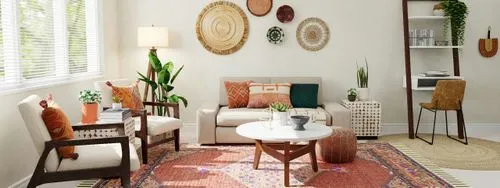
A dramatic shift is underway in Italian interior design preferences. The rigid minimalism and neutral palettes that dominated recent years are giving way to bold, expressive spaces that tell a personal storyInstagram Design Trends (instagram.com).
Key characteristics of this trend:
- Mixing old and modern: Consumers are deliberately pairing contemporary clean lines with antique or artisanal decorative elements
- Material diversity: Textured surfaces like veined marble, natural woods, and worked metals are replacing flat, uniform finishes
- Visual dynamism: Rooms are designed to create contrast and conversation rather than cohesive silence
2. Furniture Remains the Dominant Segment
Furniture continues as the cornerstone of the Italian home décor market, representing the largest product category by revenue. This dominance is sustained by Italy's global reputation for design excellence and the enduring premium commanded by the "Made in Italy" label.
The market is shifting toward high-value, durable goods rather than disposable "fast furniture," aligning perfectly with Italy's historical strengths in quality manufacturing.
3. Sustainability and Circular Economy Integration
Reflecting broader European regulatory pressure, Italian consumers are increasingly prioritizing:
- Recycled wood and circular economy furniture
- Non-toxic finishes and natural textiles
- Energy-efficient lighting solutions
- EU Deforestation Regulation (EUDR) compliant materials
This trend affects both consumer purchasing decisions and B2B supply chain requirements, with importers diversifying toward suppliers with transparent, certified supply chains.
4. Digital Transformation and Omnichannel Retail
By 2026, the integration of physical showrooms with digital experiences has become standard practice. Key developments include:
- Augmented reality (AR) for furniture placement visualization
- Digital B2B showrooms reducing reliance on traditional trade fair cycles
- "Phygital" retail strategies combining online inspiration with in-store purchases
Consumer search behavior reveals this digital shift: interest in "interior design" dramatically outpaces generic searches for "arredamento casa" (home furnishing), indicating that Italian consumers seek professional-level inspiration online before purchasing.
Consumer Behavior and Seasonal Patterns
Search Interest and Purchase Timing
Analysis of Google Trends data reveals highly cyclical consumer interest with distinct seasonal patterns:
| Period | Interest Level (0-100) | Consumer Behavior |
|---|---|---|
| August-September | 100 (Peak) | Major furniture purchases and "Design Italiano" branding focus |
| February-March | 81-96 | Preparation for spring design exhibitions (Salone del Mobile) |
| November-January | Secondary Peak | Winter interior updates and holiday textiles |
| April-June | Stable/Low | Focus on outdoor furniture and minor updates |
Strategic insight: Marketing campaigns for premium Italian décor should concentrate efforts between August and September when consumer engagement reaches its annual maximum.
The Bifurcated Market
Consumer behavior analysis reveals two distinct and simultaneous trends:
1. Heritage and Authenticity Segment
Consumers willing to pay significant premiums for:
- Regional artisanal products (Murano glass, Sicilian ceramics)
- "Made in Italy" provenance
- Statement pieces that serve as room focal points
2. Fast-Décor and Viral Aesthetics
Rapid-response purchasing driven by:
- TikTok and Instagram aesthetic trends
- LED ambient lighting and tech-enhanced accessories
- Affordable decorative items with high visual impact
Trade Dynamics and Import/Export Patterns
Italy's Export Strength
Italy maintains its position as a net exporter of home décor, with the "Made in Italy" brand commanding premiums in global luxury markets.
Primary export destinations:
- France & Germany: Top European consumers of Italian furniture and lighting
- United States: Critical growth market for luxury kitchen and upholstered furniture
- China: Increasing demand in Tier-1 cities for authentic Italian luxury
- Middle East (UAE/Saudi Arabia): Significant 2026 growth projected from hospitality "giga-projects"
Import Data: Top Supplier Countries to Italy (2025)
Analysis of customs data for furniture (HS 9403), lighting (HS 9405), ceramic tableware (HS 6911), and glassware (HS 7013) reveals Italy's primary import partners:
| Rank | Country | Total Import Value (USD) | Key Products |
|---|---|---|---|
| 1 | Bangladesh | $5,597,592 | Furniture components, textile-based décor |
| 2 | Vietnam | $2,340,875 | Outdoor furniture, raw materials |
| 3 | Italy | $232,979 | Domestic trade, re-imports |
| 4 | Philippines | $154,327 | Furniture components |
| 5 | Sri Lanka | $146,906 | Ceramic and textile products |
Key observations:
- Bangladesh dominates furniture component imports, reflecting Italy's strategy of importing cost-effective semi-finished goods for final assembly
- Vietnam's emergence as the second-largest supplier aligns with global supply chain diversification away from China
- Eastern European suppliers (Poland, Romania) are increasingly important for semi-finished wood products and upholstery frames, though not captured in this specific HS code subset
Strategic Supply Chain Shifts
For 2025-2026, Italian importers are navigating several strategic changes:
- Diversification from China toward Southeast Asia and Eastern Europe to mitigate geopolitical risks
- Sustainability compliance as EUDR regulations force transparent sourcing of timber and textiles
- Contract sector focus with significant 2026 trade driven by hospitality and commercial projects rather than retail consumers
Competitive Landscape: Key Players
The Italian market features a mix of global mass-market retailers and prestigious Italian design houses:
International Retailers
- IKEA: Maintains dominant market share in affordable and mid-range segments
- Herman Miller: Key player in high-end functional and office-integrated home décor
- Kimball International: Strong presence in premium furniture segments
Italian Design Excellence
While specific brand market share data is limited, the "Design Italiano" label itself functions as a powerful market force. Italian luxury brands maintain dominance through:
- Prestige positioning and heritage storytelling
- Participation in flagship events (Salone del Mobile)
- Digital marketing concentrated during peak consumer interest periods (August-September)
High-Opportunity Product Categories
Based on keyword trend analysis and consumer search behavior, the following product categories show exceptional potential in the Italian market:
1. Modern Wall Art with Italian Provenance
Trend Score: 95/100
- Strong demand for "Quadri moderni soggiorno made in Italy"
- Consumers seek statement pieces that combine contemporary aesthetics with local craftsmanship
2. Traditional Sicilian Ceramics
Trend Score: 88/100
- "Teste di moro ceramica siciliana" demonstrates robust demand
- Regional authenticity and artisanal heritage drive premium pricing
3. Aesthetic LED Ambient Lighting
Trend Score: 82/100
- "Lampada proiettore aurora LED camera" reflects the fast-décor trend
- Tech-enhanced accessories popular among younger demographics
4. Faux Decorative Books for Coffee Tables
Trend Score: 78/100
- "Libri decorativi faux book coffee table" shows viral aesthetic influence
- Low-cost, high-impact visual accessories
5. Minimalist Boho Ceramics
Trend Score: 74/100
- "Vasi ceramica minimalista boho" bridges minimalism and expressive décor
- Appeals to consumers transitioning from silent design to eclectic styles
Strategic Recommendations
For Exporters to Italy
- Focus on sustainability credentials: Ensure all timber and textile products meet 2025-2026 EU environmental standards to avoid customs complications
- Target the contract sector: Hotels, luxury offices, and hospitality projects represent significant B2B opportunities beyond retail
- Emphasize semi-finished components: Italy's manufacturing model increasingly relies on importing cost-effective components for final high-value assembly
For Italian Manufacturers and Retailers
- Time marketing to seasonal peaks: Concentrate premium product launches and campaigns for August-September when consumer engagement is highest
- Embrace eclectic product lines: Develop collections that allow style mixing, enabling customers to integrate new pieces with existing or vintage items
- Invest in omnichannel capabilities: AR visualization tools and digital showrooms are becoming table stakes, not differentiators
- Diversify supply chains: Reduce dependency on single-source suppliers by developing relationships with certified partners in Southeast Asia and Eastern Europe
For New Market Entrants
- Choose your positioning carefully: The market rewards either extreme heritage/authenticity or rapid viral trend response—middle positions face pressure from both sides
- 2026 is the entry window: The accelerating CAGR makes this year particularly favorable for market entry before competition intensifies
- Consider the contract channel: Hospitality and commercial projects offer more stable, higher-volume opportunities than fickle retail trends
Conclusion
The Italian home décor market in 2026 is characterized by dynamic growth, aesthetic transformation, and strategic repositioning. With projected revenues exceeding $65 billion by 2030 and a robust 8%+ CAGR, the market presents compelling opportunities for manufacturers, retailers, and suppliers who can navigate its dual nature: reverence for traditional Italian craftsmanship alongside embrace of digital innovation and global supply chain diversification.
The shift from minimalist "silent design" to eclectic, expressive interiors represents not just an aesthetic evolution but a fundamental change in consumer psychology—from homes as neutral backdrops to homes as personal narratives. Businesses that can provide products enabling this storytelling, whether through heritage authenticity or accessible aesthetic impact, are best positioned to capture value in this vibrant and evolving market.