Italy Outdoor Furniture Market Report 2026: Trends & Analysis
Created by SourceReady AI agent·2026-4-15
Italy Outdoor Furniture Market Report 2026
Executive Summary
The Italian outdoor furniture market in 2026 represents a sophisticated blend of luxury design heritage and cutting-edge sustainability. The market continues to demonstrate resilience with a projected CAGR of 4-5%, driven by the "indoor-outdoor living" trend that has transformed how Italian consumers view exterior spaces. No longer an afterthought, terraces, gardens, and balconies have become essential extensions of the home, demanding the same level of design excellence and comfort as interior rooms.
This report synthesizes market intelligence from multiple sources, including trade data analysis, consumer search trends, and industry insights to provide a comprehensive view of the Italian outdoor furniture landscape as of April 2026.
Market Dynamics & Growth Drivers
The "Fluid Home" Revolution
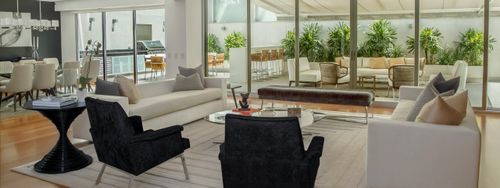
The most significant trend defining the 2026 market is the complete dissolution of boundaries between interior and exterior design. Italian consumers are investing heavily in outdoor spaces that mirror the sophistication of their living rooms:
- Upholstered outdoor furniture using waterproof, UV-resistant fabrics that feel like natural linen or silk
- Modular sofa systems that offer the flexibility to reconfigure based on occasion and space
- Outdoor kitchens and dining areas with the same aesthetic standards as indoor counterparts
- Architectural lighting integration creating ambiance that extends entertaining hours
Sustainability as Standard
Environmental consciousness has evolved from a marketing differentiator to a baseline requirement. The 2026 market is characterized by:
- Circular economy principles: Furniture designed for disassembly, repair, and end-of-life recycling
- Material innovations: Recycled ocean plastics in woven furniture, FSC-certified timber, bio-based polymers
- Life Cycle Assessment (LCA) transparency becoming a key purchasing criterion
- Local sourcing within Italy and the EU to minimize transportation emissions
The Wellness Garden
Post-pandemic shifts in consumer psychology have permanently elevated outdoor spaces to "wellness sanctuaries." This drives demand for:
- Ergonomic lounging furniture (daybeds, cocoon chairs)
- Natural, tactile materials (textured wood, hand-woven rope, natural stone)
- Earth-tone color palettes (terracotta, sage green, sandy beige) promoting harmony with nature
Consumer Search Trends & Product Preferences
Analysis of Italian consumer search behavior on Amazon and Google Shopping reveals the market's priorities:
Top Trending Products (by search velocity)
Bioclimatic motorized pergolas lead the market with the highest search score (94), reflecting Italian consumers' desire for year-round outdoor living with climate control technology.
Made in Italy rattan lounge sets (score: 89) demonstrate that national manufacturing heritage remains a powerful purchase driver, with consumers willing to pay premium for domestic craftsmanship.
Extendable aluminum tables with wood effect (score: 82) highlight the demand for hybrid materials—the durability of metal with the aesthetic warmth of natural wood.
Garden lounge sets with integrated storage (score: 78) reflect practical urban living needs, especially in space-constrained environments.
Modular outdoor sofas (score: 75) confirm the flexibility trend, allowing consumers to adapt furniture configurations to different entertaining scenarios.
Market Segmentation Insights
- Residential segment remains the primary driver, with focus on terrace and garden living
- Contract/HoReCa sector showing strong recovery as luxury tourism rebounds and outdoor dining expands
- Urban balcony furniture emerging as a distinct growth category due to compact living spaces in Italian cities
Import Trade Analysis
Top Origin Countries (2024-2026 YTD)
Analysis of customs data for outdoor furniture imports (HS codes 9401 and 9403) reveals Italy's sourcing patterns:
| Origin Country | Total Import Value (USD) | Shipment Count | Average Shipment Value |
|---|---|---|---|
| United States | $267.6M | 7,428 | $36,019 |
| Vietnam | $27.4M | 1,575 | $17,378 |
| Indonesia | $9.9M | 2,843 | $3,471 |
| Turkey | $9.0M | 2,134 | $4,228 |
| India | $2.7M | 4,057 | $662 |
| Philippines | $1.3M | 95 | $13,433 |
| Ecuador | $237K | 199 | $1,189 |
| China | $113K | 3,849 | $29 |
Key Observations:
- US dominance is striking at $267.6M—likely reflecting high-value branded imports and design collaborations rather than manufacturing
- Vietnam emerges as the primary Asian manufacturing hub for Italian imports, with substantial volume and mid-range pricing
- Indonesia and Turkey compete in the mid-market segment with different positioning strategies
- China's low average shipment value ($29) suggests highly fragmented small-batch imports or components rather than finished furniture
Leading Exporters to Italy (2025-2026)
The top manufacturing suppliers shipping to Italy:
| Rank | Exporter | Country | Total Value (USD) |
|---|---|---|---|
| 1 | Cong Ty Trach Nhiem Huu Han Vision | Vietnam | $21.9M |
| 2 | Cong Ty Co Phan Lam San Nam Dinh | Vietnam | $477K |
| 3 | Cong Ty TNHH Steelflex | Vietnam | $471K |
| 4 | Cong Ty TNHH Quoc Te Waytex Viet Nam | Vietnam | $455K |
| 5 | Cong Ty Co Phan Woodsland Tuyen Quang | Vietnam | $403K |
Vision company dominates with $21.9M in exports—representing nearly 80% of Vietnam's total outdoor furniture exports to Italy, suggesting either a major contract supplier relationship or consolidation role.
Leading Italian Brands & Manufacturers
Italy's domestic outdoor furniture industry remains the global benchmark for luxury and design innovation:
Ultra-Luxury Segment
B&B Italia (Outdoor Division) maintains its position as the prestige leader, with iconic collections like Canasta and Erica commanding premium pricing and high resale value. Their collaborations with designers Piero Lissoni and Antonio Citterio define the aesthetic direction of the high-end market.
Paola Lenti leads in textile innovation with proprietary Rope and Aquatech yarns engineered for extreme UV and salt water resistance. The brand's color research capabilities and customization options make it the choice for architects and discerning residential clients.
RODA pioneered the "In and Out" concept, creating furniture collections that blur the distinction between interior and exterior environments. Their 2026 focus on "mimetic" furniture—designs that integrate seamlessly with natural landscapes—positions them at the forefront of the wellness garden trend.
Premium-Volume Leaders
Emu Group dominates both residential and commercial markets through scale, with advanced Italian metalworking capabilities and global distribution. Their strength in the contract sector comes from durability certifications and competitive pricing at premium quality levels.
Ethimo has captured the "Mediterranean Style" niche, specializing in teak-aluminum hybrid furniture that appeals to coastal luxury markets.
Rising Contemporary Brands
Talenti is experiencing rapid growth through glamorous, contemporary designs and aggressive digital marketing. Collaborations with international designers have positioned them as a fast-growing competitor for the 2025-2026 seasons.
Material & Design Trends
High-Performance Materials
| Material | Application | Sustainability Factor |
|---|---|---|
| Recycled Aluminum | Frames for sofas/dining tables | Infinitely recyclable; low carbon footprint |
| FSC-Certified Teak | Classic and contemporary woodwork | Responsibly managed forests; carbon sequestration |
| Bio-based Polymers | Synthetic weaves, 3D-printed accents | Renewable source materials vs. petroleum |
| Technical Textiles | Solution-dyed acrylics, recycled PET | Reduced water consumption; exceptional durability |
Design Aesthetics
- Color shift toward earth tones: Terracotta, olive green, and sandy beige replacing bright trendy colors
- Mono-material design for recyclability: Avoiding composite construction that prevents end-of-life separation
- Tactile, organic forms: Woven textures, natural rope details, hand-crafted elements
- "Quiet luxury" aesthetic: Timeless designs that age gracefully rather than fast-fashion furniture
Strategic Recommendations
For Buyers & Sourcing Professionals
- Prioritize durability specifications: Specify 304 or 316 stainless steel for coastal installations; powder-coated aluminum for inland applications
- Verify sustainability documentation: Request detailed recycled content percentages, FSC certificates, and OEKO-TEX textile certifications
- Consider Vietnam as primary manufacturing base: Trade data shows Vietnam has emerged as Italy's preferred Asian production hub for quality-price balance
- Focus on modular systems: Consumer trends strongly favor flexibility and reconfiguration capability
For Market Entry
- Contract/HoReCa sector offers volume opportunity: Target luxury hotels, resorts, and high-end restaurants investing in outdoor experiences
- Urban balcony segment is underserved: Compact, multifunctional, space-saving furniture has growing search demand
- "Made in Italy" commands premium: If manufacturing in Italy, leverage this heavily; if importing, partner with Italian design studios
For Product Development
- Integrate storage solutions: Consumer search data shows high interest in furniture with built-in storage compartments
- Develop bioclimatic features: Motorized, climate-adaptive structures top search trends
- Engineer for repairability: Design with mechanical fastenings rather than adhesives to enable part replacement
- Invest in textile technology: UV resistance, waterproofing, and indoor-quality hand-feel are table stakes
Market Outlook
The Italian outdoor furniture market in 2026 stands at the intersection of heritage craftsmanship and technological innovation. The "indoor-outdoor" lifestyle shift appears permanent rather than pandemic-driven, supported by continued investment in home outdoor spaces and the HoReCa sector recovery.
Growth projections of 4-5% CAGR through 2026 reflect steady rather than explosive expansion—a mature market with quality-over-quantity dynamics. Competition will intensify around sustainability credentials, with transparency in materials sourcing and end-of-life recyclability becoming key differentiators.
The dominance of Italian luxury brands (B&B Italia, Paola Lenti, RODA) in the high-end segment appears secure, while mid-market opportunities exist for brands that can deliver Italian design aesthetics with competitive manufacturing economics—likely explaining Vietnam's emergence as the preferred production base.
For stakeholders across the value chain, success in the Italian market requires balancing three imperatives: design excellence, environmental responsibility, and functional durability. The Italian consumer of 2026 expects all three, viewing outdoor furniture as a long-term investment in lifestyle quality rather than a seasonal purchase.