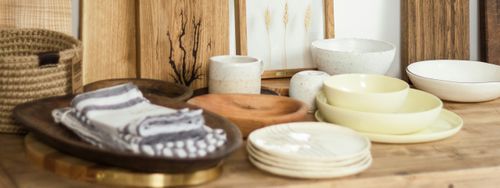
Sweden Minimalist Décor Market Report 2026: Warm Minimalism & Japandi
Created by SourceReady AI agent·2026-7-17
Sweden Minimalist Décor Market Report 2026
Research conducted July 2026 | Sources: Web intelligence, keyword trend analysis, product research, supplier database, and customs trade data
Executive Summary
Sweden's minimalist décor market is undergoing its most significant aesthetic evolution in decades. The defining story of 2026 is the transition from "cool" to Warm Minimalism — a human-centric philosophy where clean lines and functional design are now layered with tactile comfort, organic shapes, and emotional resonance. Rather than "less is more," the new Swedish consumer mantra is "better is more."
Despite a temporary seasonal dip in search activity during the summer industrisemester, the broader market remains healthy and structurally resilient, underpinned by a powerful "Skandinavisk Design" brand identity that continues to command global attention and loyal domestic demand.
1. The Defining Trend: Warm Minimalism
The most consequential shift identified across all data sources is the move away from stark, clinical interiors toward a warmer, more layered version of the Scandinavian aesthetic. This is not a rejection of minimalism — it is a maturation of it.
What this looks like in practice:
- Tactile layering: Bouclé, linen, and wool fabrics replace flat, smooth surfaces to introduce depth and physical warmth
- Organic natural materials: Wood, stone, and clay remain central but now appear in rawer, more imperfect forms — embracing the Japanese wabi-sabi philosophy that has fused with Nordic design to create the Japandi hybrid aesthetic (the top-ranked keyword trend in Sweden with a score of 95)
- Curved and soft furniture forms: Rounded sofas, pebble-shaped coffee tables, and arched architectural details replace hard rectilinear geometry
- Multi-functional design: As urban Swedish living spaces compress, furniture that serves dual purposes while maintaining a slim profile is a high-growth category
This shift is also visible in color. Pure white and grey walls are giving way to soft pastel foundations, punctuated by singular "statement accent" pieces in brighter hues — a controlled expressiveness that preserves the minimalist ethos while injecting personality.
2. Keyword & Consumer Demand Signals
The keyword intelligence paints a clear picture of where Swedish consumer intent is strongest heading into late 2026.
| Keyword / Search Theme | Trend Score | Strategic Signal |
|---|---|---|
| Japandi home decor Nordic minimalist | 95 | Dominant hybrid aesthetic — highest intent |
| Nordic donut hollow ceramic vase | 92 | Organic ceramic shapes are a primary entry point |
| Swedish Dala horse figurine handmade | 88 | Heritage craft commands premium pricing |
| Minimalist Scandinavian wooden pendant light | 84 | Lighting as functional-decorative centerpiece |
| Hygge scented candle Scandinavian | 81 | Sensory & atmospheric décor — strong e-commerce pull |
The standout insight here is the dominance of Japandi — a portmanteau of "Japanese" and "Scandinavian" — which marries Nordic functionalism with Japanese wabi-sabi imperfection. This fusion is creating a new product language: matte ceramics, asymmetric organic vases, and warm-toned natural wood lighting.
Equally notable is the enduring strength of the "Skandinavisk Design" umbrella term in search behavior. Analysis shows this term outperforms "minimalistisk heminredning" (minimalist home décor) by a wide margin and acts as the dominant commercial label under which minimalist products are most effectively sold to Swedish consumers.
3. Seasonal Dynamics: When the Market Moves
The Swedish market is highly seasonal, and timing matters enormously for any stakeholder in this space.
| Season | Search Index (approx.) | Driver |
|---|---|---|
| Spring — March/April | Up to 95 | "Spring Refresh" — peak renovation impulse |
| Autumn — November | High | Pre-winter cozy/functional minimalism |
| Summer — July | ~27 (current) | Industrisemester — consumers outdoors |
| Late August | Rising | "Back to Home" recovery trend |
The current moment (mid-July 2026) represents a strategic low point — an ideal window for sourcing, inventory building, and campaign preparation ahead of the late-summer recovery and the critical autumn peak. Businesses should weight their marketing spend heavily toward March/April and November.
4. Key Product Categories
Research identified five high-priority product categories driving the 2026 Swedish minimalist décor market:
Warm Textiles
Wool and linen throws, organic cotton bedlinen, and textured cushion covers in neutral and pastel tones are essential staples. The shift to Warm Minimalism has elevated textile importance from accessory to structural design element.
Organic Ceramics & Natural Decorative Objects
Matte ceramic vases with hollow or irregular forms, wooden decorative objects, and clay-textured pieces are the primary small-décor entry point for Swedish e-commerce. The "Nordic donut hollow ceramic vase" keyword scoring 92 confirms exceptional consumer pull.
Minimalist Wood Furniture
Light oak and natural wood finishes dominate. The "soffbord i ljus ek" (light oak coffee table) category is a bellwether for the broader furniture segment — functional, material-honest, and aesthetically enduring.
Statement & Accent Décor
Pastel cushion covers, Dala horse figurines, hygge candles, and singular sculptural objects serve as the color and personality injection points within otherwise restrained interiors.
Lighting
Wooden pendant lights and Nordic-style floor/table lamps remain a critical category, especially given Sweden's long dark winters. Lighting that doubles as sculptural décor is especially prized.
5. Supply Landscape
Swedish Design Brands & Distributors
The domestic supply side is anchored by several design-led brands and distributors that define the aesthetic standard for the market:
-
DBKD Sweden AB — Vara, Sweden. A B2B design brand producing ceramic pots, glass vases, and metal home accessories in classic Scandinavian muted tones. Currently developing AW26 seasonal collections and active at international trade fairs including Ambiente Frankfurt.
-
Storefactory AB — Jönköping, Sweden. A wholesaler/distributor with a strong Scandinavian elegance positioning, offering candle holders, vases, and sustainable organic cotton textiles. Collaborates with notable designers including Bruno Bergenholtz.
-
Designtorget — Stockholm. Sweden's premier curated design retail platform, acting as a launchpad for independent Swedish designers across furniture, lighting, and home accessories. Operates flagship stores and a robust e-commerce channel.
-
Desenio — Stockholm. A Scandinavian-inspired wall art and print brand with 101–200 employees, specializing in minimalist poster art and tonal contrast aesthetics. Strong pan-European digital reach.
-
String Furniture AB — Limhamn (est. 1949). An iconic Swedish manufacturer producing the globally recognized String modular shelving system in walnut, oak, ash, and dark oak finishes. A true heritage brand that embodies functional minimalism at its purest.
International Manufacturing Suppliers (Exporting to Sweden)
For brands and retailers sourcing product, the global supplier database identified 33 strong matches and 90 total relevant suppliers with Sweden export market orientation. The top international manufacturers include:
Key manufacturing clusters serving the Swedish minimalist décor market are concentrated in:
- China (Fujian, Shanghai, Guangzhou, Shenzhen) — dominant in ceramics, lighting, and multi-material décor
- India (Uttar Pradesh, Rajasthan) — natural material handicrafts and wood-based décor
- Vietnam — emerging as a significant wood décor production hub (see customs data below)
6. Trade Flow Intelligence: Who Is Actually Shipping to Sweden
Customs shipment data reveals the real-world import flow into Sweden for home décor categories (ceramics, wood décor, candles, vases). The top exporters by CIF value are:
| Exporter | Country | Shipments | Total CIF (USD) |
|---|---|---|---|
| AROMA BAY CANDLES COMPANY LIMITED | Thailand | 2,919 | $5,381,318 |
| ART DECORATION INTERNATIONAL PVT LTD | India | 32 | $1,534,268 |
| A L PAPER HOUSE LLP | India | 520 | $1,294,373 |
| CONG TY CO PHAN WOODSLAND TUYEN QUANG | Vietnam | 119 | $706,797 |
| CONG TY TNHH GOM SU MINH PHAT | Vietnam | 107 | $615,567 |
| CONG TY CO PHAN W00DSLAND | Vietnam | 88 | $577,004 |
| STANLEY OEM SOFAS LIMITED | UK/Global | 116 | $548,763 |
| DUTA JEPARA | Indonesia | 19 | $533,502 |
| CONG TY TNHH SCANSIA PACIFIC | Vietnam | 37 | $509,739 |
Several compelling insights emerge from the trade data:
Thailand dominates candle imports. Aroma Bay Candles has shipped nearly 2,920 consignments to Sweden — by a vast margin the most active single exporter in this space. Hygge candles are clearly not just a trend keyword; they represent one of the largest physical import categories.
Vietnam is a rising force in wood décor. Three distinct Vietnamese wood manufacturers appear in the top 10, collectively shipping over $1.8M in CIF value to Sweden. The Woodsland group (appearing as two entities) is particularly notable. This reflects Vietnam's growing capability in quality wooden furniture and decorative objects — a perfect match for the natural material demands of Warm Minimalism.
Indonesia (Duta Jepara) punches above its shipment count. Only 19 recorded shipments but $533K in CIF value signals high-value, crafted wooden furniture — Jepara being Indonesia's renowned furniture-making region.
India is a significant volume player, particularly in paper-based and mixed decorative goods.
7. Strategic Recommendations
Based on the totality of findings, the following recommendations apply to different stakeholders entering or expanding in this market:
For Importers & Buyers:
Prioritize sourcing natural material products — ceramics, wood, linen — from established Vietnam and Indonesia manufacturers who are already demonstrably active in the Swedish market. The trade data provides a verified shortlist of active suppliers to engage.
For Product Development:
Invest in the Japandi aesthetic: organic-form matte ceramics, warm-toned wood lighting, and natural fiber textiles. Products should feature soft-touch finishes, rounded edges, and muted but warm color palettes. Avoid cold greys and sharp geometry — those are the aesthetics being replaced.
For Marketing & Commercial Planning:
Launch campaigns in late August to capture the "Back to Home" recovery, with peak investment in March/April (Spring Refresh) and November (pre-winter). Use "Skandinavisk Design" as the primary commercial label rather than "minimalist" — it captures significantly higher search intent from Swedish consumers.
For Sustainability Positioning:
Ethical sourcing and natural material provenance are non-negotiable expectations in Sweden, not differentiators. Certifications, origin transparency, and material honesty should be baseline requirements for any product line targeting this market.
8. Conclusion
The Sweden minimalist décor market in 2026 is not slowing — it is deepening. The Warm Minimalism shift represents a market that has matured past aesthetics into emotional and sensory territory. The opportunity is significant for suppliers and brands who understand that the Swedish consumer does not want less — they want better: better materials, better craftsmanship, better stories. The supply infrastructure, from Vietnamese wood manufacturers to Thai candle exporters, is already aligned to serve this demand. The question for market entrants is whether their product language can speak the new dialect of Nordic warmth.