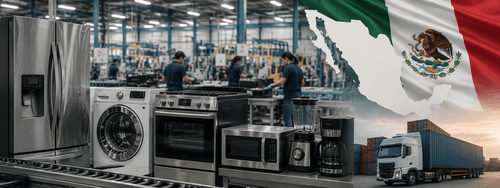
US Home Appliances Market Report 2026: AI, Efficiency & Regionalization
Created by SourceReady AI agent·2026-4-15
United States Home Appliances Market Report 2026
Executive Summary
The United States home appliances market is entering a transformative phase as it approaches mid-2026, characterized by the convergence of artificial intelligence, energy efficiency mandates, and supply chain regionalization. The market is projected to reach $68-72 billion by 2026, growing at a compound annual growth rate (CAGR) of 3.5-4.2% from an estimated $55-60 billion in 2024. This growth is driven by replacement cycles, smart home integration, and aggressive federal policy incentives promoting electrification and sustainability.
Market Size and Trajectory
The U.S. home appliances market remains one of the world's largest, supported by high consumer spending power and a robust housing sector. Following post-pandemic stabilization, the market has entered a steady growth phase with distinct dynamics across major and small appliance categories.
| Metric | 2024 Estimate | 2026 Forecast | Growth Rate |
|---|---|---|---|
| Market Value | $55-60 billion | $68-72 billion | 3.5-4.2% CAGR |
| Unit Shipments | ~85 million units | ~92 million units | 2.8% CAGR |
Major appliances (refrigerators, washing machines, ovens, dishwashers) continue to hold the largest revenue share, though small appliances are experiencing faster innovation cycles and higher replacement frequency.
Key Market Trends Shaping 2026
1. From "Smart-Capable" to "AI-First" Standard
By 2026, Wi-Fi connectivity has shifted from premium feature to baseline expectation across mid-to-high-range appliances. The market is now moving toward AI-integrated ecosystems that go beyond simple voice commands:
- Matter Protocol Integration: Cross-brand interoperability is becoming standard, allowing appliances from different manufacturers to communicate seamlessly within smart home ecosystems
- Predictive Maintenance: Appliances now alert manufacturers and users to potential part failures before they occur, significantly reducing downtime
- Resource Optimization: Washing machines and dishwashers automatically adjust water, detergent, and energy usage based on real-time load sensors to minimize waste
2. Energy Efficiency and the Electrification Wave
Regulatory mandates and federal incentives are driving a fundamental shift in appliance technology and consumer purchasing behavior:
- Induction Cooking Revolution: A rapid transition from gas to induction cooktops is accelerating, driven by local health regulations and federal tax incentives under the Inflation Reduction Act
- Heat Pump Dominance: Heat pump technology is becoming the standard for clothes dryers and water heaters to meet 2026 Department of Energy (DOE) efficiency benchmarks
- Energy Star Premium: Consumers are increasingly prioritizing long-term utility savings over initial purchase price, favoring high-efficiency models despite higher upfront costs
3. Premiumization and Aesthetic Integration
The "white box" era of appliances is ending, replaced by design-conscious, customizable products that blend into home environments:
- Panel-Ready and Built-In Designs: Homeowners are opting for appliances that integrate seamlessly into cabinetry rather than standing out as industrial tools
- Modular Customization: Brands like Samsung Bespoke are finding success with interchangeable panels and color options that allow personalization
- Health-Centric Features: Advanced air filtration in refrigerators, steam capabilities in ovens, and air-fry functions are becoming standard in premium segments
Competitive Landscape and Market Share
The U.S. market is dominated by a "Big Four" manufacturer group, though the competitive dynamics are shifting as Asian brands gain ground through innovation in smart technology and premium design.
Market Share by Leading Brands (2025-2026)
| Brand/Company | Market Share | Core Strength |
|---|---|---|
| Samsung | 19-21% | Leadership in smart features, premium design, and IoT integration |
| LG Electronics | 17-19% | High reliability ratings; dominance in front-load laundry |
| GE Appliances (Haier) | 16-18% | Strong builder/contractor relationships; "Made in USA" positioning |
| Whirlpool Corporation | 15-17% | Extensive distribution network; multi-brand strategy (Maytag, KitchenAid) |
| Others (Bosch, Electrolux, etc.) | 25-30% | Niche premium markets and budget-friendly alternatives |
Samsung and LG continue to lead by volume, particularly in refrigerators and laundry segments, with aggressive investment in AI-driven energy management to comply with tightening federal standards. GE Appliances has successfully reclaimed market share through localized manufacturing and its luxury "Cafe" and "Monogram" lines. Whirlpool maintains its position as the preferred choice for value-conscious consumers and large residential developments, leveraging its vast service network.
Trade Dynamics and Supply Chain Transformation
The Shift to Nearshoring and "China Plus One"
The U.S. home appliance market is undergoing a fundamental supply chain transformation, moving away from heavy Chinese import dependence toward a diversified, regionalized model. Based on 2025 customs data for major appliance categories (refrigerators, washing machines, dishwashers, electric heating appliances), the top exporting countries are:
| Rank | Country | Total Import Value (2025) | Market Dynamics |
|---|---|---|---|
| 1 | China | $7.87 billion | Still dominant but declining share due to Section 301 tariffs |
| 2 | South Korea | $5.75 billion | Driven by Samsung/LG exports; strong in premium smart appliances |
| 3 | Thailand | $2.21 billion | Emerging hub for Southeast Asian manufacturing |
| 4 | Vietnam | $1.23 billion | Rapid growth as "China alternative"; lower tariff exposure |
| 5 | Taiwan | $476 million | Specialized in smart components and semiconductors |
| 6 | Mexico | $404 million | Growing significantly in major appliances via USMCA benefits |
| 7 | Singapore | $372 million | Re-export hub and regional distribution center |
| 8 | Spain | $143 million | Premium European brands (Bosch, etc.) |
| 9 | Italy | $136 million | High-end kitchen appliances and design-focused products |
| 10 | Germany | $123 million | Premium efficiency-focused brands |
Key Observations:
- China remains the largest source at $7.87 billion, but its share is declining as manufacturers pursue "China Plus One" strategies
- Mexico's growth trajectory is accelerating rapidly for bulky major appliances due to USMCA duty-free access and significantly lower logistics costs compared to trans-Pacific shipping
- Southeast Asian growth: Thailand and Vietnam are capturing manufacturing migration from China, particularly for mid-range appliance assembly
Tariff Impact and Policy Environment
Trade policy remains the most influential factor in sourcing and pricing decisions:
- Section 301 Tariffs: Continued duties on Chinese-made components and finished goods have forced manufacturers to relocate assembly lines or "finish" products in third countries to change Country of Origin
- Antidumping/Countervailing Duties: Specific focus on large residential washers and refrigeration components from Southeast Asia to prevent tariff circumvention
- Energy Efficiency Standards as Trade Barriers: New DOE mandates effective through 2026 require significant R&D investment from foreign manufacturers, creating a technical barrier to entry
Consumer Preferences and Trending Categories
Analysis of consumer search and purchase behavior reveals distinct preference shifts for 2026:
High-Growth Product Categories
The market is heavily influenced by social commerce trends, with portable, cordless, and specialized cleaning appliances driving significant consumer interest:
- Portable Cleaning Solutions: Handheld pressurized steam cleaners and cordless stick vacuums are experiencing explosive growth, driven by video-content demonstration and ease of use
- Specialized Sanitization: Mattress vacuum cleaners with UV and dust mite removal capabilities reflect growing health consciousness
- Automation in Kitchen: Electric vacuum sealers and smart temperature probes show consumer demand for food preservation and precision cooking
- Chemical-Free Cleaning: Steam and UV-based cleaning devices align with consumer preference for PFAS-free and eco-friendly solutions
Strategic Implications
The trend toward USB-powered portability, cordless convenience, and health-conscious features presents opportunities in high-velocity, problem-solving appliances that are easily demonstrable via digital content platforms.
Growth Drivers and Market Headwinds
Primary Growth Catalysts
| Driver | Impact | Description |
|---|---|---|
| Replacement Cycle Wave | High | Appliances purchased during the mid-2010s housing boom are reaching 10-12 year end-of-life, creating a natural replacement surge |
| Housing Market Stabilization | Moderate | As mortgage rates stabilize, increased home sales trigger appliance purchases ("move-in" effect) |
| Federal Incentives | High | Inflation Reduction Act tax credits for energy-efficient appliances are accelerating adoption of premium eco-tech |
| E-commerce Expansion | Moderate | Direct-to-consumer sales from manufacturers and enhanced delivery/installation services are shortening purchase paths |
Persistent Challenges
Despite strong fundamentals, the industry faces structural obstacles:
- Interest Rate Sensitivity: High mortgage rates persisting into mid-2026 may dampen the "move-in" purchase surge typically associated with new home sales
- Supply Chain Fragility: While 2021-2022 crisis conditions have abated, geopolitical tensions continue to threaten semiconductor and raw material (nickel, steel, aluminum) supply stability
- Right to Repair Movement: State-level legislation requiring manufacturers to provide parts and repair manuals to consumers threatens high-margin proprietary service revenue streams
- E-Waste Regulations: Stricter mandates on appliance decommissioning and recycling are increasing end-of-life costs for manufacturers
Strategic Recommendations
For Manufacturers
- Prioritize Induction Technology: Accelerate investment in induction cooking as gas-to-electric transitions intensify
- Invest in AI Integration: Focus on predictive maintenance and energy optimization features to differentiate in the smart appliance space
- Emphasize Repairability: Market durability and long lifespan as premium selling points as consumers face higher prices
For Importers and Retailers
- Diversify Sourcing Beyond China: Establish secondary manufacturing relationships in Vietnam, Thailand, or India to mitigate tariff exposure
- Build Safety Stock: Maintain 15-20% inventory buffers above pre-pandemic levels to hedge against port disruptions
- Monitor De Minimis Rule Changes: Stay informed on potential legislative changes to the $800 import threshold for small appliances
For Investors
The 2026 market presents a cautiously optimistic outlook. The strongest opportunities lie in companies that:
- Lead in AI-driven energy management systems
- Have diversified, nearshore-heavy supply chains
- Offer premium, customizable product lines aligned with the "wellness kitchen" trend
- Maintain robust direct-to-consumer distribution capabilities
Conclusion
The United States home appliances market in 2026 is defined by efficiency, intelligence, and regionalization. The transition from gas to electric, from standalone to ecosystem-integrated, and from China-centric to diversified supply chains represents a fundamental restructuring of the industry. Companies that successfully navigate new energy standards, invest in AI capabilities, and build resilient supply chains will capture the largest share of the $68-72 billion market, while those lagging in the electrification transition face regulatory and demand-side headwinds.
The market's future belongs to manufacturers who recognize that appliances are no longer standalone tools but interconnected nodes in smart home ecosystems, delivering not just functionality but energy savings, predictive intelligence, and seamless aesthetic integration into modern living spaces.