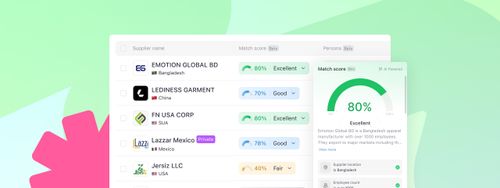
Enterprise procurement is moving beyond manual supplier search toward AI-driven discovery. Traditional methods—marketplaces, trade shows, and networks—struggle to keep up with the scale and complexity of modern sourcing. AI changes this by turning fragmented supplier and market data into structured insights, enabling faster, more accurate decisions. Platforms like SourceReady go further by combining supplier discovery with product and competitor intelligence, helping teams identify opportunities earlier and reduce risk. This guide explores how AI is reshaping supplier discovery into a more proactive, data-driven, and scalable process.
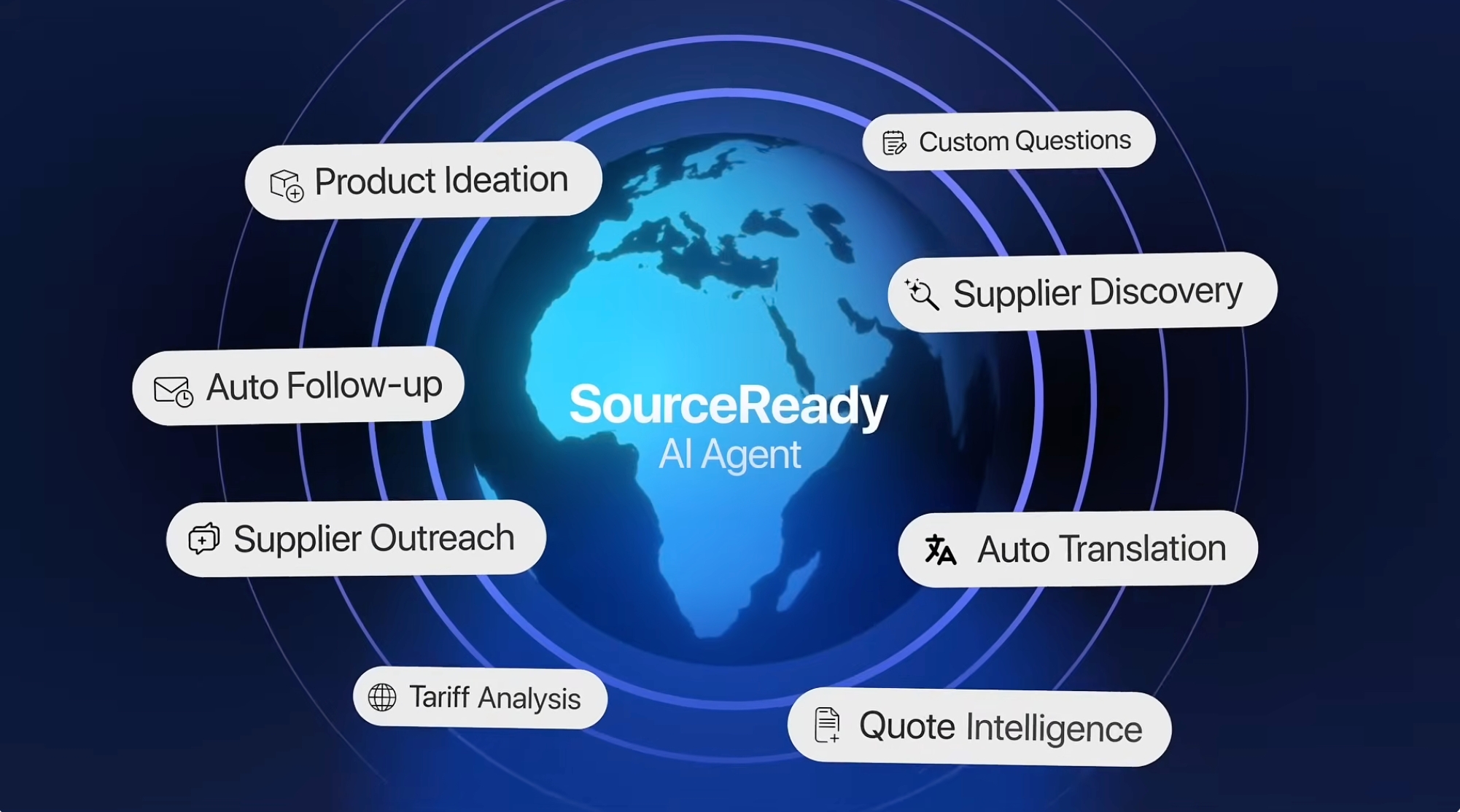
There's a better way to source ❤️
Watch the video to see how SourceReady helps brands move from product ideas to trusted supplier relationships faster
Watch the VideoHow is supplier discovery changing for enterprise procurement teams?
Supplier discovery used to be a manual, relationship-driven process. Procurement teams relied on trade shows, existing networks, and marketplace searches to build supplier pipelines. That approach still works—but it doesn’t scale well, and it doesn’t handle complexity.
Today, enterprise procurement teams are dealing with:
- Multi-country sourcing strategies
- Stricter compliance requirements
- Faster product cycles
- Increased pressure on cost and resilience
AI is changing supplier discovery by shifting it from a search problem to a data and decision problem.
- From manual search to intelligent filtering: Instead of browsing hundreds of suppliers, AI systems can narrow down options based on structured criteria such as product type, certifications, capacity, and historical performance. This reduces time spent on low-fit suppliers.
- From static listings to dynamic data: Traditional supplier profiles are often outdated or incomplete. AI aggregates and updates data from multiple sources, creating a more accurate and current view of supplier capabilities.
- From reactive sourcing to proactive discovery: Procurement teams can now identify suppliers before they actively start searching, using signals like export activity, production trends, and market demand.
The result is a shift toward faster, more informed, and more scalable supplier discovery.
What problems does AI actually solve in supplier discovery?
AI is not just a layer of automation—it addresses structural inefficiencies in how procurement teams identify and evaluate suppliers.
Here are the key problems it solves:
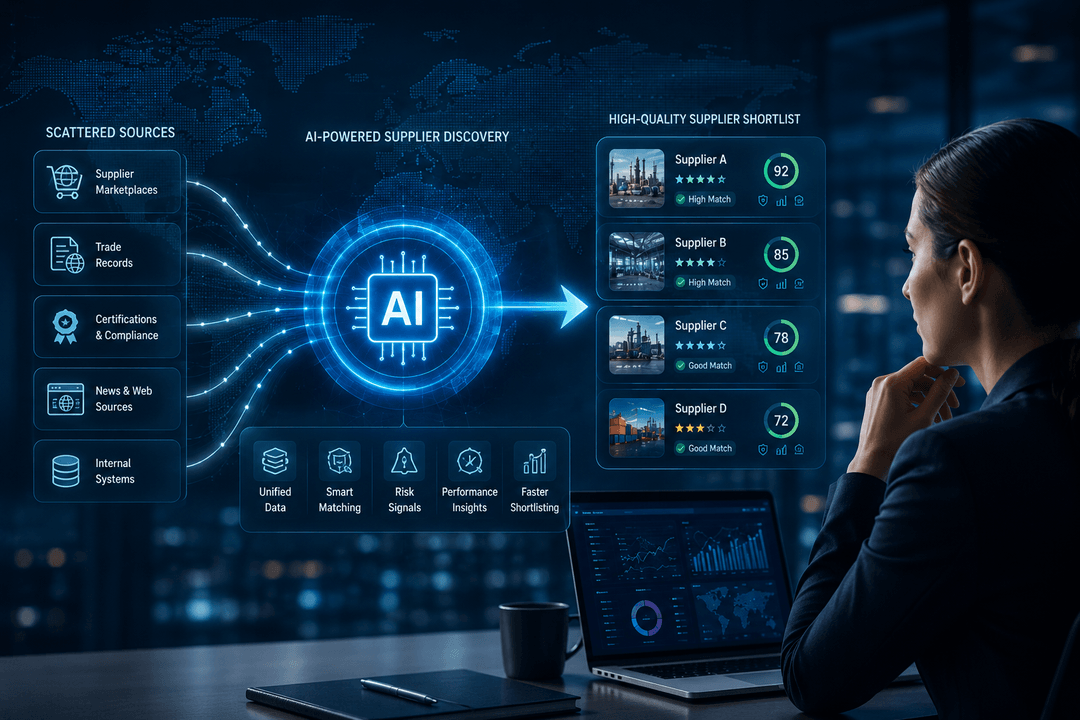
- Information fragmentation: Supplier data is scattered across marketplaces, trade records, certifications, and internal systems. AI consolidates these sources into a single, structured view, making it easier to compare suppliers objectively.
- Low signal-to-noise ratio: Traditional search methods return too many irrelevant results. AI improves relevance by understanding context—such as product specifications, industry requirements, and buyer preferences—and filtering accordingly.
- Inconsistent supplier data: Suppliers often describe themselves differently across platforms. AI can normalize and reconcile this data, identifying when multiple listings refer to the same company or when claims do not align with observed activity.
- Limited visibility into performance: Procurement teams often lack insight into how suppliers perform beyond initial interactions. AI can incorporate historical signals—such as export frequency or customer patterns—to provide a more complete picture.
- Manual workload in shortlisting: Evaluating dozens of suppliers is time-consuming. AI reduces this burden by ranking suppliers based on fit, allowing teams to focus on a smaller, higher-quality shortlist.
In practice, AI reduces both time-to-discovery and risk of poor supplier selection.
What changes for procurement teams when AI is adopted?
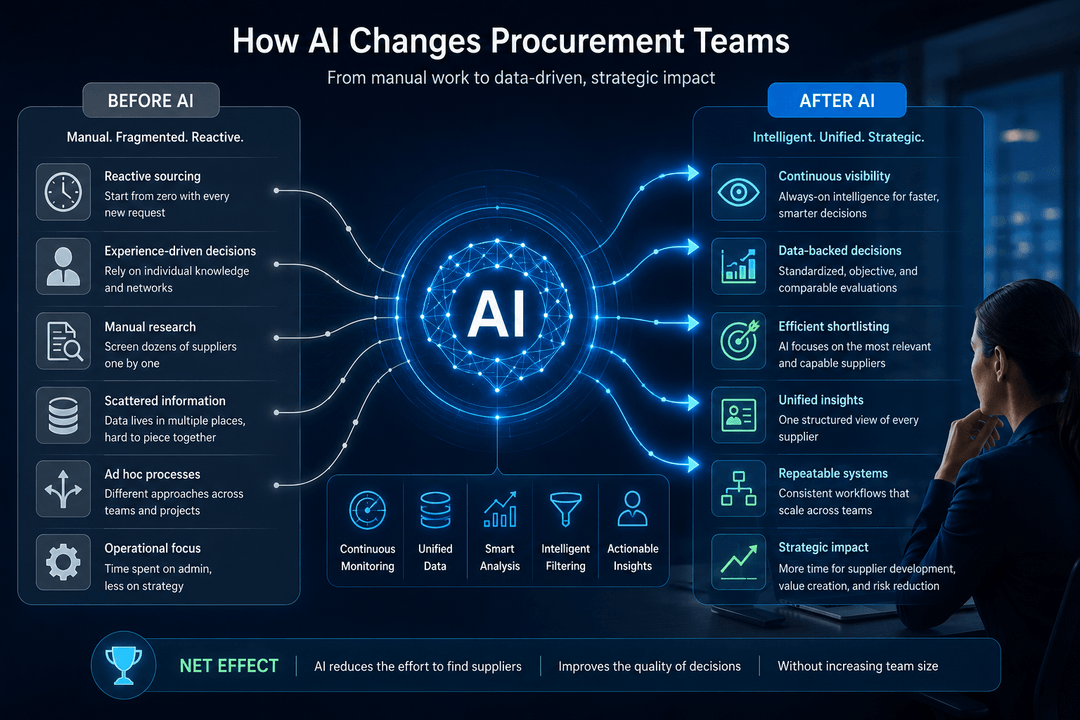
AI doesn’t just make sourcing faster—it reshapes how procurement teams operate. The biggest shift is from manual effort to structured, data-driven decision-making.
1. From reactive sourcing to continuous visibility
Always-on supplier intelligence: AI continuously monitors supplier activity—such as export patterns, production signals, and market demand—so procurement teams are no longer starting from zero with each new sourcing request.
Faster response to change: Whether it’s a new product launch or a supply disruption, teams can react quickly because relevant suppliers have already been identified and partially validated.
2. From experience-driven to data-backed decisions
Standardized decision-making: Instead of relying on individual experience or internal networks, teams use shared datasets to evaluate suppliers, which improves consistency across regions and categories.
More objective comparisons: Suppliers can be assessed using comparable metrics—like certifications, production history, and specialization—reducing bias and improving confidence in final selections.
3. From manual research to efficient shortlisting
Higher-quality pipelines: AI filters large volumes of suppliers into a focused shortlist based on relevance, capability, and historical signals, allowing teams to concentrate on the most viable options.
Reduced research burden: Procurement teams no longer need to manually screen dozens of suppliers, which frees up time for deeper evaluation, negotiation, and supplier alignment.
4. From scattered information to usable insights
Unified supplier view: Data from multiple sources—trade records, certifications, internal notes—is consolidated into one structured profile, eliminating the need for fragmented research.
Clearer differentiation: Standardized data makes it easier to identify which suppliers are truly specialized, reliable, or compliant, rather than relying on inconsistent descriptions.
5. From ad hoc processes to repeatable systems
Consistent workflows: Supplier discovery, filtering, and evaluation follow a defined process, reducing variability and improving sourcing efficiency across different teams and projects.
Scalable knowledge sharing: Because insights are embedded in systems rather than individuals, new team members can ramp up faster and contribute effectively without relying on years of experience.
6. From operational role to strategic function
More time for high-impact work: With less time spent on discovery and filtering, procurement can focus on supplier development, cost optimization, and long-term planning.
Stronger supply base: Better upfront selection leads to fewer but more reliable suppliers, which improves consistency, reduces risk, and supports long-term partnerships.
Net effect: AI reduces the effort required to find suppliers and increases the quality of decisions made about them—without increasing team size.
What does a modern AI sourcing platform look like in practice?
Not all AI tools are built the same. The real value comes from how well a platform turns fragmented supplier and market data into something procurement teams can actually use.
Platforms like SourceReady are designed specifically for supplier discovery, combining multiple high-signal data sources into a structured, searchable system.
- Aggregated supplier data: Instead of relying on listings, SourceReady pulls from customs records, trade shows, certification databases, and other sources to build a more complete and reliable supplier profile.
- AI-powered matching: The system analyzes your requirements and surfaces suppliers that are most likely to fit, significantly reducing manual research and guesswork.
- Product and market intelligence: Beyond supplier discovery, SourceReady enables teams to identify emerging product trends by scanning websites and marketplaces. This helps procurement teams spot new product opportunities earlier, validate demand signals, and avoid reacting too late to shifts that competitors are already capitalizing on.
- Competitor activity visibility: By tracking import/export patterns, teams can see where competitors are sourcing from and which suppliers they are working with, providing valuable strategic insight.
- Comparable supplier insights: Standardized data makes it easier to evaluate multiple suppliers side by side, improving consistency and decision quality.
Why this matters: instead of spending hours searching and cross-checking information, procurement teams can move directly to evaluating a smaller set of high-confidence suppliers while also gaining visibility into market trends and competitive dynamics.
In practice, platforms like SourceReady don’t replace procurement workflows—they make them faster, more informed, and more strategic.

What are the limitations of AI in supplier discovery?
AI is powerful, but it is not a replacement for procurement expertise. Understanding its limitations is key to using it effectively.
- Data quality still matters: AI is only as good as the data it processes. Incomplete or inaccurate data can lead to misleading results, which is why cross-verification remains important.
- Context requires human judgment: AI can identify patterns and rank suppliers, but it cannot fully understand nuanced requirements such as brand positioning or design intent.
- Supplier relationships are still human: Long-term success depends on trust, communication, and collaboration—areas where human interaction remains essential.
- Over-reliance can reduce diligence: Teams may be tempted to trust AI outputs without sufficient validation, which can introduce risk if not managed carefully.
The most effective approach is to use AI as a decision support system, not a decision-maker.
Conclusion
AI is not replacing procurement—it’s redefining where value is created. The advantage no longer comes from finding suppliers faster, but from identifying the right suppliers with greater confidence and consistency. Teams that adopt AI-driven discovery can reduce noise, improve decision quality, and build stronger, more resilient supply chains over time. Tools like SourceReady make this shift practical by turning fragmented supplier data into structured, actionable insights. If your team is still relying on manual search and marketplaces alone, now is the time to rethink your approach and start building a more scalable sourcing system.

Find the sourcing tools you need.
Explore how SourceReady helps you research products, discover suppliers, verify factory information, analyze trade data, and manage your sourcing workflow in one place
Explore Features
Graduating from USC with a background in business and marketing, Judy Chen has spent over a decade working in e-commerce, specializing in sourcing and supplier management. Her experience includes developing strategies to optimize supplier relationships and streamline procurement processes for growing businesses. As SourceReady’s blog writer, Judy leverages her deep understanding of sourcing challenges to create insightful content that helps readers navigate the complexities of global supply chains.