
Sourcing a custom product is more complex than buying an existing SKU. You are asking a manufacturer to turn an idea into something it can produce consistently, at the right cost and quality.
Most sourcing problems start before mass production. Vague specifications create inconsistent quotes. Weak sampling creates quality disputes. Poor supplier selection creates delays later.
The goal is simple: remove ambiguity before committing to production.
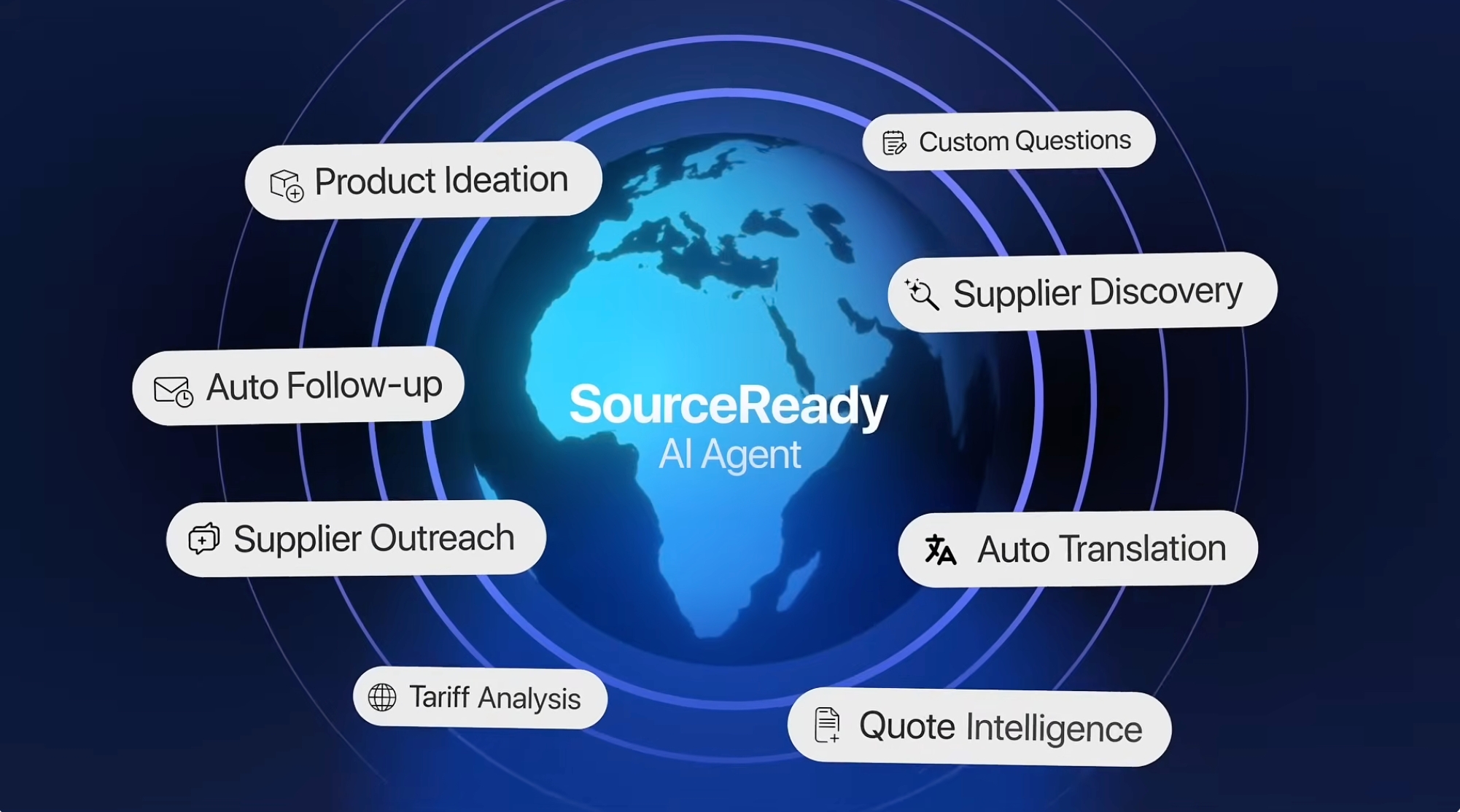
There's a better way to source ❤️
Watch the video to see how SourceReady helps brands move from product ideas to trusted supplier relationships faster
Watch the VideoWhat Should You Define Before Contacting Suppliers?
Before requesting quotes, define the product clearly enough that suppliers are pricing the same thing.
A reference photo and a short description are rarely enough for a custom product. One factory may quote a cheaper material, another may assume different packaging, and another may use a completely different construction method.
Your specification should match the complexity of the product. Apparel may require a tech pack. Engineered products may require CAD files, technical drawings, tolerances, and a bill of materials.
Focus on the details that materially affect production:
- Materials: Specify the material type, grade, thickness, composition, or performance requirement. Replace terms like “premium plastic” with something measurable.
- Dimensions and tolerances: Define important dimensions and acceptable variation. A 100 mm part with a ±0.5 mm tolerance is very different from one with ±3 mm.
- Construction: Explain how the product should be stitched, molded, welded, assembled, printed, or finished when the method matters.
- Performance: Define what the product must actually do, such as load capacity, waterproofing, heat resistance, durability, or colorfastness.
- Packaging: Confirm individual packaging, labels, inserts, carton quantities, shipping marks, and protective requirements.
The rule is simple: if a requirement matters to you, document it before production.
How Do You Choose the Right Manufacturer?
A supplier that makes similar-looking products is not automatically the right manufacturer.
What matters is whether the factory has experience with your materials, processes, quality level, and production volume. Ask suppliers how a similar product would move through production and which operations are handled internally versus subcontracted.
- Relevant experience: Look for products made using similar manufacturing processes, not just products that look similar.
- Production capability: Confirm that the factory has the equipment and capacity to handle your expected volume. Some suppliers are excellent at samples but struggle when production scales.
- Engineering support: A strong custom manufacturer should identify design features that may be expensive, difficult, or unreliable to manufacture.
- Quality control: Ask how raw materials, production steps, and finished goods are inspected, and whether the supplier follows documented QC procedures.
- Commercial fit: Compare MOQ, sample fees, tooling costs, lead times, payment terms, and available production capacity.
You should also verify the company before making major payments. Check its legal entity, factory location, certifications, export history, and manufacturing capabilities where possible.
This is where SourceReady can help speed up supplier discovery and initial due diligence. SourceReady combines AI with real-world supplier data from sources such as customs records, trade shows, industry directories, and other verified data sources. Its database covers more than 4 million suppliers across 200 countries, giving you a broader view of potential manufacturers beyond the suppliers that happen to rank highly on traditional marketplaces.
You can use this data to identify manufacturers that match your product requirements, review their sourcing and trade activity, and build a more qualified shortlist before starting outreach. SourceReady should complement—not replace—direct supplier qualification, sample testing, and factory audits for higher-risk projects.
How Should You Manage Prototypes and Samples?
Sampling is not just about making the product look right. It is where you test whether the design can actually be manufactured reliably.
Expect several revisions.
A material may perform differently than expected. A molded component may need a thicker wall. A zipper may fail testing. A finish may scratch too easily.
Each round should have a clear purpose.

Not every product requires every stage. The important part is controlling revisions.
Whenever something changes, update the actual specification rather than leaving the decision buried in emails or chat messages.
- Revision control: Give drawings and specifications clear version numbers so the supplier knows which version is approved.
- Sample feedback: Use measurable comments where possible. Instead of “make the handle stronger,” define the load it should withstand.
- Golden sample: Keep a final approved sample when practical and ask the supplier to retain an equivalent reference.
The final sample should represent something the supplier can reproduce using the intended mass-production process.
What Should You Lock Before Production?
Sample approval should be followed by a final production review.
Before paying a production deposit, confirm the exact product specification, pricing, quality standard, tooling arrangements, payment terms, and lead time.
This is also the point where compliance requirements should be finalized.
- Tooling ownership: If you pay for molds, dies, fixtures, or other custom tooling, document who owns them and whether they can be used for other customers.
- Final price: Confirm what is included in the unit price, including packaging, labels, finishes, testing, and any other agreed requirements.
- Lead time: Define exactly when the production timeline starts and what counts as completion.
- Quality standards: Create an inspection checklist based on measurable requirements such as dimensions, function, workmanship, packaging, and acceptable defect levels.
- Compliance: Identify the regulations that apply in your target market and verify that certificates or test reports actually cover the product you are buying.
Do not rely on statements such as “this product is compliant.” You need supporting documentation tied to the relevant product, material, or test standard.
How Do You Control Quality During Production?
Once production begins, the focus shifts from development to consistency.
A supplier making one perfect sample does not guarantee that 5,000 production units will match it.
For new suppliers or highly customized products, checking early production can catch problems before they spread across the full order.
- Early-production inspection: Check initial units when you are using new tooling, unfamiliar materials, tight tolerances, or a new factory.
- In-process inspection: For complex products, inspect critical manufacturing stages before defects become difficult to correct.
- Pre-shipment inspection: Inspect finished goods before releasing the final balance. Check quantity, dimensions, function, workmanship, branding, labeling, and packaging.
- Corrective action: When defects appear, document the cause and the supplier's proposed solution instead of simply repairing the affected units.
Keep the final sourcing file organized. It should include specifications, quotations, purchase orders, sample approvals, compliance documents, inspection reports, and major production changes.
That record makes future orders easier and gives you evidence if a quality dispute occurs.
The overall process is straightforward: define the product, verify the manufacturer, validate the sample, lock the production standard, and inspect against measurable requirements.
The more ambiguity you remove early, the fewer expensive surprises you will face once production starts.
Conclusion: How Do You Move From Prototype to Production With Less Risk?
Successful custom-product sourcing comes down to controlling uncertainty before it becomes expensive. Define your specifications clearly, choose a manufacturer based on capability rather than price alone, validate the product through structured sampling, and lock your quality and compliance requirements before mass production begins.
Once production starts, inspect against measurable standards and keep a clear record of every major approval and change.
If you are still searching for the right factory, SourceReady help you identify and evaluate manufacturers based on your product and sourcing requirements. Use it to build a stronger supplier shortlist before you begin outreach, sampling, and due diligence.
FAQ
1. What is the difference between a prototype and a pre-production sample?
A prototype is mainly used to test the product's design, dimensions, and function. A pre-production sample should reflect the actual materials, construction methods, finishes, and processes that will be used in mass production.
2. How do I verify a supplier before paying a deposit?
Check the supplier's legal registration, factory address, production capabilities, certifications, export history, and relevant trade data. For larger orders, consider a third-party factory audit before committing significant funds.

Find the sourcing tools you need.
Explore how SourceReady helps you research products, discover suppliers, verify factory information, analyze trade data, and manage your sourcing workflow in one place
Explore Features
Graduating from USC with a background in business and marketing, Judy Chen has spent over a decade working in e-commerce, specializing in sourcing and supplier management. Her experience includes developing strategies to optimize supplier relationships and streamline procurement processes for growing businesses. As SourceReady’s blog writer, Judy leverages her deep understanding of sourcing challenges to create insightful content that helps readers navigate the complexities of global supply chains.


