Finding European suppliers is not difficult because Europe lacks manufacturers. It is difficult because the supplier base is fragmented across countries, languages, industry associations, regional directories, and highly specialized production clusters.
A factory in Portugal may describe its capabilities differently from a comparable supplier in Poland. A German manufacturer may appear in a domestic B2B directory but have little presence on global marketplaces. Some platforms list manufacturers alongside wholesalers, agents, distributors, and service companies, which means you still need to confirm who actually makes the product.
The best sourcing platform depends on what you need to buy, where you want it made, and how much supplier verification you can perform internally. This guide compares the leading platforms for finding European manufacturers and explains how to turn directory results into an audit-ready shortlist.
What Makes a Sourcing Platform Europe-Friendly?
A platform is not Europe-friendly simply because buyers in Europe can access it. It should give you practical access to suppliers located across European manufacturing markets.
That includes major industrial economies such as Germany, Italy, France, Spain, and the United Kingdom, as well as increasingly important sourcing locations such as Portugal, Poland, Romania, Bulgaria, Czechia, Lithuania, and Turkey.
Evaluate each platform against five criteria:
- European supplier coverage: Can you search across several European countries, or does the platform mainly serve one regional market?
- Manufacturer identification: Can you distinguish factories from distributors, wholesalers, agents, and service providers?
- Product-level detail: Does the profile explain materials, processes, machinery, production capacity, certifications, or customization options?
- Buyer workflow: Can you send requests, compare responses, organize suppliers, and manage follow-ups?
- Verification evidence: Does the platform provide trade activity, company information, certifications, or other evidence beyond a self-written profile?
You should also consider language support. Europe contains excellent manufacturers that do not maintain polished English websites. A platform that searches local-language information or supports multilingual communication may reveal suppliers you would not find through a standard English Google search.
Do not confuse platform verification with full due diligence. A “verified” badge may only mean that the company exists or controls the listed contact information. It does not prove that the supplier owns a factory, meets your technical requirements, or complies with the regulations governing your product.
Top Platforms for Finding European Suppliers (Strengths and Limitations)
The following five platforms cover a wide range of sourcing needs, from broad discovery to specialized industrial searches. Each has distinct strengths and limitations, so combining them often produces the best results.
1. SourceReady
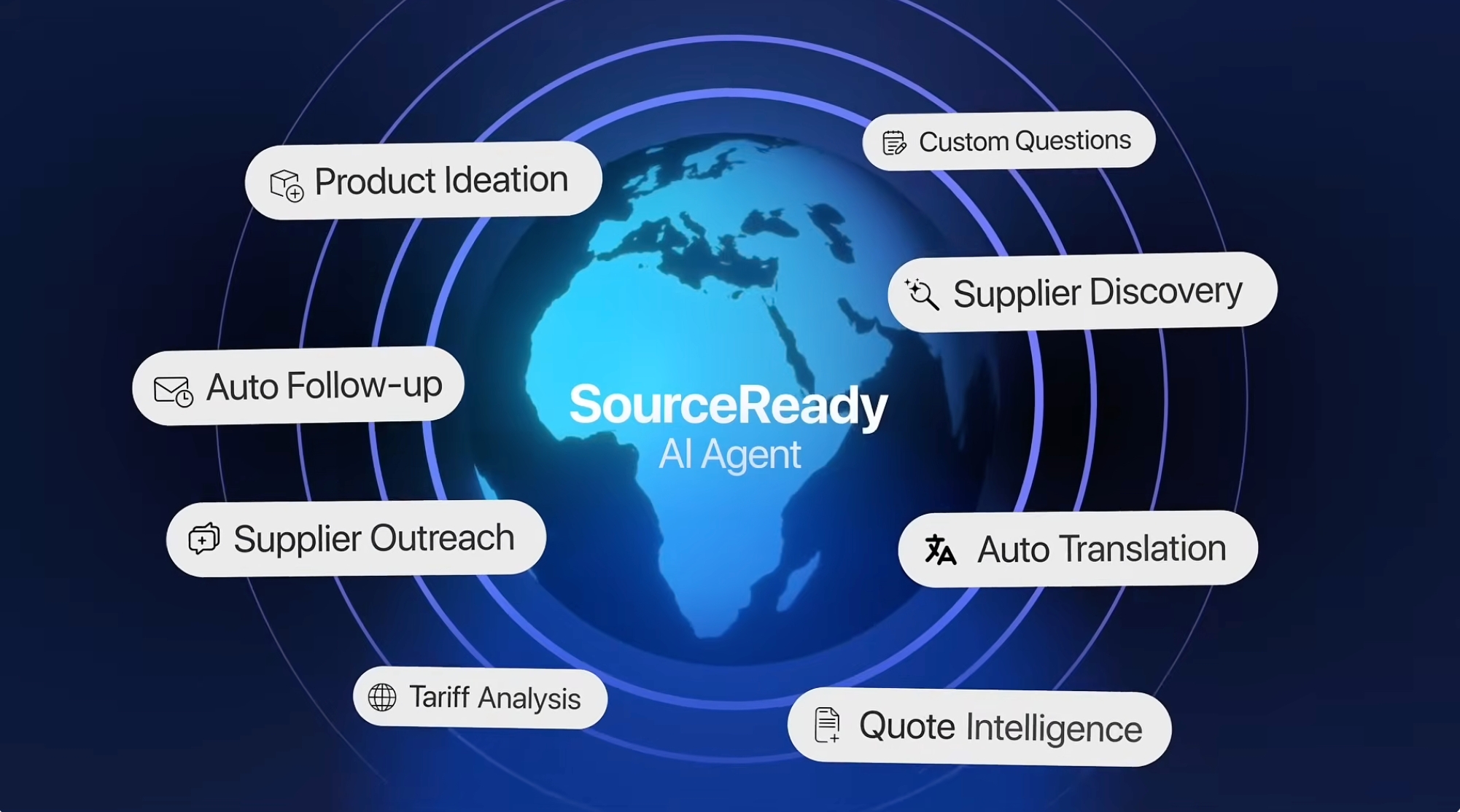
SourceReady is designed as a modern sourcing platform that combines AI with aggregated supplier data rather than relying only on static directory listings. It pulls information from multiple sources—including customs and trade data, company websites, B2B directories, trade shows, and other public and proprietary datasets—to help buyers identify manufacturers more efficiently.
According to SourceReady, its supplier discovery system covers approximately 4 million suppliers across 200+ countries, allowing buyers to compare European suppliers alongside alternatives in other regions using consistent data inputs.
One of its key strengths is its AI-assisted search. Instead of relying on simple keywords, you can describe requirements in natural language—such as product specifications, materials, certifications, or production capabilities—and the platform surfaces relevant suppliers based on combined data signals.
Beyond discovery, SourceReady supports the full sourcing workflow. You can research suppliers, organize shortlists, send outreach messages, collect quotations, and manage follow-ups in one place.
Best for:
- Discovering European suppliers alongside global alternatives using consistent data
- Narrowing down fragmented supplier markets with AI-assisted search
- Building structured shortlists from broad or complex requirements
- Managing supplier outreach, RFQs, and communication in one system
- Identifying suppliers with visible export activity or international exposure
Watch for: AI and aggregated data improve discovery but do not replace due diligence. You still need to verify factory capabilities, compliance, and commercial terms through documentation, samples, and audits.
2. Europages
Europages is one of the broadest European B2B marketplaces, covering millions of providers across a wide range of industries. It allows buyers to search products, contact companies, and request quotations.
Its main advantage is breadth. You can search across consumer goods, food, packaging, textiles, machinery, construction, chemicals, logistics, and professional services.
Best for:
- Building an initial pan-European supplier list
- Searching by country and product category
- Finding SMEs that may not use global sourcing marketplaces
- Sending quote requests to several suppliers
Watch for: Search results can mix manufacturers with wholesalers, distributors, and service companies. Confirm the supplier’s role before treating it as a factory candidate.
3. Kompass
Kompass is a global B2B company database with particularly strong European coverage. Its structured classification system helps narrow down suppliers by industry, product type, and business activity.
This makes it especially useful when broad keyword searches return too many irrelevant results.
Best for:
- Industrial market mapping
- Identifying companies within narrow product classifications
- Creating longlists by country or region
- Finding company and decision-maker information
Watch for: Kompass also functions as a sales-prospecting database. Not every listed company is actively accepting private-label or contract-manufacturing projects.
4. wlw (Wer liefert was)
wlw focuses heavily on Germany, Austria, and Switzerland and is particularly strong in industrial and technical sourcing. It is widely used for machinery, components, and custom manufacturing services.
Best for:
- German-speaking suppliers
- Technical and industrial sourcing
- Custom components and manufacturing services
- Direct supplier messaging and RFQs
Watch for: Its regional focus means it is less useful outside German-speaking Europe. Using German search terms can significantly improve results.
5. IndustryStock
IndustryStock operates more like an industrial search engine than a general marketplace. It is strong in categories such as metals, plastics, machinery, electrical systems, and engineered components.
Best for:
- Machinery and capital equipment
- Materials and industrial inputs
- Technical components
- Specialized European manufacturers
Watch for: Its structure is better suited to procurement engineers than consumer-product buyers. It is less effective for lifestyle or retail-oriented sourcing.
How Should You Verify Suppliers Found Through These Platforms?
Treat every platform result as a lead, not an approval.
Before sending a serious RFQ, confirm:
- Legal identity: Obtain the registered company name, registration number, VAT number, ownership information, and operating address.
- Supplier role: Determine whether the company is a manufacturer, distributor, agent, design studio, or trading business.
- Factory location: Request the address where production, assembly, finishing, testing, and packing will occur.
- Technical capability: Review machinery, production processes, engineering resources, capacity, quality controls, and comparable products.
- Compliance evidence: Check certificates, test reports, technical files, materials declarations, and market-specific regulatory experience.
- Financial and operational stability: Review company filings, credit information, customer concentration, delivery performance, and business continuity plans.
- Commercial terms: Compare MOQ, pricing, tooling ownership, payment terms, lead times, warranty obligations, and intellectual-property provisions.
- Physical evidence: Approve samples, conduct an audit where risk justifies it, and arrange independent testing before production.
For products sold in the European Union, identify regulatory requirements before selecting a supplier. These may include CE marking rules, the General Product Safety Regulation, REACH, RoHS, food-contact requirements, battery rules, packaging obligations, or category-specific standards.
Conclusion
Europe offers one of the world's most diverse manufacturing ecosystems, but finding the right supplier requires more than searching a single directory. The best results come from combining multiple sourcing platforms with a consistent verification process to confirm manufacturing capabilities, compliance, and commercial suitability. By taking a structured, evidence-based approach, you can build a reliable supplier shortlist while reducing sourcing risk and avoiding costly surprises.
Platforms like SourceReady can further simplify the process by bringing together supplier discovery, AI-powered search, verification data, and RFQ management in one place. Leveraging the right sourcing tools allows you to spend less time searching and more time building strong, long-term supplier relationships.
FAQ
1. Which European countries are best for manufacturing?
The answer depends on the product category. Common sourcing markets include:
Germany: Machinery, automotive parts, chemicals, and industrial equipment
Italy: Fashion, furniture, leather goods, machinery, and food equipment
Portugal: Apparel, footwear, textiles, ceramics, and furniture
Poland: Furniture, packaging, automotive parts, appliances, and metal products
Czechia: Engineering, automotive components, and industrial manufacturing
Romania and Bulgaria: Apparel, footwear, furniture, and contract manufacturing
Turkey: Textiles, apparel, home goods, machinery, and packaging
2. How do I know whether a supplier is a manufacturer or distributor?
Ask for the factory address, production equipment list, employee count, capacity, quality-control process, and photos or videos of the production line. You should also confirm whether manufacturing is completed internally or subcontracted to another company.