Procurement is getting harder, not easier. Supplier fragmentation is increasing, lead times are volatile, compliance requirements are creeping downstream, and small teams are expected to operate with enterprise-level discipline. At the same time, the cost of a single bad supplier decision—missed delivery, compliance failure, quality issues—can wipe out months of margin.
That’s why AI procurement tools are moving fast from “nice to have” to “table stakes.” But for small and mid-sized brands, the challenge isn’t whether to use AI—it’s what’s actually worth paying for.
Most AI procurement software is built for Fortune 500 complexity, not SMB reality. Overbuilt features, long implementations, and pricing models that assume dedicated procurement teams.
This guide cuts through that noise. You’ll learn:
- Why AI procurement tools matter specifically for SMBs
- Which tool categories actually deliver ROI
- The top 5 AI procurement tools worth considering today
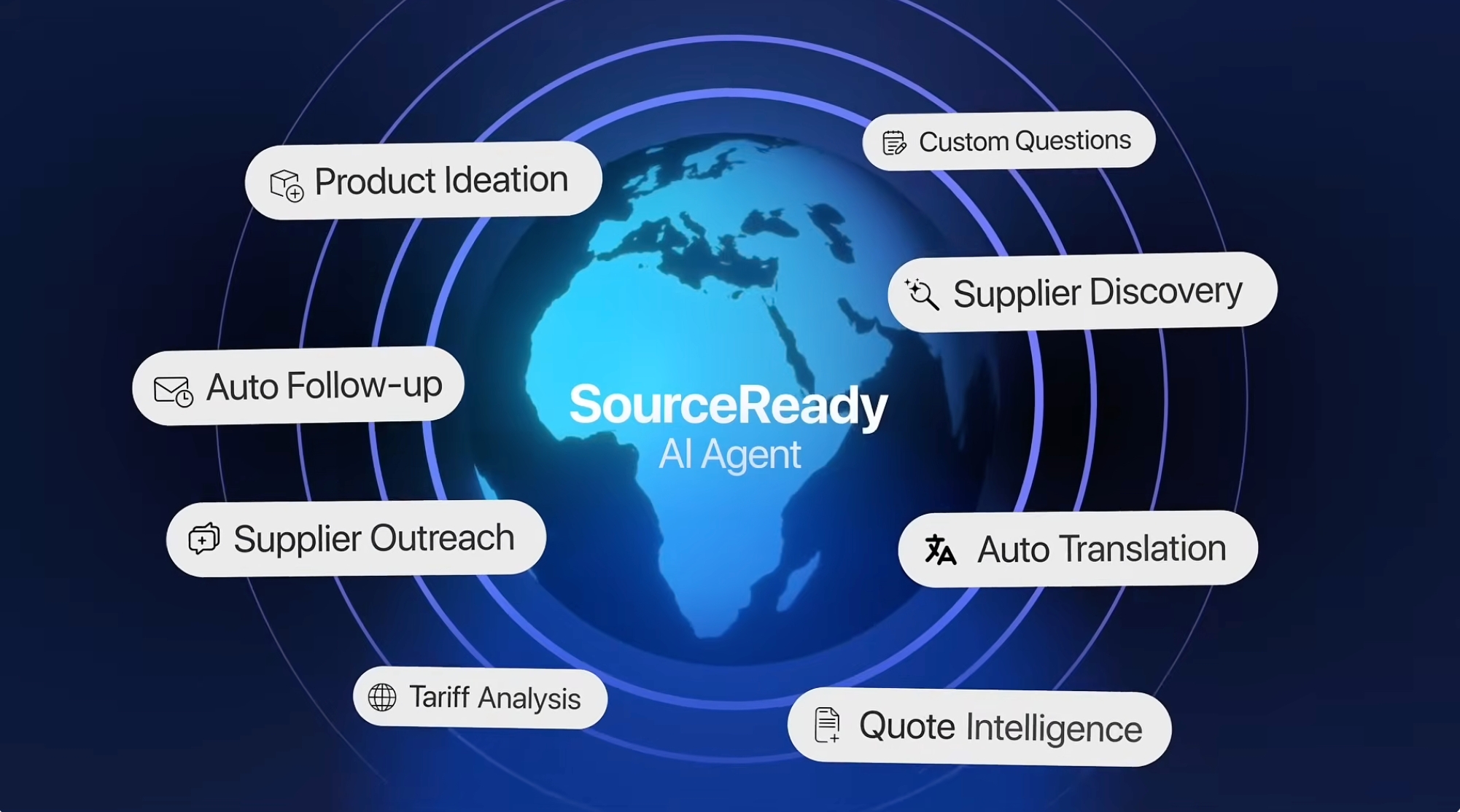
There's a better way to source ❤️
Watch the video to see how SourceReady helps brands move from product ideas to trusted supplier relationships faster
Watch the VideoWhy AI Procurement Tools Matter for SMBs
SMBs don’t fail at procurement because they lack strategy. They fail because procurement is under-resourced, under-documented, and reactive.
AI tools matter for SMBs for three very specific reasons.
1. You don’t have procurement headcount to spare
Most SMBs run procurement with:
- One sourcing manager
- Ops or finance wearing a second hat
- Founders still approving suppliers themselves
AI doesn’t replace judgment. It replaces manual effort:
- Filling RFQs
- Comparing supplier data
- Chasing documents
- Summarising contracts
- Repeating the same due-diligence steps
For SMBs, AI is leverage—not automation theatre.
2. Your biggest risk is supplier selection, not negotiation
Large enterprises squeeze pennies on price. SMBs bleed money on bad suppliers.
Common failure points:
- Supplier looked legit but wasn’t
- Capacity overstated
- Certifications expired
- Factory outsourced without disclosure
- No paper trail to explain “why we chose them”
AI procurement tools that help with supplier discovery, verification, and comparison deliver outsized value for SMBs because they reduce decision risk, not just cycle time.
3. Audit readiness is no longer optional
You may not think you’re “regulated.” But your customers are.
Retailers, marketplaces, distributors, and enterprise buyers increasingly require:
- Supplier transparency
- ESG disclosures
- Traceable sourcing decisions
- Documented approval workflows
AI tools that automatically generate audit trails (who approved what, based on which data) protect SMBs from painful retroactive scrambling.
If a tool can’t explain its outputs, it’s a liability—not an asset.

Top 5 AI Procurement Tools Worth Paying For
This list is not about who has the most features. It’s about where SMBs actually get ROI.
1. SourceReady — Best for Supplier Discovery & Due Diligence
Best for: Brands sourcing globally who need to find, verify, and justify suppliers fast.
What it does well:
SourceReady functions as an AI supplier search engine, not a generic directory. It helps you:
- Discover suppliers across countries and categories
- Review structured supplier profiles (certifications, capabilities, trade data)
- Compare suppliers using consistent criteria
- Build a clear “why this supplier” rationale
Why it’s worth paying for: Supplier discovery is where SMBs make their most expensive mistakes. SourceReady reduces that risk by turning fragmented supplier data into decision-ready profiles that are easy to defend internally and externally.
This makes it especially valuable for:
- New product launches
- Switching countries or suppliers
- Scaling SKU count
- Responding to customer due-diligence requests
2. Zip — Best for Procurement Intake & Control
Best for: SMBs struggling with uncontrolled spend and messy approvals.
What it does well:
Zip focuses on procurement orchestration:
- Centralized intake for all purchasing requests
- Automated approval routing
- Policy enforcement
- Visibility into who approved what and why
AI helps guide users through compliant buying paths instead of forcing them to learn procurement rules.
Why it’s worth paying for: For SMBs, spend leakage often comes from process gaps, not bad intent. Zip closes those gaps early—before money is committed.
3. Keelvar — Best for Repeatable Sourcing Events
Best for: Teams running frequent RFQs for standardized categories (freight, packaging, components).
What it does well:
Keelvar applies AI to:
- Automate RFQ creation
- Normalize supplier bids
- Compare scenarios beyond price (lead time, risk, capacity)
- It shines when specs are stable and decisions are repeatable.
Why it’s worth paying for: If you run the same sourcing event multiple times a year, automation pays for itself quickly.
Not ideal if: Your requirements change every time or specs aren’t standardized.
4. Icertis — Best for Contract Intelligence
Best for: SMBs with growing contract volume and renewal exposure.
What it does well:
Icertis applies AI to:
- Extract key contract terms
- Flag non-standard clauses
- Track obligations and renewals
- Summarize contracts for non-legal users
Why it’s worth paying for: Missed renewals and hidden clauses quietly drain margins. Contract AI turns contracts into operational assets instead of PDF graveyards.
Reality check: This is usually a stage-2 or stage-3 purchase for SMBs, not a starting point.
5. EcoVadis — Best for ESG & Supplier Risk Requirements
Best for: Brands selling into retailers or enterprise buyers with ESG mandates.
What it does well:
EcoVadis standardizes:
- Supplier ESG assessments
- Risk scoring
- Documentation sharing
It gives SMBs a recognizable compliance language when customers ask tough questions.
Why it’s worth paying for: If ESG reporting is required to win or keep customers, this becomes a revenue enabler—not a cost center.
Skip if: No customer is asking for ESG proof yet.
Conclusion
AI procurement tools aren’t about being “advanced.” They’re about being disciplined at scale.
For small and mid-sized brands, the smartest investments focus on:
- Supplier discovery and verification
- Spend control and approval discipline
- Clear, explainable decision records
You don’t need a monolithic procurement suite. You need targeted leverage where mistakes are expensive and time is scarce.
Start where your risk is highest. For most SMBs, that’s supplier selection—making sure the supplier you choose is real, capable, and defensible. That’s why tools like SourceReady fit naturally into a modern procurement stack: they reduce uncertainty at the exact moment decisions are made.
Buy less. Buy smarter. Demand explainability.
And never pay for AI that creates more questions than answers.
FAQ
1. Do AI procurement tools replace procurement managers?
No. They augment decision-making by removing repetitive tasks and surfacing relevant data. Human judgment is still essential—especially for supplier relationships, risk trade-offs, and negotiations.
2. What should SMBs avoid when buying AI procurement software?
Avoid tools that:
Require long, custom implementations
Depend on perfect historical data you don’t have
Produce recommendations without explanations
Assume dedicated procurement teams
If a tool can’t be explained in a finance or audit review, it’s a risk.

Find the sourcing tools you need.
Explore how SourceReady helps you research products, discover suppliers, verify factory information, analyze trade data, and manage your sourcing workflow in one place
Explore Features
Graduating from USC with a background in business and marketing, Judy Chen has spent over a decade working in e-commerce, specializing in sourcing and supplier management. Her experience includes developing strategies to optimize supplier relationships and streamline procurement processes for growing businesses. As SourceReady’s blog writer, Judy leverages her deep understanding of sourcing challenges to create insightful content that helps readers navigate the complexities of global supply chains.