Most supplier decisions fail not because of a lack of options, but because of misinterpreted data. Supplier and B2B databases can give you visibility into who exists, who is active, and who is legitimate—but each dataset only answers part of the picture. This guide breaks down the top platforms across discovery, trade data, and verification, and shows where users often go wrong. If you rely on rankings, surface-level profiles, or single data points, you’re exposed. If you combine and interpret signals correctly, you gain a clear sourcing advantage.
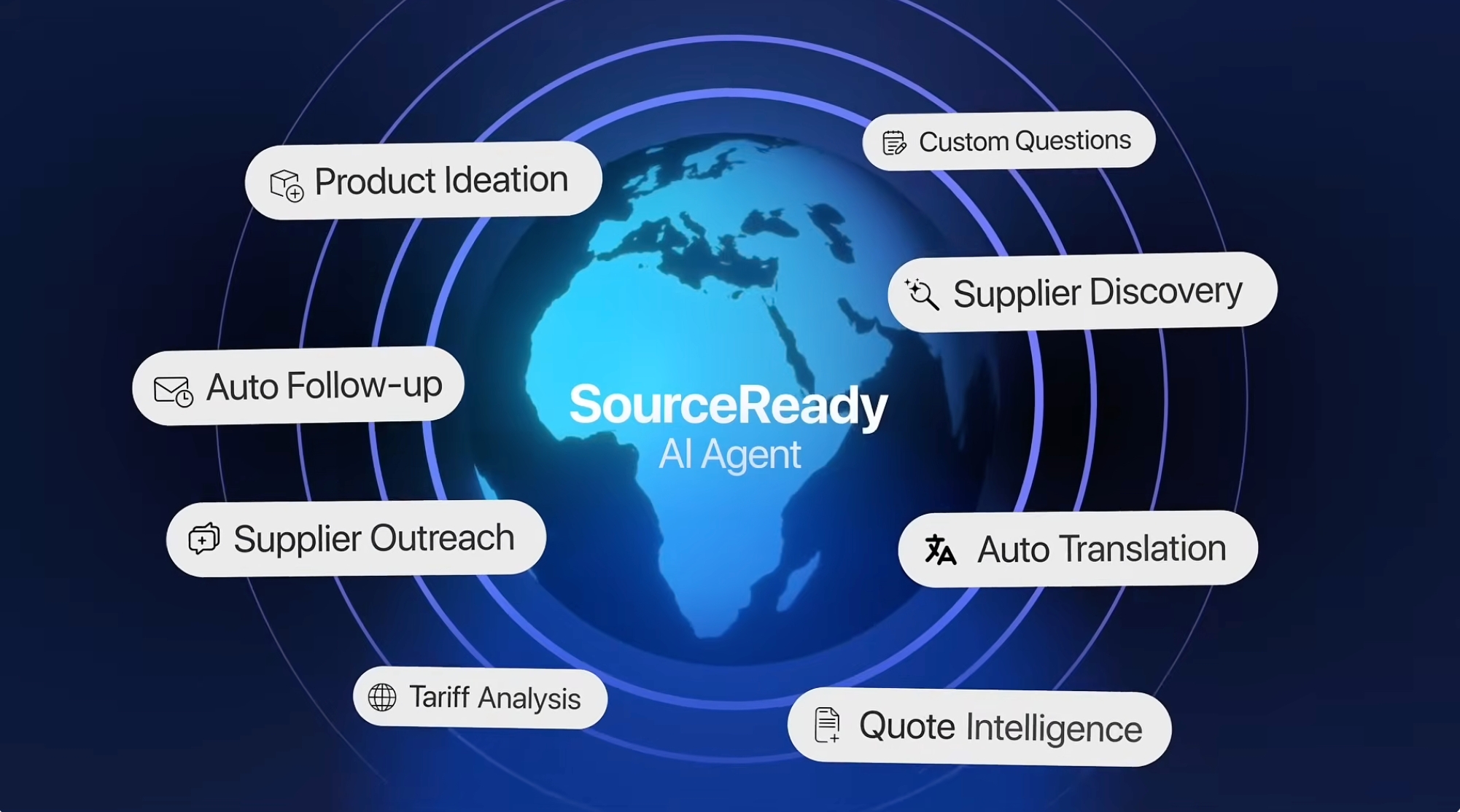
There's a better way to source ❤️
Watch the video to see how SourceReady helps brands move from product ideas to trusted supplier relationships faster
Watch the VideoWhat exactly are supplier and B2B data provider databases—and what problem do they solve?
At a glance, these databases may look like simple directories, but in practice, they function as decision infrastructure that supports sourcing, procurement, and due diligence workflows.
When you evaluate suppliers or B2B partners, you are ultimately trying to answer three core questions:
- Discovery: Who exists in the market, and which suppliers are relevant to your product category and sourcing needs?
- Activity: Which of these suppliers are actively operating at scale, as evidenced by real shipment or transaction data?
- Trust: Which suppliers can be relied on based on verified company, financial, and compliance information?
Most teams only answer the first question, which is where sourcing risk begins to accumulate.
Supplier and B2B data provider databases aggregate structured information from multiple underlying sources, including:
- Customs data: Shipment records provide visibility into real import and export activity across countries and industries.
- Company registries: Official filings establish legal existence, ownership, and corporate structure.
- Certifications: Compliance databases help validate quality standards and regulatory adherence.
- Trade shows: Industry directories contribute discovery-oriented supplier data and market presence signals.
- Digital footprint: Websites and activity signals provide additional context, although they should be treated as secondary validation.
The real value is not just access to data, but the ability to cross-verify multiple signals before making decisions.
Why this matters in sourcing
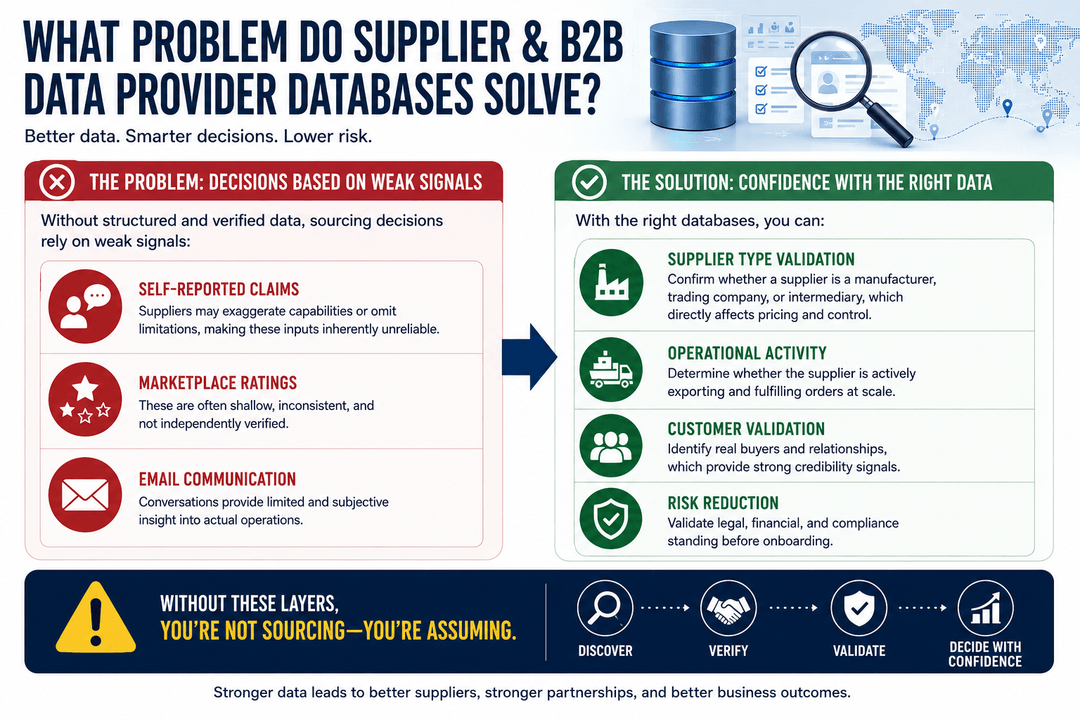
Without structured and verified data, sourcing decisions tend to rely on weak signals such as:
- Self-reported claims: Suppliers may exaggerate capabilities or omit limitations, making these inputs inherently unreliable.
- Marketplace ratings: These are often shallow, inconsistent, and not independently verified.
- Email communication: Conversations provide limited and subjective insight into actual operations.
With the right databases, you can:
- Supplier type validation: Confirm whether a supplier is a manufacturer, trading company, or intermediary, which directly affects pricing and control.
- Operational activity: Determine whether the supplier is actively exporting and fulfilling orders at scale.
- Customer validation: Identify real buyers and relationships, which provide strong credibility signals.
- Risk reduction: Validate legal, financial, and compliance standing before onboarding.
If you are making supplier decisions without these layers, you are not operating a sourcing process—you are making assumptions.
Which platforms actually cover discovery, trade data, and verification in one place?
Most databases specialize in a single layer of the sourcing process, which forces teams to combine multiple tools to achieve full visibility.
If your goal is to build an audit-ready sourcing approach, you should focus on a small, complementary set of platforms that collectively cover:
- Discovery layer: Platforms that help you identify potential suppliers in a given category.
- Trade layer: Tools that confirm whether those suppliers are actively shipping and operating.
- Verification layer: Systems that ensure the supplier is legitimate, financially stable, and compliant.
Below are five platforms that provide meaningful coverage across these layers.
1. SourceReady — Best for consolidated supplier intelligence
What it does
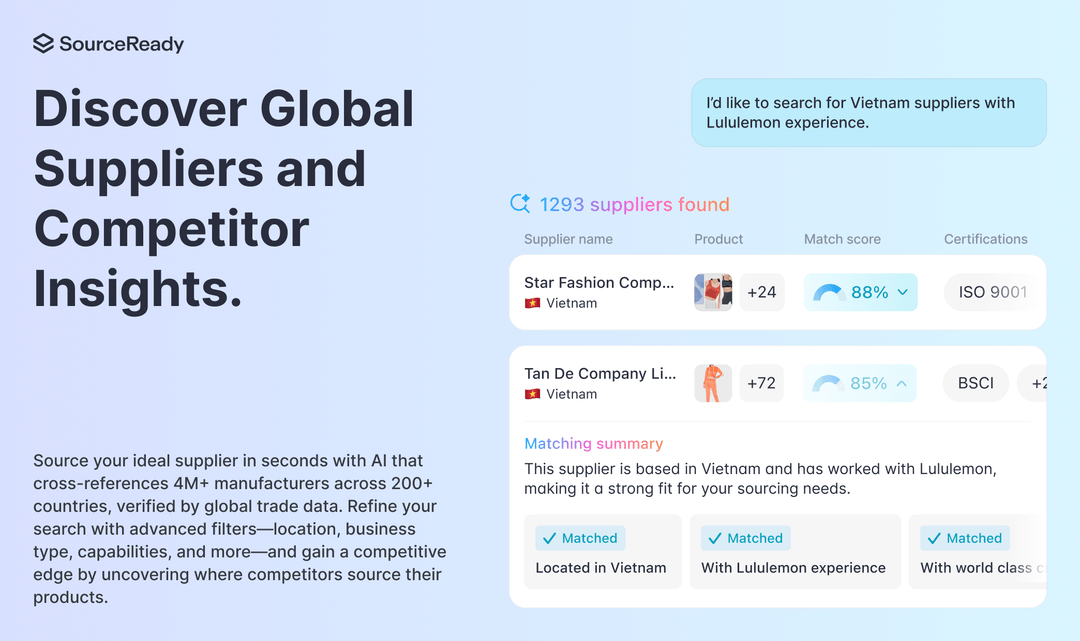
- AI-powered sourcing: It is an AI-powered sourcing intelligence system that supports an end-to-end workflow from product opportunity identification to supplier discovery and supplier outreach.
- Global coverage: It covers over 4 million suppliers across more than 200 countries, providing broad international visibility beyond a single region.
- Data aggregation: It combines supplier discovery, trade signals, and verification layers into a unified system, reducing the need to switch between multiple tools.
- Standardization: It structures supplier data into comparable profiles, which improves consistency in evaluation.
Why it matters
- Workflow integration: It connects multiple stages of sourcing into a single flow, reducing fragmentation and improving efficiency.
- Decision support: It enables faster movement from search to validated shortlist with structured data.
- Scalability: It supports repeatable sourcing processes across categories and geographies.
What to watch
- Operational validation: You still need to validate suppliers through samples, negotiations, and direct communication.
2. Panjiva — Best for clean, decision-grade trade data
What it does
- Shipment visibility: It provides bill of lading data that reflects real import and export activity.
- Relationship mapping: It identifies buyer–supplier connections across markets.
- Analytical filtering: It enables filtering by volume, frequency, and geography.
Why you use it
- Customer validation: It shows which suppliers are trusted by established buyers.
- Scale assessment: It helps evaluate whether suppliers operate consistently at scale.
Limitations
- No discovery layer: It cannot be used to build an initial supplier list.
- Limited verification: It does not provide deep compliance or financial checks.
3. ImportGenius — Best for fast validation
What it does
- Quick access: It offers fast lookup of shipment-level data.
- Simple search: It allows rapid identification of supplier and buyer activity.
Where it is useful
- Activity check: It helps determine whether a supplier is actively exporting.
- Recency validation: It provides insight into recent shipment behavior.
Limitations
- Data structure: It is less structured than more advanced platforms like Panjiva.
- No verification: It lacks compliance and risk assessment features.
4. Dun & Bradstreet (D&B) — Best for verification and compliance
What it does
- Entity identification: It provides verified company identities through D-U-N-S® numbers.
- Financial insight: It offers credit scores and financial indicators.
- Ownership mapping: It reveals corporate hierarchies and relationships.
Why it matters
- Legal validation: It confirms that a supplier is a legitimate registered entity.
- Risk assessment: It provides financial and operational risk indicators.
- Transparency: It uncovers ownership structures that may not be immediately visible.
Limitations
- No sourcing capability: It does not support supplier discovery.
- No trade data: It lacks shipment visibility.
5. Alibaba — Best for broad supplier discovery
What it does
- Large database: It provides access to a massive supplier network, with particularly strong coverage in China and surrounding manufacturing regions.
- Product search: It allows quick filtering by product category and supplier type.
Why teams use it
- Speed: It enables rapid creation of an initial supplier pool, especially for China-based sourcing.
Where it falls short
- Geographic concentration: It is highly focused on China, which may limit global diversification strategies.
- Supplier mix: Many listings include trading companies rather than direct manufacturers, which can impact pricing and control.
- Paid placement bias: Suppliers can pay for better visibility and rankings, which may distort search results and prioritization.
- No trade visibility: It does not provide shipment or real activity data.
What should you actually look for when evaluating these platforms?
Not all data is equally valuable, and sourcing outcomes depend heavily on data quality.
1. Data origin: Where does the information come from?
- Primary sources: Strong platforms rely on customs records and official filings, which are difficult to manipulate and therefore more reliable.
- Verified certifications: Independent certification databases provide additional validation of supplier claims.
- Structured datasets: Well-maintained and standardized data improves consistency and usability.
- Self-reported data: Platforms relying heavily on supplier-submitted information tend to produce less reliable outputs.
- Unverified listings: These introduce noise and increase the risk of incorrect decisions.
2. Entity resolution: Are companies matched correctly?
- Name normalization: Strong systems standardize company names across datasets to reduce duplication and confusion.
- Duplicate merging: They combine multiple entries into a single unified entity view.
- Relationship mapping: They link subsidiaries and parent companies to provide a complete picture.
- Inconsistent naming: Without normalization, small variations can hide critical connections.
- Fragmented data: Poor matching leads to incomplete and misleading analysis.
3. Data freshness: How recent is the information?
- Recent shipments: Data should reflect activity within the last 3–6 months to ensure relevance.
- Company status: Active versus dissolved status must be up to date.
- Certification validity: Expired certifications should not be treated as valid.
- Outdated records: These can lead to engaging inactive suppliers.
- Incorrect assumptions: Old data can distort capacity and reliability assessments.
4. Coverage depth vs. breadth
- Broad coverage: Large datasets help identify a wide range of potential suppliers across regions.
- Deep data: Detailed supplier profiles support confident decision-making.
- Shallow datasets: Wide but low-detail platforms are insufficient for final decisions.
- Narrow datasets: Deep but limited platforms may restrict discovery opportunities.
What are the common mistakes teams make when using these databases?
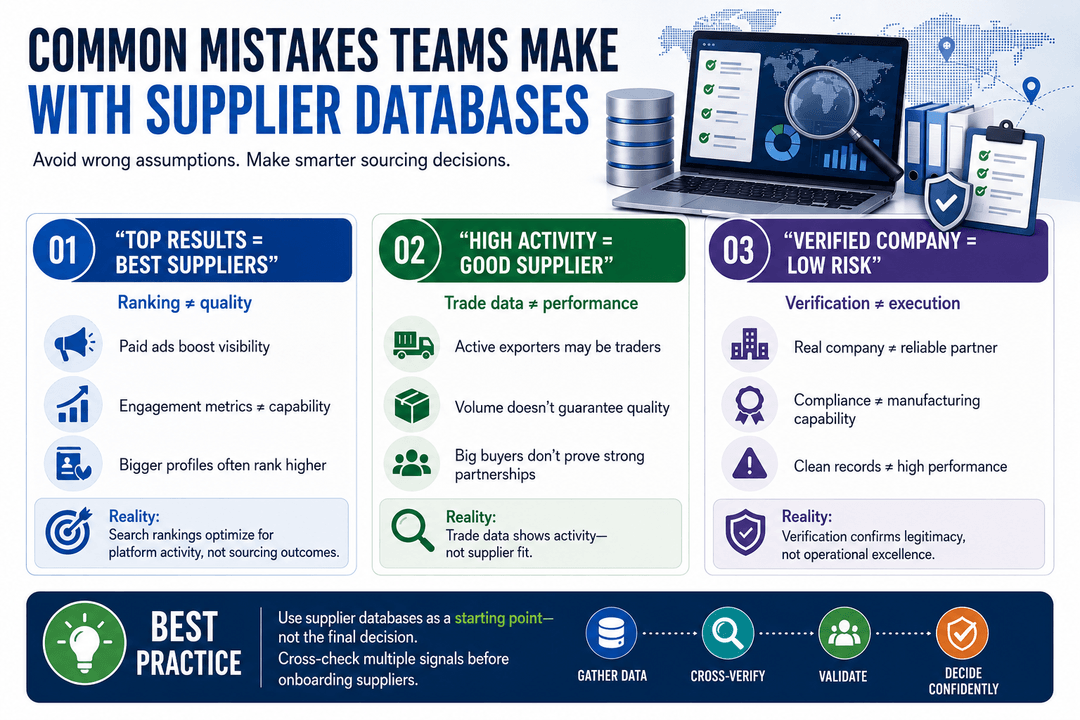
The biggest issues are not with the databases themselves, but with the assumptions users make when interpreting the data. These assumptions are subtle, and they often lead to confident but wrong decisions.
Here are three that show up consistently in real sourcing workflows.
1. “The top results are the best options”: Mistaking ranking for quality
Users often assume that suppliers appearing at the top of search results are the most relevant or highest quality. In reality, ranking is rarely neutral.
- Paid placement bias: On platforms like Alibaba, suppliers can pay for higher visibility, which means ranking reflects marketing spend—not capability.
- Engagement bias: Some platforms prioritize suppliers with higher response rates or activity, which does not necessarily correlate with production quality or reliability.
- Data density bias: Suppliers with more complete profiles or more data points may rank higher, even if their operational capability is average.
The underlying issue is simple:Search ranking is optimized for platform behavior—not sourcing outcomes.
2. “If there’s activity, they must be a good supplier”: Overestimating what trade data proves
Trade data is powerful, but many users overextend what it actually tells them.
- Activity ≠ capability: A supplier showing frequent shipments may still be a trading company rather than a manufacturer, which affects control, pricing, and quality consistency.
- Volume ≠ quality: High shipment volume does not guarantee product quality, process reliability, or communication standards.
- Customer signal misread: Seeing recognizable buyers in shipment data is helpful, but it does not automatically mean long-term or high-value relationships.
Trade data answers one key question:“Are they active?”—not “Are they the right partner for you?”
3. “If the company is verified, the risk is low”: Assuming verification equals performance
Verification tools like Dun & Bradstreet provide strong signals, but they are often misunderstood.
- Existence ≠ reliability: A company can be legally registered and financially stable while still being a poor operational partner.
- Compliance ≠ capability: Passing compliance checks does not confirm production quality, lead time consistency, or technical expertise.
- Clean record ≠ low risk: A lack of negative signals (e.g., no litigation or sanctions) does not mean the supplier is high-performing.
Verification answers:“Is this company real and compliant?”—not “Will they execute well?”
Conclusion
Supplier and B2B databases are powerful—but only if you interpret them correctly. The real advantage doesn’t come from access to data; it comes from how you connect discovery, trade signals, and verification into one clear decision. Most teams stop at visibility. Strong teams go further—they validate, cross-check, and challenge assumptions before committing.
If you want to reduce risk and move faster, you need a system—not just tools.
Use the data. Verify it. Then decide with confidence.
FAQ
1. What makes a sourcing process “audit-ready”?
An audit-ready sourcing process is structured, consistent, and defensible. It involves cross-checking suppliers across multiple data sources, documenting why decisions were made, and applying the same evaluation criteria to all suppliers. The goal is to ensure that decisions can be explained and justified at any point.
2. What role does AI play in supplier databases today?
AI is increasingly used to aggregate and structure large volumes of supplier data, improve entity matching across inconsistent datasets, and provide better search and recommendation capabilities. It helps surface relevant suppliers faster and reduces manual effort. However, AI does not replace due diligence—it enhances how efficiently you can perform it.

Find the sourcing tools you need.
Explore how SourceReady helps you research products, discover suppliers, verify factory information, analyze trade data, and manage your sourcing workflow in one place
Explore Features
Graduating from USC with a background in business and marketing, Judy Chen has spent over a decade working in e-commerce, specializing in sourcing and supplier management. Her experience includes developing strategies to optimize supplier relationships and streamline procurement processes for growing businesses. As SourceReady’s blog writer, Judy leverages her deep understanding of sourcing challenges to create insightful content that helps readers navigate the complexities of global supply chains.