Strategic sourcing software has changed quickly. A few years ago, most platforms focused on supplier directories, RFQs, spend analysis, or procurement workflows. In 2026, that is no longer enough.
You now need a platform that can connect market intelligence, supplier discovery, supplier verification, cost analysis, sourcing execution, and ongoing supplier management in one workflow. You also need traceable data. AI-generated answers without sources, supplier evidence, or an audit trail create more risk than value.
The best strategic sourcing platform is therefore not simply the one with the largest supplier database or the longest feature list. It is the one that helps your team make better sourcing decisions faster, while keeping the underlying evidence visible.
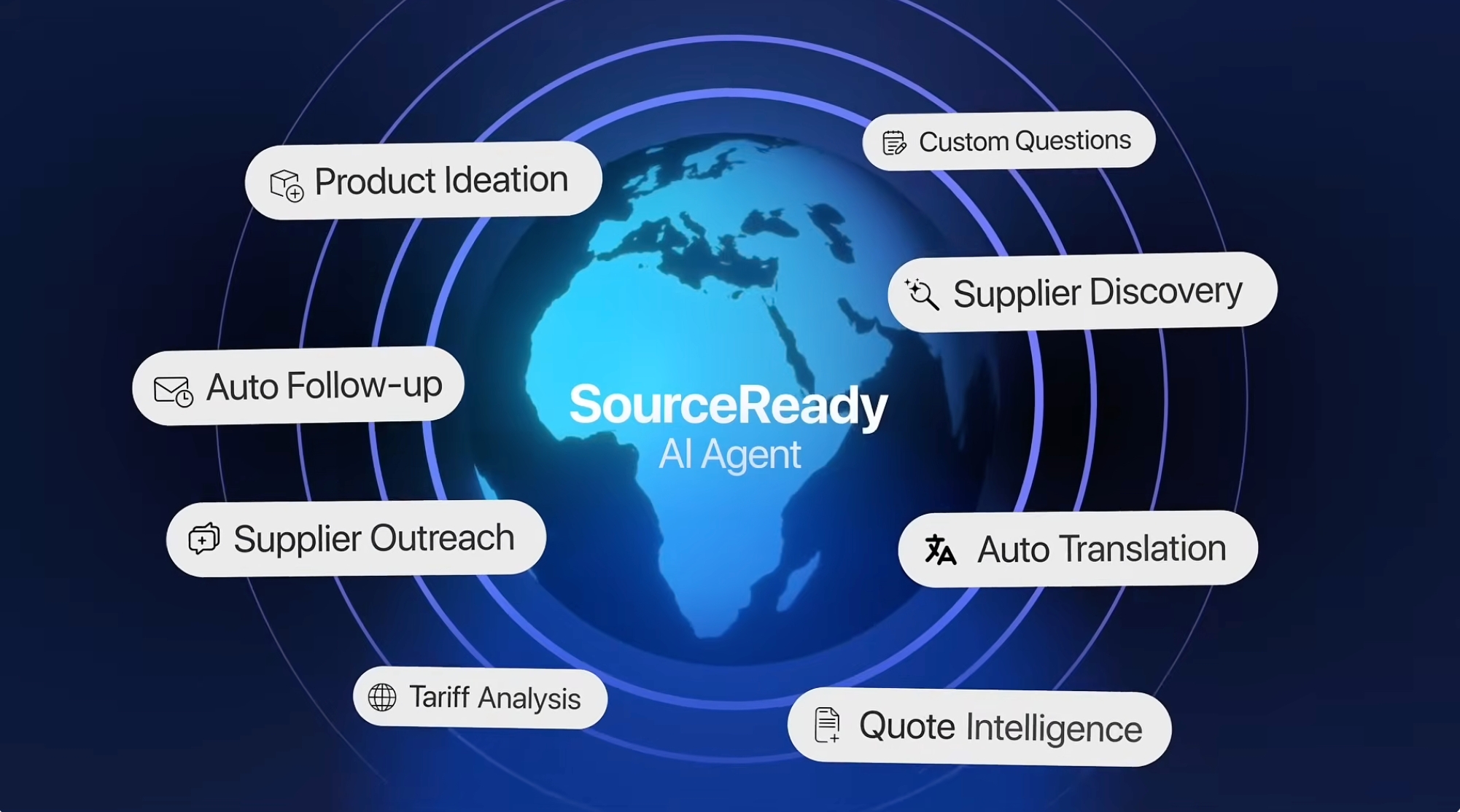
There's a better way to source ❤️
Watch the video to see how SourceReady helps brands move from product ideas to trusted supplier relationships faster
Watch the VideoWhat should a strategic sourcing platform actually do in 2026?
Strategic sourcing starts before an RFQ.
You may first need to understand a category, identify where production is shifting, benchmark competitors, evaluate alternative sourcing countries, estimate tariffs, or determine whether qualified manufacturing capacity exists.
That means modern sourcing platforms should support the full decision process, not just supplier onboarding or tender management.
At minimum, you should look for five capabilities.
- Market intelligence: Help you understand category trends, competitor activity, production regions, product demand, pricing signals, and emerging sourcing opportunities.
- Supplier discovery: Search manufacturers using products, capabilities, locations, certifications, customers, trade history, images, keywords, or technical requirements.
- Supplier verification: Validate whether a supplier appears legitimate and relevant using incorporation records, certifications, trade data, sanctions screening, customer history, and other independent sources.
- Sourcing execution: Turn shortlisted suppliers into RFQs, outreach, follow-ups, quotation collection, comparison, and supplier selection.
- Ongoing supplier management: Track open sourcing projects, purchase orders, milestones, supplier communication, exceptions, and sourcing risks after the initial award.
A useful test is simple: How many systems does your team need to leave before completing one sourcing decision?
The goal is straightforward: reduce the number of disconnected tools required to make and execute a sourcing decision.
If supplier research happens in one database, analysis in spreadsheets, compliance checks in another tool, and supplier communication in email, your team spends too much time moving information between systems. A strategic sourcing platform should bring those activities into a more connected workflow.
What should you expect from AI?
AI has become standard across sourcing software, but the implementation matters.
You should treat AI as a reasoning and workflow layer rather than as the source of truth.
- Evidence-backed AI: Important findings should connect to supplier records, documents, transactions, certifications, web sources, or internal company data.
- Structured extraction: AI should convert emails, quotations, documents, and supplier responses into fields that you can compare and audit.
- Workflow automation: Agents should handle repetitive research, supplier follow-up, missing-information requests, and data collection without removing human control.
- Internal-data support: Your team should be able to combine external market intelligence with specifications, supplier scorecards, historical quotations, policies, and other internal information.
Most importantly, AI outputs should be traceable. If the system recommends a supplier, flags a risk, or provides a cost benchmark, you should be able to see the data and sources supporting that conclusion.
How do the leading strategic sourcing platforms compare?
The right platform depends on what part of strategic sourcing you want to improve.
Some platforms focus on enterprise procurement and spend management. Others specialize in sourcing optimization or supplier discovery. Newer AI-native platforms combine external supplier intelligence with research and sourcing execution.
Here are five platforms worth considering in 2026.
1. SourceReady
SourceReady is designed for organizations that need to research markets, discover suppliers, verify manufacturers, run RFQs, and manage sourcing workflows from one platform.
SourceReady's supplier intelligence combines AI with real-world sourcing data across millions of suppliers in more than 200 countries, drawing from dozens of data sources.
- Supplier discovery: Search manufacturers using products, images, capabilities, locations, certifications, customers, trade relationships, and custom sourcing requirements.
- Supplier verification: Cross-check suppliers using trade records, corporate information, certifications, sanctions data, public sources, and other independent datasets.
- Market intelligence: Research categories using product, retail, marketplace, search, social, trade, and public-web signals.
- Competitive supply-chain research: Analyze which manufacturers competitors and other brands appear to source from.
- RFQ automation: Contact shortlisted suppliers, collect responses, follow up on missing information, and structure quotations for comparison.
- AI sourcing agents: Automate research, supplier outreach, follow-ups, document analysis, and other repetitive sourcing tasks.
- Cost and trade analysis: Analyze tariffs, trade flows, sourcing geography, shipment activity, and landed-cost considerations.
SourceReady is particularly relevant for retailers, brands, sourcing companies, importers, and manufacturers where finding and evaluating the right suppliers is a major part of the sourcing process.
2. Coupa
Coupa is an established enterprise platform centered on spend management and procurement operations.
It is strongest when organizations want tighter control over purchasing, approvals, supplier management, contracts, and enterprise spend.
- Spend management: Centralize procurement data and analyze where money is being spent.
- Procurement workflows: Manage requisitions, approvals, purchasing, and other standardized processes.
- Strategic sourcing: Run sourcing events and manage supplier participation.
- Supplier management: Maintain supplier information and support governance across large supplier bases.
Coupa can be a strong choice if your primary goal is procurement governance and spend control. If your biggest problem is discovering new manufacturers or conducting deep external supplier research, you may need additional supplier-intelligence capabilities.
3. SAP Ariba
SAP Ariba remains one of the best-known platforms for large-scale enterprise sourcing and procurement.
It fits organizations that already operate within a complex procurement environment and need sourcing, contracts, supplier management, and purchasing processes connected across the enterprise.
- Supplier network: Connect buyers with a large network of registered suppliers.
- Sourcing events: Run RFIs, RFPs, auctions, and other competitive sourcing processes.
- Contract management: Connect supplier selection with contracting and procurement processes.
- Procurement integration: Integrate sourcing activities with SAP environments and enterprise purchasing processes.
SAP Ariba is particularly useful for large enterprises where process standardization and integration matter more than quickly searching the global manufacturing market.
Implementation can also be more substantial than with newer sourcing platforms, so evaluate whether that level of infrastructure matches the problem you are trying to solve.
4. Ivalua
Ivalua provides a broad source-to-pay platform covering sourcing, supplier management, contracts, procurement, and spend analysis.
Its main advantage is configurability. Large organizations can adapt workflows around complex procurement structures and approval requirements.
- Strategic sourcing: Manage sourcing events, supplier participation, evaluation, and awards.
- Supplier management: Centralize supplier records, performance information, and onboarding processes.
- Spend analysis: Analyze purchasing activity across categories and business units.
- Configurable workflows: Adapt procurement processes to internal requirements and organizational structures.
Ivalua is a good fit when you are undertaking a broader procurement transformation rather than solving supplier discovery alone.
For companies primarily trying to identify new factories, benchmark supply markets, or analyze competitor supplier networks, external sourcing intelligence will still be an important consideration.
5. Keelvar
Keelvar approaches strategic sourcing from another angle: sourcing optimization and automation.
It is particularly useful for organizations running complex sourcing events where many suppliers, lanes, prices, constraints, or award scenarios need to be evaluated simultaneously.
- Sourcing optimization: Model different supplier-award scenarios based on price, capacity, geography, and other constraints.
- Complex tenders: Handle sourcing events with large numbers of variables and supplier bids.
- Scenario analysis: Compare different sourcing strategies before making an award.
- Automation: Use sourcing bots and automated workflows to reduce repetitive work in tender management.
Keelvar is especially relevant for categories such as logistics and complex enterprise procurement where optimization mathematics and bid scenarios play a major role.
It is less focused on discovering manufacturers across the open market, so companies may use supplier intelligence tools earlier in the sourcing process.
Why is supplier intelligence becoming more important in strategic sourcing?
Traditional procurement systems are good at managing suppliers you already know.
Strategic sourcing often requires finding suppliers you do not know yet.
That distinction becomes increasingly important as companies diversify supply chains, respond to tariffs, enter new sourcing markets, and reduce dependency on individual countries or factories.
A sourcing team may need to answer questions such as:
- Alternative suppliers: Which manufacturers can produce this product to the required specification?
- Supplier capabilities: Does the factory actually manufacture the product, or is it primarily a trader?
- Customer history: Which brands or importers appear to have purchased from the supplier?
- Production geography: Which countries and manufacturing clusters are competitive for the category?
- Certification: Does the supplier hold the required social, quality, environmental, or product certifications?
- Trade activity: Is the supplier actively exporting, and where are its goods going?
- Competitive intelligence: Which manufacturers are supplying your competitors?
- Risk exposure: Could tariffs, sanctions, geographic concentration, or compliance issues affect the sourcing decision?
Searching each question manually across trade databases, search engines, supplier directories, corporate databases, and spreadsheets is possible. It is also slow.
Modern supplier intelligence platforms aim to make those signals searchable together.
What makes the best strategic sourcing platform in 2026?
The best platform depends on where your sourcing process needs the most support.
Traditional procurement suites remain strong for spend control, contracts, approvals, and supplier administration. Optimization platforms are useful for complex tenders. But if your team needs to research markets, discover new suppliers, verify them, and move directly into outreach and RFQs, you need stronger supplier intelligence and workflow automation.
SourceReady is built for that earlier, research-heavy part of sourcing and connects it with execution. Try SourceReady directly with a real sourcing project from your team. Search for suppliers, verify them, compare sourcing options, and see how AI-powered research and workflow automation fit into your existing process.
FAQ
1. What is the difference between strategic sourcing software and procurement software?
Strategic sourcing software focuses on finding the right suppliers, evaluating options, negotiating, and making sourcing decisions. Procurement software focuses more on purchasing, approvals, contracts, requisitions, invoices, and spend control. Some platforms cover both.
2. What is the difference between supplier discovery and supplier intelligence?
Supplier discovery helps you find potential suppliers. Supplier intelligence goes further by helping you understand and evaluate those suppliers using trade data, certifications, corporate records, customer history, risk signals, market information, and other evidence.

Find the sourcing tools you need.
Explore how SourceReady helps you research products, discover suppliers, verify factory information, analyze trade data, and manage your sourcing workflow in one place
Explore Features
Graduating from USC with a background in business and marketing, Judy Chen has spent over a decade working in e-commerce, specializing in sourcing and supplier management. Her experience includes developing strategies to optimize supplier relationships and streamline procurement processes for growing businesses. As SourceReady’s blog writer, Judy leverages her deep understanding of sourcing challenges to create insightful content that helps readers navigate the complexities of global supply chains.