The global reusable water bottle market is worth over $10 billion and still growing. From gym-goers to sustainability-conscious consumers, demand spans stainless steel, Tritan plastic, and glass bottles. Brands large and small are competing to produce lightweight, leakproof, and eco-friendly designs—while keeping margins intact.
That’s why choosing where to manufacture matters as much as what you make. A well-chosen manufacturing base can mean better compliance, shorter lead times, and stronger sustainability credentials. This guide walks you through the top manufacturing countries, their strengths and weaknesses, and how to vet suppliers for long-term reliability.
By the end, you’ll know how to align your bill of materials (BOM) with each country’s strengths, model landed costs, and select partners that meet your quality and certification standards—with help from tools like SourceReady, which lets you map BOMs, filter suppliers, and model sourcing scenarios in minutes.
There’s a better way to source ❤️
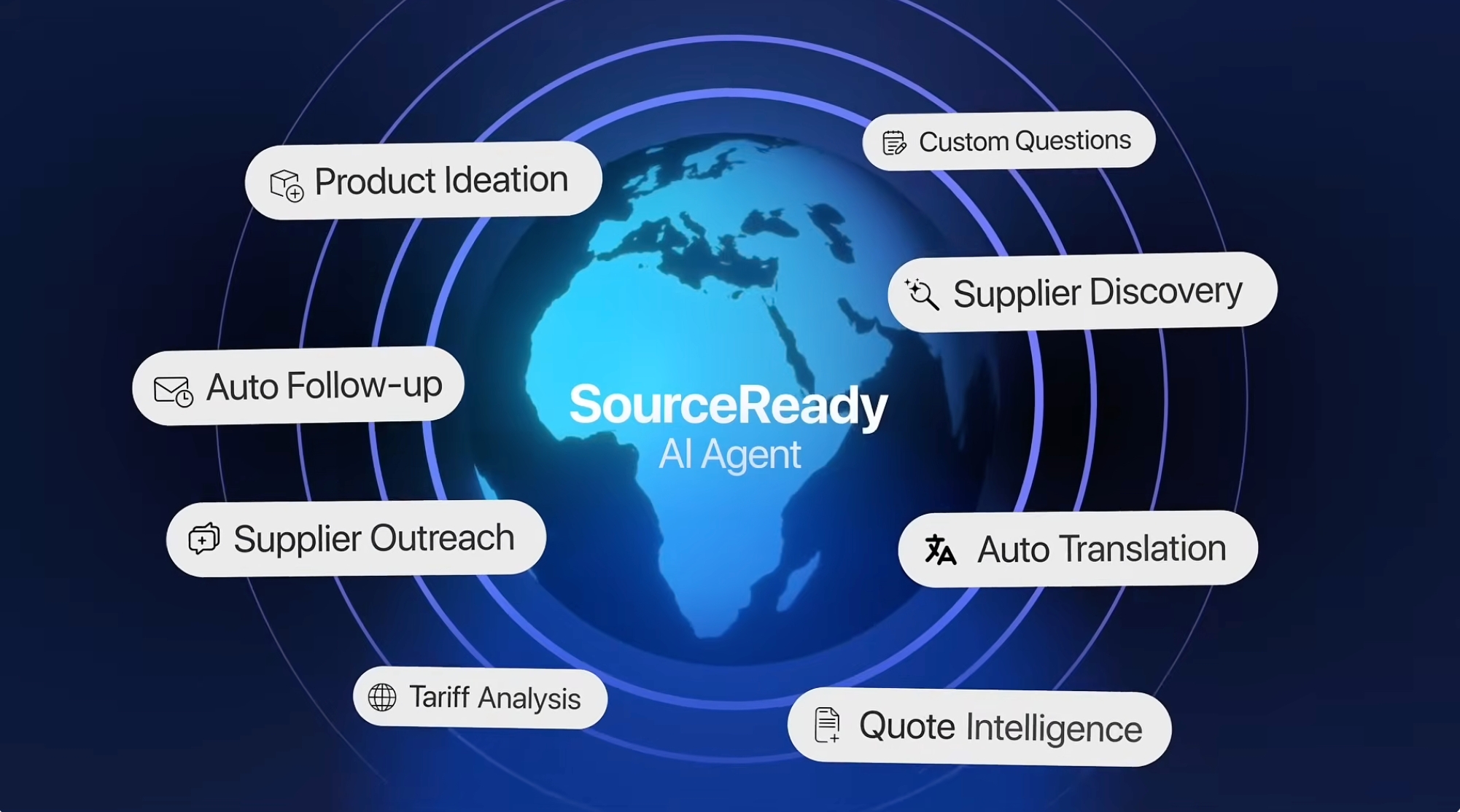
Watch the video to see how SourceReady helps brands move from product ideas to trusted supplier relationships faster
Global Market Overview: Size, Drivers, and Iconic Players
Market Size and Growth Drivers
The reusable water bottle market is projected to reach $15.39 billion by 2032, growing at around 5.8% CAGR. Growth is driven by:
Sustainability mandates: Governments and consumers are rejecting single-use plastics.
Corporate wellness programs: Custom-branded bottles have become part of employee engagement kits.
Outdoor and fitness lifestyle: Hiking, cycling, and gym culture continue to push demand for durable and stylish hydration gear.
Material innovation: Lightweight stainless steel, BPA-free Tritan, and bamboo-lid hybrids are differentiating modern designs.
Viral Water Bottles Now
The water bottle industry isn’t just about hydration anymore — it’s about identity. A handful of bottles have gone viral in recent years, blending practical design with lifestyle branding that consumers want to be seen with.
The Stanley Cup revived a century-old design and became a social media sensation thanks to its sturdy build and nostalgic charm. Owala gained traction with its leakproof flip-straw and effortless one-hand operation. Hydro Flask built a community around colorful stainless steel and active lifestyle appeal. Takeya earned trust through Japanese precision and lightweight durability. And YETI, known for outdoor toughness, remains the gold standard for insulation and premium positioning.
Each brand succeeds because it balances design, material, and manufacturing discipline. For sourcing managers, these products are benchmarks — proof that great execution and strong supply chain control drive both performance and brand power.
What Makes a Good Bottle
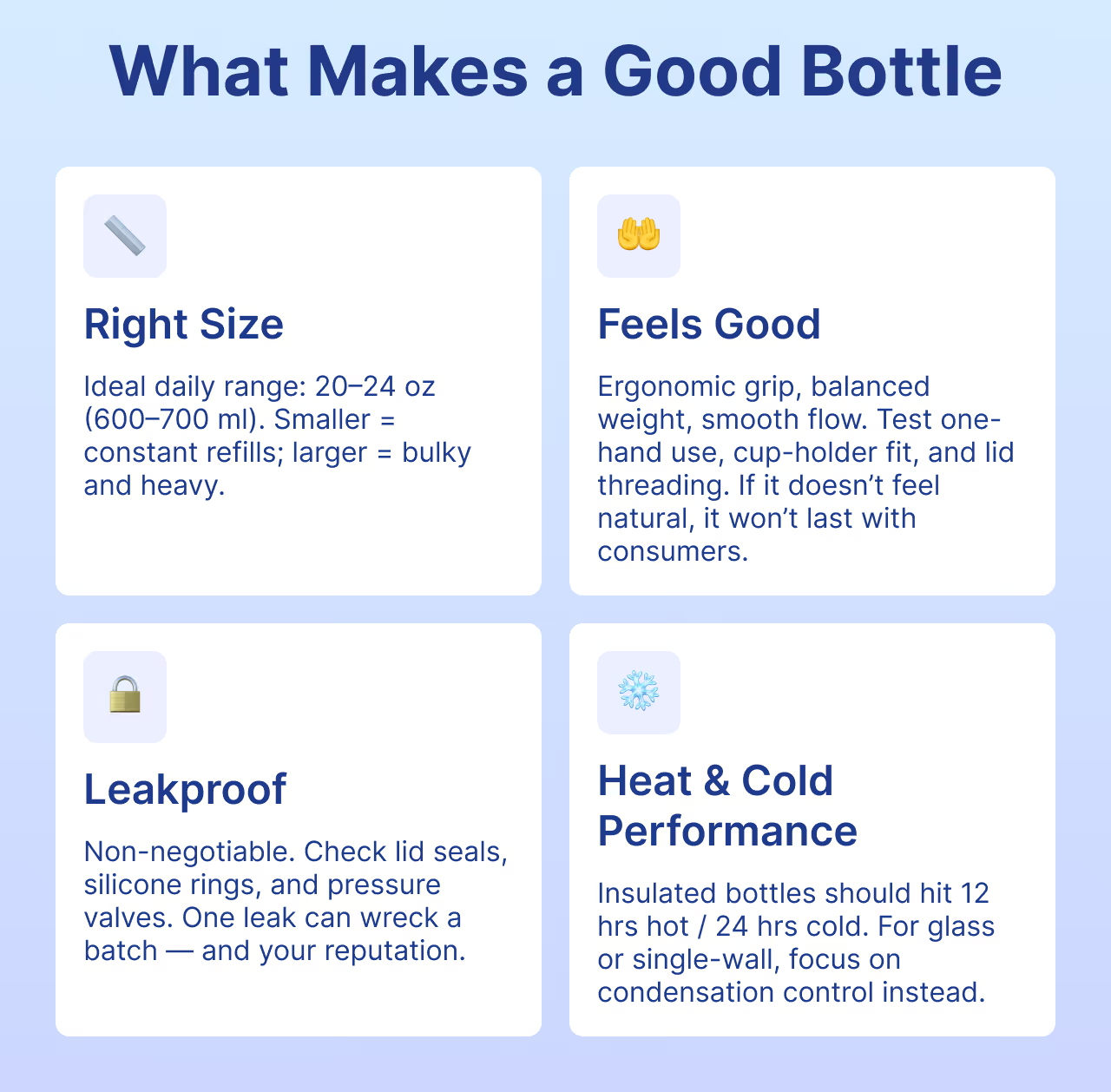
A great bottle isn’t just about materials — it’s about function, feel, and consistency. Whether you’re designing your own line or auditing an OEM, focus on these fundamentals:
✅ It’s the Right Size
Too small leaves users refilling constantly; too large feels heavy and impractical. A sweet spot for daily use is 20–24 ounces (600–700 ml) — enough for convenience without bulk.
✅ It Feels Good
Comfort matters. A well-designed grip, balanced weight, and smooth drinking flow make all the difference. Test ergonomics for one-hand use, cup-holder fit, and lid threading. If it doesn’t feel natural, it won’t pass long-term consumer use.
✅ It’s Leakproof
This is non-negotiable. Bottles should survive a drop or a bag toss without spilling. Test lid seals, silicone rings, and pressure valves. One failed leak test can sink a batch — and your brand reputation.
✅ It Insulates Well
For insulated designs, performance should last 12 hours hot or 24 hours cold. Verify claims through controlled temperature-retention tests. For glass or single-wall designs, insulation isn’t expected, but condensation control still matters.
Top Countries to Manufacture Water Bottles
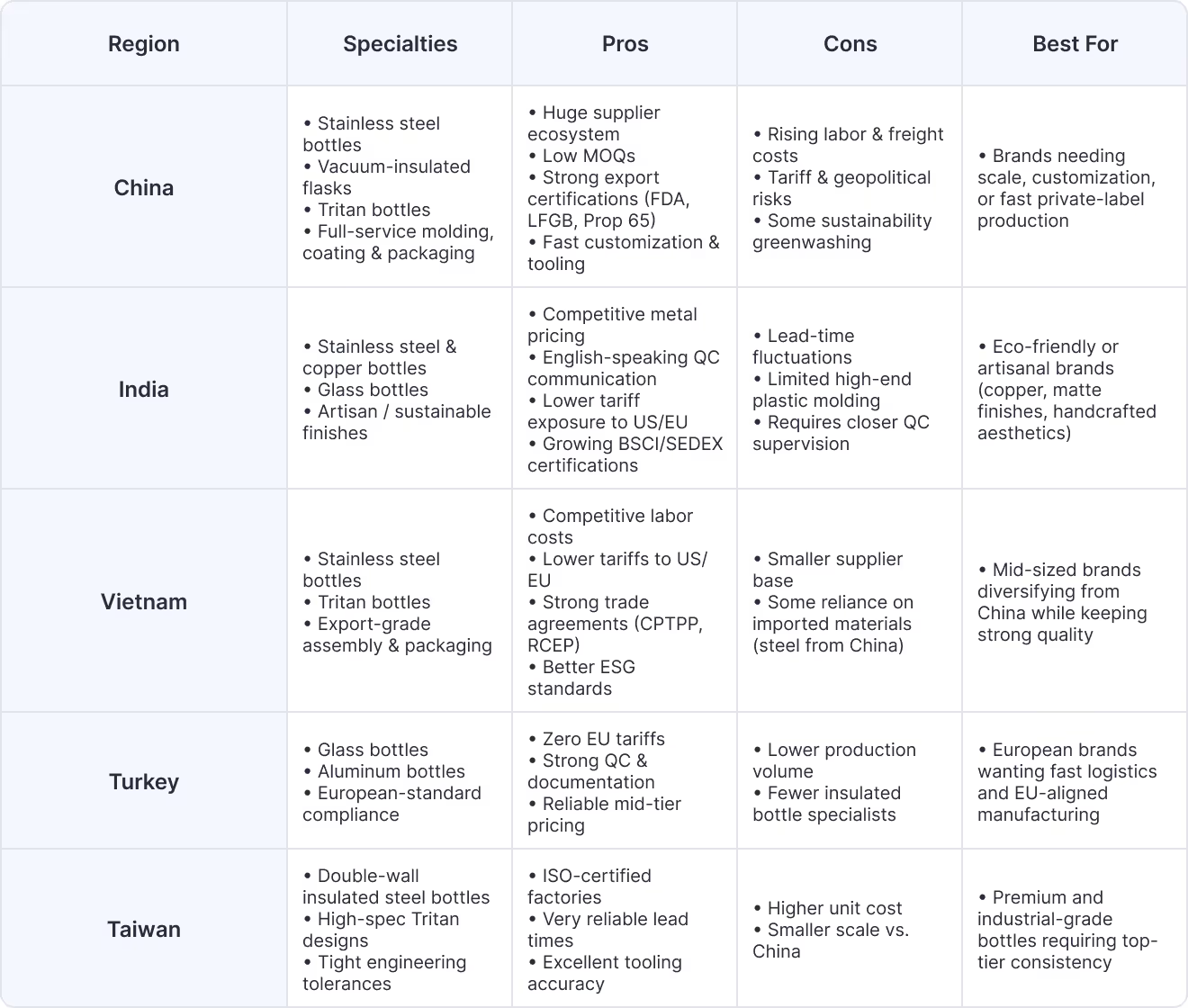
Let’s examine the leading manufacturing hubs for reusable water bottles and what makes each unique.
1. China: The One-Stop Manufacturing Powerhouse
China still dominates the global water bottle supply chain. It offers complete vertical integration—from raw materials to printing and packaging.
Specialties:
Stainless steel bottles, vacuum-insulated flasks, and custom-branded Tritan bottles.
Injection molding, laser engraving, powder coating, and packaging under one roof.
Pros:
Massive supplier ecosystem and material access.
Low MOQ (Minimum Order Quantity) for startups.
Mature export compliance—many factories already certified for FDA, LFGB, and Prop 65.
Best for: Brands that need scale, design flexibility, or private-label production with fast turnaround.
2. India: The Emerging Challenger
India’s manufacturing of stainless steel and glass bottles is expanding rapidly, supported by its strong metalworking base and government export incentives.
Specialties:
Stainless steel bottles, copper-infused bottles, and glass variants.
Known for artisan finishes and sustainable materials.
Increasing number of BSCI and SEDEX-certified plants.
Cons:
Inconsistent lead times during seasonal demand peaks.
Limited availability of high-end plastic molding compared to China.
Requires closer supervision for QC consistency.
Best for: Buyers targeting eco-conscious consumers or artisanal aesthetics (e.g., copper or matte-finish bottles).
3. Vietnam: The Agile Mid-Scale Alternative
Vietnam offers a balance between China’s scale and India’s pricing. With foreign investment driving quality improvements, it’s now a top alternative for stainless steel and BPA-free plastic bottles.
Specialties:
Stainless steel and Tritan bottles for Western brands.
Assembly and packaging for export.
Pros:
Competitive labor costs and lower tariffs to U.S./EU.
Strong trade compliance under CPTPP and RCEP agreements.
Increasing use of automation and imported machinery from Japan and Korea.
Better ESG transparency compared to low-tier Chinese suppliers.
Cons:
Smaller supplier base than China, limiting product variety.
Some suppliers rely on imported raw materials (e.g., steel from China).
Best for: Mid-sized brands seeking diversification from China while maintaining export-grade quality.
5. Turkey: The Regional Bridge Between Europe and Asia
Turkey’s industrial infrastructure and customs union with the EU make it a strategic sourcing hub.
Specialties:
Glass and aluminum bottles.
Focus on European design standards and compliance.
Pros:
Quick access to EU markets (zero tariffs within customs union).
Strong QC and export documentation practices.
Reliable mid-tier pricing.
Cons:
Smaller production volumes than Asian giants.
Fewer specialized suppliers for insulated bottles.
Best for: European brands seeking shorter logistics routes and compliance-aligned production.
6. Taiwan: The Precision Manufacturing Hub
Taiwan’s reputation for engineering precision and high material standards makes it a solid choice for premium stainless steel and high-spec plastic bottles.
Specialties:
Double-wall insulated stainless bottles and Tritan designs.
Consistent quality and advanced QC.
Pros:
ISO-certified and export-experienced factories.
Reliable delivery schedules.
Tight control over tooling and finishing accuracy.
Cons:
Higher unit cost.
Limited scale compared to China.
Best for: High-end consumer or industrial-grade bottles demanding consistent tolerances.
Top Countries to Manufacture Water Bottles
How to Find and Vet Water Bottle Suppliers
Sourcing isn’t guesswork — it’s structured investigation. Follow these steps for an audit-ready process.
1. Define Your BOM
Start by listing every key component: body, lid, straw, gasket, coating, and packaging. Then use SourceReady — simply enter a prompt describing exactly what you need for your reusable water bottle, and it will find suppliers that match your requirements most closely. This saves hours of manual filtering and surfaces factories with the right materials, certifications, and production capabilities.
2. Shortlist by Certification
Look for documented compliance, not promises. Key standards include:
Food safety: FDA, LFGB, EU 10/2011.
Material safety: BPA-free, REACH, Prop 65.
Social/Quality: BSCI, ISO 9001, SEDEX.
Always verify the certifying body and expiry date — expired or unverifiable certificates are red flags.
3. Audit the Factory
Whether virtual or on-site, assess:
Process control — traceable QC logs.
Social compliance — labor and safety documentation.
Capacity — daily throughput versus your forecast.
If you can’t travel, request video walkthroughs of the production line and quality testing.
4. Test Samples Rigorously
Run stress and usability tests before confirming mass production:
Drop and leak testing.
Temperature retention for insulated models.
Dishwasher and coating durability cycles.
Score each against your QC criteria. A single weak metric often signals process inconsistency.
5. Negotiate Clearly
Before signing, clarify:
Payment structure (30 / 70 or LC).
Lead-time tolerance and shipment buffers.
Replacement and warranty terms.
Put every term in writing — ambiguity is the most common cause of cost overruns.
6. Monitor Performance
Supplier vetting doesn’t end with the first shipment. Track defect rates, delivery reliability, and responsiveness over time. The best partnerships are data-driven: consistent follow-up ensures continued compliance and performance stability.
Conclusion
Manufacturing reusable water bottles is about more than price — it’s about aligning design, materials, and compliance with the right country’s strengths. China still leads in scale and customization, India adds sustainability and craftsmanship, Vietnam balances cost and reliability, and Turkey anchor production for the European market. The most efficient approach is to map your BOM to each country’s advantage and model your true landed cost before you commit.
Reusable bottles sit at the intersection of consumer demand and environmental responsibility. Getting them right means choosing suppliers who can meet both quality and sustainability expectations.
With SourceReady, you can describe exactly what you need for your reusable bottle and instantly see suppliers that meet your material, certification, and cost requirements. In sourcing, precision and preparation always outperform speed — and that’s how lasting brands are built.
FAQ
1. How do I calculate landed cost accurately?
Include unit cost, freight, tariffs, duties, and packaging. Don’t overlook secondary costs such as compliance testing or delays from certification renewals. Modeling multiple-country scenarios in SourceReady helps reveal the most cost-effective combination.
2. What’s the most common sourcing mistake to avoid?
Choosing suppliers solely on price. The lowest quote often means hidden risks — missing documentation, poor coatings, or failed QC. Always verify compliance and long-term reliability before scaling orders.
3. What post-shipment checks should I run?
Upon arrival, run AQL sampling tests for leaks, weight variance, and coating durability. Confirm that labeling matches customs declarations — this avoids compliance issues in resale markets.
Find the sourcing tools you need.
Explore how SourceReady helps you research products, discover suppliers, verify factory information, analyze trade data, and manage your sourcing workflow in one place
Graduating from USC with a background in business and marketing, Judy Chen has spent over a decade working in e-commerce, specializing in sourcing and supplier management. Her experience includes developing strategies to optimize supplier relationships and streamline procurement processes for growing businesses. As SourceReady’s blog writer, Judy leverages her deep understanding of sourcing challenges to create insightful content that helps readers navigate the complexities of global supply chains.