Sourcing apparel suppliers today is not about finding more options—it’s about finding the right ones faster and validating them properly. The difference between a good and bad supplier rarely shows up in listings, but in how you filter, compare, and verify. This guide combines tools—including SourceReady for AI-driven matching—into a structured system, helping you move from discovery to confident, data-backed supplier decisions.
In addition, here's the report to apparel trends in 2026.
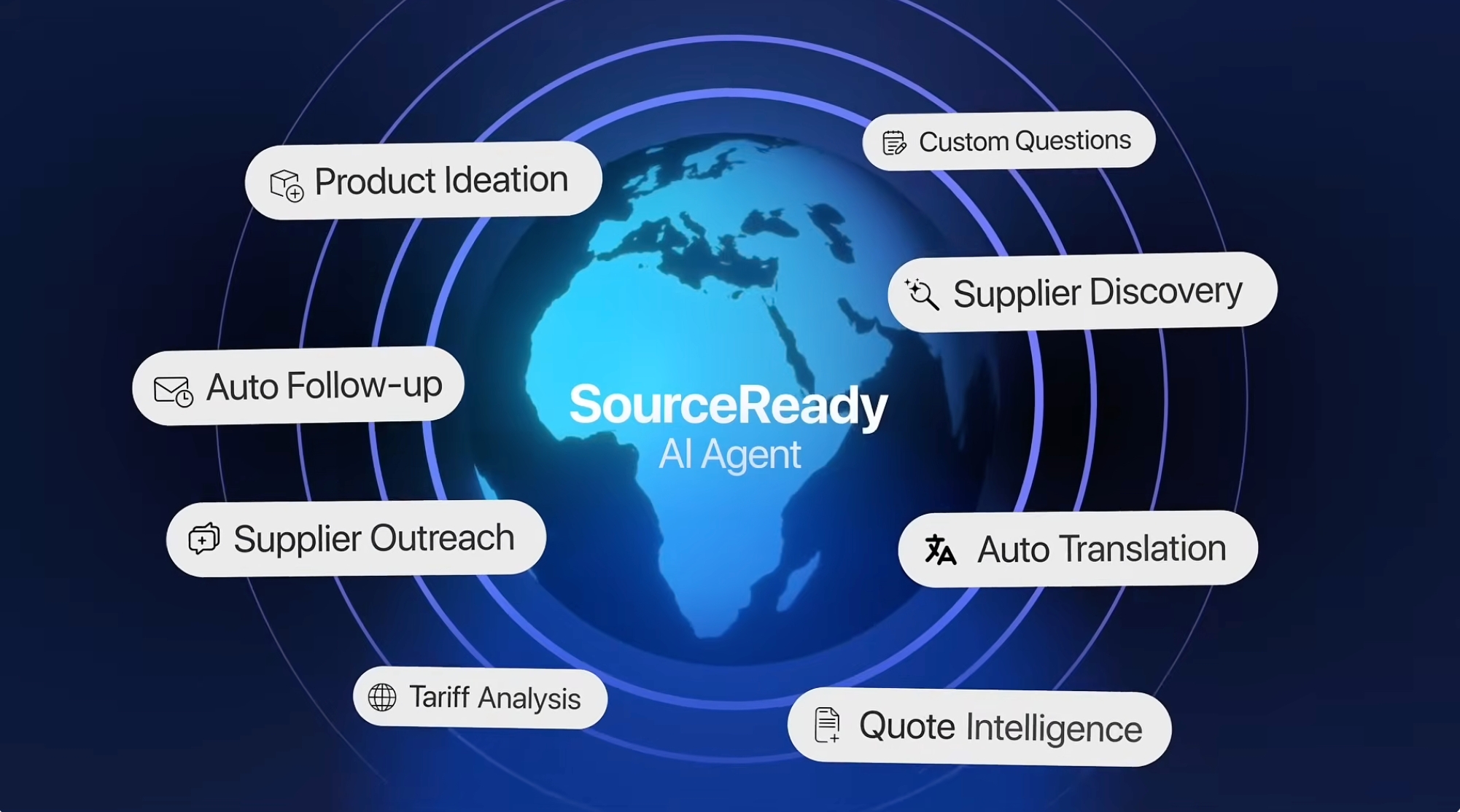
There's a better way to source ❤️
Watch the video to see how SourceReady helps brands move from product ideas to trusted supplier relationships faster
Watch the VideoWhat “Good” Sourcing Tools Actually Do
Before diving into specific tools, define what you need them to achieve.
A strong sourcing tool should help you:
- Reduce noise — narrow hundreds of suppliers into a manageable shortlist
- Reveal real capability — not just what suppliers claim, but what they can actually produce
- Standardize comparison — so decisions are based on consistent criteria
- Improve speed — less manual back-and-forth, more structured insights
Most tools only solve part of this. The goal is to combine them into a workflow that covers discovery, filtering, and validation.

What Tools Should You Use for Apparel Supplier Sourcing?
1. Alibaba
Alibaba is the most widely used B2B sourcing marketplace. It gives you immediate access to a massive number of suppliers across all apparel categories, making it the default starting point for most sourcing processes.
Features & Functions
Alibaba’s core strength is scale and accessibility. You can quickly search for almost any product and generate a large pool of potential suppliers.
Key functions include:
- Search and filtering tools: You can refine suppliers by years in business, certifications, export markets, and production capabilities, helping you narrow down options quickly.
- Supplier profiles: Each supplier provides structured information such as product focus, factory size, certifications, and production scope. This gives you a first-pass understanding of their positioning.
- RFQ system: You can submit one request and receive quotes from multiple suppliers. This is useful for quickly comparing pricing, MOQs, and lead times.
- Built-in communication: Messaging tools allow you to discuss specifications, request samples, and negotiate terms directly.
- Trade Assurance: A transaction layer that sets expectations around delivery timelines and payment protection.
Advantages
- Unmatched supplier coverage — you can find almost any apparel category or variation
- Fast initial outreach — RFQ enables parallel communication at scale
- Low barrier to entry — easy to start sourcing without existing networks
- Strong price discovery — quickly understand market pricing ranges
Alibaba works best as a broad discovery tool—it gives you options quickly, but requires further filtering and validation.
2. SourceReady
SourceReady is an AI-powered supplier search engine designed to help you move from manual browsing to structured supplier matching and comparison.
Features & Functions
SourceReady is an AI-powered supplier search engine designed to help you move from manual browsing to structured supplier matching and comparison. It provides access to 1,200,000 suppliers across 80 countries, giving you both scale and precision in one system.
Key functions include:
- AI-driven matching: You input criteria such as product type, materials, MOQ, and pricing expectations. The platform returns suppliers that fit those requirements.
- Match scores with explanations: Each supplier is evaluated based on how well they meet your criteria, with clear reasoning behind the score. This makes decision-making more transparent.
- Aggregated data profiles: Supplier data is gathered and cross-verified from multiple sources, including custom datasets, trade shows, directories, and more. Each profile includes insights such as past shipment records, customer relationships, key exporting countries. This gives you a clearer view of a supplier’s real capabilities and track record, not just what they claim.
- Side-by-side comparison: Suppliers are presented in a structured format, making it easier to compare key attributes without manual tracking.
Advantages
- Saves significant time — reduces hours of manual filtering into minutes
- Structured decision-making — match scores and reasoning improve clarity
- Better supplier fit — focuses on relevance, not just availability
- Data consolidation — brings multiple data points into one view
SourceReady functions as a decision-support layer, helping you move efficiently from a long list to a focused shortlist.
3. Trade Shows
Trade shows are physical sourcing environments where suppliers present their products and capabilities. They remain one of the most effective ways to directly evaluate apparel suppliers. Trade shows provide real-world validation that digital tools cannot replicate.
Features & Functions
- Physical product inspection: You can assess fabric quality, stitching, finishing, and construction firsthand, which is critical in apparel sourcing.
- Face-to-face communication: Direct interaction allows you to evaluate how well a supplier understands your requirements and communicates technical details.
- Category-based organization: Suppliers are grouped by product type or specialization, making it easier to compare similar manufacturers in one setting.
- Trend and material insights: You can observe new fabrics, production techniques, and design trends across the industry.
- Relationship buildingMeeting suppliers in person helps establish trust and improves long-term collaboration.
Advantages
- High signal quality — immediate visibility into real product quality
- Faster trust-building — in-person interaction reduces uncertainty
- Efficient benchmarking — compare multiple suppliers side-by-side physically
- Stronger long-term relationships — better foundation for collaboration
Trade shows are best used as a validation and relationship layer, rather than a primary discovery tool.
4. ImportYeti
ImportYeti provides access to import/export shipment data, allowing you to evaluate suppliers based on actual trade activity rather than self-reported claims. The platform helps you understand what suppliers are doing in the real world.
Features & Functions
- Shipment data search: You can look up suppliers or brands and see shipment records associated with them.
- Buyer–supplier visibility: In some cases, you can identify which brands a supplier has worked with, giving insight into their client base.
- Shipment frequency tracking: Regular shipments indicate consistent production and ongoing business relationships.
- Product-level insights: Shipment descriptions often reveal product categories, helping confirm whether a supplier specializes in your type of apparel.
- Competitive research: You can analyze competitors to identify their suppliers and sourcing patterns.
Advantages
- Data-backed validation — based on real shipments, not marketing claims
- Credibility check — identify suppliers working with established brands
- Reliability signals — consistent shipment patterns indicate stability
- Competitive intelligence — uncover sourcing strategies used by others
ImportYeti adds a data-driven validation layer, helping you verify whether a supplier is actively operating at scale.
5. Foursource
Foursource is a sourcing platform focused specifically on apparel and textiles, offering a more curated and structured supplier database.
Features & Functions
- Apparel-focused supplier discovery: The platform is built for fashion and textile sourcing, reducing irrelevant results and improving search relevance.
- Structured supplier profiles: Information such as capabilities, certifications, and production scope is presented in a consistent format, making evaluation easier.
- Material and fabric sourcing: You can explore suppliers across the supply chain, including fabric and material providers.
- Compliance and sustainability filters: Suppliers can be filtered based on environmental and social standards, supporting responsible sourcing.
- Regional sourcing options: The platform includes suppliers from Europe, Turkey, and Asia, enabling diversified sourcing strategies.
Advantages
- Higher relevance — focused specifically on apparel and textiles
- Cleaner data structure — easier to evaluate suppliers consistently
- Strong compliance visibility — supports regulatory and ESG requirements
- Useful for diversification — enables nearshore and regional sourcing
Foursource works well as a focused sourcing layer, especially when compliance, materials, or regional sourcing are priorities.
Sourcing Checklist
Once you’ve identified suppliers, you need a consistent way to evaluate them.
A practical checklist includes:
- Capability: Confirm the supplier has real experience with your product type and can demonstrate it through samples or past work.
- Commercial terms: Review pricing structure, MOQ, sampling costs, and payment terms clearly.
- Production: Understand lead times, capacity, and how the supplier handles order fluctuations.
- Quality control: Ask about QC processes, defect handling, and consistency across production batches.
- Compliance: Verify certifications and ensure materials meet regulatory standards for your market.
- Communication: Evaluate responsiveness, clarity, and ability to handle technical discussions.
This checklist ensures your evaluation is consistent, repeatable, and defensible.
Conclusion
Effective apparel sourcing is not about relying on a single platform—it’s about building a repeatable system that moves from discovery to validation to decision. The strongest teams combine broad search with structured filtering, then verify everything with real data and direct interaction. When you approach sourcing this way, you reduce guesswork, avoid costly mistakes, and make decisions you can confidently defend. Over time, this discipline compounds—leading to more reliable suppliers, smoother production cycles, and a supply chain that supports your growth instead of slowing it down.
If you want to move faster and make more confident sourcing decisions, start by upgrading how you evaluate suppliers—not just where you find them.
FAQ
1. How do I reduce risk when sourcing internationally?
You can reduce risk by:
verifying supplier data (shipment history, certifications)
requesting samples before bulk orders
using clear contracts and payment terms
maintaining consistent communication
2. How do I reduce risk when sourcing internationally?
You can reduce risk by:
verifying supplier data (shipment history, certifications)
requesting samples before bulk orders
using clear contracts and payment terms
maintaining consistent communication
3. How is AI better than traditional sourcing methods?
AI improves sourcing by making the process more structured, data-driven, and efficient. Instead of manually browsing hundreds of suppliers, AI tools:
match suppliers based on your exact requirements
provide clear reasoning behind recommendations
standardize comparisons across multiple suppliers
Traditional sourcing relies heavily on manual filtering and experience, while AI helps you scale decision-making without losing accuracy.

Find the sourcing tools you need.
Explore how SourceReady helps you research products, discover suppliers, verify factory information, analyze trade data, and manage your sourcing workflow in one place
Explore Features
Graduating from USC with a background in business and marketing, Judy Chen has spent over a decade working in e-commerce, specializing in sourcing and supplier management. Her experience includes developing strategies to optimize supplier relationships and streamline procurement processes for growing businesses. As SourceReady’s blog writer, Judy leverages her deep understanding of sourcing challenges to create insightful content that helps readers navigate the complexities of global supply chains.