The global CCTV and surveillance camera market is valued at approximately $66.01 billion in 2026. Driven by advancements in AI, smart home integration, and public security, the market is projected to reach around $228.65 billion by 2034. Surveillance cameras are not just another electronics product. You are sourcing hardware, firmware, cloud access, data security, and regulatory exposure in one box. A cheap camera can become expensive fast if it fails cybersecurity review, uses restricted components, or cannot be legally sold in your target market. The best sourcing countries are usually China, Taiwan, Vietnam, South Korea, and India, but each comes with different strengths and limitations. Your job is not to find the lowest quote. Your job is to find a supplier that can pass cost, quality, compliance, and security checks.
Top Countries to Find Surveillance Camera Suppliers

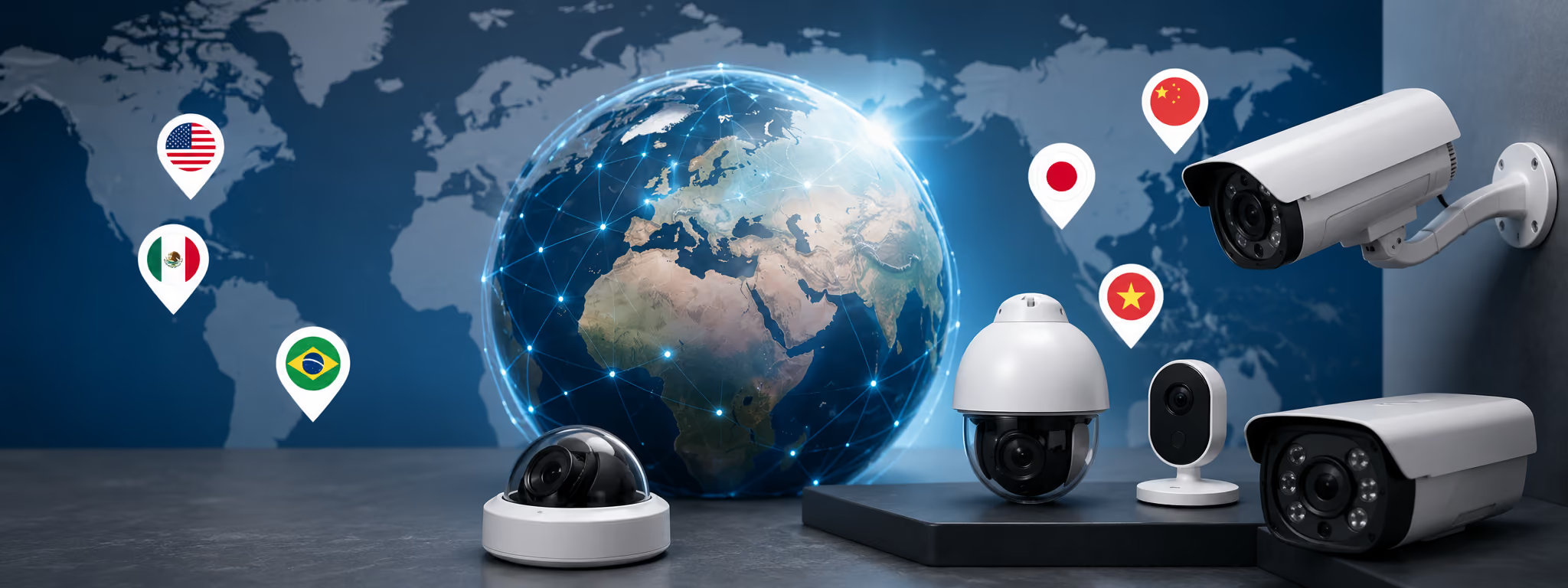
Which countries are best for sourcing surveillance camera suppliers?
1. China
China is still the largest and deepest sourcing market for surveillance cameras. If you need a wide product range, fast sampling, and competitive pricing, China is usually the first place to look.
You can find suppliers for:
- IP cameras: Indoor, outdoor, dome, bullet, PTZ, fisheye, and solar-powered models.
- CCTV systems: Cameras, DVRs, NVRs, cables, brackets, and full security kits.
- Smart cameras: Wi-Fi cameras, app-connected cameras, doorbell cameras, and AI detection models.
- OEM/ODM projects: Private label packaging, custom housing, firmware branding, and mobile app integration.
China’s biggest strength is its complete ecosystem. Shenzhen and surrounding electronics clusters have camera module suppliers, lens suppliers, PCB factories, enclosure manufacturers, firmware teams, and packaging vendors all within reach. This makes development faster and usually cheaper.
But China also carries the highest compliance risk. In the U.S., the FCC Covered List includes certain communications and video surveillance equipment and services from companies such as Hikvision and Dahua when used for public safety, government facilities, critical infrastructure, or national security purposes. The EU’s Cyber Resilience Act also creates cybersecurity requirements for products with digital elements, which can include connected surveillance products.
Strengths:
- Lowest cost range: Best option for price-sensitive cameras and large-volume orders.
- Full product variety: Easy to find basic, mid-range, and advanced models.
- Fast customization: Good for private label, packaging, and feature changes.
- Mature export experience: Many suppliers already serve Amazon sellers, distributors, and security brands.
Limitations:
- Restricted-vendor risk: You must check ownership, affiliates, chipset origin, and firmware source.
- Cybersecurity concerns: Some products may have weak password controls, unclear cloud routing, or poor patch support.
- Tariff exposure: U.S. buyers need to review current tariff treatment and landed cost.
- Customer acceptance risk: Government, enterprise, education, and infrastructure buyers may reject certain China-linked products.
China is best when you need cost, speed, and product variety, but only if you run serious compliance screening. “The factory said it is fine” is not a compliance strategy. It is a plot twist.
2. Taiwan
Taiwan is one of the strongest alternatives for buyers who want better documentation, stronger engineering discipline, and lower mainland China exposure.
Taiwanese suppliers are often better suited for commercial, industrial, and enterprise-grade surveillance products. They may not offer the same low prices as China, but they can be more reliable for buyers selling into markets with stricter security expectations.
Taiwan is especially useful for:
- Industrial cameras: Durable products for factories, warehouses, and commercial buildings.
- OEM/ODM development: More structured engineering support and cleaner documentation.
- Networking integration: Useful if the camera system connects with routers, switches, gateways, or edge devices.
- Compliance-sensitive sourcing: Better fit for buyers who need stronger audit trails.
Strengths:
- Strong electronics background: Taiwan has deep experience in hardware, networking, and embedded systems.
- Better documentation: Suppliers are often more prepared for product specs, quality records, and compliance files.
- Lower geopolitical rejection risk: Some customers prefer Taiwan over mainland China for security-sensitive projects.
- Good engineering quality: Better fit for products where reliability matters more than the lowest price.
Limitations:
- Higher cost: Taiwan is usually more expensive than China and Vietnam.
- Smaller supplier pool: You will find fewer mass-market private-label camera suppliers.
- Less flexible for tiny orders: Some suppliers prefer serious OEM/ODM projects over very small trial orders.
- Component dependency: Some parts may still come from mainland China, so BOM review is still necessary.
Taiwan is best when you need trust, engineering support, and cleaner compliance positioning.
3. Vietnam
Vietnam is increasingly important for electronics buyers who want a China+1 sourcing strategy. It is not yet as complete as China for surveillance cameras, but it is useful for assembly, diversification, and tariff planning.
Vietnam works best for mature products where the design is already stable. If you already know the camera model, component structure, and target specs, Vietnam can be a practical production base.
Strengths:
- China+1 diversification: Helps reduce dependence on one country.
- Competitive labor cost: Useful for assembly-heavy products.
- Growing electronics base: Vietnam has become more relevant for consumer electronics and export manufacturing.
- Useful for private label: Good option for stable camera models, basic kits, and regional distribution.
Limitations:
- Less complete supply chain: Many key components may still be imported.
- Limited camera R&D depth: Some suppliers are better at assembly than product development.
- BOM transparency required: You need to know where sensors, chipsets, firmware, and Wi-Fi modules come from.
- Not always cheaper after logistics: Landed cost may narrow the gap versus China.
Vietnam is best when you need production diversification, not when you need the broadest supplier catalog or fastest product development.
4. South Korea
South Korea is a strong sourcing country for higher-end surveillance cameras, especially when quality, cybersecurity, and brand credibility matter.
Korean suppliers are often more suitable for professional security channels, system integrators, enterprise buyers, and government-adjacent projects. They are usually not the cheapest option, but they can be easier to position when your customers care about trust.
Strengths:
- Premium product quality: Strong fit for commercial IP cameras and advanced surveillance systems.
- AI analytics: Good option for edge AI, object detection, and intelligent video analysis.
- Enterprise credibility: Better acceptance in professional security channels.
- Cybersecurity maturity: Often stronger documentation and security practices than low-cost suppliers.
Limitations:
- Higher pricing: Not ideal for ultra-low-cost consumer cameras.
- Less private-label flexibility: Some suppliers may focus on branded or semi-custom solutions.
- Longer sales cycles: Enterprise-grade suppliers may require more formal qualification.
- Higher MOQ or project threshold: Smaller buyers may face less flexibility.
South Korea is best when you need performance, reliability, and customer trust.
5. India
India is becoming more important for surveillance camera sourcing because of local demand, public-sector projects, and security-driven procurement rules.
India is especially relevant if you plan to sell into the Indian market. In 2026, Indian rules around certification for internet-connected CCTV products created major pressure on Chinese-origin surveillance products, especially where Chinese chipsets or firmware were involved.
That shift gives local Indian manufacturers and assemblers more room to grow.
Strengths:
- Local market access: Strong option if your target customers are in India.
- Public-sector relevance: Better fit for projects that require local certification or domestic sourcing.
- Growing manufacturing base: More companies are entering electronics assembly and security hardware.
- Reduced China exposure: Useful for buyers avoiding Chinese-origin surveillance products.
Limitations:
- Supplier maturity varies: Some companies are true manufacturers; others are importers or assemblers.
- Limited global export depth: Not every supplier is ready for U.S. or EU compliance demands.
- Component dependency: Key sensors, chipsets, and modules may still be imported.
- Quality consistency: You need strict sample testing and factory audits.
India is best when you need local-market access, domestic sourcing, or lower China exposure.
How can you find reliable surveillance camera suppliers?
Finding suppliers for surveillance cameras is not just about searching “CCTV camera manufacturer” and collecting quotes. You need to verify the company, the product, the firmware, the component origin, and the legal risk.
Start with a clear sourcing brief.
Include:
- Camera type: IP camera, CCTV camera, PTZ, dome, bullet, Wi-Fi, PoE, solar, thermal, or doorbell camera.
- Target market: U.S., EU, India, Middle East, Southeast Asia, or domestic market.
- Sales channel: Retail, Amazon, distributor, installer, enterprise, government, or infrastructure project.
- Required certifications: FCC, CE, UKCA, RoHS, REACH, BIS/STQC, or other local requirements.
- Cybersecurity requirements: Secure boot, encrypted transmission, firmware update policy, no hardcoded credentials, and vulnerability handling.
- Cloud and app requirements: Local storage, cloud storage, mobile app, remote access, server location, and data control.
- Volume and price target: Sample quantity, pilot order, annual volume, and target landed cost.
Then screen suppliers using five checks.
- Company check: Verify the factory name, address, ownership, export history, and related brands.
- Restricted-party check: Screen against FCC, sanctions, entity lists, and customer-specific banned vendor lists.
- Product check: Review chipset, image sensor, firmware provider, app provider, and cloud architecture.
- Certification check: Ask for certificates, test reports, model numbers, and issuing labs.
- Audit check: Review QC process, production records, firmware update policy, and after-sales support.
Do not stop at a pretty product catalog. Surveillance cameras can look identical while using very different firmware, cloud routing, and chipsets. Two cameras may share the same housing but have completely different risk profiles. Very stylish little compliance trap.
How can SourceReady help you find surveillance camera suppliers?
Finding surveillance camera suppliers can be surprisingly time-consuming. Between manufacturer directories, trade shows, customs data, company websites, and compliance checks, building a reliable shortlist often takes days—or even weeks.
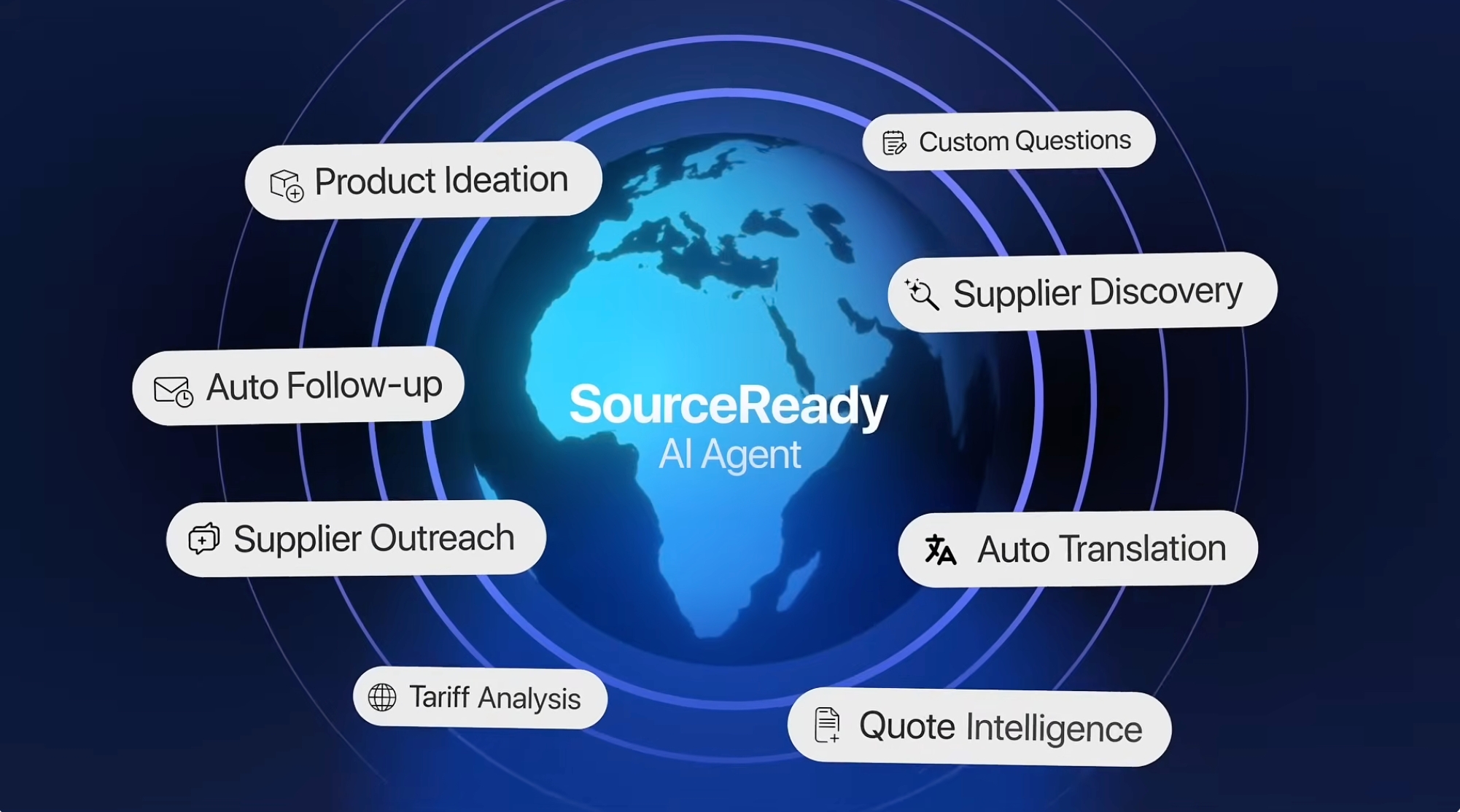
SourceReady simplifies that process by combining AI with a global supplier database of more than 4 million suppliers across 200+ countries and regions. Instead of searching multiple platforms separately, you can discover, compare, and evaluate suppliers from a single workspace.
For surveillance camera sourcing, SourceReady helps you:
- Discover qualified manufacturers faster: Search millions of supplier profiles using keywords, product categories, manufacturing capabilities, certifications, export history, and geographic location.
- Compare suppliers across countries: Evaluate manufacturers from China, Taiwan, Vietnam, South Korea, India, and other sourcing markets side by side to identify the best balance of cost, quality, and supply chain resilience.
- Build a more informed shortlist: Use AI to filter suppliers based on your sourcing requirements, helping distinguish manufacturers from trading companies and prioritize suppliers that best match your project.
- Leverage import and export intelligence: Review shipment activity and customer relationships where available to better understand a supplier's export experience and manufacturing scale.
- Create better RFQs with AI: Turn product specifications into structured supplier inquiries, ensuring you ask consistent technical and commercial questions across every supplier.
- Automate supplier outreach: Send RFQs to multiple suppliers simultaneously, manage responses in one place, and compare quotations without relying on manual email tracking.
Rather than spending hours switching between supplier directories, search engines, and spreadsheets, SourceReady gives you a structured way to identify, evaluate, and engage surveillance camera suppliers more efficiently. Whether you're looking for a low-cost OEM in China, an enterprise-grade manufacturer in Taiwan, or a China+1 production partner in Vietnam, you can build a stronger supplier shortlist with significantly less manual research.
Conclusion
Choosing the right surveillance camera supplier is about more than finding the lowest price. You need to evaluate manufacturing capabilities, product quality, cybersecurity, regulatory compliance, and long-term reliability before placing an order. While China remains the largest sourcing hub, countries like Taiwan, Vietnam, South Korea, and India each offer unique advantages depending on your target market and sourcing strategy.
As supply chains become more complex, combining supplier intelligence with AI can help you make faster, more informed sourcing decisions. Platforms like SourceReady make it easier to discover qualified suppliers, compare options across countries, and build a stronger shortlist with less manual research—so you can spend more time negotiating the right partnership instead of searching for one.
FAQ
1. Which certifications should surveillance cameras have?
The required certifications depend on your target market. Common certifications include:
FCC: United States
CE: European Union
UKCA: United Kingdom
RoHS: Restriction of hazardous substances
REACH: Chemical compliance for the EU
BIS: India
NDAA compliance: Often required for U.S. government-related projects
2. What are the latest trends in the surveillance camera industry?
Current trends include AI-powered object detection, edge computing, color night vision, 4K and 8MP cameras, cloud-based video management, solar-powered security cameras, dual-lens cameras, and greater emphasis on cybersecurity and data privacy.