Choosing the right country for home appliance sourcing goes far beyond finding the lowest factory price. Home appliances require strict attention to product safety, compliance certifications, quality control, supply chain reliability, and long-term supplier performance.
The best sourcing destination depends on your product category, target market, order volume, and risk tolerance. While China remains the dominant sourcing hub for many appliance categories, countries such as Vietnam, Thailand, Mexico, and Turkey offer compelling advantages for diversification, regional access, or specialized manufacturing capabilities. Understanding each country's strengths and limitations is essential for building a resilient and cost-effective sourcing strategy.

There's a better way to source ❤️
Watch the video to see how SourceReady helps brands move from product ideas to trusted supplier relationships faster
Watch the VideoHome Appliance Market Size and Growth
The global home appliance industry is one of the largest consumer goods sectors in the world. Demand for household appliances continues to expand as consumers invest in convenience, energy efficiency, and smart home technologies.
The global home appliances market size was estimated at USD 503.03 billion in 2024 and is projected to reach USD 675.73 billion by 2030, growing at a CAGR of 5.2% from 2025 to 2030. Several factors are driving this expansion:
1. Rising Urbanization
As urban populations grow, demand for household appliances such as refrigerators, washing machines, air conditioners, and kitchen appliances continues to increase. Emerging markets in Asia, Latin America, and Africa are contributing significantly to new appliance purchases.
2. Growing Disposable Income
Higher household incomes allow consumers to upgrade from basic appliances to premium and feature-rich products. This trend is particularly visible in developing economies where appliance ownership rates continue to rise.
3. Expansion of Smart Home Technology
Connected appliances are becoming increasingly popular. Products that integrate with mobile apps, voice assistants, and home automation systems are creating new opportunities for manufacturers and suppliers with advanced electronics capabilities.
4. Demand for Energy-Efficient Products
Consumers and governments are placing greater emphasis on sustainability and energy savings. Energy-efficient appliances often command higher prices and require manufacturers to meet stricter performance and certification standards.
5. Opportunities for Importers and Brands
The size and growth of the home appliance market create significant opportunities for retailers, private-label brands, distributors, and importers. However, success depends heavily on selecting reliable manufacturing partners that can consistently meet quality, compliance, and delivery requirements.
Home Appliance Sourcing Trends to Watch
Before selecting a sourcing destination, it is important to understand the major trends shaping the global home appliance industry. These trends influence where products are manufactured, how suppliers invest in production capabilities, and what buyers should prioritize when evaluating sourcing partners.
1. Smart and Connected Appliances
Consumers increasingly expect appliances to integrate with mobile apps, voice assistants, and smart home ecosystems. Products such as air purifiers, robotic vacuum cleaners, coffee machines, and kitchen appliances now commonly include Wi-Fi, Bluetooth, or IoT functionality. As a result, sourcing suppliers with strong electronics and software integration capabilities has become more important.
2. Energy Efficiency and Sustainability
Governments and consumers are placing greater emphasis on energy-efficient appliances. Manufacturers are investing in technologies that reduce power consumption, improve performance, and comply with stricter energy regulations. Buyers should prioritize suppliers that understand energy labeling requirements and can support certification processes for target markets.
3. Supply Chain Diversification
Many brands are adopting a "China+1" strategy to reduce dependence on a single sourcing country. Vietnam, Thailand, India, and Mexico have benefited from this trend as companies seek alternative manufacturing locations while maintaining access to global markets.
4. Increased Compliance Requirements
Product safety, environmental regulations, and traceability requirements continue to expand across major markets. Retailers and regulators increasingly require detailed documentation, testing reports, and quality records. Suppliers with strong compliance systems are becoming more valuable than those competing solely on price.
Which countries are best for sourcing home appliances?
1. China
China remains the world's largest home appliance manufacturing hub and is often the first choice for brands sourcing small appliances, kitchen appliances, air treatment products, and smart home devices.
Key Home Appliance Categories:
- Small kitchen appliances (air fryers, blenders, kettles, coffee makers)
- Smart home appliances and IoT-enabled devices
- Air purifiers, humidifiers, and dehumidifiers
- Robotic vacuum cleaners and floor care products
- Fans and personal cooling products
- Personal care appliances (hair dryers, electric shavers)
- Microwave ovens and countertop cooking appliances
- Private-label and ODM appliance products
Strengths:
- Extensive supplier network and component ecosystem: China offers access to thousands of appliance manufacturers, component suppliers, tooling companies, testing laboratories, and logistics providers, making it easier to source complete products and replacement components.
- Strong OEM and ODM capabilities: Many Chinese manufacturers can produce products based on customer specifications or provide ready-made designs that can be customized and branded quickly.
- Competitive pricing across many categories: Large production volumes, mature supply chains, and manufacturing efficiency often result in lower costs for small and medium-sized appliances.
- Fast product development and customization options: Suppliers can typically create prototypes, modify designs, and launch new products faster than many competing manufacturing regions.
- Wide range of certified manufacturers: Many factories have experience meeting international standards such as UL, ETL, CE, FCC, and RoHS requirements for export markets.
Limitations:
- Potential tariff exposure in certain markets: Import duties and trade policies can significantly increase landed costs, particularly for products entering markets with additional tariffs on Chinese goods.
- Quality can vary significantly between suppliers: Manufacturing capabilities range from world-class facilities to lower-tier factories, making supplier qualification and audits essential.
2. Vietnam
Vietnam has become a popular China+1 sourcing destination, particularly for brands seeking diversification and lower labor costs.
Key Home Appliance Categories:
- Electric fans
- Rice cookers
- Basic kitchen appliances
- Water dispensers
- Household electrical products
- Entry-level vacuum cleaners
- Small household appliances for private-label programs
Strengths:
- Competitive manufacturing costs: Labor costs are generally lower than in China, helping manufacturers remain cost-competitive for labor-intensive products.
- Growing export-oriented manufacturing sector: Significant foreign investment has expanded Vietnam's manufacturing capabilities and export infrastructure.
- Attractive alternative for basic small appliances: Vietnam is increasingly used for products such as fans, simple kitchen appliances, and household electrical goods.
- Increasing foreign investment and production capacity: Global manufacturers continue to establish facilities in Vietnam, improving production capabilities and supplier expertise.
Limitations:
- Smaller supplier ecosystem compared to China: Buyers may have fewer supplier choices and less access to specialized component manufacturers.
- Reliance on imported materials and components: Many manufacturers continue to source motors, electronics, and other key components from neighboring countries.
- Fewer options for highly customized products: Advanced ODM development and rapid customization capabilities are generally less mature than those available in China.
3. Thailand
Thailand has established itself as a leading manufacturing center for refrigeration, air conditioning, and other large household appliances.
Key Home Appliance Categories:
- Air conditioners
- Refrigerators and freezers
- Compressors
- Commercial refrigeration equipment
- Washing machines
- Water heaters
- Cooling and climate-control appliances
Strengths:
- Strong expertise in cooling and refrigeration products: Thailand is home to major manufacturers specializing in air conditioners, refrigerators, compressors, and related technologies.
- Mature manufacturing infrastructure: Well-developed industrial zones, transportation networks, and supplier relationships support efficient production.
- Reliable production quality: Many factories have extensive experience supplying international brands and maintaining consistent quality standards.
- Well-developed appliance supply chain: The country benefits from a strong ecosystem of component suppliers supporting large appliance production.
Limitations:
- Less flexibility for low-volume orders: Many manufacturers focus on large-scale production and may not prioritize smaller sourcing programs.
- Higher costs than some neighboring countries: Labor and operating costs can exceed those found in emerging manufacturing markets.
- Fewer supplier options for niche appliance categories: Thailand's strengths are concentrated in specific appliance segments rather than the full range of household products.
- Limited ODM variety for small appliances: Buyers seeking extensive product customization may find fewer options compared to China.
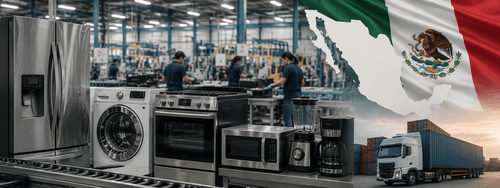
4. Mexico
Mexico is a strategic sourcing destination for companies serving the North American market.
Key Home Appliance Categories:
- Refrigerators and freezers
- Washing machines
- Clothes dryers
- Dishwashers
- Cooking ranges and ovens
- HVAC equipment
- Large household appliances for North American brands
Strengths:
- Shorter shipping times to the United States and Canada: Geographic proximity enables faster replenishment and reduced transit delays.
- Reduced logistics risks and transportation costs: Shorter supply chains can lower freight expenses and improve inventory management.
- Strong manufacturing base for large appliances: Mexico is a major production hub for refrigerators, washing machines, dryers, and other large household appliances.
- Potential trade advantages under regional agreements: Depending on product origin requirements, companies may benefit from favorable trade arrangements within North America.
Limitations:
- Higher labor costs than many Asian countries: Manufacturing costs may be less competitive for labor-intensive products.
- Smaller supplier base for certain appliance categories: Mexico offers fewer sourcing options for small appliances and specialized consumer electronics.
- Capacity constraints in high-demand sectors: Popular manufacturing regions can experience labor shortages and production bottlenecks during periods of strong demand.
5. Turkey
Turkey is a strong choice for companies supplying Europe, the Middle East, and North Africa.
Key Home Appliance Categories:
- Refrigerators
- Washing machines
- Dishwashers
- Ovens and cookers
- Range hoods
- Small kitchen appliances
- White goods and built-in appliances
Strengths:
- Established white goods manufacturing industry: Turkey has extensive experience producing refrigerators, washing machines, dishwashers, and cooking appliances.
- Strong expertise in major household appliances: Manufacturers have developed advanced capabilities in large appliance production and export operations.
- Faster access to European markets: Shorter transit times can improve inventory planning and reduce logistics costs for European buyers.
- Familiarity with European quality and compliance requirements: Many suppliers regularly serve EU customers and understand regulatory expectations.
Limitations:
- Currency fluctuations can impact pricing stability: Exchange rate volatility may affect long-term sourcing costs and contract negotiations.
- Regional geopolitical risks: Political and regional developments can occasionally influence trade conditions and supply chain planning.
- Supplier availability may be more limited than in Asia: Buyers generally have fewer manufacturer options compared to larger sourcing markets.
- Higher costs than some emerging manufacturing countries: Turkey may not always be the most competitive option for cost-sensitive sourcing programs.
How should you choose the right sourcing country?
Selecting the right sourcing country requires balancing cost, quality, compliance, and supply chain resilience. Use the following framework when evaluating suppliers and manufacturing locations.
1. Match the country to your product category
Different countries excel in different appliance categories. For example, China is often best for small appliances and smart devices, while Thailand is stronger for refrigeration and cooling products. Start by identifying where your product category has the strongest manufacturing ecosystem.
2. Evaluate compliance and certification capabilities
Home appliances often require certifications such as UL, ETL, CE, FCC, RoHS, or energy-efficiency approvals. Verify that suppliers can provide model-specific documentation and have experience exporting to your target market.
3. Compare landed cost, not just factory price
A lower unit price does not always mean lower overall cost. Consider freight, duties, tariffs, testing, inspections, warehousing, warranty reserves, and potential quality issues when calculating total landed cost.
4. Use SourceReady to streamline supplier sourcing
Finding reliable suppliers can be time-consuming and risky. SourceReady helps businesses identify vetted manufacturers, compare sourcing options across countries, and evaluate suppliers based on quality, compliance, and production capabilities. This can significantly reduce sourcing risks and accelerate supplier selection.
5. Build supply chain resilience
Avoid relying on a single supplier or country for critical products. A dual-sourcing strategy can help reduce disruptions caused by geopolitical events, logistics challenges, or production delays.
Conclusion
There is no single best country for sourcing home appliances. China remains the most versatile option due to its scale and supplier ecosystem, while Vietnam offers diversification opportunities, Thailand excels in cooling products, Mexico provides advantages for North American distribution, and Turkey serves as a strong gateway to European and regional markets. The right choice depends on your product requirements, compliance needs, target customers, and long-term sourcing goals.
If you're evaluating suppliers or exploring new sourcing destinations, SourceReady can help simplify the process by connecting you with qualified manufacturers and providing the insights needed to make confident sourcing decisions. Contact SourceReady today to build a more reliable and resilient appliance supply chain.
FAQ
1. How do I verify a home appliance supplier?
Start by reviewing the supplier’s business license, export history, factory capabilities, certifications, product test reports, and customer references. You should also request a factory audit, confirm whether the supplier is a manufacturer or trading company, inspect samples, and verify that certificates match the exact product model you plan to buy.
2. What should I check before placing a home appliance order?
Before placing an order, check:
Product specifications
Bill of materials
Safety certifications
Energy-efficiency requirements
Plug and voltage standards
Packaging requirements
Warranty terms
Inspection process
Production lead time
Landed cost
Supplier track record
Do not rely only on the sample. The production version must match the approved sample exactly.

Find the sourcing tools you need.
Explore how SourceReady helps you research products, discover suppliers, verify factory information, analyze trade data, and manage your sourcing workflow in one place
Explore Features
Graduating from USC with a background in business and marketing, Judy Chen has spent over a decade working in e-commerce, specializing in sourcing and supplier management. Her experience includes developing strategies to optimize supplier relationships and streamline procurement processes for growing businesses. As SourceReady’s blog writer, Judy leverages her deep understanding of sourcing challenges to create insightful content that helps readers navigate the complexities of global supply chains.